
The Tamil language has a prolific literary tradition, represented in Puducherry by its substantial history of theatre. Theatre, like other art forms, evolves in response to changing social contexts, cultural practices, and performance spaces. Through contributions of numerous artists, institutions, and venues, Pondicherry’s theatre evolved from traditional performance forms to modern practices over the past centuries.
Traditional Theatre in the Temples
Early dramatic traditions in the region were closely connected to koothu: local, often on-street, theatrical enactments. In older Tamil, it referred to dramatic storytelling performed through acting, music, dance, and dialogue, accompanied by elaborate costumes and make-up, usually set in a public space. Koothu exists in several forms. Therukoothu is a traditional Tamil theatre, connected with Hindu temples and mythical storytelling. Today, it is still practiced in parts of Puducherry and Tamil Nadu, albeit without its earlier vibrancy. Ariyakoothu is a classical form historically performed in temples, while kuravanjikoothu is a form of dance-drama based on poetic texts.
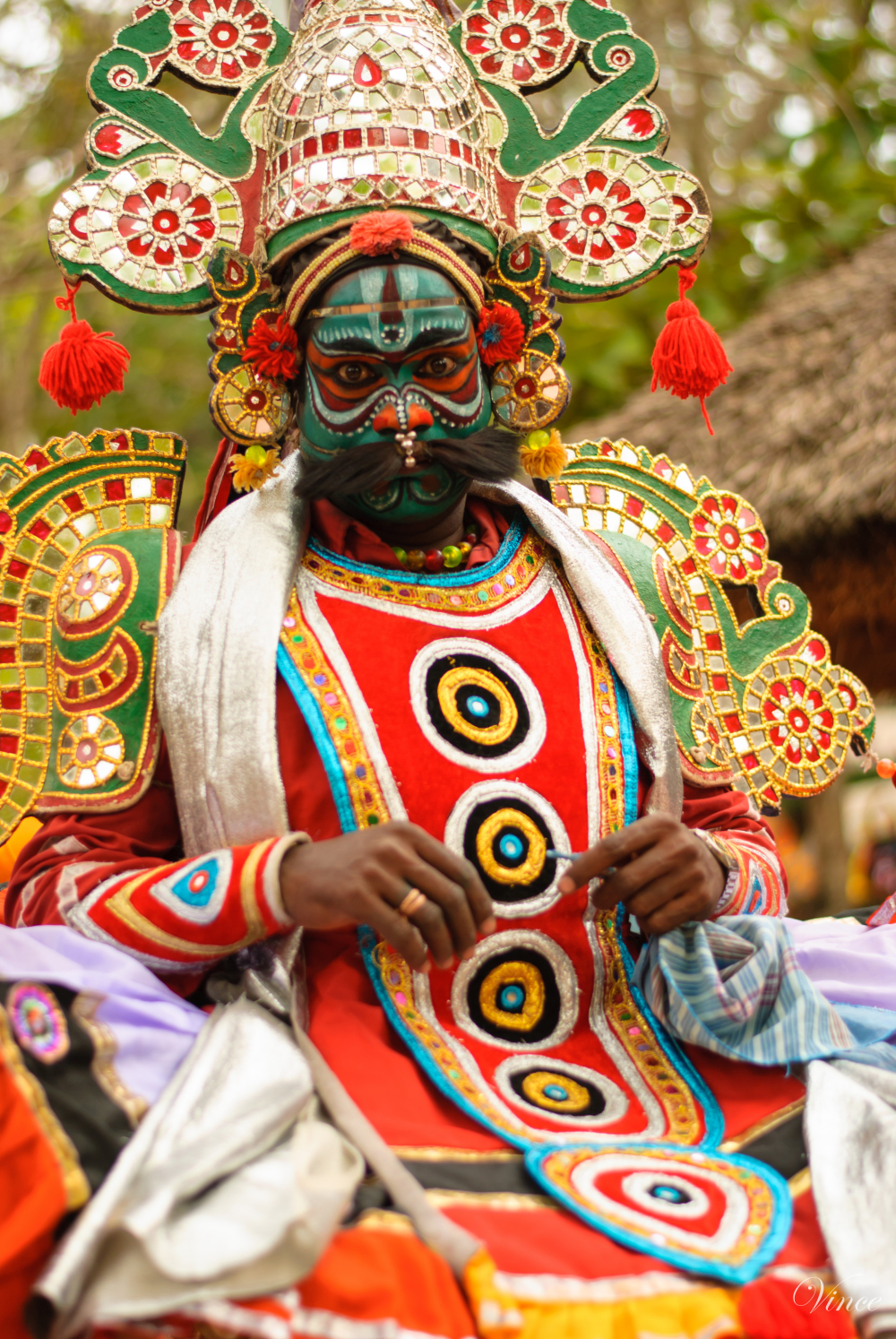
A Therukoothu artist. (Picture Courtesy: Vinc3nt/Wikimedia Commons)
Most drama was also connected in its early forms to dance. Traditional explanations distinguish between abhinayam, an expressive dance performed to a specific song, and natakam, a dramatic performance based on a narrative or story. Dance and drama were thus always intertwined elements of performance traditions.
In the early modern and medieval periods, temples were generous benefactors of the performing arts. Historical inscriptions from the eleventh-century CE mention, for instance, that ariyakoothu performances were staged annually at the Thirunallur temple at Thirunallur during the Tamil months of Maasi (February-March) and Vaikasi (May-June). These were two-day performances divided into five acts. The inscription also notes that the performers received twenty measures of paddy as payment. Similarly, the devadasi, or temple-dancers, presented dance-dramas based on stories of the gods. Sculptures of female performers in the Siva temple at Bahour, built during the reign of the Chola king Parantaka, depict the costumes and performance styles of dancers. Records from 1822-24 note the presence of thirty-six devadasis at the Sri Kokilambal-Thirukameswarar Temple in Villianur. During annual festivals such as the Ther (temple chariot procession) and Theppam (float festival), these dancers once performed for the public. Temples thus provided notable patronage to dance and drama, which were in turn central to the cultural life of the people.
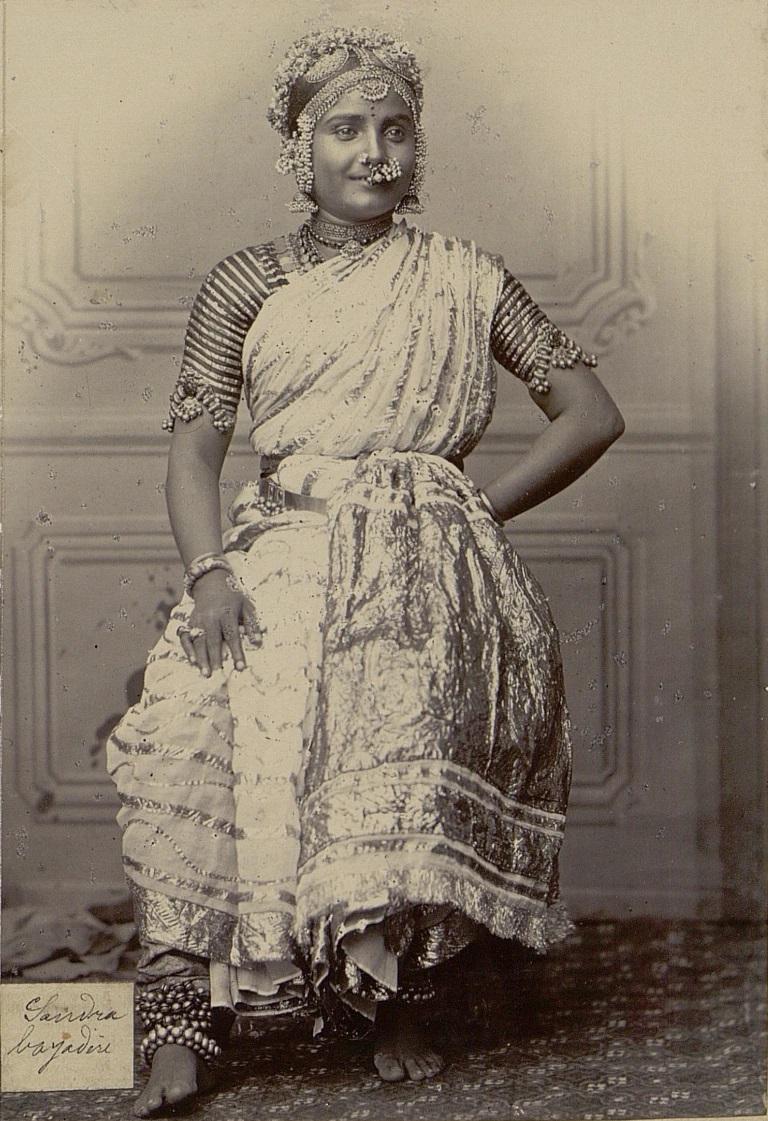
The celebrated devadasi Gyana from Tanjore, 1850. (Picture Courtesy: Fedor Jagor/Wikimedia Commons)
Movement Towards Modernity
In the nineteenth-century, theatrical forms began to shift from verse-based koothu traditions to dialogue-driven dramas.
Vasagappa, referred to as vasappu in colloquial Tamil, emerged from Tamil Catholic traditions as a form of drama that combined prose narration with song, usually centered around stories of Jesus. With a history of approximately 500 years, this form of theatre materialised in Trichy, Vellore and North Arcot regions, and grew popular in Pondicherry during French rule. French Christian missionary Vallet de Virville, who mastered Tamil, wrote a work titled Punitha Esthash Vasagappa (The Sacred/Saint Eustace Vasagappa play) in 1837, which was successfully staged in 1845. According to K. Satchidanandam, vasappu performances were held at the Othiyan Salai maidan in Puducherry and were usually staged at night. It is said that during midnight performances, the actors’ voices could be heard all the way till Aurobindo Street, a kilometre away: since these performances took place before the use of sound amplification, the actors trained their voices to project strongly across large open spaces. While vasappu performances do not take place in Puducherry anymore, it continues to be performed during Easter in various parts of Tamil Nadu.
Simultaneously, the vilasam, a form of drama written mainly in prose dialogue, similar to Western theatrical forms, emerged. Unlike traditional koothu, which was composed in verse and followed established narrative traditions, vilasam relied on spoken dialogue and structured dramatic presentation. In 1880, Thandavaraya Mudaliar published a play titled Manmatha Vilasam (the play of the Manmatha/ God of love) in Puducherry, a piece exemplifying this emerging theatrical style.
By the early twentieth-century, prominent dramatists such as Sankaradas Swamigal, an ascetic, were popularising staged theatre in Puducherry. His plays, including works like Gnanaseoundari, Paduka Pattabhishekam, Lanka Dahanam and Sulochana Sathi, were performed at venues such as Gaebele Theatre from 1919 until his unfortunate death in 1922. Sankaradas Swamigal is often referred to as the ‘father of Tamil theatre’ and remembrance performances are staged on his birth anniversary every year.
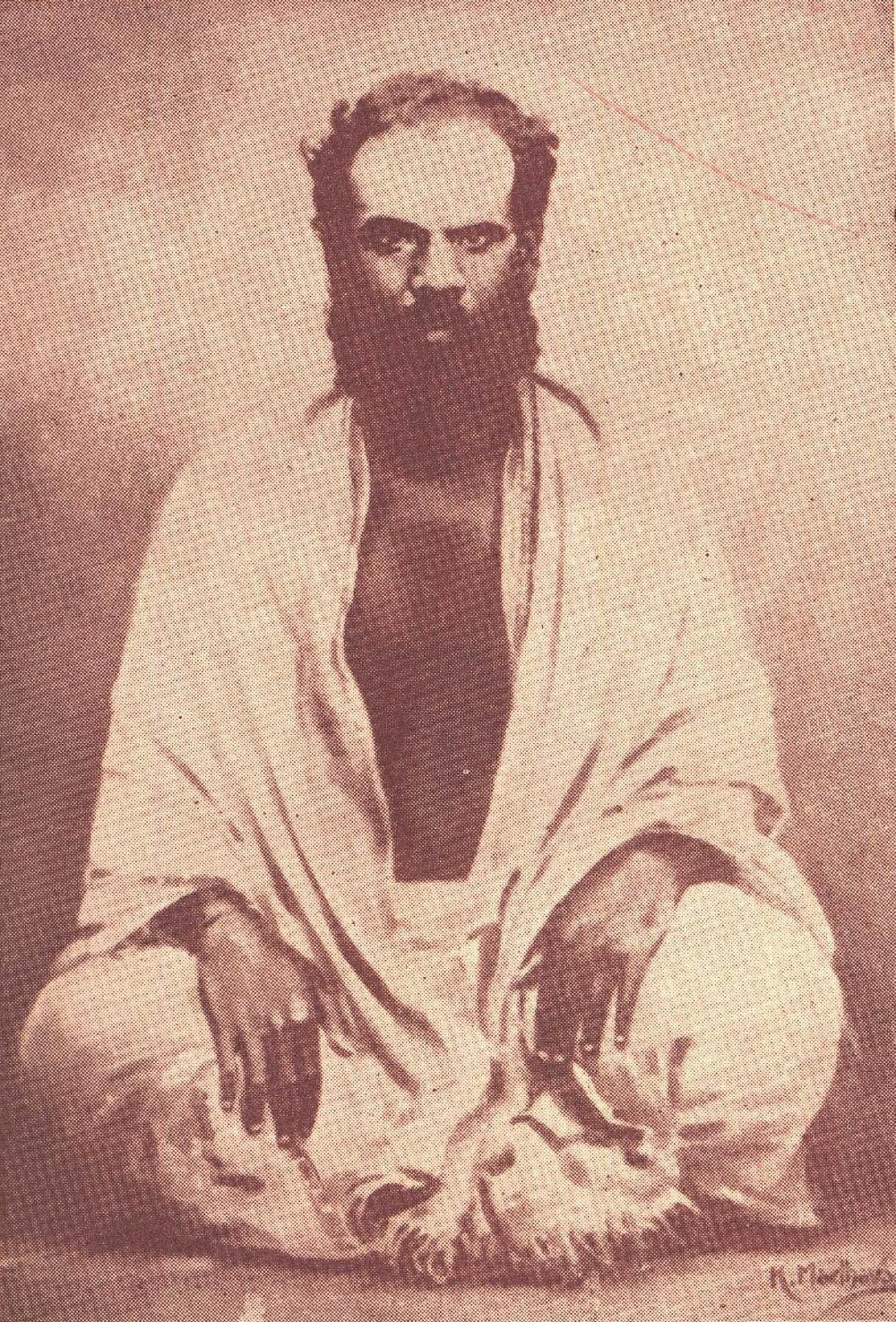
Sankaradas Swamigal, considered as the father of Tamil theatre. (Picture Courtesy: Tamil Virtual Academy/Wikimedia Commons)
The rapid growth of theatre in Pondicherry in the late nineteenth-early, which would continue into the twentieth-century, was facilitated by patronage and institutional support from the French as well as Tamil community. Take, for instance, the cultural stage of the Gaebele theatre: constructed by the then mayor of Pondicherry, Henri Gaebele, it quickly became the centre of performance work in the city.
Social and Political Stages
The twentieth-century also saw the emergence of politically engaged theatre. The playwright Bharathidasan (1891–1964) produced works infused with rationalist and social reform ideas. Originally named Kanakasabai Subburathinam, Bharathidasan was born and spent much of his life under French colonial rule. He adopted his pen-name, meaning ‘a devotee of Bharathi,’ in admiration of the nationalist poet Subramania Bharati, who had taken refuge in Pondicherry to escape British persecution, and whose work shaped much of his writings and political thought. Bharathidasan’s plays Viduthalai Court (1930), Chintamani (a celebrated play in 1931 which has a poem called Kudumba Vilaku, first staged in front of the French governor), Logaragam (1932), Nimida Nadagam (One-Minute Play) addressed themes such as caste discrimination, religious orthodoxy, and Dravidian identity. Some of these works were controversial. The play Iranian Inaitraveeda (1934) centered around Aryan domination and highlighted Dravidian resistance. Initially banned only by the French government, it was later banned even by the Madras government in 1948. In 1969, Bharathidasan was posthumously awarded the Sahitya Akademi Award for his Tamil play Pisiraandhaiyaar (1967).
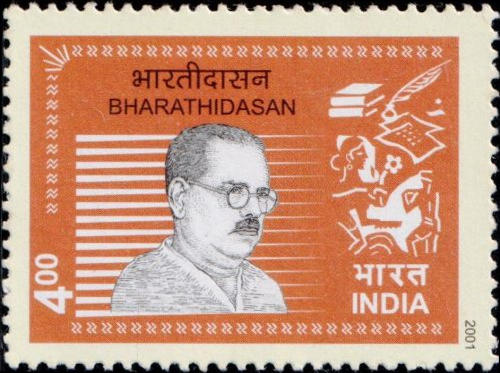
Stamp issued by the GoI commemorating the poet Bharathidasan. (Picture Courtesy: India Post/Wikimedia Commons)
Other writers such as Puduvai Sivam and Tamil Oli continued to develop socially conscious theatre as well. Puduvai Sivam was an important figure in the history of theatre in Puducherry, being both a student and close associate of Bharathidasan. His first play, Sundara (The Secret Tunnel), written in the 1930s, was reportedly staged several times by the Puduvai Reform Youth Association, a now-defunct community development organization formed by volunteer youth in the 1940s. Another play, Social Service, written in the late 1930s, was performed in 1941 at Gaebele Theatre. Because of his close association with the Dravidian Movement, Puduvai Sivam’s plays strongly emphasised themes of social reform. His dramas were also staged in places such as Sri Lanka and Malaysia, where Tamil communities lived. His works were later compiled by his son Ilango.
Tamil Oli, born Vijayarangam on 21 September 1924 in Puducherry, later adopted his name out of deep devotion to the Tamil language. He was known for his involvement in labour movements and progressive political struggles. While still a college student, he wrote the play Sirpiyin Kanavu (The Sculptor’s Dream) in 1944, which was staged in Chennai by the Sakthi Drama Sabha, in which the lead role was played by the renowned actor Sivaji Ganesan. The play was well-received, eventually leading to its adaptation into the film Vanangamudi in 1957. Another significant work by Tamil Oli is the short poetic epic Veerayi in 1947, which expressed progressive ideas concerning Dalit issues and women’s rights decades before such themes became widely discussed. The work was later adapted for the stage by the theatre director Pralayan, who performed it in various parts of Tamil Nadu, bringing renewed attention to Tamil Oli’s writing.
Performance Spaces in Puducherry
Several performance venues played an important role in the development of theatre in Puducherry. Among the most notable were Othiyan Salai Maidan (now Anna Ground), Othiyan Salai Tharai Kottagai (later called Kamban Kalai Arangam), Gaebele Theatre on Dupleix Street (now Nehru Street), and the Jeanne d’Arc Theatre (later Indianostrum) near Cluny Hospital. These spaces hosted many theatrical events and contributed significantly to the city’s performance culture, with Gaebele Theatre in particular becoming an important centre for major productions.
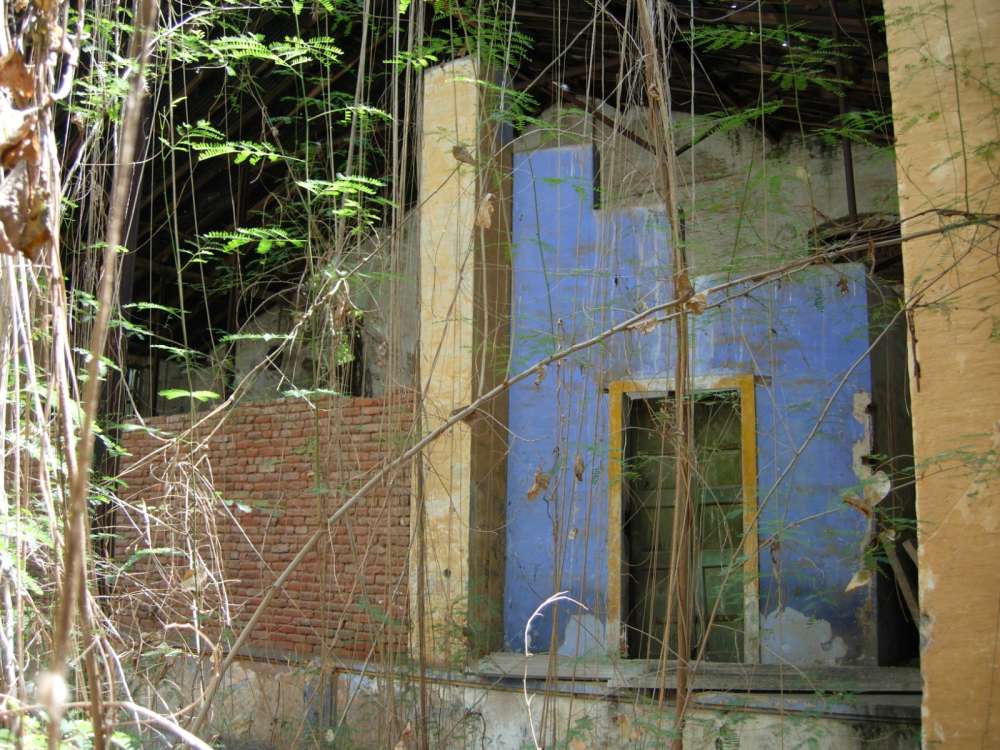
Last remaining sections of the Gaebele Theatre. (Picture Credits: Gobi G.)
Gaebele Theatre, originally established as a recreation and entertainment hall, later developed into a prominent venue for Tamil theatrical performances. Several plays by Sankaradas Swamigal, including Gnanaseoundari, Paduka Pattabhishekam, Lanka Dahanam, and Sulochana Sathi, were staged there. In later years, figures such as the political leader M. Karunanidhi, the playwright K. Kesavan, and the actor Nadigavel M.R. Ratha also staged productions at this theatre for extended periods. In the last few decades, the property came under the ownership of a private company and large shopping complexes and commercial establishments were built around the area where the theatre once stood. As a result, most of the original structure was demolished and only the stage survives, which is now hidden behind a large clothing store and therefore not visible to the public.
Another important venue was the Jeanne d’Arc Theatre, established in 1934. In 2012, it was taken over by Koumarane Valavane and renamed Indianostrum Theatre. It soon became a hub for modern theater in the city, inviting performances by domestic as well as international theatre groups. In August 2024, the space was handed back to the neighbouring Church of Our Lady of the Angels. Its demolition, now impending, will be an irreparable loss to Puducherry’s cultural heritage.
Currently, the Alliance Française auditorium in Puducherry functions as one of the remaining performance spaces in the old town.
Contemporary Theatre in Puducherry
Several theatre groups have played an important role in sustaining and promoting theatrical culture in Puducherry. Among these are Thayagambin Arts, the Puratchi Kavignar Drama Forum, Good Evening Creators, the Apex Fine Arts Forum, the Teachers’ Cultural Group, the Tamil Thai Arts Forum, and the Youth Arts Group. These organisations regularly participate in competitions and organise drama festivals, contributing to the continued vitality of the city’s stage traditions. In addition, the Department of Art and Culture of the Puducherry Government provides opportunities for registered drama groups to perform during cultural festivals. Alongside stage productions, some voluntary organisations run their own theatre initiatives. Take, for instance, the Dalit-support organisation Adecom, which runs a street theatre initiative called Koottukural, which uses performance as a platform for social awareness and activism.
In the late twentieth-century, theatre culture was further institutionalised with the establishment of the Department of Drama at Pondicherry University in 1988, later renamed the School of Performing Arts. The department has trained students in various aspects of theatre production and has contributed significantly to the development of contemporary theatre in the region.
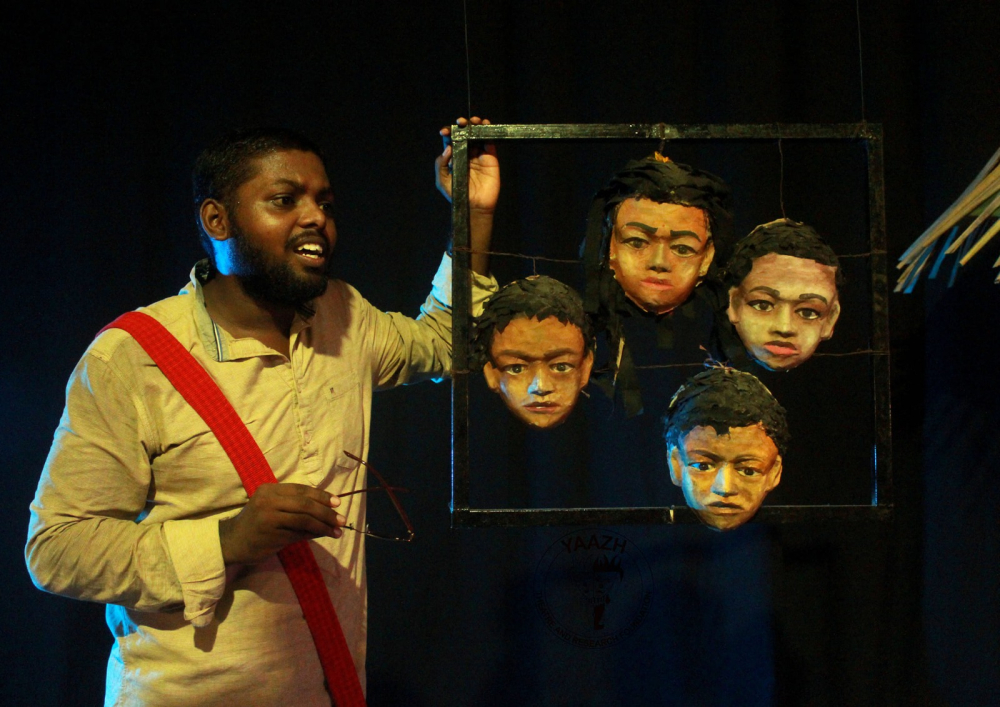
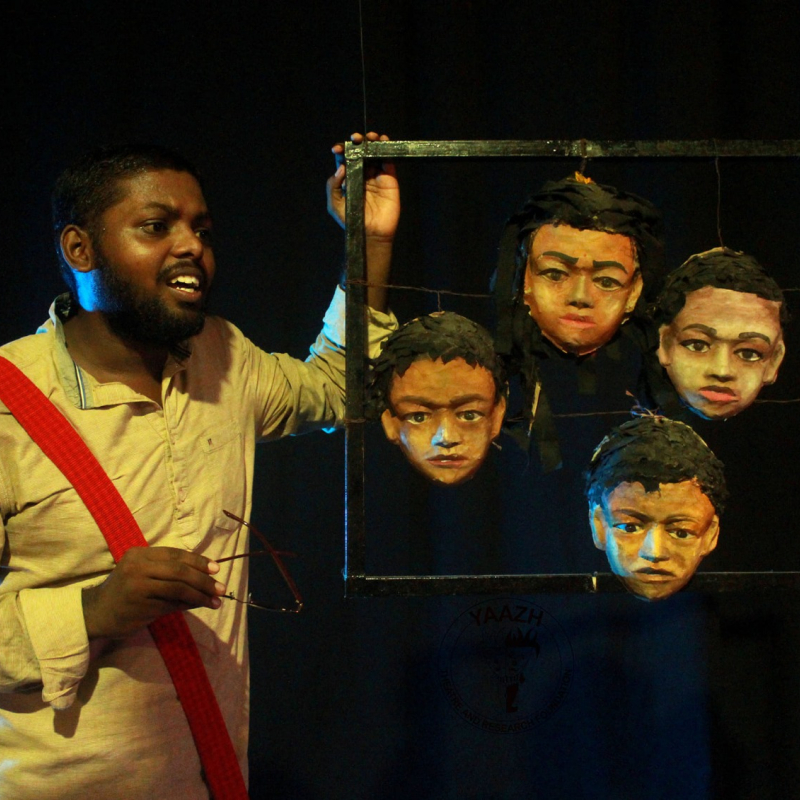
Yaazh Theatre and Research Foundation theatre production - Pencil tree (a solo play). (Picture Credits: Gobi G.)
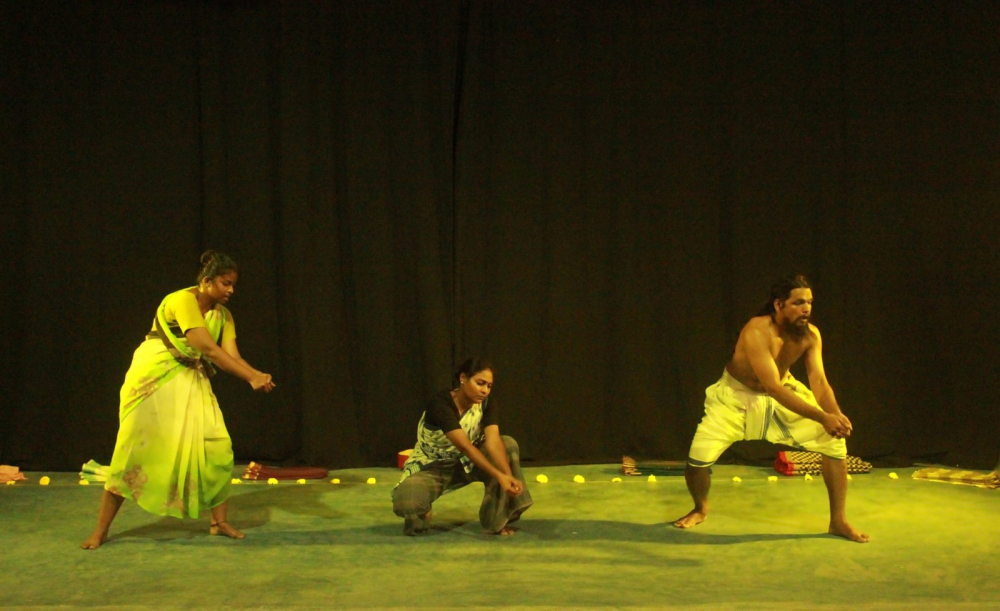
Velippadai theatre group production - Nadapaavadai (The Woman Who Performs Funeral Rites) Design & Direction: Ramassamy S. (Picture Credits: Gobi G.)
In recent decades, graduates and researchers connected with theatre in Puducherry have established several avant-garde groups, including Indianostrum Theatre, Kalam Theatre Group, Avatharangal Arts Group, Yaazh Theatre and Research Foundation, Velippadai Theatre Group, and the Pondicherry Theatre Academy. Through these organisations, numerous plays have been staged for the public, and Tamil productions from these groups have also participated in international festivals. Alongside these collective initiatives, individual artists such as Chevalier Dr Gandhymary, Dr V. Arumugham, Aazhi Vengadesan, Dr Gobi, Dr P. Arokia Mary Stella, Dr P. Arunagiri, M. Ramasamy, Sugumar, Prem, and Kandanathan have made important contributions through their work in writing, directing, and theatre education.
Although the history of theatre in Puducherry has not been systematically documented, it is evident that the city possesses a rich theatrical heritage rooted in traditional performance forms and sustained by the dedication of many artists.
Note: The essay is translated and adapted from Tamil by Sayali Athale.
Bibliography
Adiyarkku Nallar. Commentary on the Silappadikaram. Chennai: U. V. Swaminatha Iyer Library, n.d., I:3:2:12.
Eswar, Clement. Public Activities of the Devadasis of Puducherry. Puducherry: Department of Art and Culture, Government of Puducherry, n.d.
Kruttinamoorthy, Ko. The Life History of Bharathidasan. Chennai: New Century Book House, n.d.
Pavendarum Puduvai Sivamum – Some Reminiscences. Puducherry: n.p., n.d.
Rasendran, Ku. Twentieth-Century Literary Records of Puducherry. Puducherry: Thazh Publication, 2007.
Satchidanandam, K. The Status of Tamil under French Rule. Puducherry: Pondicherry Institute of Linguistics and Culture, n.d.
Venkatesan, N. Karaikal Region in Inscriptions. Puducherry: Department of Art and Culture, Government of Puducherry, n.d.
Wells, Henry W. The Classical Drama of India: Studies in Its Values for the Literature and Theatre of the World. Bombay: Asia Publishing House, 1963.
This essay has been created as part of Sahapedia's My City My Heritage project, supported by the InterGlobe Foundation (IGF).