
Pondicherry, a coastal enclave, is part of the Cauvery delta with typical deltaic ecosystems such as mangroves, inter-tidal zones, estuaries, and lagoons. Small rivers empty into the Bay of Bengal, and feed estuaries such as Ariankuppam that lie at the interface between salt and fresh water. The coastal zone has sandy beaches and an intertidal belt extending up to the continental shelf. The local people depend to a large extent on fisheries in the backwaters and the open ocean. The total recorded forest cover, including littoral and mangrove forests, and patches of the tropical dry evergreen forest (TDEF) is estimated to be 9-10 per cent of the extent of Puducherry Union Territory. This iconic tropical dry evergreen forest occurs in sites protected as ‘sacred groves’ by the local community. This region receives rainfall mostly from the north-east or winter monsoon, which feeds the fresh water ponds and lakes, both natural and human-constructed.
Here is a brief description of the different ecosystems in this region:
Tropical Dry Evergreen Forest (TDEF)
The tropical dry evergreen forest, a dense, closed-canopy forest, is geographically restricted to South India and Sri Lanka. As its name indicates, many of the trees and shrubs are ‘evergreen’ as they do not lose their leaves during the dry season.
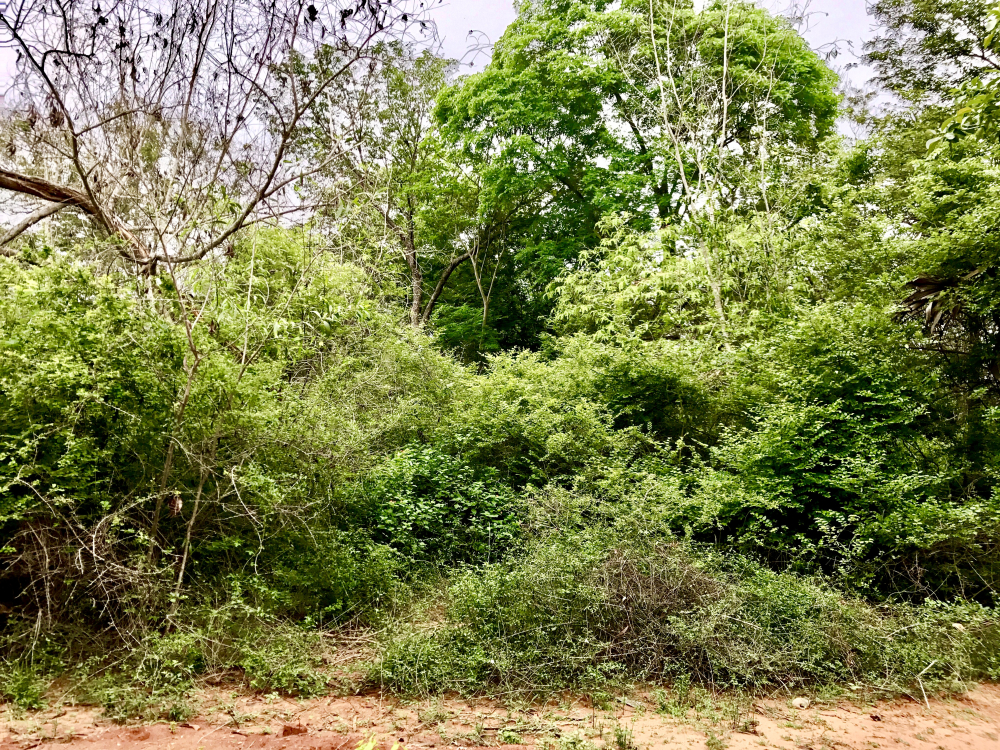
Tropical Dry Evergreen Forest type in Auroville. (Picture Courtesy: IM3847/Wikimedia Commons)
This forest type occurred along the Coromandel coast, in regions where the annual rainfall was around 1000 mm. Now only around 0.01 per cent of its original extent remains, sacrificed as settlements and agriculture expanded. The remnant patches are protected as sacred groves by local communities. In Pondicherry, the commune of Bahour hosts a few patches which are sacred groves. These remnant patches hold many rare plants, diverse birds, and other fauna. Mammals such as the slender loris, the spotted deer, rusty-spotted cat, and jungle cat, inhabit the TDEF.
Several communities in the Auroville International City in Tamil Nadu, which abuts Pondicherry, have with passion undertaken extensive restoration work of the TDEF. As this forest regrows, many of the iconic biodiversity of this region has been restored along with traditional plant based health practices. Overall communities such as Pitchandikulam have documented 735 plant species, including 400 medicinal plants used by local practitioners.
The Mangroves
Mangroves are a unique type of vegetation that grow in coastal intertidal zones such as estuaries, lagoons, and mudflats, where freshwater and saltwater mix. Dense stands of mangroves are vital for protecting coastal areas from the impact of storms, tsunamis, wave action, and coastal erosion.
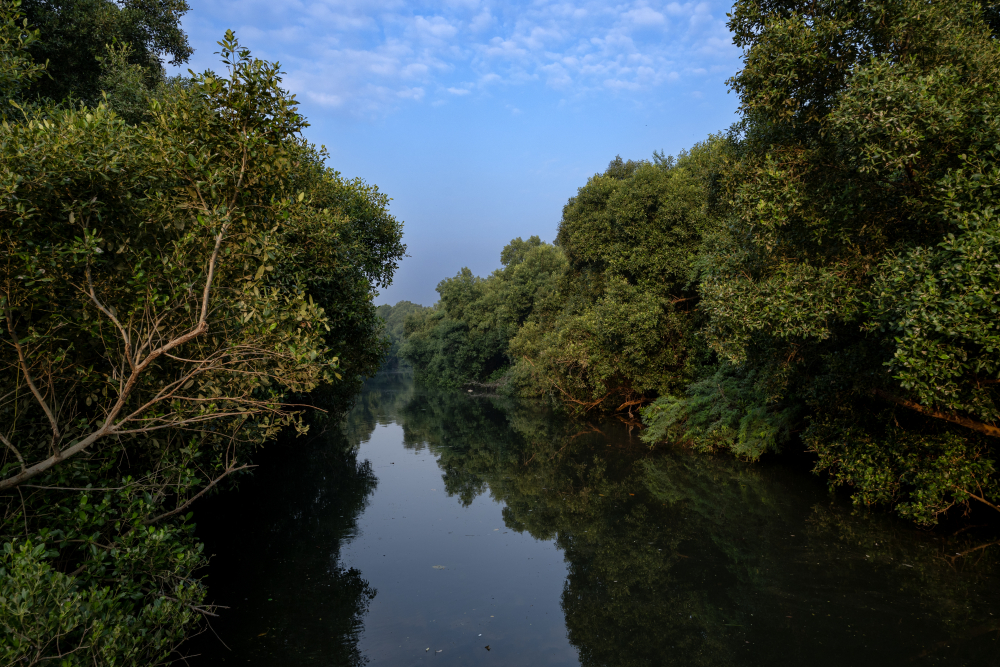
Stretches of mangroves along the Ariankuppam river. (Picture Credits: Joseph Rahul)
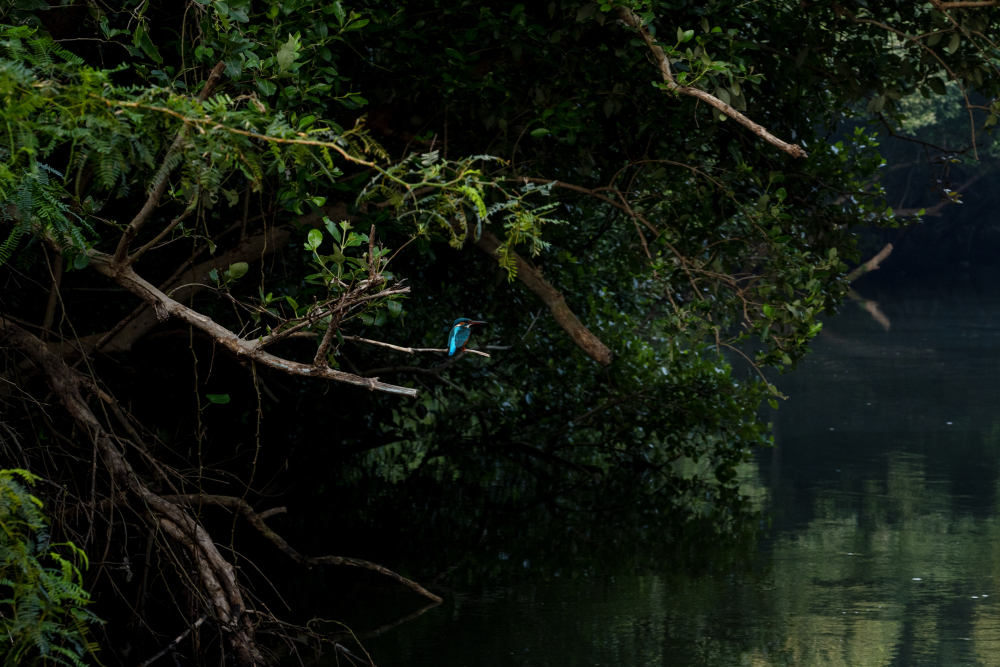
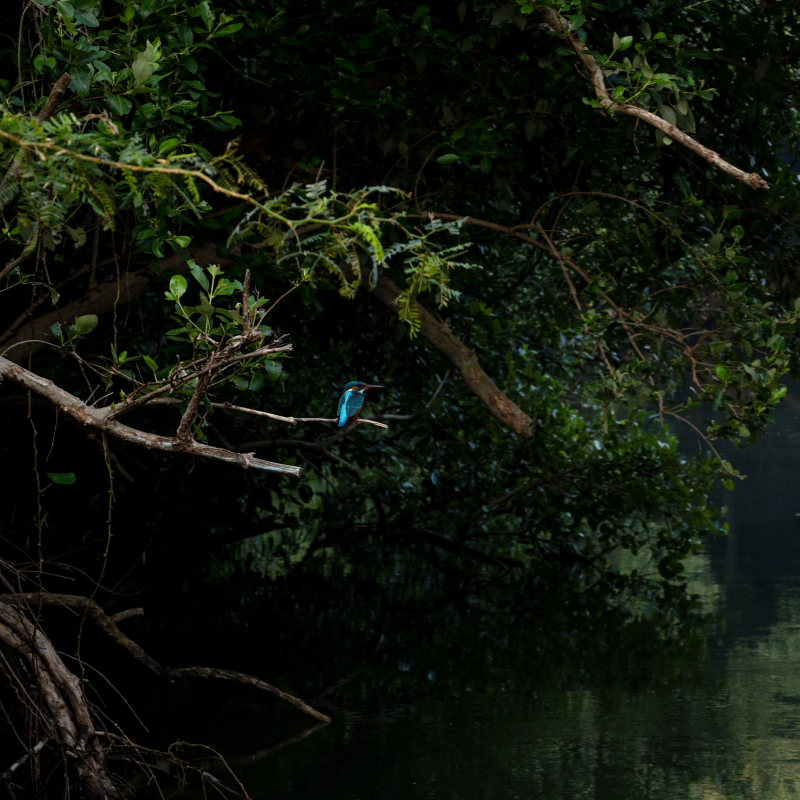
A kingfisher in the mangrove forest. (Picture Credits: Joseph Rahul)
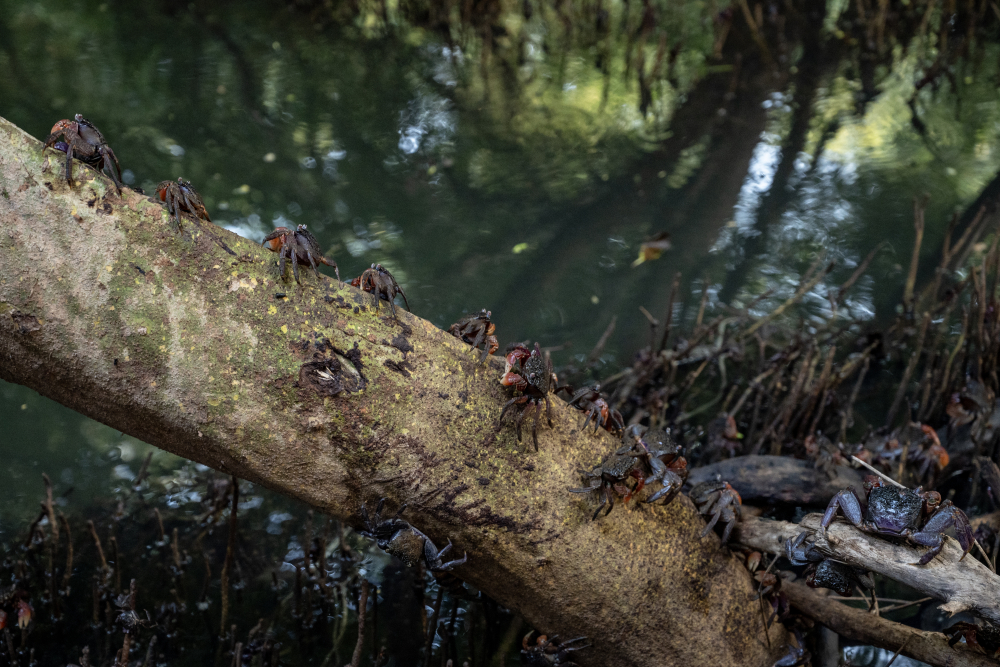
Mangroves are breeding sites for crustaceans. (Picture Credits: Joseph Rahul)
Small patches of degraded mangrove vegetation are found in the Ariankuppam estuary in Pondicherry, which are used as breeding sites for fish and crustaceans to serve as livelihood for local fishing communities. This area of mangrove, to some extent, mitigated the damage caused by the 2004 tsunami by reducing wave velocity and water spread. However, its effectiveness was probably reduced as the forest was degraded due to wood harvesting and other human impacts.
Around 18 mangrove species have been documented in the UT of Puducherry, of which 6-7 occur in Ariankuppam. Although small, they provide a habitat for resident and migratory birds, such as the kingfishers, storks, curlews, ospreys, and mangrove whistlers.
Wetlands
There are two inland freshwater wetlands in Pondicherry — Ossudu and Bahour — and one brackish water wetland neighbouring Pondicherry in Kaliveli. All three wetlands are listed as Important Bird Areas (IBAs), as they host over 200 species of birds in winter. Of these, 58 species are long distance migrants, which travel along the Central Asian-South Asian migratory flyway to winter in South Asia. Tens of thousands of ducks, waders, gulls, and harriers (birds of prey) have been recorded.
As these wetlands lie between large wetlands, such as Chilka Lake and Pulicat Lake in the north and Point Calimere Bird Sanctuary in the south, they are often also used as stopping points to feed and rest. The rest of the species in the area are residents, among which is the distinctive spot-billed pelican that migrates locally and seasonally between wetlands.
Around 47 bird species that visit these lakes are under risk of extinction and are listed in the IUCN (International Union for the Conservation of Nature and Natural Resources) red list. Species listed as ‘Vulnerable’ to extinction include the greater-spotted eagle. Species listed as ‘Near Threatened’ include the grey-headed fish-eagle, the pallid harrier, spot-billed pelican, black-tailed godwit, black-bellied tern, darter, painted stork and the black-headed ibis or white ibis.
Ossudu:
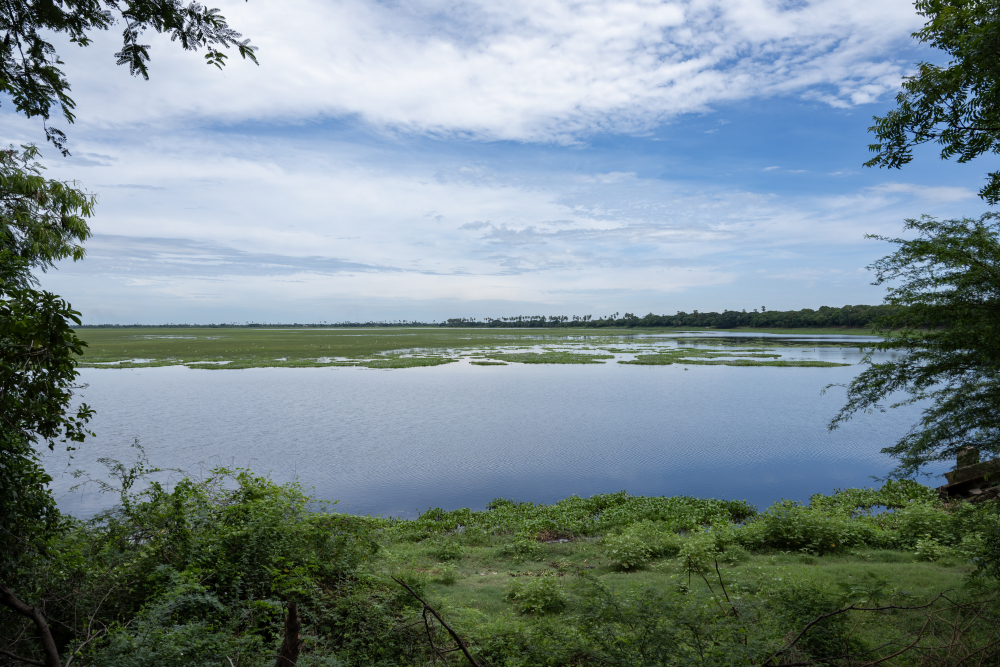
Ossudu is an irrigation tank that lies in the Villianoor commune of Puducherry, about 12 km west of the township, a site shared between Pondicherry and Tamil Nadu. The space is home to many birds, with over 20,000 wetland birds belonging to 44 species found at Ossudu. The extensive reed beds here provide a good foraging site for rails and waders and breeding sites for coots and little crebes. Fishery was once practiced locally in the area, before it became a bird sanctuary in 2008. An island has since been created in the lake to harbour wetland birds.
The Ousteri lake, a vital wetland lies partially in Pondicherry and partially in Tamil Nadu. (Picture Credits: Joseph Rahul)
Bahour:
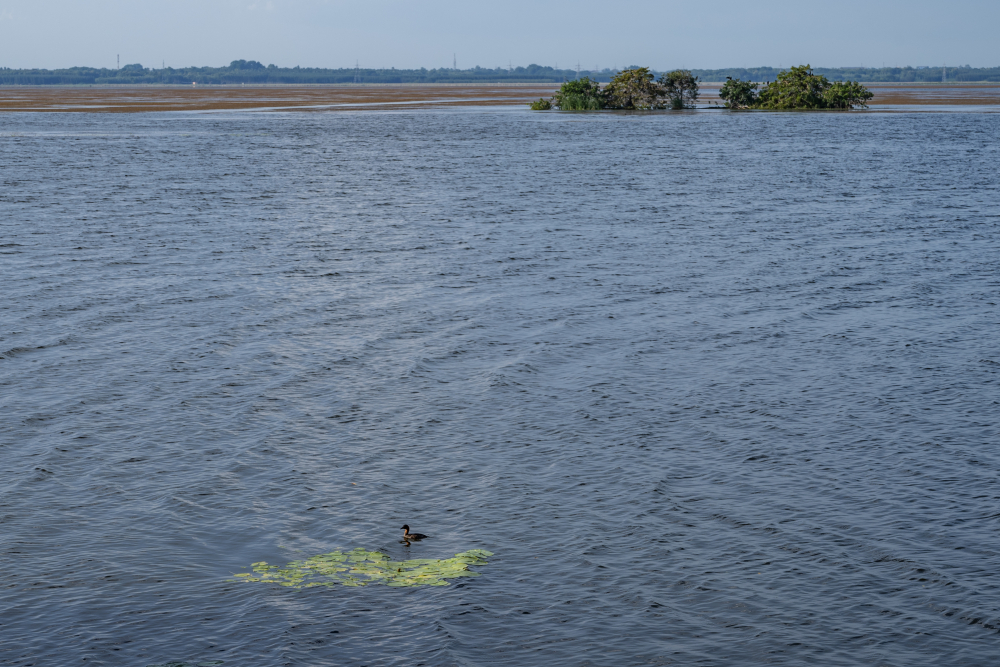
Bahour is an older, shallow irrigation tank located around 20 km south of Pondicherry township in the Bahour commune. It is completely open, its banks covered with grass and invasive weeds, rich in submerged and floating aquatic plants that are especially suitable for diving birds. Over 25,000 birds ranging over 16 species have been found at Bahour. It attracts thousands of ducks, including the eurasian wigeon and breeding populations of the little grebe. Clumps of Acacia nilotica trees in the area host a colony of little cormorants and egrets. Its exposed mudflats during February-March make it suitable for waders. After March, when the migratory birds have left, the water is drained for fishing, with the income shared between the panchayat and local associations.
The Bahour tank is an Important Bird Area (IBA) as well as a historical irrigation system. (Picture Credits: Joseph Rahul)
Kaliveli
Kaliveli (Kazhuveli) is a large brackish water estuary bordering Pondicherry in the state of Tamil Nadu. The local communities that live along the large wetland harvest fish, shellfish, and reeds for their livelihood. However, since Kaliveli has been declared a bird sanctuary in 2021, the status of fishing in the area remains unclear. In 2023, over 22,000 birds from around 175 species (from wetland and terrestrial birds) were recorded in the area. Kaliveli has also received the prestigious Ramsar designation in 2024, a title endowed by the Ramsar Convention, an international treaty that seeks to conserve and sustainably use wetlands.
All three wetlands, which are dependent on rains from the winter monsoon, used to progressively dry up from January. However, after Kaliveli and Ossudu have been dammed, there is water throughout the year and the mudflats that supported wading birds have disappeared. The impact of the alteration of hydrology on the bird population is yet to be known.
Coastal and Marine Ecosystems
The Union Territory of Puducherry has a 48 km coastline. Puducherry supports a large fishery sector, which contributes significantly to the local economy and supports the livelihood of around 1 lakh fishermen and their families. Pondicherry is the administrative head of the fisheries management, but its contribution to fishery is low compared to with the other enclaves in the territory.
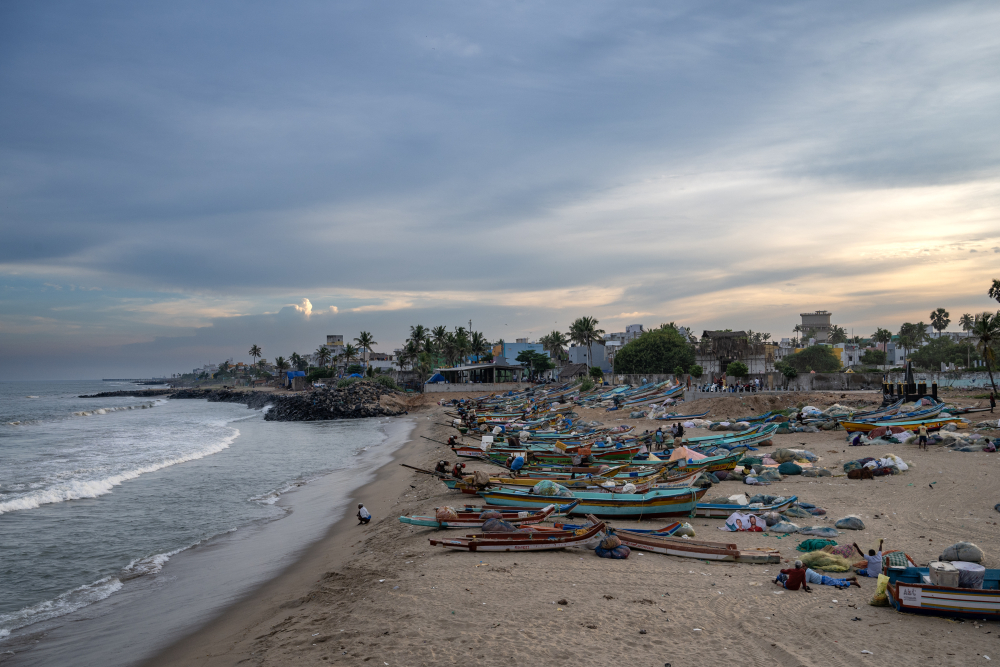
The long coastline supports a substantial population of fisherpeople. (Picture Credits: Joseph Rahul)
Sandy beaches fringe the Pondicherry township along the Bay of Bengal. In the shallow sea before the continental shelf, both natural and artificial coral reefs can be found. Around 70 hard and soft coral species and many coral reef fishes have been documented. Occasionally, sharks, whale sharks, and moral eels visit these areas. Pods of dolphins and an occasional whale have also been sighted. Boating tours are available for dolphin sightings.
The beaches and dunes are also important nesting sites for the Olive Ridley turtles, which are classified as Vulnerable by the IUCN. The turtles return every year from January to March to nest on beaches in villages like Narambai, Nallavadu, and Moorthikuppam. The nests are safeguarded by the Puducherry Forest Department and local youth volunteers, who protect nests and eggs from predators, including village dogs and people. Due to these efforts, the number of nesting Olive Ridleys are increasing over time.
The Pondicherry Botanical Garden
The Pondicherry Botanical Garden (Jardin Botanique), spread across 22 acres, is centrally located within Pondicherry township. It was established in 1826 by French botanists with a view of developing an arboretum of native and introduced tropical plants. By 1829, around 800-900 plant species had been grown, and a collection of fossil plants were also displayed. The eminent botanist S. G. Perottet inaugurated the garden in 1831. In 1954, the French colonial administration seceded and the botanical garden was handed over to the Department of Agriculture. Many of the trees that survived have grown enormous and present an iconic legacy of a former era. It was famously featured in the movie ‘Life of Pi’.
Other attractions in the garden include a toy train and a musical fountain. Every February, the Pondicherry Botanical Garden hosts an annual flower show and a farmer’s festival, where a variety of ornamental flowering plants, vegetables, fruits, and cut flowers are displayed. However, comments from recent visitors speak of the neglect of the garden and the loss of the original vision of its founders for conserving tropical biodiversity.
Conservation of Biodiversity
The conservation of the rich natural heritage of Pondicherry requires the involvement of several stakeholders. The Forest and Wildlife Department of the Puducherry Government manages the Ossudu bird sanctuary. It undertakes reafforestation and social forestry programmes, the marine turtle conservation programme and wildlife rescue and rehabilitation services, among other activities. The Puducherry Government has instituted an annual 61-day marine fishing ban to protect breeding fish stocks in Puducherry UT. Between 15 April to 14 June in Pondicherry, mechanized boats are prohibited from movement, though traditional catamarans/country boats are usually exempted. Financial aid is provided for affected fishers.
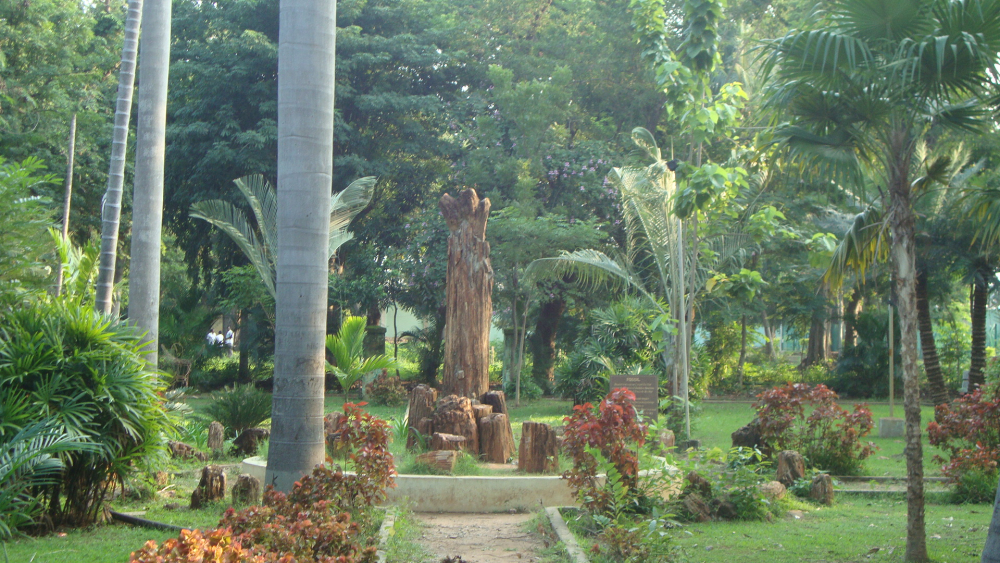
Tree fossils at the Pondicherry Botanical Garden. (Picture Courtesy: Prabhupuducherry/Wikimedia Commons)
Research on biodiversity is also an important activity in Pondicherry, mostly undertaken by the educational institutions in the UT like Pondicherry Central University and Tagore Government Arts and Science College. This helps provide documentation and in understanding the functional aspects of intact ecosystems.
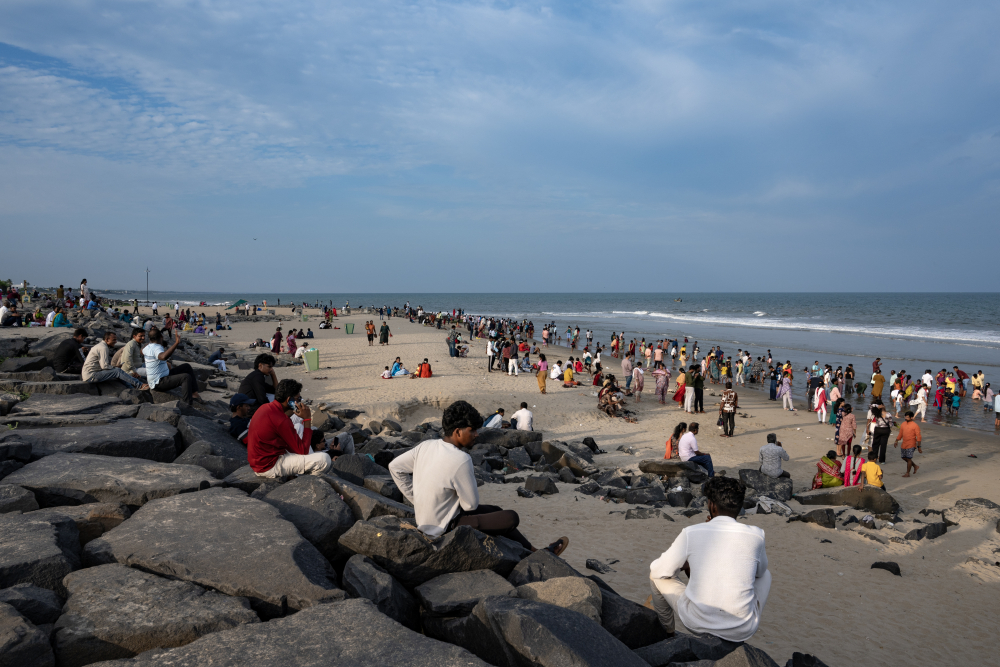
The beach abutting the Promenade in the city. (Picture Credits: Joseph Rahul)
Civil society actively participates in data generation, advocacy, and conservation. Beach cleanups, mangrove restoration, and awareness programmes are ongoing activities organised by local NGOs and government bodies that work towards the conservation of the natural heritage of Pondicherry.
Bibliography
Auroville, ‘Pitchandikulam Forest: Providing Models of Sustainable Ecological Practices.’ https://auroville.org/page/pitchandikulam-forest. Accessed March 20, 2026.
Davidar, Priya. Wetland Birds of Pondicherry Region. Puducherry: ECOS, 2011.
Department of Agriculture and Farmers Welfare, ‘AU Jardin Zoologique at Pondicherry (Established in the Year 1826).’ https://agri.py.gov.in/bggarden.html. Accessed March 20, 2026.
Government of Pondicherry, ‘Forests and Wildlife.’ https://www.py.gov.in/forestry-wild-life. Accessed March 20, 2026.
International Beach Cleanup, ‘International Beach Cleanup Activity,’ 2025. https://beachcleanup.ncscm.res.in/beachcleaning/print/56/12. Accessed March 20, 2026.
Kuppusamy, S., P. Sachchidanand, S. Kumaran, and R.S. Kumar. ‘Conservation of Sea Turtles along the Puducherry Coast of India,’ Indian Ocean Turtle Newsletter 36 (2022): 5-12.
Muthukumaran, M. ‘A Floral Wealth and Diversity: An Outstanding Status in Puducherry Union Territory – A Review.’ World News of Natural Sciences 52 (2024): 139–150.
Natesan, B., S. Kichenamourthy, J. Muthukumaran, J. Mannu, S. Chandrasekar, A. Punetha, and D. Sundar. ‘Diversity of True Mangroves and Their Associates in the Pondicherry Region of South India and Development of a Mangrove Knowledgebase.’ Journal of Ecology and the Natural Environment 1 (2009): 99–105.
Pondicherryin, ‘Botanical Garden Pondicherry,’ 2025. https://pondicherryin.com/botanical-garden-pondicherry. Accessed March 20, 2026.
Sivakumar, K., R. S. Kumar, C. Ramesh, D. Adhavan, P. Hatkar, P. Bagaria, D. Kukadia, and P. Jyothi. ‘Conservation Strategy and Action Plan for the Marine Turtles and Their Habitats in Puducherry. Dehradun: Wildlife Institute of India.’ https://wii.gov.in/index.php/publications/manuals-and-guidelines/conservation-strategy-and-action-plan-for-the-marine-turtles-and-their-habitats-in-puducherry. Accessed March 20, 2026.
Subramanean, J., and Priya Davidar. ‘Changes in Avifauna over a Sixteen-Year Period in the Pondicherry University Campus.’ Newsletter for Ornithologists 1. 4 (2004): 50-52.
Wikipedia, ‘George Samuel Perrottet.’ https://en.wikipedia.org/wiki/George_Samuel_Perrottet. Accessed March 20, 2026.
This essay has been created as part of Sahapedia's My City My Heritage project, supported by the InterGlobe Foundation (IGF).