
Those who know a little about Gwalior rightly imagine it as a city built on rocks at the edges of the Vindhyas. It does not inspire images of greenery or common breathing spaces. Like many other cities in India, and around the developing world, the city is facing a rapid increase in population due to the migration of people searching for better opportunities. To make space for housing this increasing population, it is the forests and greenspace in the city that are sacrificed. Yet not even a century ago, it was a critical political duty of the rulers to create and extend such breathing spaces. From royally curated gardens and tanks, built by and for the rulers, to tomb gardens with the Mughal Charbagh (pleasure gardens, divided into quarters) design, from gardens built in honour of guests to lacklustre forest conservation policies, to even planned government intervention for making parks, the city has seen it all. Even today, residents who have grown up in Gwalior will tell you the formative roles that green spaces have played in their childhood.
Natural Avenues
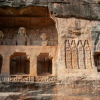
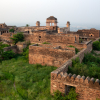
One major example of an intact green space in the city would be the cliffside against the Gopachal plateau. This plateau, on which stands the most important identity marker of the city — the Gwalior Fort — has many facets to boast about. Standing on top, it is evident that the city has developed around the plateau. As one roams around, they can easily identify green spaces around it. The fresh, cool air along the paved road that runs beside the fort, bordered by lush greenery, is one of the key reasons why residents frequent this stretch. Some areas may have been left green for centuries as a defence strategy, while some might just have been too difficult to develop. But the consequence is that the cliffside of the fort, from most directions, is covered with native shrubbery and trees. Babur notes in his memoir Baburnama (c. 1494 to 1530) that he found the climate on the plateau cool and agreeable. The presence of surrounding green cover and elevation continues to contribute to this microclimate even today.
It is crucial to note that some of these natural lungs of the city still remain. Among them is Tapovan, a forest protected from encroachment (for now) under the protection of the Madhya Pradesh Forest Department. Right at the southern edge of Gwalior city, a walk inside the forest offers a rarity: fresh air, a noise-free environment, and a host of flora and fauna to witness. There is also an ‘eco-museum’ within its perimeters that hosts soil varieties, seeds, and leaves in its collection. While belpatra, guava, and amaltash trees are quite common across India, the presence of the rare Broken Bone (Oroxylum indicum) tree species makes Tapovan a little more special. So named because of its large, falling leaf stalks that almost resemble a broken limb, this tree is among the vulnerable plant species in the country — Tapovan is one of the few spaces where it continues to grow.
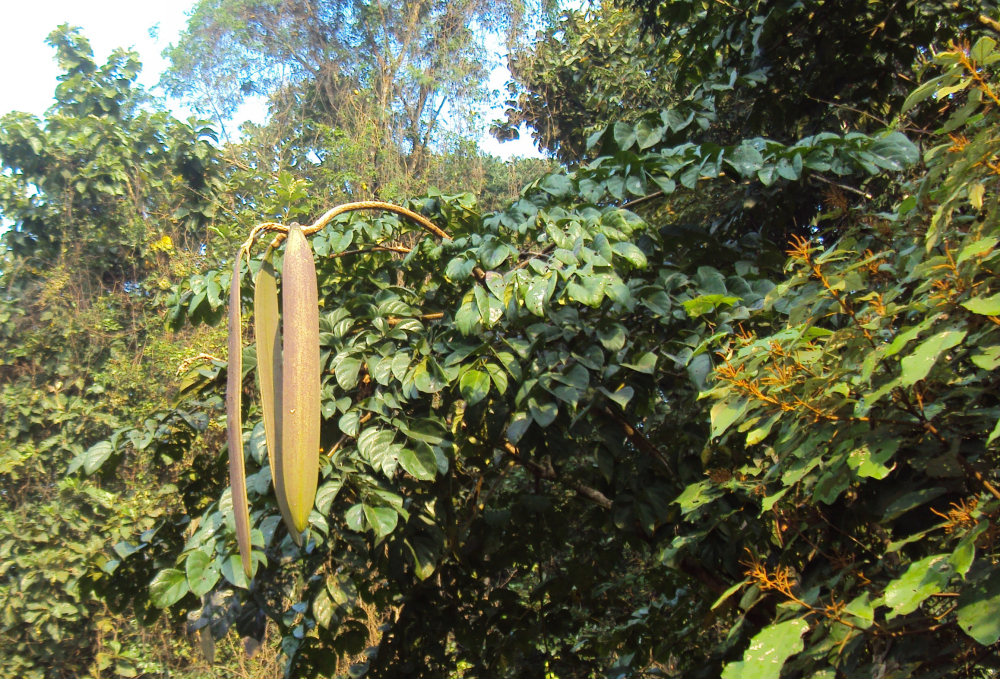
Oroxylum indicum pods. (Picture Courtesy: Vinayaraj/Wikimedia Commons)
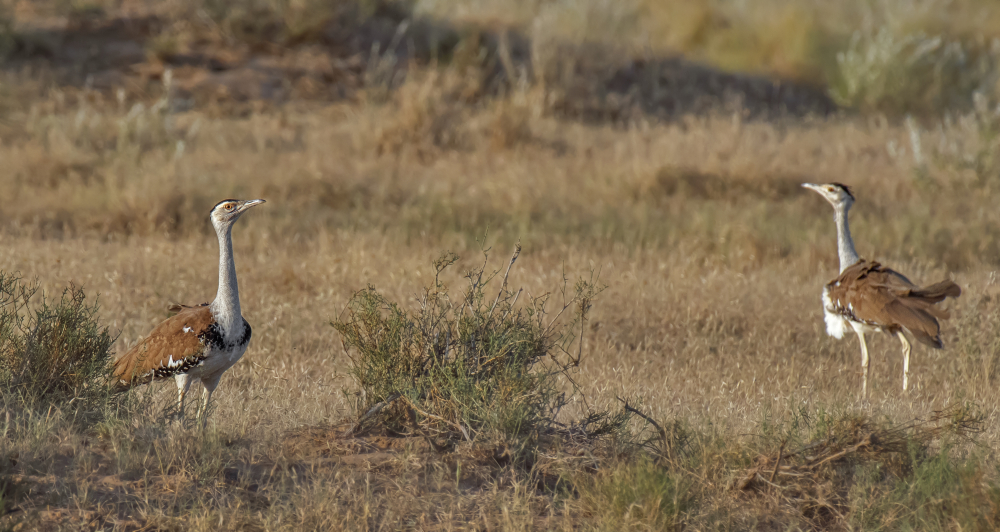
The Great Indian Bustard. (Picture Courtesy: SVKMBFLY/Wikimedia Commons)
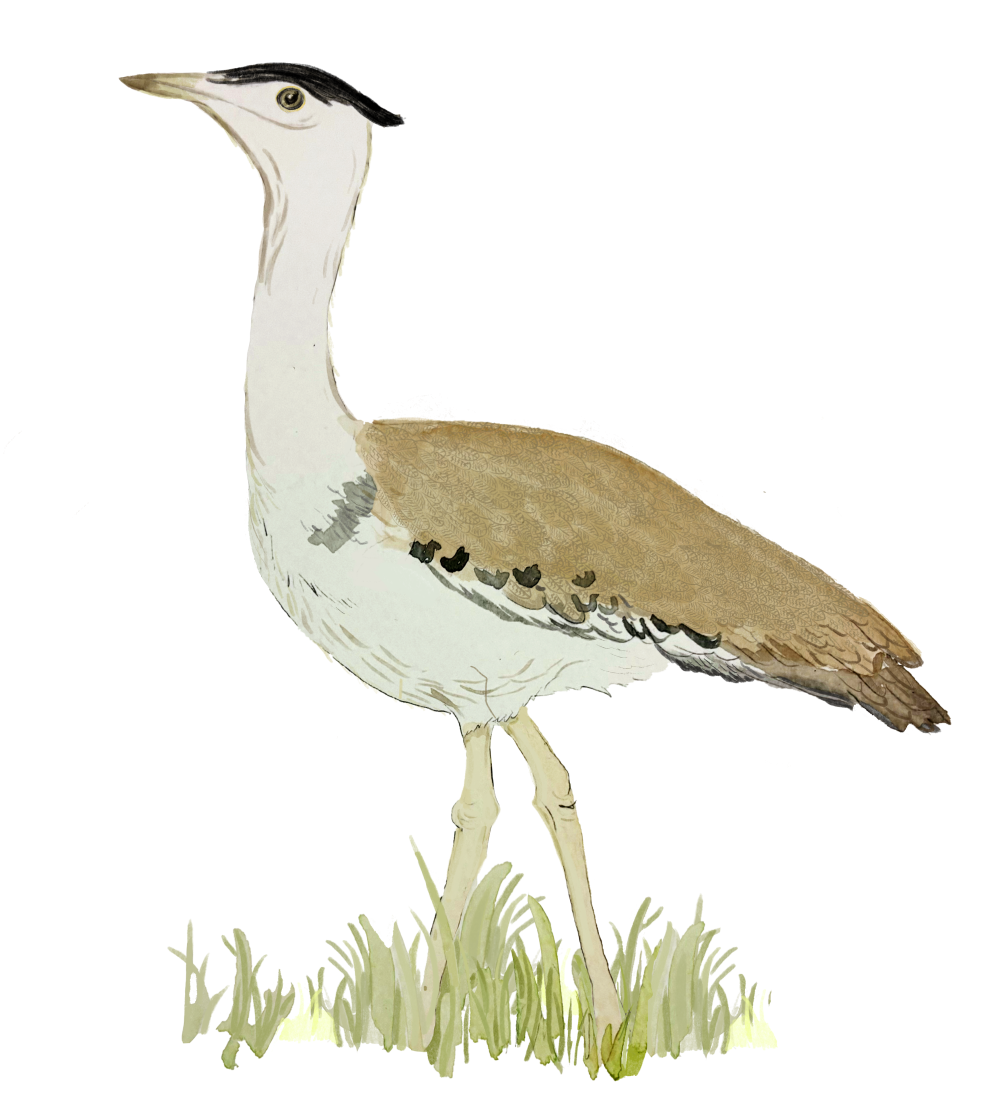
The Great Indian Bustard. (Picture Courtesy: SVKMBFLY/Wikimedia Commons)
Another nature sanctuary, a little farther from Tapovan, is the Ghatigaon Wildlife Sanctuary, spread across 500 square kms. This area was demarcated as a protected zone for the natural habitat of the Sonchiriya or the Great Indian Bustard. Once among the forerunners to be the National Bird of the country, the large, migratory, and ground-dwelling bird is on the verge of extinction today. A primary reason behind that is a direct loss of its natural habitat. Unfortunately, neither Ghatigaon nor the nearby Karera Bird Sanctuary, which was also set up to preserve the Sonchiriya, have had a sighting since the 1990s.
Tapovan has enjoyed some degree of success as an urban forest. Ghatigaon, on the other hand, has faced failure as a wildlife sanctuary, though it still contains a few animals like the Black Buck and hyenas. A major reason behind its failure is just location. It was not Ghatigaon, which is towards the South-West of the city, but the areas around Tighra, which is more towards the West, that once served as breeding ground for the Sonchiriya. Today, these 'birdless sanctuaries' stand as somber reminders of the gap between policy and ecological reality.
Constructed Getaways
One famous man-made green space, built a century earlier by the forefathers of Madho Rao Scindia (1876-1925), is the Italian Garden complex in the Phoolbagh district. This area still remains among the most beautiful public spaces in the city. As the official name suggests, this is a garden complex with water bodies around it. The complex hosts a fountained walking space, a garden, and a baradari (pavilion). Between this garden and the Moti Mahal, a royal Scindia palace, lies the Baija Tal. While the Moti Mahal functioned as a vital government nerve center for decades, first housing the Madhya Bharat Legislative Assembly and later the Divisional Commissioner’s office and the State Tax department for many years, the other two sites became lively public spaces for residents of the city.
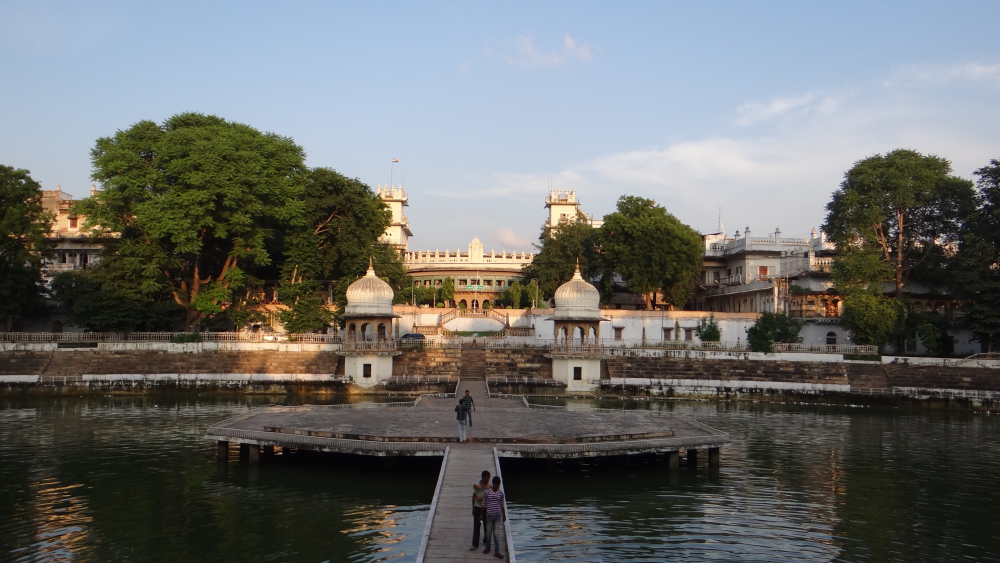
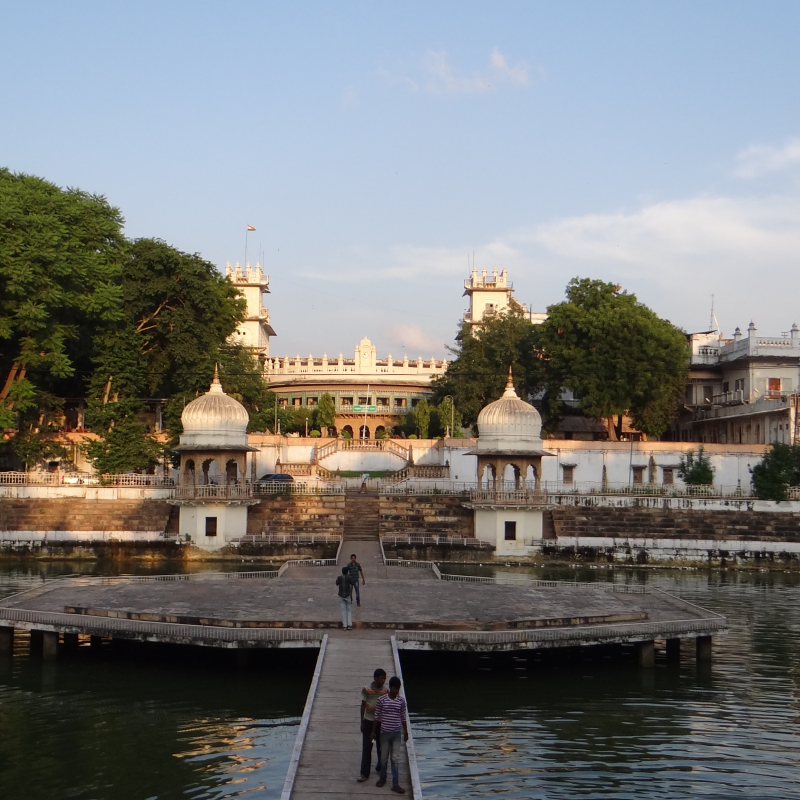
Baija Tal with Moti Mahal in the background. (Picture Courtesy: Vidhu Khare/Wikimedia Commons)
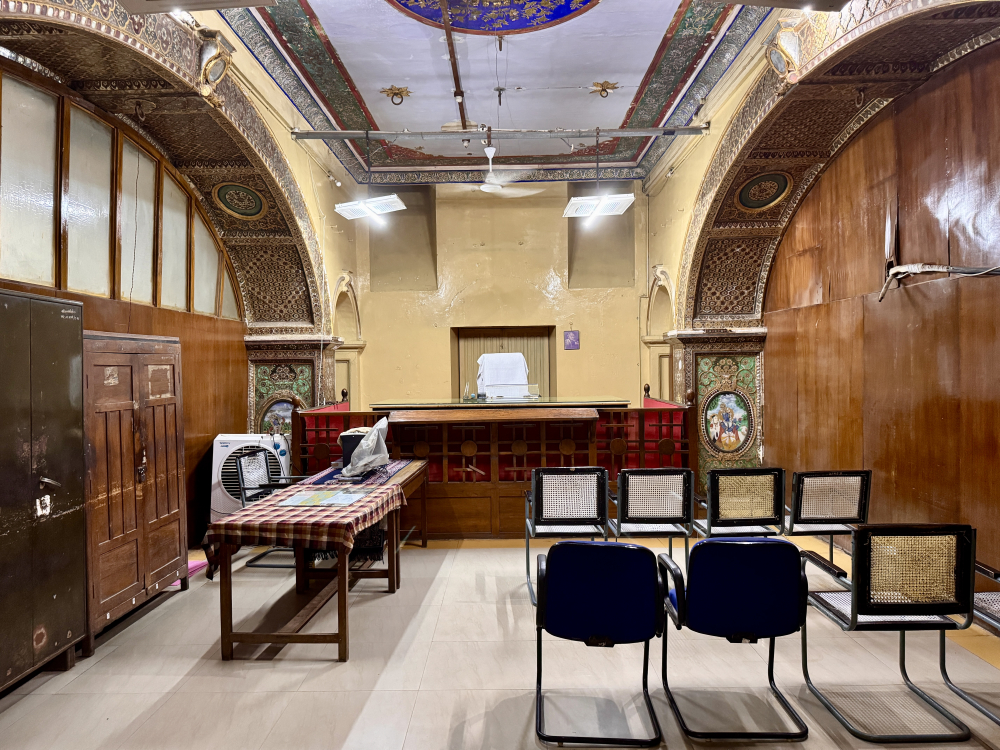
State Transport Appellate Tribunal Office, Moti Mahal. (Picture Credits: Meenakshi Vashisth)
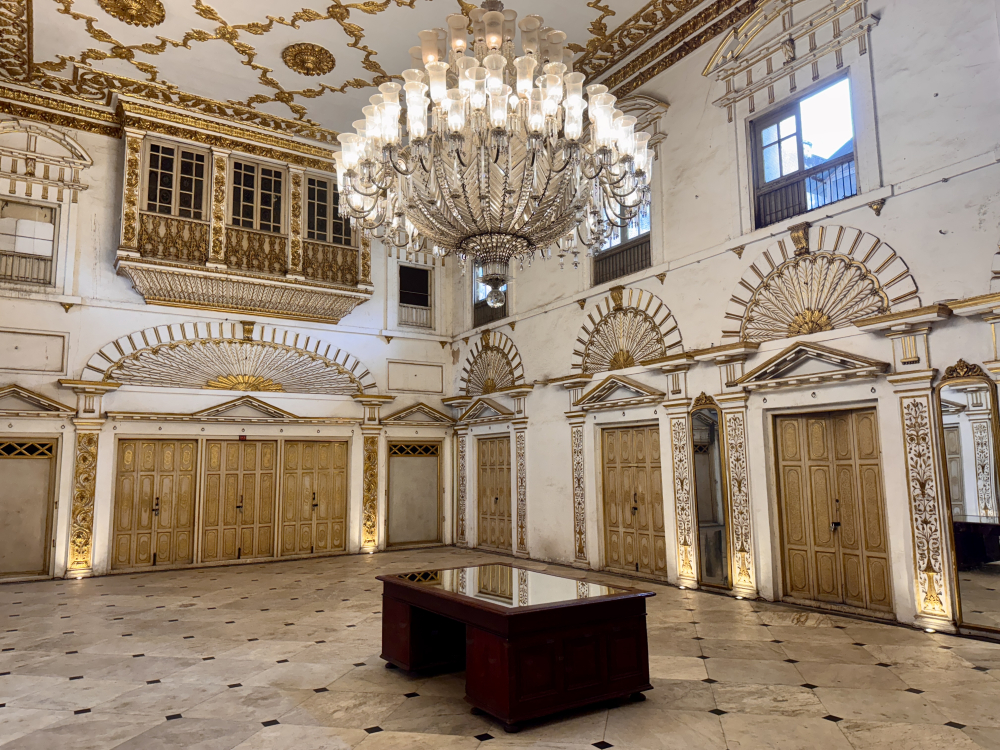
Darbar Hall in Moti Mahal. (Picture Credits: Meenakshi Vashisth)
Established roughly 200 years ago, the Italian Garden site was commissioned by Daulatrao Scindia (1794–1827) as a private retreat for the women of the royal family. Even when one zooms out on Google Maps, the area reveals a remarkably well-planned layout. The Jal Vihar complex boasts of multiple, interconnected water tanks with a wave-shaped drain running next to it. At its heart lies a central square, where the sounds of the royal women have been replaced by the modern sound of children on roller skates. This historic charm is furthered by a nearby Scindia-era building — now repurposed as an office —which retains its elegant Indo-Saracenic character and signature cusped arches. But before one loses themselves in the tranquillity of gardens and heritage, one is reminded of the consequences of unplanned modern urban sprawl. The baradari next to the Italian Garden is now sadly a space filled with trash. As ironically, the river that once fed the so-called Jal Vihar was called the Swarnarekha, literally meaning ‘golden stream’. Today, this golden river is nothing more than a drain for untreated sewage – a classic story of urban neglect across the country.
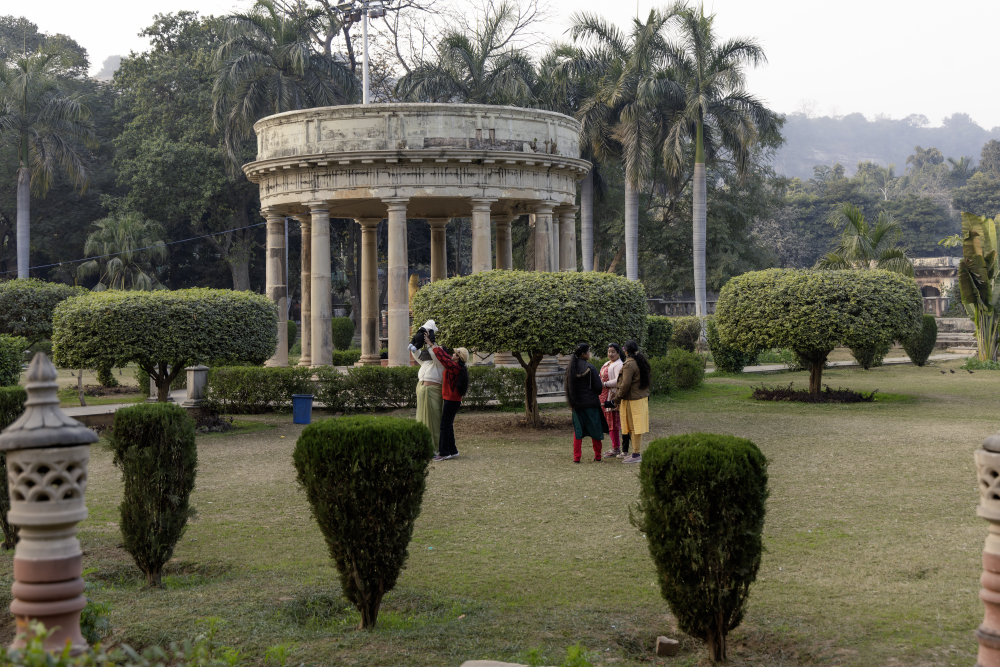
Citizens leisuring at the Italian Garden. (Picture Credits: Pranjal Jain)
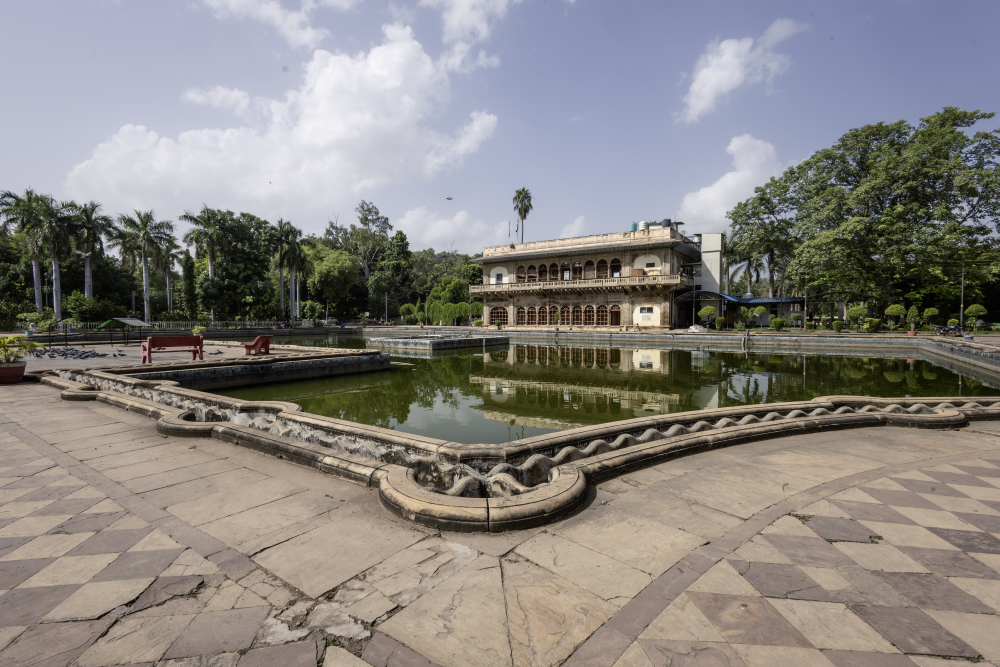
Jal Vihar. (Picture Credits: Pranjal Jain)
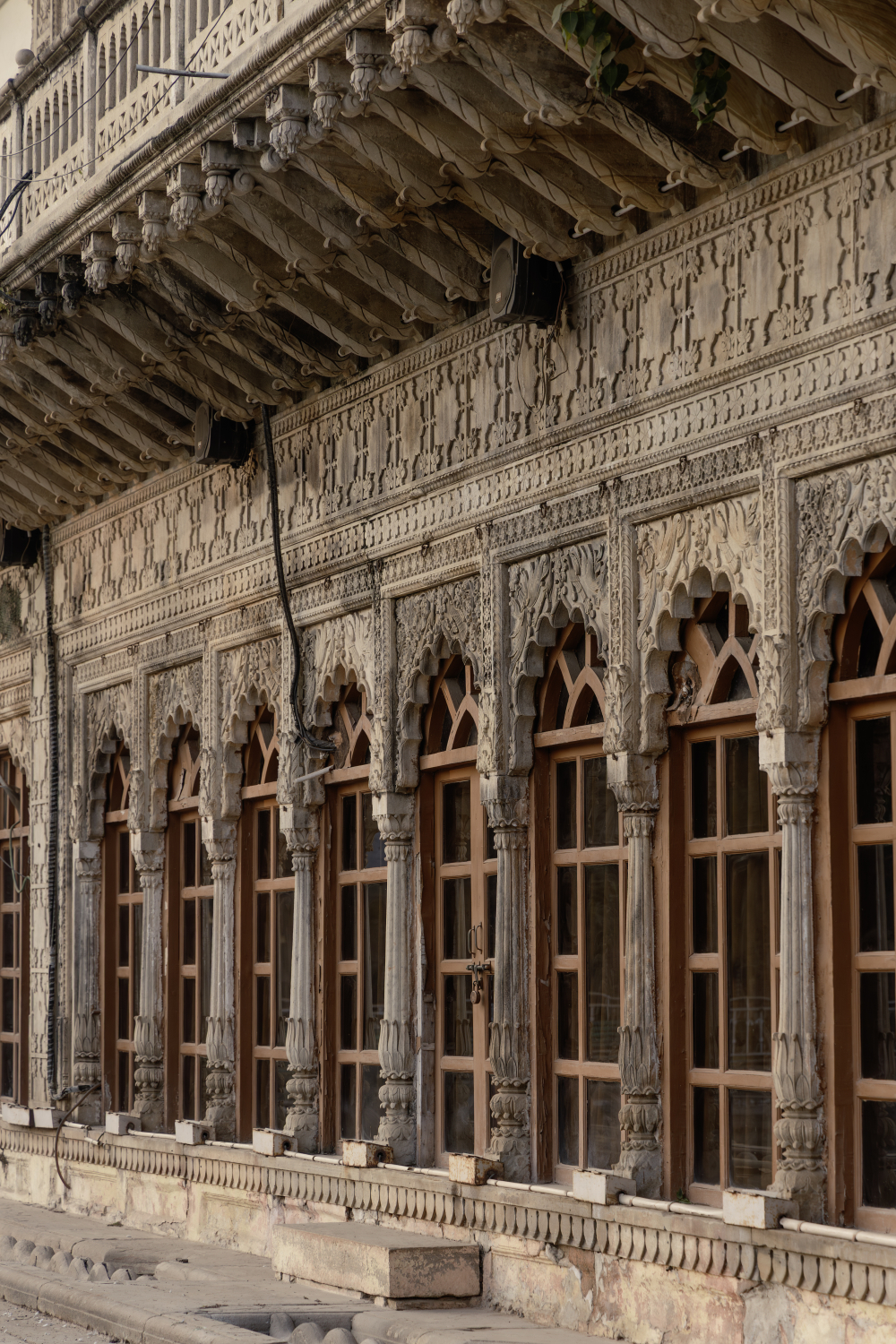
Cusped Arches on a Sindhia-era building in Jal Vihar. (Picture Credits: Pranjal Jain)
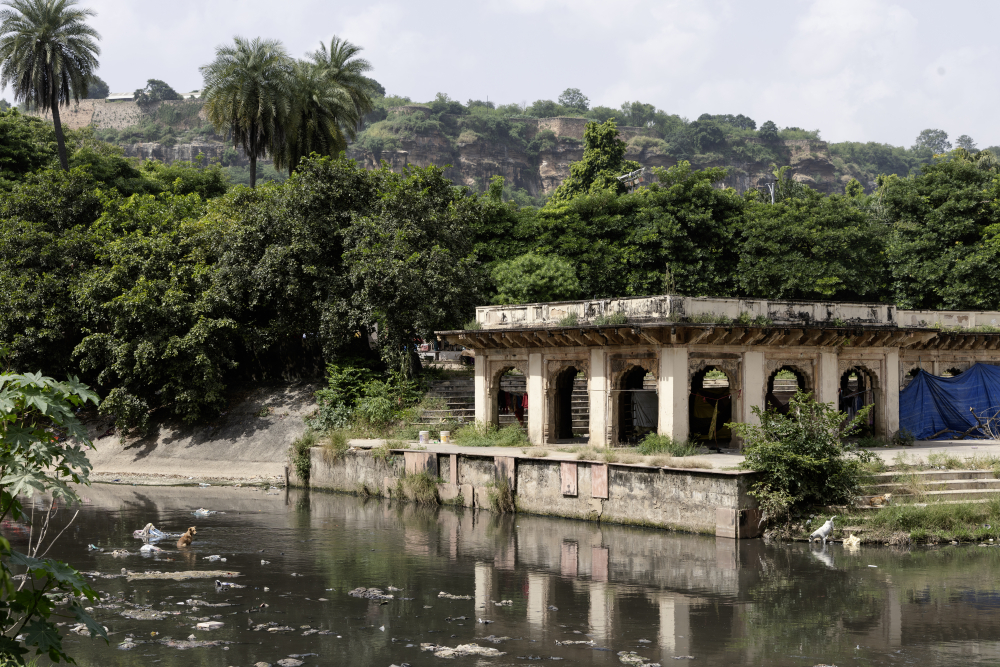
Current state of Baradari, Phoolbagh. (Picture Credits: Pranjal Jain)
What the Swarnarekha also once fed was an artificial lake called Baija Tal. Baiza Bai, after whom it is named, was the wife of Daulatrao Scindia. Baija Tal is architecturally dominated by the raised platform in the middle of it, which is today a place for cultural performances. Following a major renovation of the whole space, it has become one of the most lively sites in the city: groups of friends and families are often seen walking, talking, and boating here. What started off as a space reserved for royal leisure has now become a part of everyday life for the Gwalior dwellers and tourists.
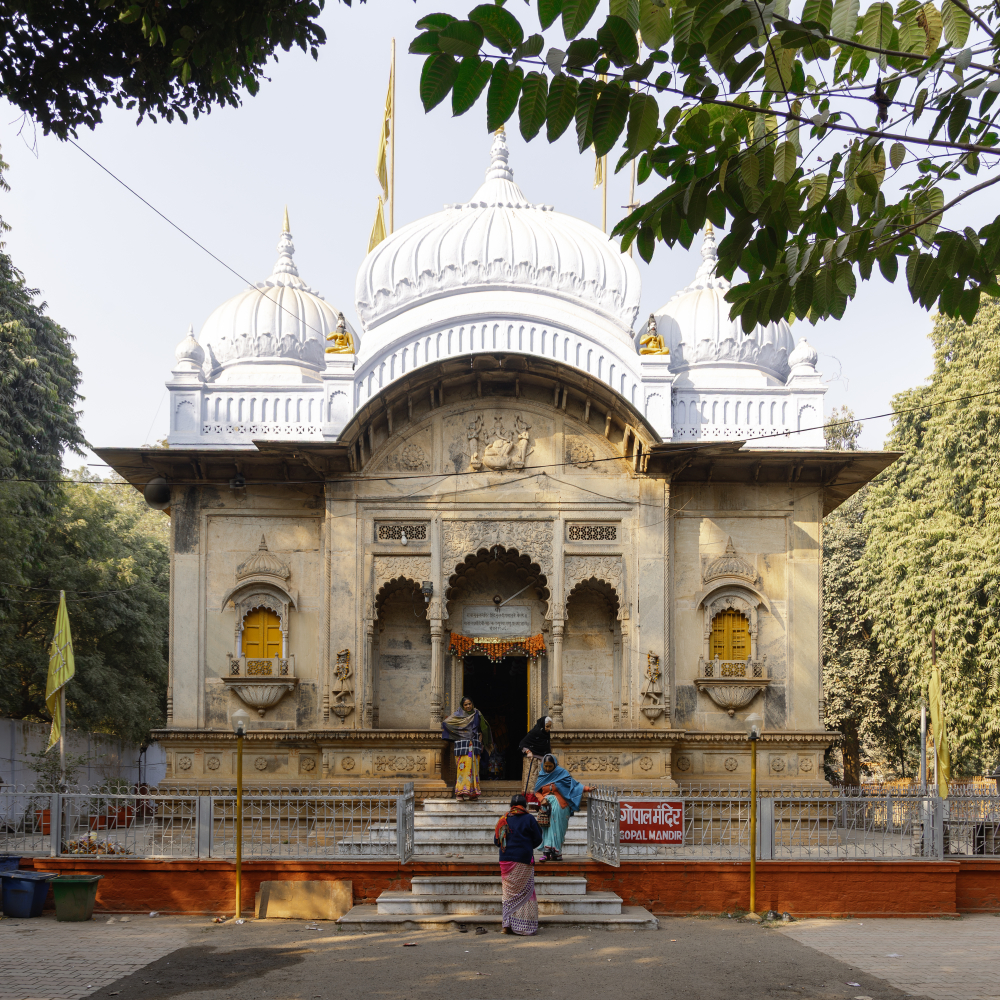
Facade of the Gopal Mandir. (Picture Credits: Pranjal Jain)
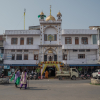
The large park complex around Moti Mahal was renovated by Madho Rao Scindia, and inaugurated when the Prince of Wales visited the city in 1922. Interestingly, the complex includes places of worship across religions, located right next to each other. The Gopal Mandir is a Haveli-style temple, a prominent style during the Scindia era. Other temples like Gorkhi Mandir and Datta Mandir follow the same style: Bangla arched roof (elongated arch, popularised during the Mughal era), cusped arches, and a long mandapa (pillared hall) flanked with smaller lanes. The Gopal Mandir receives crowds especially during Janmashtami, when the idol of Krishna is adorned with precious jewellery gifted by the Scindia family to the temple. Right next to the temple is the largest of the religious structures within Moti Mahal: the Moti Masjid. With its sandstone material and carvings on the walls, the Moti Masjid retains the Scindia-era character seen in their chhatris and temples. There is also a gurudwara nearby, which has a flagpole that was used as a symbol of safe shelter during the 1984 riots. Once, a Theosophical church was located within the vicinity as well.
However, beyond these sites of worship, it is the parks in the complex that figure majorly in the daily lives of people in the city. The Ambedkar and Gandhi parks here are always filled with people on walks, kids playing, and frequent cultural activities. All of this was built right next to the Italian Garden Complex — but they have a 100 years of history between them! Together, these afford a whole area dedicated to leisure.
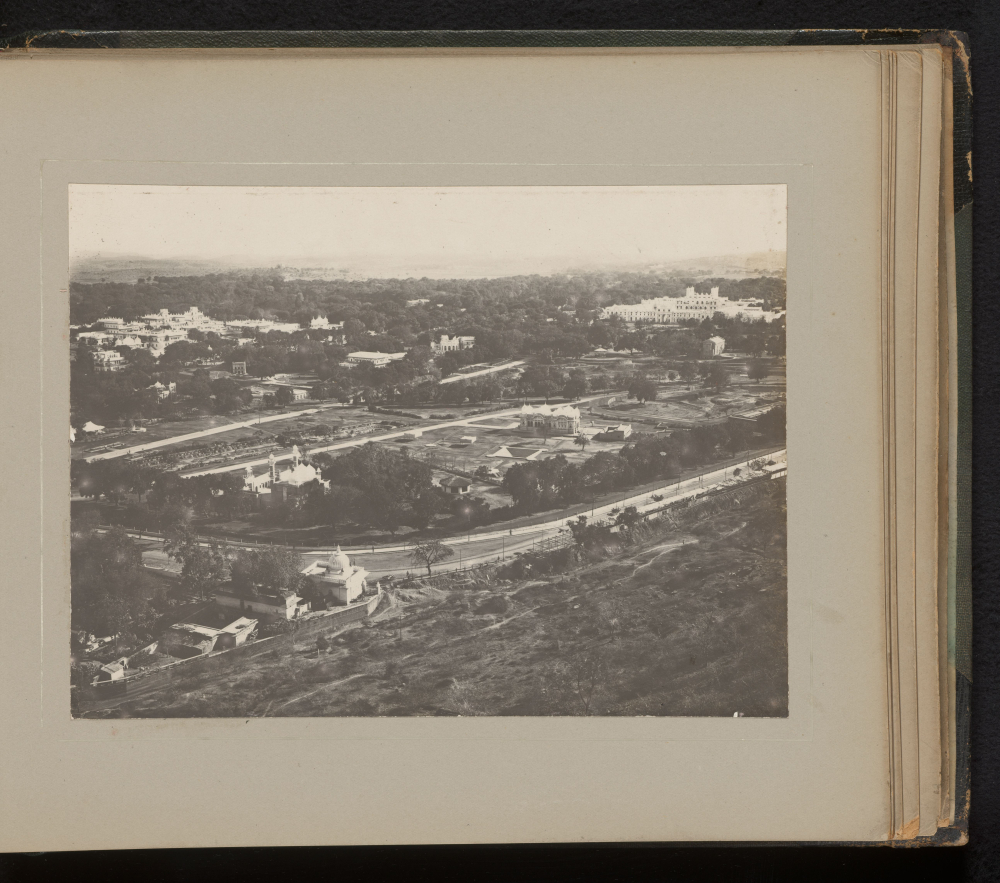
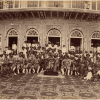
Gwalior before Phoolbagh. (Picture Courtesy: Rijksmuseum/Wikimedia Commons)
Post-independence too, there was some effort to create green spaces in the city — for the public, rather than the royals. I sat down with one of the prominent architects of the city, my grandfather Prabhat Kumar Bhargava, to discuss those developments. The Bal Bhawan Complex is among the biggest ones, part of the wider City Centre area (the newest part of the city) that he designed. It includes a park and a recreational centre that were built when a number of schools opened there in the 1980s. In front of the Bhawan is the Roop Singh Cricket Stadium, named after a hockey captain. While not in use anymore, it was once the site where Sachin Tendulkar reached the record of 200 runs in a One Day International (ODI) match. While the stadium itself is no longer a public space, the areas where the players used to practice and the nearby swimming pool still remain amongst the most important open-access athletic areas in the city.
Continued Urban Development
All developments are obviously not positive ones. Gwalior, like many Indian cities, lost much of its green and public spaces to expanding urbanity. Older natives of the city, like Prabhat Bhargava, reminisce of a time when such urban sprawl had not yet eaten up the public spaces. For example, Ghaus ki Talaiyya, near the Railway Station, used to be a place where one often found growing singhada (water chestnuts), which only grows in submerged conditions. A ditch behind Jiwaji Club, which today houses nurseries, was an important pond for the residents that used to be filled with wildlife like snakes, fishes, and even turtles! Public playgrounds near Science College and Achaleshwar Temple now must function as wedding venues to make profit. In fact, in Phoolbagh, between the two important parks Gandhi Park and Ambedkar Park, was another lush green area, fully forested with a stream of water running in the middle. Locals used to call it their own Kashmir. Today, there are only roads in its place. The places of leisure that are still somehow maintained for the public to use are solely the famous and the oldest ones. The Gwalior Fort, especially the non-ticketed areas like the amphitheatre and the tomb of Muhammad Ghaus, are still leisure-spaces that attract crowds. In many ways, however, this broader arc is not only a story of Gwalior or even of public spaces. This is a story of Indian urban development and how it permits the relegation of spaces for leisure to slip from an important government function to a forgotten element.
This essay has been created as part of Sahapedia's My City My Heritage project, supported by the InterGlobe Foundation (IGF).