
On the crafts map of India, Gwalior is not prominent. Amidst the sheer diversity of craft practices in the region of Madhya Pradesh — Chanderi and Maheshwari saris, Bagh prints, Bhopal’s Zari or Zardozi work — Gwalior is not considered a centre of crafts. Whether this is a result of poor marketing or sheer dumb luck, is difficult to say. Yet this perception is misleading, since the historically enterprising city of Gwalior has sustained diverse crafts traditions. In December 2025, two crafts from Gwalior received the Geographical Indicator (GI) tags, bringing the total to three separate GI-tagged crafts from the city: stonework and paper-mâché have now joined carpet-making.
Turning Waste into Craft
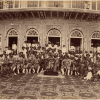
Techniques and traditions of papier-mâché have been quite prominent in the craft cultures of regions like Kashmir, Rajasthan, and Odisha. In Gwalior, the legend about this craft goes back to the first half of the nineteenth-century. It is believed that the Scindia Palace was beautifully ornamented with pearls and so named Moti Mahal (Pearl Palace). When a guest complimented the pearls in question, the Maharaja was compelled to gift them away. To make sure that such a situation never came about, it was decided to replace them with paper-mâché pearls. While the story may not stand the test of historical veracity, practitioners of the craft today continue to believe that their work had royal origins.
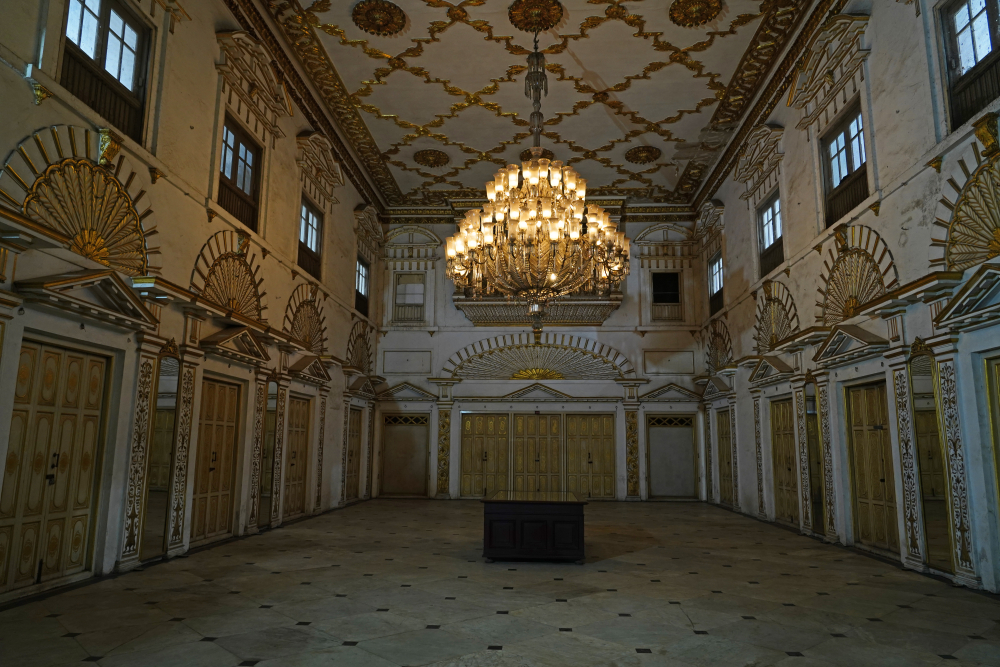
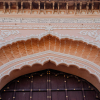
Main Durbar Hall of the Moti Mahal. (Picture Courtesy: Amitabha Gupta/Wikimedia Commons)
Today, it is primarily the Nagvanshi community in Gwalior that practices the craft, transforming what would otherwise be waste, into bright and beautiful decorative objects. They were also the key stakeholders for gaining it the GI-Tag.
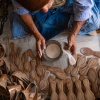
Scrap paper, collected from printing presses, is the main material for this craft. Shreds of paper are transformed into a pulp, combined with dhaora tree gum (Terminalia anogeissiana), glue, and chalk powder, then kneaded into a workable dough. This dough is then cast into moulds of Plaster of Paris for increased efficiency. Once they are dried and smoothed using sandpaper, these artefacts are ready to be painted. Finished products include human figures, animals, mythical creatures, deities, birds, even models of structures in Sanchi and Khajuraho. Jewellery boxes, vases, and masks are also made. Gwalior papier-mâché is especially famous for its toys.
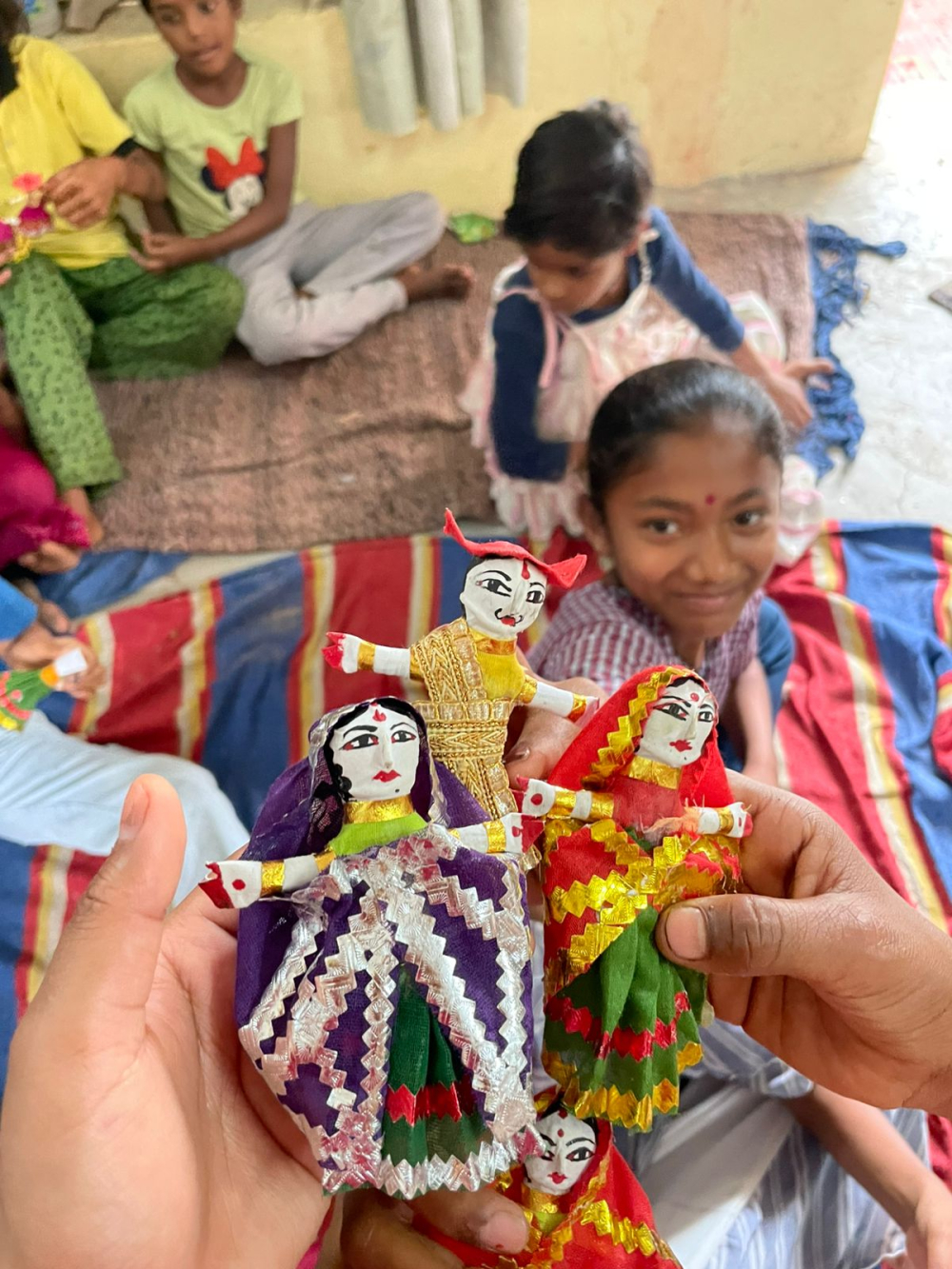
Batto Bai dolls made by kids during a Sahapedia anubhuti (heritage experiences curated for children or persons with disabilities or underserved backgrounds). (Picture Credits: Shikha Dhakad)
Batto Bai dolls might not go as far back as the nineteenth-century, but the story of their inception is not any less interesting. Gudda-Gudiya (male and female doll-figurines) were an integral part of girls’ childhood in the region, especially during the festival of Akh-Teej (or Akshaya Tritiya in Sanskrit). These girls would play with them and they were then ceremonially married under banyan trees.
Batto Bai Parihar learned the craft from her mother-in-law and played a key role in taking these dolls beyond the region, even to global avenues — Japan, Australia, and the United States of America — and turned them famous. Now named after her, the dolls earned her a National Award in 1967, and her work was featured in exhibitions post the 1970s. Her Raja-Rani (King and Queen) models, which became especially popular, featured even the Maratha pheta (headgear). Today, Batto Bai’s descendants still manufacture these dolls at Bharat Art Shop, with women being the sole makers. Waste like sawdust, cloth, paper, rags, and unusable bamboo are used for manufacturing the dolls. Painted bright and sold in pairs, these rustic dolls have carved out a niche of their own.
The Resurgent Carpets
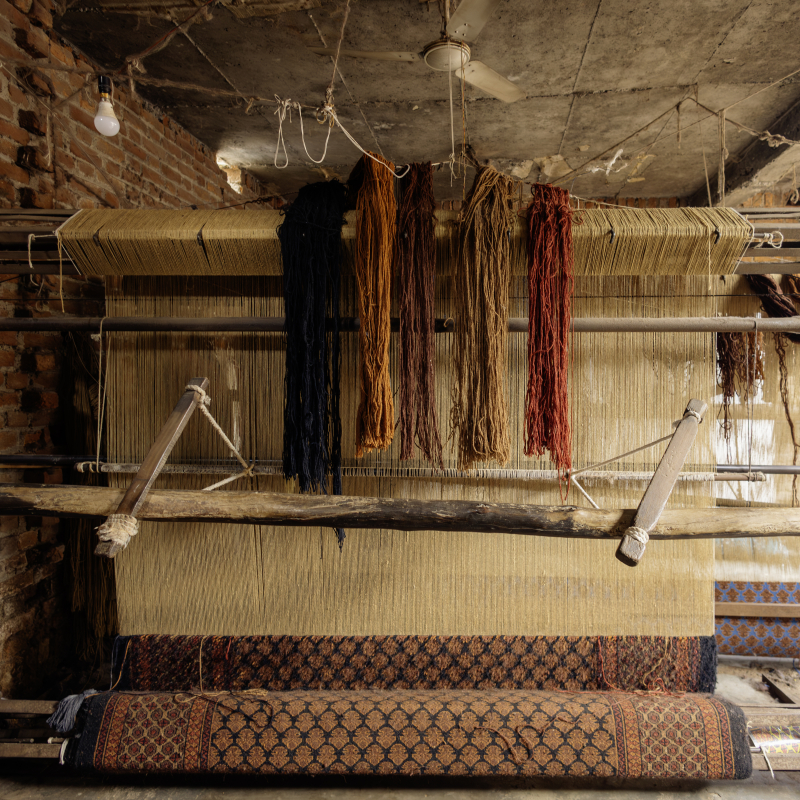
The first craft practice to receive the GI-tag in Gwalior was carpet-making. Carpets were popular across the subcontinent since Mughal rule, though there is no distinct origin story or myth around the tradition. It is likely that the popularity of Irani-influenced carpet across other royal centres in India, alongside the Scindia dynasty’s engagement with weaving centres in Chanderi and Maheshwar, led to the growth of carpet production in the nineteenth-century. In 1902, the incumbent ruler Madho Rao also invited Greek carpet-maker Stavrides to the city, at a time when Greek carpets had been gaining popularity. Stavrides established GP Stavrides Gwalior Ltd, which produced Schna and Ghiordes knots, and also introduced Chinese designs into the market. Carpet weaving was also introduced to the prisoners in the central jail of Gwalior. In the Durbar Hall of the Jai Vilas Palace is displayed a momentous example of the same. 90 feet by 48 feet in length, it took around 12 years for the prisoners to finish this masterpiece. Another important development was the establishment of Oriental Carpet Manufactures, an export-oriented company run by the East India Company. Decrease in its revenues led to its shutdown after 1980, but it briefly contributed in a significant manner to carpet-making in Gwalior.
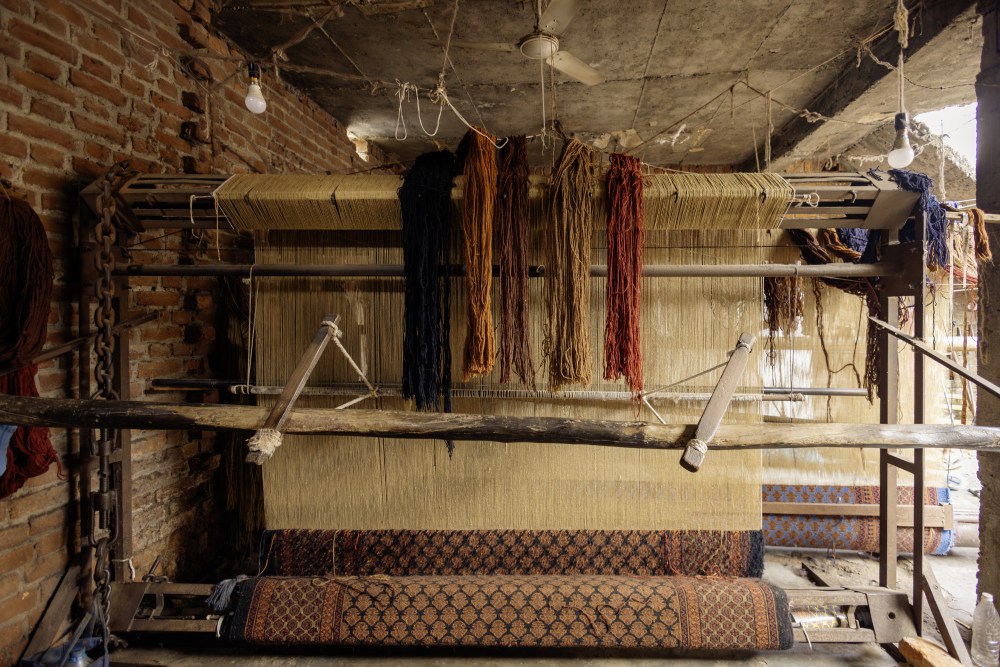
Gwalior carpet on a loom. (Picture Credits: Pranjal Jain)
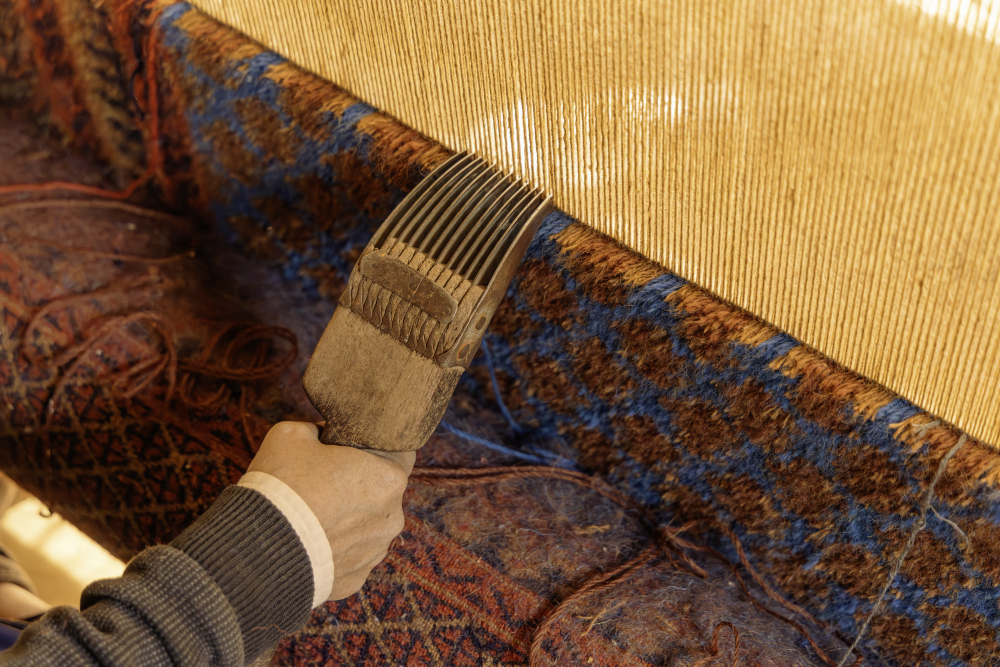
Panja (a metallic, claw-like, or rake-like tool) used in looms for making Gwalior carpets. (Picture Credits: Pranjal Jain)
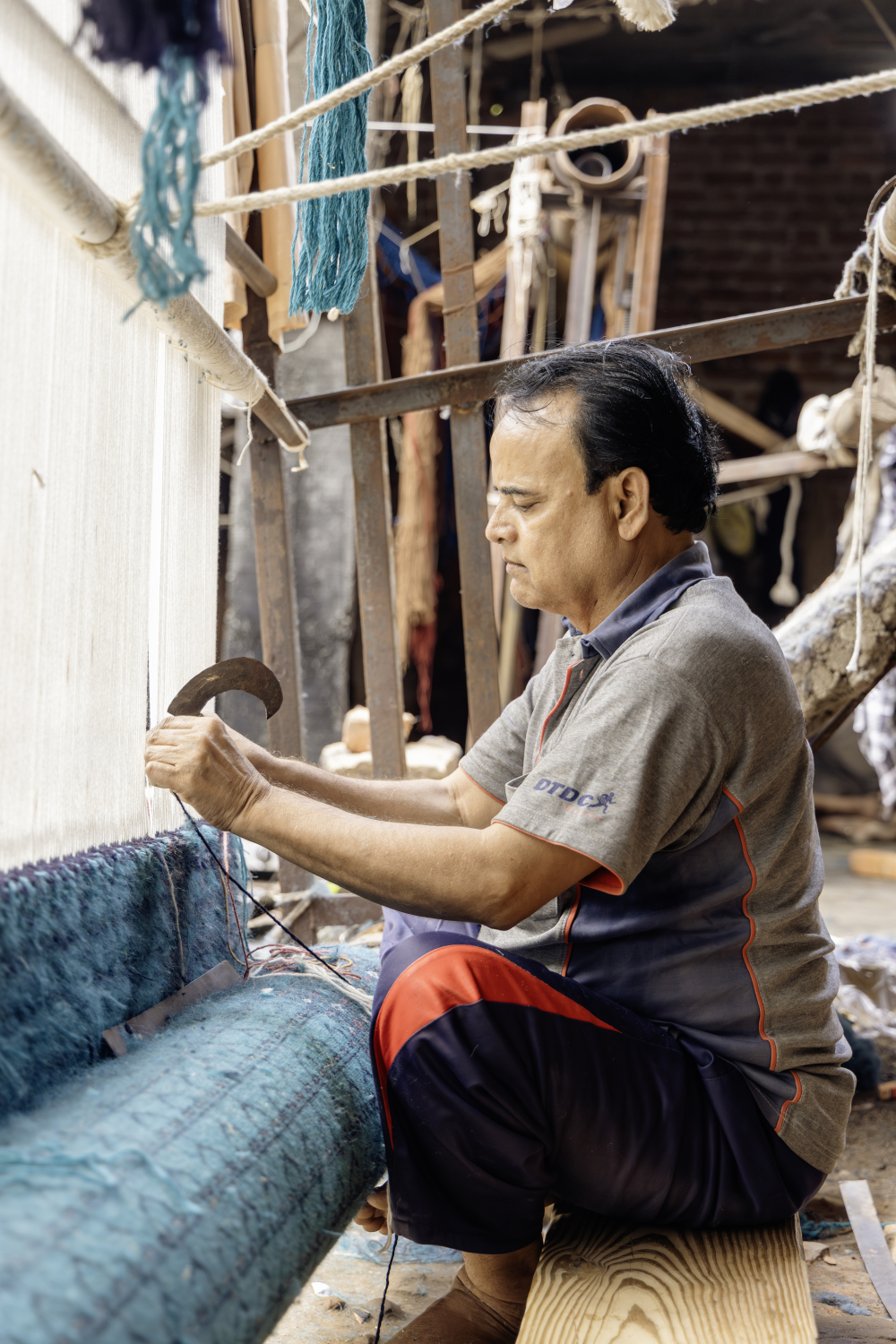
Riyajuddin Usmani, the founder of Amma Carpets and master weaver, at work on a loom in his workshop. (Picture Credits: Pranjal Jain)
Today, there is no single karkhana (workshop-community) of carpet-making that survives in Gwalior. Instead, multiple makers practice the craft in their homes. These makers mostly belong to the Muslim or Hindu Kori communities, working in tandem to create beautifully vast patterns. There is no established apprentice system in place. For instance, one carpet-maker, Shahida, learned the skill in a karkhana, and ended up imparting the techniques to her family, eventually employing 10+ people. Shahida’s looms were set up in an area called ‘Pichoriyon Ki Pahadia’ in Kampoo, which developed as a settlement of weavers thanks to an old karkhana which was established there. Once that karkhana died, those workers too started producing carpets from their homes.
The carpets are mostly made out of locally procured cotton warp, with wool and art silk from Amritsar used for weft. The details of the materials used are decided, however, on a case-by-case basis, depending on the size, thickness, and intricacies of the finished product. Carpet sizes can differ from a 4 x 4 inch coaster-size product to a 12 x 18 ft giant carpet, the latter giant demanding a year’s worth of labour from 4 weavers. Worked from the bottom to the top, the weaving knot used here is the Persian knot (funda). Weaver follows the graph or naqsha, on which the design is pre-planned. Excess threads are then cut by churi (small knife) and knots pushed down by the punja, securing the design.
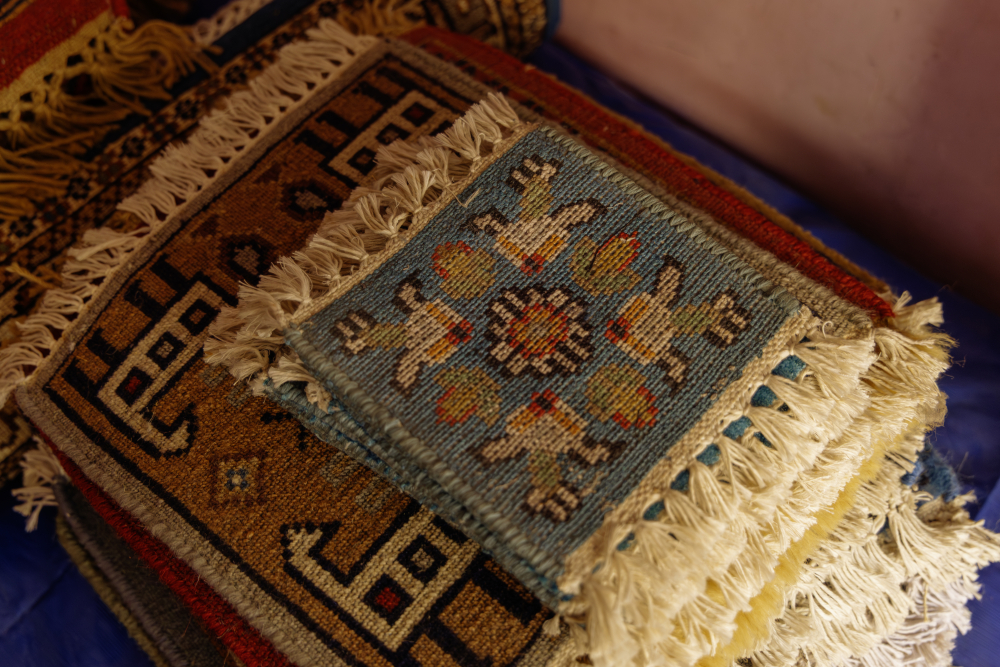
Carpet master weaver, also the owner of Amma Carpets, at work on a loom in his workshop. (Picture Credits: Pranjal Jain)
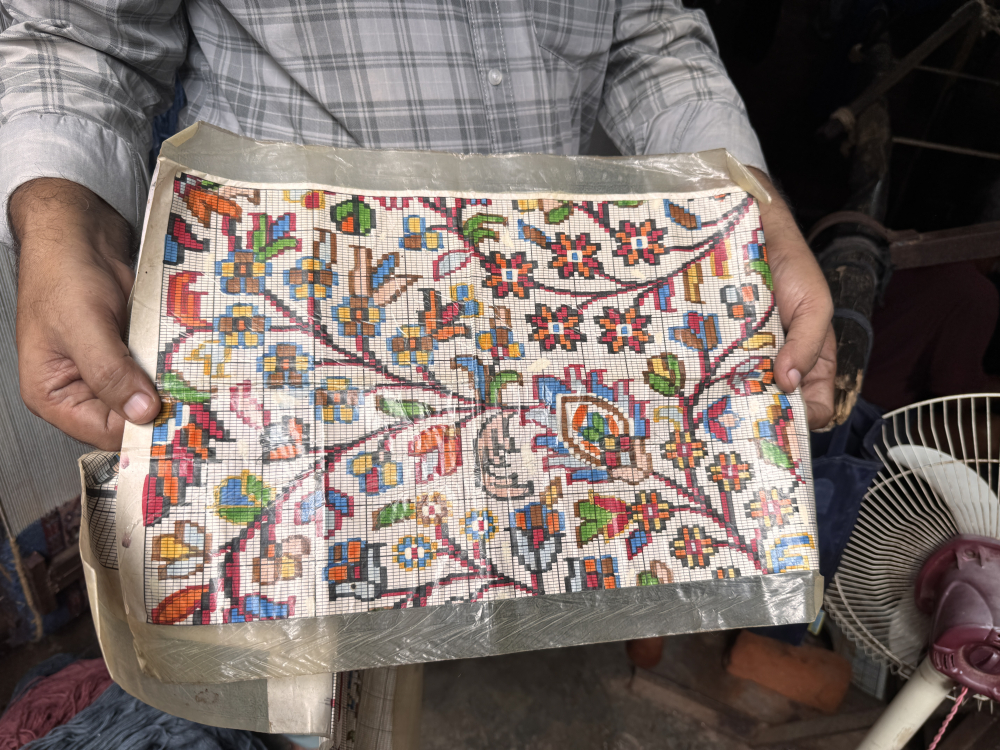
Typical naqsha (graph) used for following designs or distinct patterns in Gwalior carpets. (Picture Credits: Meenakshi Vashisth)
Motifs are woven into the carpets. These can range from being as complex as the Taj Mahal to a simple geometric pattern. Other common motifs include the Tree of Life, stylised flowers, birds or animals, and even abstract motifs. In conversation with Ustad Pallav Shah, I also learned other designer definitions and terms. Chala (literally, walk) indicates weaving a straight line, and bachcha (literally, kid) a repetition of colour. ‘Persian Design’ refers to floral patterns in a four-fold symmetry, potentially the oldest type in Gwalior. Bukhara are geometric patterns that completely occupy the finished product. ‘Hunting’ refers not only to scenes of the hunt but to animal figures in general, and Lichi to carpets with repeated dotted patterns.
Riyajuddin Usmani, the founder of Amma Carpets, has found success in selling his ware internationally, via a brilliant online presence. Usmani laments that the residents of Gwalior themselves are not his primary buyers, but points out that the labour required to produce such masterful carpets are not worth the price offered in domestic markets. This follows the history of Gwalior carpets, which were always made for exports, from when Oriental Carpet Manufactures took the lead. Today, the trade is struggling. Apprentices are hard to come-by, with weavers’ children turning away from the not-so-lucrative trade. Government initiatives are lacking too, with the Kaleen Park set up by the authorities unable to create an impact. Authorities did attempt to issue ‘Bunkar Cards’ as IDs for recognised practitioners of the craft, to uplift and emphasise their craft, but this did not result in any change whatsoever. However, as Usmani points out, marketing help from authorities and clients, alongside a guaranteed pension for carpet-makers, could still turn the tide of carpet-making in Gwalior.
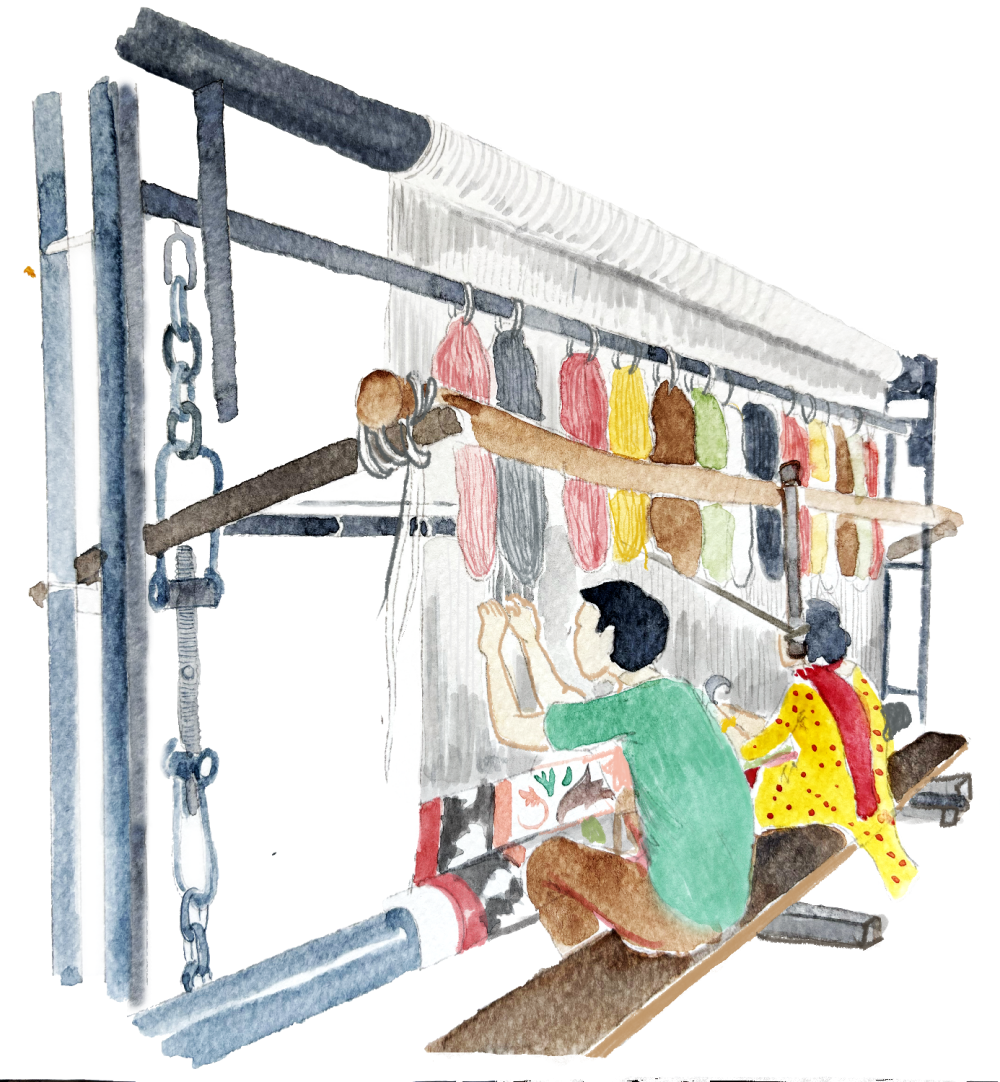
Gwalior carpet weaving. (Illustration Credits: Jisha Unnikrishnan)
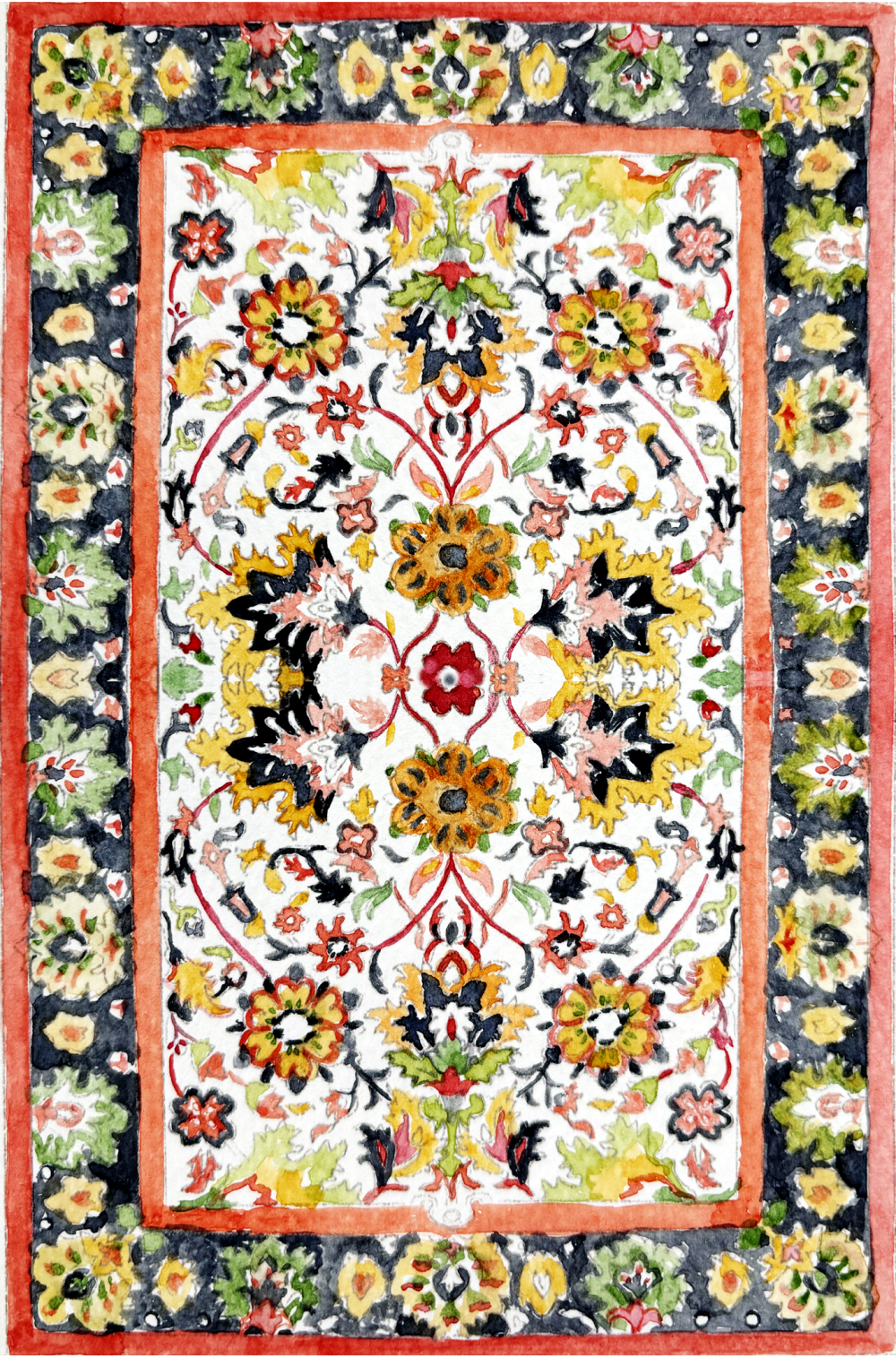
Gwalior carpet. (Illustration Credits: Jisha Unnikrishnan)
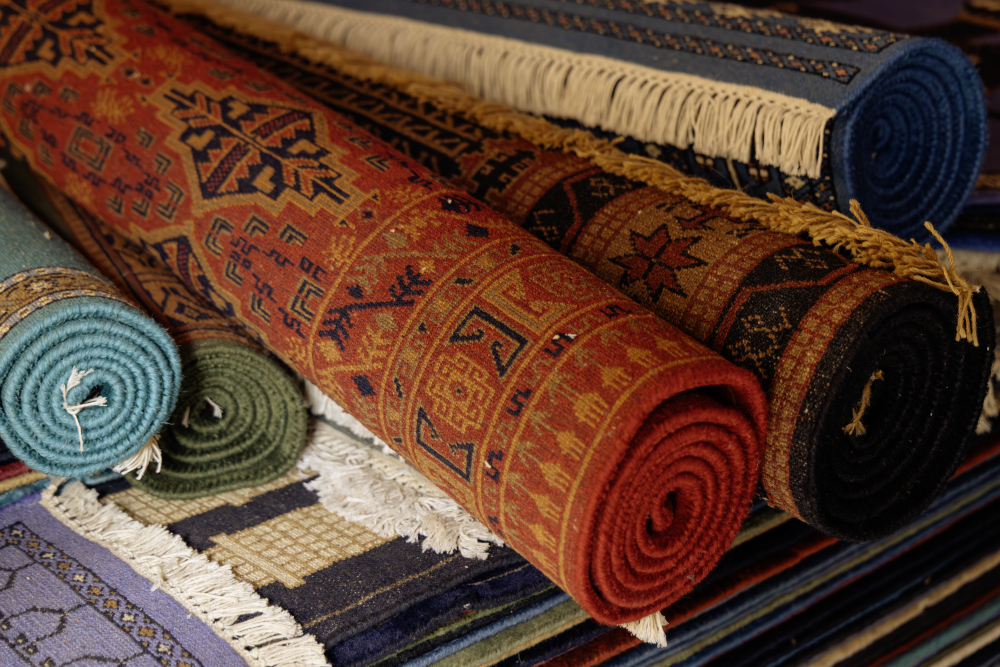
Rolled-up Gwalior carpets in the workshop of Amma Carpets. (Picture Credits: Pranjal Jain)
Stone Sculptures
From the carvings in Garhi Padavli to the beams in Man Singh Palace or from the jaalis (lattice-screens) in Muhammad Ghaws’ tomb to the scenes from the Bhagvata Purana on Scindia chhatris, stone sculpting has been an integral part of Gwalior throughout its diverse history.
Today, the craft is practiced by the Vishwakarma community, who live around ‘Gende Wali Sadak.’ Locals believe that sculptors settled this particular locality a couple of hundred years ago. With royal patronage dead and modern government buildings foregoing ornamental details, the sculptors no longer work on large-scale construction projects. Rather, they sell statuettes of deities for the most part. Passing through Gende Wali Sadak, especially before Ganesh Chaturthi or Navratri, can be an absolute treat as they are always full of intricate statues waiting to be sold. The sculptors also present exhibitions of their work. Deepak Vishwakarma, a member of the primary stone-working caste-group, has become a famous name. A National Awardee, he was able to establish a big karkhana away from Gende Wali Sadak near Phoolbagh, the centre of the city. He learned the craft from his father, moving from creating functional items like the sil-batta (grinding stones for cooking) to beautiful artistic pieces.
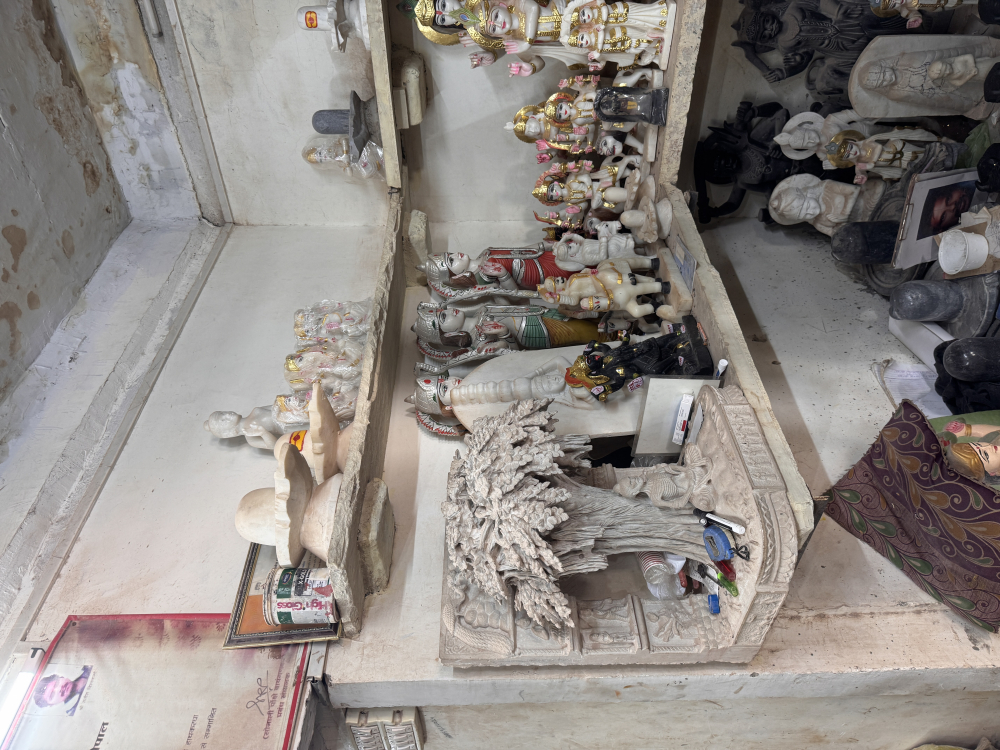
Inside a shop of a stonemason in Gwalior, near Gende Wali Sadak. (Picture Credits: Meenakshi Vashisth)
The workers use a range of materials, including marble and soapstone. Marble is sourced from Rajasthan and sandstone is sourced from the locality of Reshampura, where a quarry exists. The traditional, and by far the most popular, material remains the Gwalior red-and-white sandstone. Generally, sculptors choose the stone blocks themselves, weeding out weakened or cracked stones.
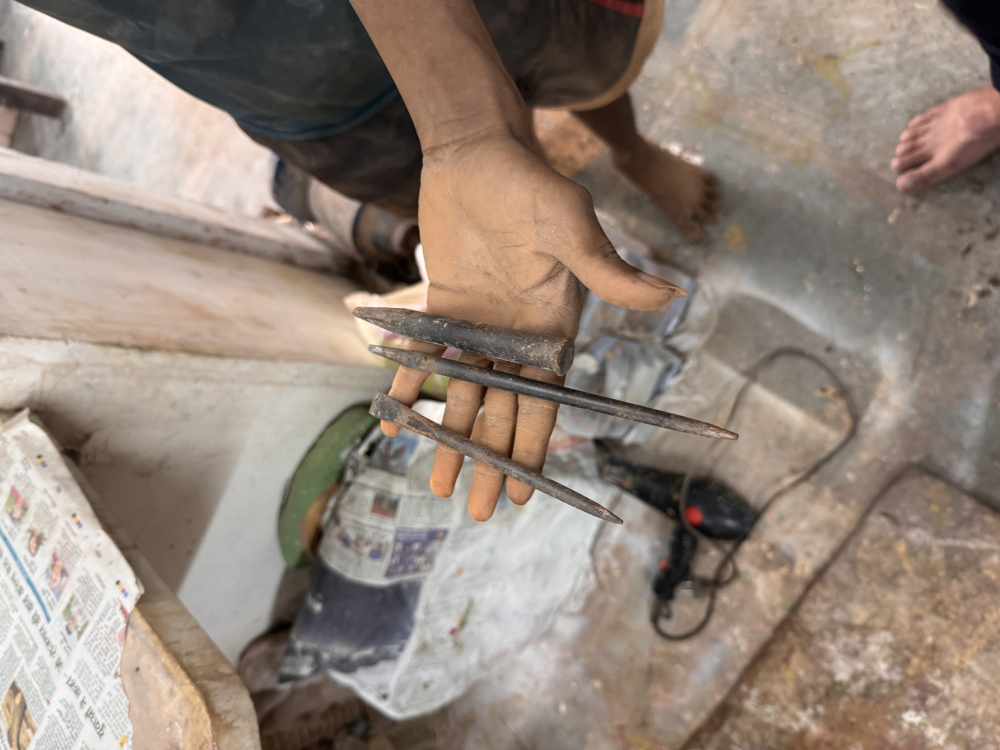
Some of the tools used in stonework. (Picture Credits: Meenakshi Vashisth)
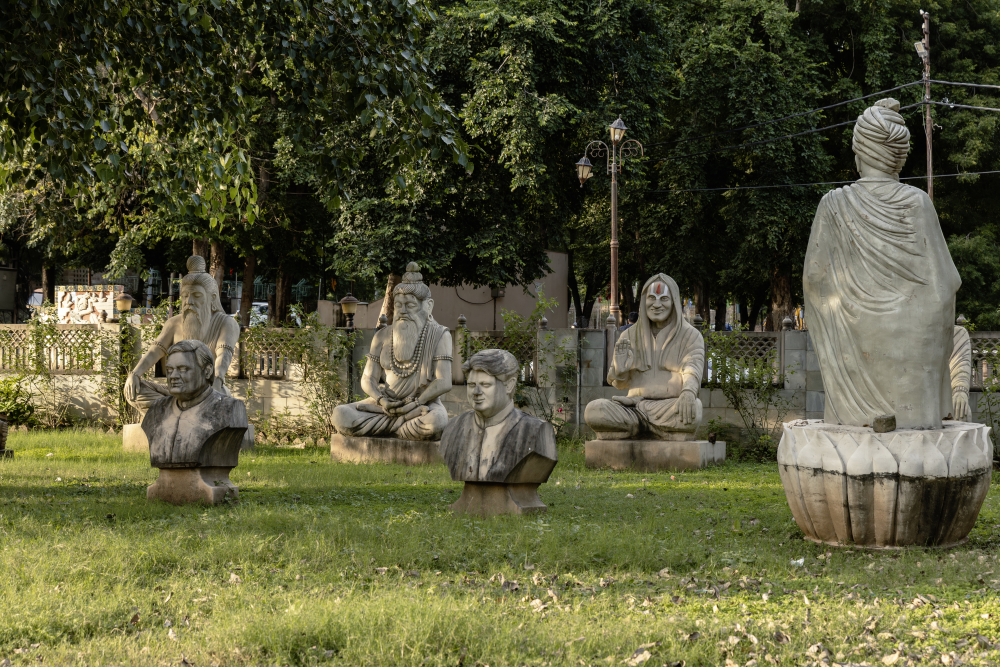
Specimen of modern stonework near Moti Mahal. (Picture Credits: Pranjal Jain)
Sahil Vishwakarma, who operates one of the many karkhana-shops in Gende Wali Sadak, estimates that around 30-40 Vishwakarma families like his work in this profession. Like him, most workers learned it from fathers, uncles, and brothers. Their tools are the traditional hammer and chisels, which most sculptors prefer to electric tools like machine-grinders. While machines may be efficient, the resultant dust pollution is so hazardous that workers prefer working directly by hand. Heavy machines are reserved for necessary work, including finishing a giant statue. Working by hand also gives sculptors extensive flexibility in changing styles based on a client’s expectations. It takes one full day for a skilled artisan to hand-carve a 1-foot-tall lingam, the easiest statue for stone-workers to make. Statues of Kali and Durga, along with the lingam, are the most sold wares across the stores. Navratri is the most lucrative time of the year for the sculptors, with half their annual earnings stemming from this single festival.
When asked about their income and compensation, the sculptors had divided answers. While some believe that their work will continue to find demand in temples, others believe that stone-sculpting requires government intervention to continue surviving. Given the low returns and history of stone-sculpting as a caste-based profession, the younger generation is searching for alternate economic opportunities. Sahil, however, continues to have an optimistic perspective. He points out that earlier, even people in Gwalior did not know where the murtikars (statue-makers) lived. Today, on the other hand, they receive orders from businessmen, rural and urban communities, and temples from outside the city too. The introduction of phones and the internet, he says, has expanded his consumer base. Institutionally, he suggests that the government could provide the artists with a larger space to work, away from the hustle of the city. Most shops today exist near or at houses, with the front-space serving as the shop and the back-space the place of manufacture. A separate, larger space for running their workshops would not only permit the creation of more and larger pieces, it would significantly reduce dust and noise pollution for residents around Gende Wali Sadak.
The government is also attempting to make interventions to support stone-sculpting. The PM Mudra Yojana seeks to streamline loan processes, though no shop owner we talked to has taken advantage of the scheme so far. Authorities have also organised camps, providing tools and support to the workers. The recent achievement of the GI-tag has been another step towards the recognition of this craftwork.
Bibliography
‘Batto Bai Dolls: Preserving the Heritage of Handicrafts.’ MP Tourism, May 10, 2020. https://www.mptourism.com/batto-bai-dolls.html. Accessed April 17, 2026.
‘Birds of a Feather.’ Gaatha, November 12, 2010. https://gaatha.com/papier-mache-bird-ujjain/. Accessed April 17, 2026.
Goswami, Arunash.‘Greece and India’s magic carpet ride.’ Neoskosmos, December 7, 2024. https://neoskosmos.com/en/2024/12/07/features/greece-and-indias-magic-carpet-ride/. Accessed April 17, 2026.
Solanki, Anjali. ‘The Art That Breathes Through Paper: Exploring Gwalior and Ujjain’s Craft Heritage.’ EBNW Story, June 28, 2025. https://ebnw.net/art-craft/the-art-that-breathes-through-paper-exploring-gwalior-and-ujjains-craft-heritage/. Accessed April 17, 2026.
‘Papier Mache of Ujjain - Craft That Brings Artefacts to Life.’ MP Tourism, December 1, 2020. https://www.mptourism.com/papier-mache-of-Ujjain.html#:~:text=Involves%20great%20precision,between%20these%20and%20real%20birds. Accessed April 17, 2026.
‘Papier Mache, Clay, Plaster of Paris of Madhya Pradesh.’ AsiaInch. https://asiainch.org/craft/papier-mache-clay-plaster-of-paris-of-madhya-pradesh/#:~:text=Lightweight%20and%20travel%2Dfriendly%2C%20these,Madhya%20Pradesh's%20rich%20artistic%20heritage. Accessed April 17, 2026.
‘Stone-Carving Gwalior.’ Gaatha. https://gaatha.org/Craft-of-India/craft-study-gwalior-stone-craft/. Accessed April 17, 2026.
‘Waking Stones.’ Gaatha, February 24, 2011. https://gaatha.com/stone-carving-gwalior/. Accessed April 17, 2026.
‘Women From Gwalior Family Take Forward Legacy Of Doll Making.’ ETV Bharat, September 7, 2025. https://www.etvbharat.com/en/!offbeat/women-from-gwalior-family-take-forward-legacy-of-doll-making-enn25090702167. Accessed April 17, 2026.
Bhargava, Nandika . “Hand Knotted Carpets.” Craft Documentation, National Institute of Design, 2021.
This essay has been created as part of Sahapedia's My City My Heritage project, supported by the InterGlobe Foundation (IGF).