
The history of commemorative architecture in the Indian subcontinent is a journey from the sacred to the sovereign. While funerary practices varied across cultures, the transition from simple burial to "celebratory remembrance" found its early known monumental expression in the Stupa. Originally modest earthen mounds containing the relics of the Buddha or his disciples, these structures evolved into sophisticated architectural microcosms. They shifted the focus of a funerary site from a place of mourning to a center of spiritual presence, where the physical remains of the departed served as a permanent anchor for the community’s devotion.
This impulse to mark the landscape with the memory of the dead took diverse local forms over the centuries. In the rural and frontier landscapes of Gujarat and Rajasthan, this was expressed through sati stones and paliyas (memorial stones), while the Deccan and South India saw the rise of viragal or natukal (hero-stones).
However, the Chhatri (cenotaph) represents a distinct evolution where memorialization met power and politics. Across central and peninsular India, the act of building a chhatri carried deep political connotations of kingship and caste.
Chhatris are funerary monuments that are built over the place where Hindu, mostly kshatriya, rulers or aristocrats were cremated. According to Melia Belli Bose, it was the Rajputs who first introduced the practice of building chhatris. While the impulse was indigenous, the architectural form was a sophisticated appropriation. When the Ghurids and the Mamluks arrived in the Indian subcontinent and took control of parts of north India, they brought along the practice of tomb-making. These tombs were not just monuments dedicated to the dead. As Bose argues, they signify dynastic continuity, political legitimacy, wealth, and Islamic kingship. It was a royal prerogative to build tombs. When a ruler died, it was the successor who built a tomb in his memory, thus maintaining the dynastic continuity. These meanings were not lost on the Rajputs, and they appropriated the practice of tomb-making in the form of chhatris around the early sixteenth-century.
By the time the Marathas came onto the scene in the late seventeenth-century, the Rajputs had firmly established the practice of building chhatris as a symbol of kingship and an important component of Hindu courtly culture. Although Shivaji and his immediate successors did not build grand chhatris, the later Maratha dynasties would not lag behind. The Scindias in Gwalior, the Holkars in Indore, the Bhonsles in Nagpur, and the Gaekwads in Baroda (now Vadodara) built massive and often ornately decorated chhatris. The Marathas would have also seen the chhatris as an essential mark of kshatriya-hood. During the seventeenth and eighteenth-centuries, their claim to the kshatriya status was fairly new: Shivaji managed to bring forth a dynastic lineage linking his clan, the Bhonsles, to the Sisodiya Rajputs of Mewar during his first coronation, thus establishing them as twice-born kshatriyas. The Scinidias might have had to do something similar when they came into power in central India — for their ancestors, as Stewart Gordon notes, were considered to be agriculturists.
The Need for Legitimacy
The Maratha raids in the Malwa region started around the early 1720s under the Maratha peshwa (ruler), Bajirao I, alongside his able generals Malhar Rao Holkar, Udaji Pawar, and Mahadji Shinde. Much of the Maratha dominion in Malwa and up north was secured under Malhar Rao Holkar and Mahadji Shinde. Mahadji is often regarded as the real architect of the Scindia kingdom: it was under him that much of central and northern India came under the influence or the direct rule of the Marathas. The Scindias first set up their base of operations in Ujjain and later shifted it to Gwalior. Under Mahadji’s successor, Daulatrao, Scindia rule was firmly established in the region of Gwalior and Malwa. Gwalior hitherto had been ruled by the Rajputs as well as the Mughals, who had left behind several markers of their rule. The Scindias, therefore, needed to justify their right to rule Gwalior and promote themselves as legitimate rulers. One of the several ways to do this was to build chhatris, since it was only the prerogative of kshatriya rulers to do so.
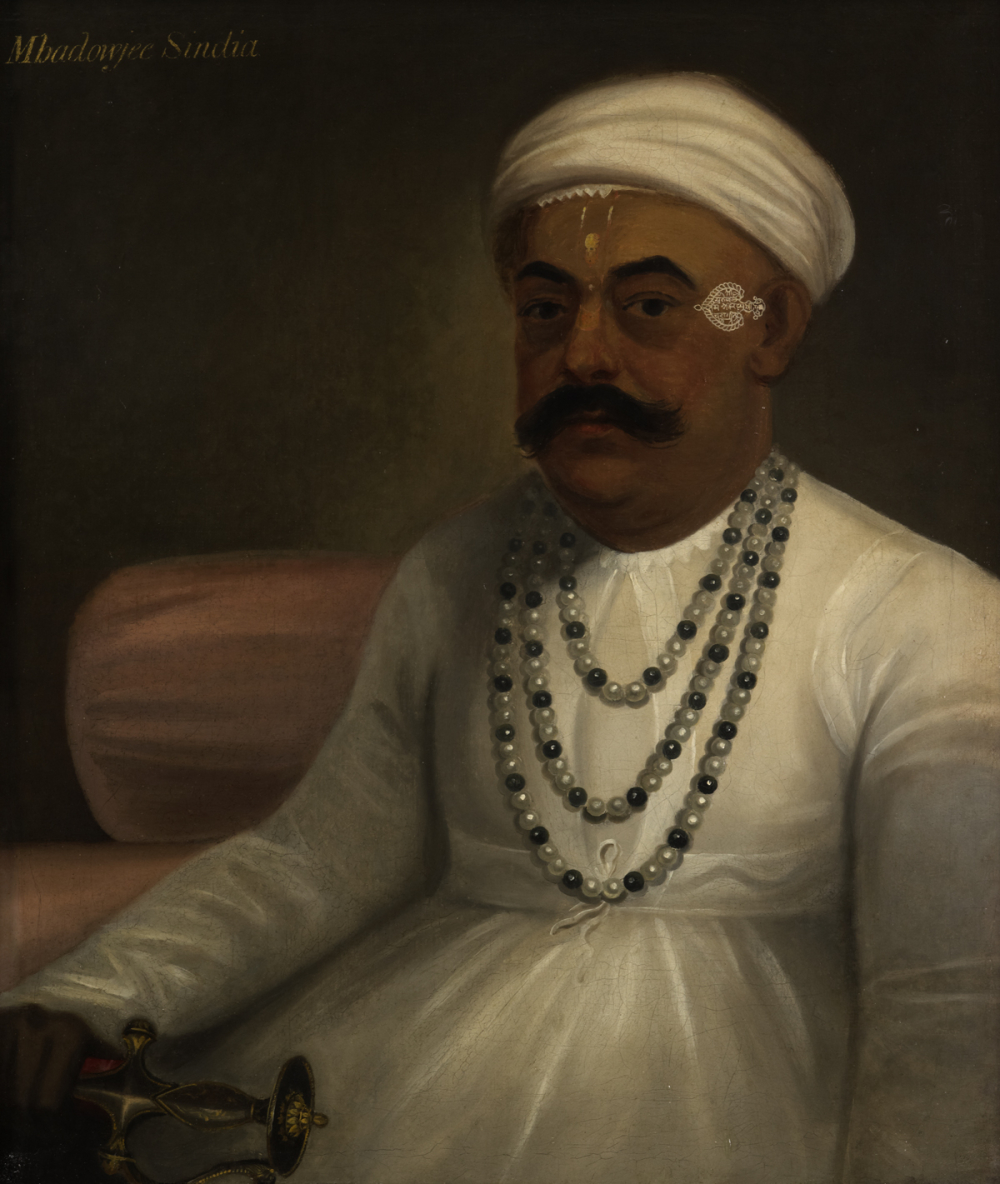
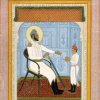
Portrait of Mahadji Shinde. (Picture Courtesy: Wikimedia Commons)
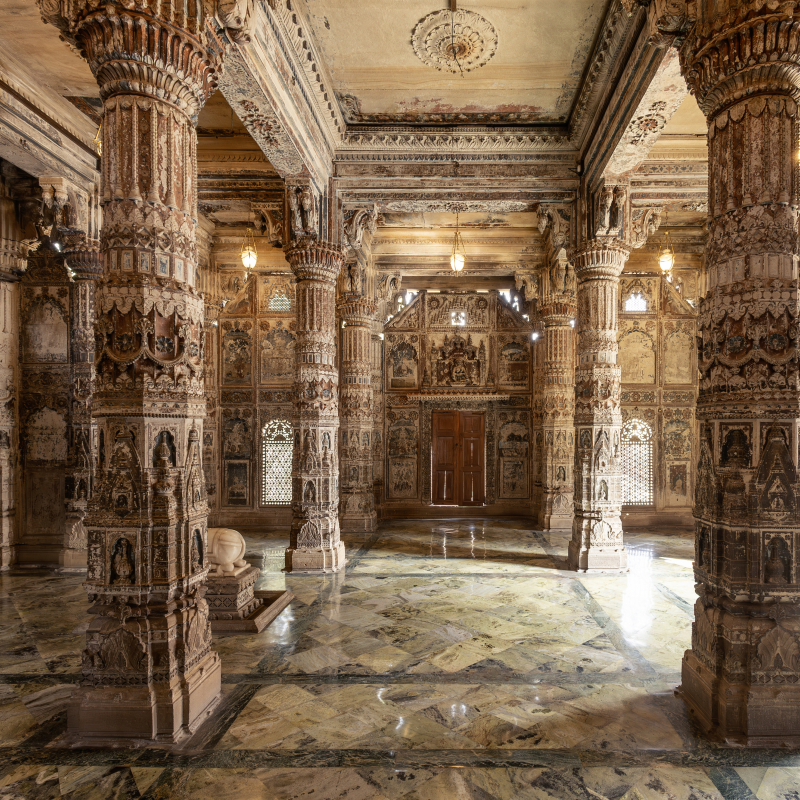
The chhatris of the Scindias in Gwalior are now majorly spread across three areas: in Chhatri-bagh (near Lashkar), in Shivpuri, and the newer ones in the Taal Katori complex. Most of these chhatris resemble a north Indian Hindu temple, with a grand mandapa (pillared hall) often replete with murals on its inner walls, a garbhagriha (sanctum sanctorum) containing a Shiva lingam, as well as a seated statue of the ruler or queen it is dedicated to (often depicted with his wife, in the case of a male ruler), and a sprawling shikhara (superstructure) atop the garbhagriha. The Scindia chhatris (along with the Holkar ones in Indore and Maheshwar) are unique for the practice of installing the almost life-size statue of the king or queen in the garbhagriha of the chhatri. These statues or murtis are made out of marble and are placed in a bangladari (Bengali-style) roof inside the garbhagriha. As Bose notes, these murtis are dressed daily, lustrated, and offered bhog (food), which is then served as prasad (offerings). Priests also regularly perform puja (worship) in these chhatris.
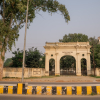
The earliest dateable Scindia chhatri in Gwalior belongs to Daulatrao Scindia, who died in March 1827. Located in the Chhatri-bagh complex, it is entered through a cusped-arched gateway flanked by two infantrymen statues serving as dwarapalas (guardian-gatekeepers) dressed in peculiar European-inspired uniforms. The chhatri is devoid of any decoration from the outside, although the mandapa has several murals on its inner walls. The garbhagriha has a Shiva linga and a murti of Daulatrao and his wife, atop of which a sekhari-style (North Indian style) shikhara rises several feet in the air. To the left of Daulatrao’s chhatri is perhaps the most ornate chhatri in the complex, belonging to Daulatrao’s successor, Jankoji Rao II Scindia. The outer walls of Jankoji’s chhatri are full of Vaishnavite and Shaivite relief sculptures, while the inner walls of the mandapa have several murals painted over them. Beyond Jankoji’s chhatri lies the chhatri of his mother, Bala Bai, in a separate enclosure of its own. Bala Bai was the only daughter of Mahadji Shinde and was married into the Shitole family, one of the subordinate families of the Scindias. At the time of Daulatrao’s death, Jankoji was his adopted heir. But on account of him being a minor upon his accession, Bala Bai served as his regent. She died in 1833, so although Jankoji would have been the earlier patron of her chhatri, the murals inside the chhatri were only finished under Madho Rao Scindia (r. 1876–1925) and have therefore largely survived. As Bose notes, these murals depict scenes from ragamalas, Hindu mythology, as well as frescos of yogis (practitioners of meditation), battle scenes, and royal hunts. Interestingly, one mural depicts Rani Lakshmibai of Jhansi in battle against the British East India Company troops.
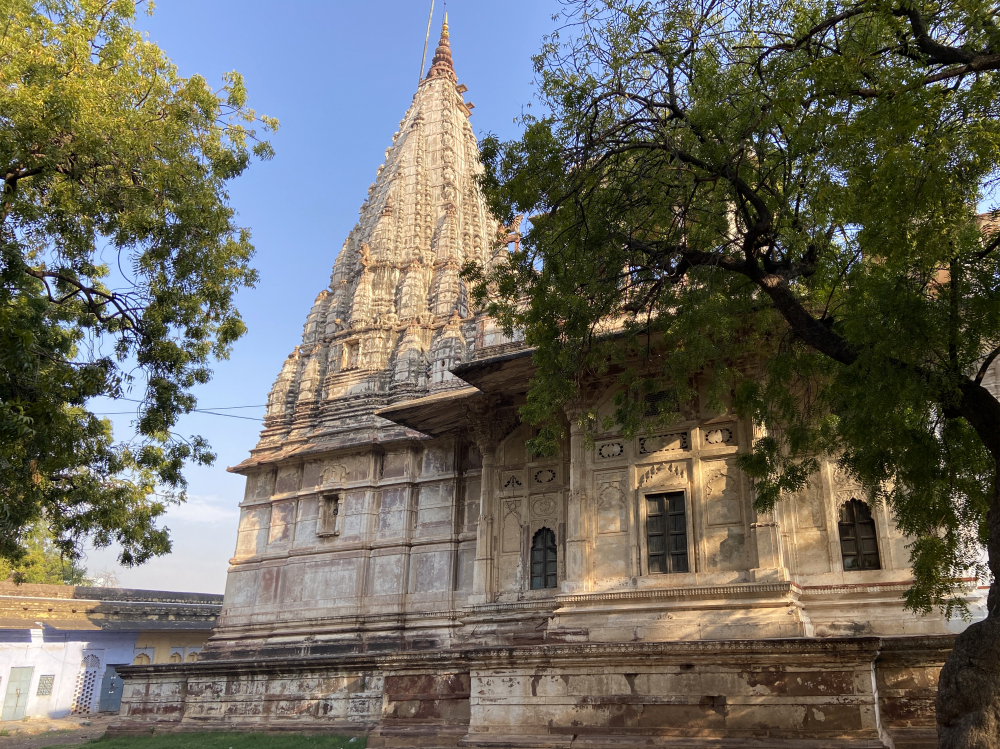
Chhatri of Daulatrao Scindia in Chhatri-bagh, Gwalior. (Picture Credits: Austin Coutinho)
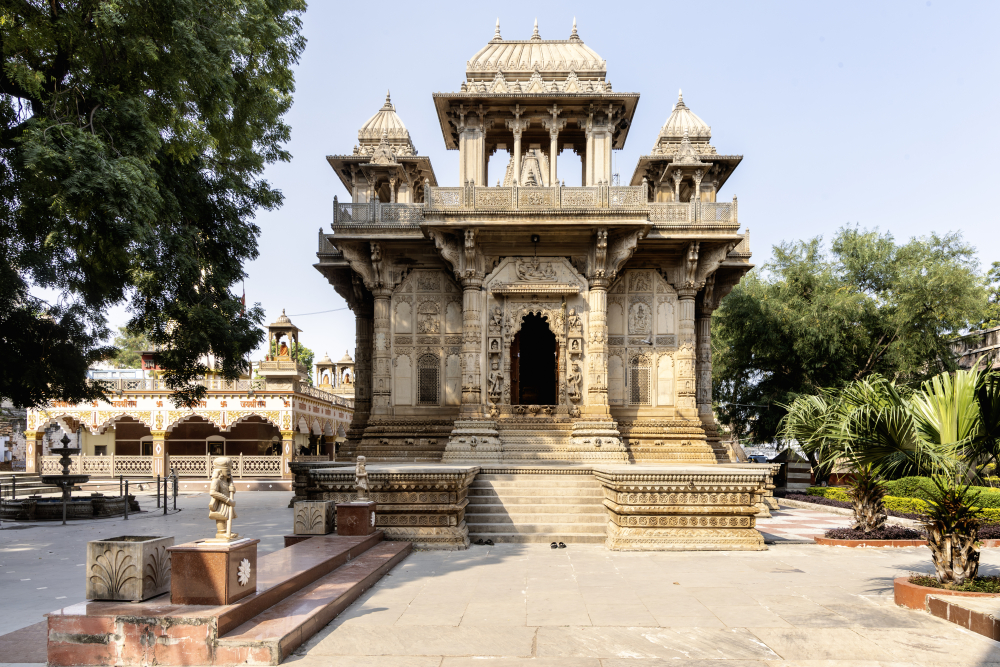
Chhatri of Jankojirao Scindia. (Picture Credits: Pranjal Jain)
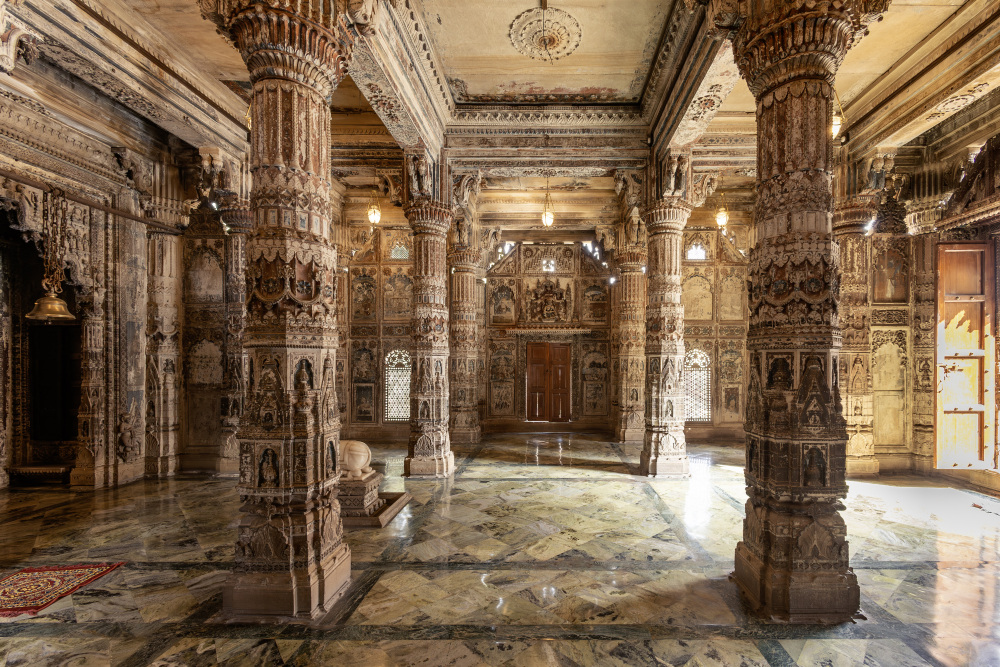
Murals in the mandapa (pillared hall), Jankojirao chhatri. (Picture Credits: Pranjal Jain)
Another notable chhatri in the Chhatri-bagh complex is that of Jayajirao Scindia (r. 1843–86). Located in a separate enclosure, which also includes chhatris dedicated to Baccha Bai and Gyaneshwar Patil, the chhatri of Jayajirao is perhaps the largest in size of all the Scindia chhatris. Featuring a uniquely European double-staircase in front, it features a proportionally larger mandapa, and a pancharatna (five) cluster of shikharas over the garbhagriha.
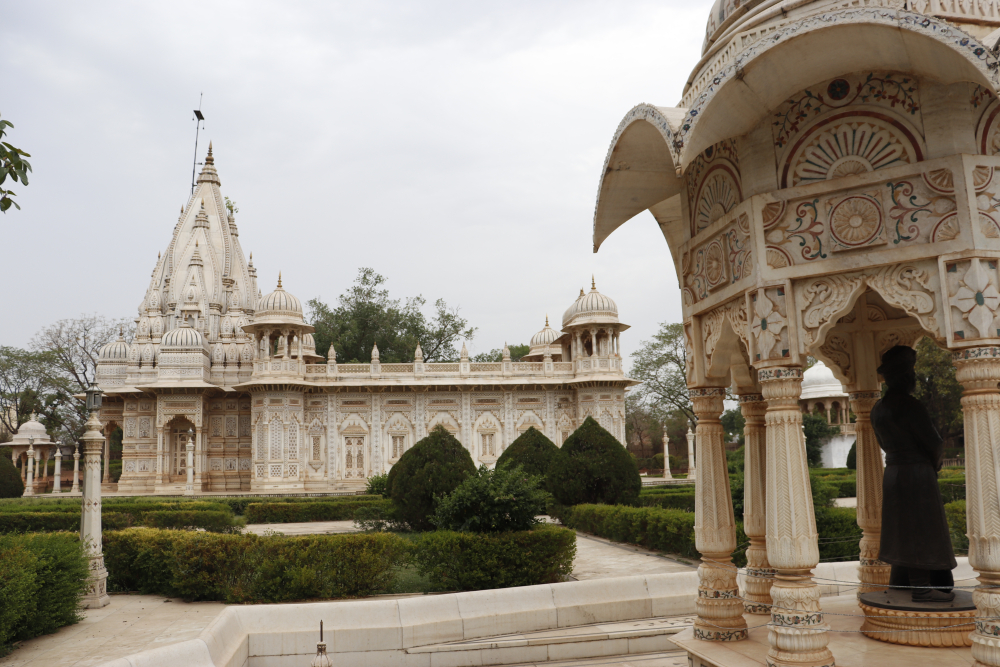
Chhatri of Madho Rao I Scindia in Shivpuri, Scindia cenotaphs, Shivpuri. (Picture Courtesy: Yayawar Monk/Wikimedia Commons)
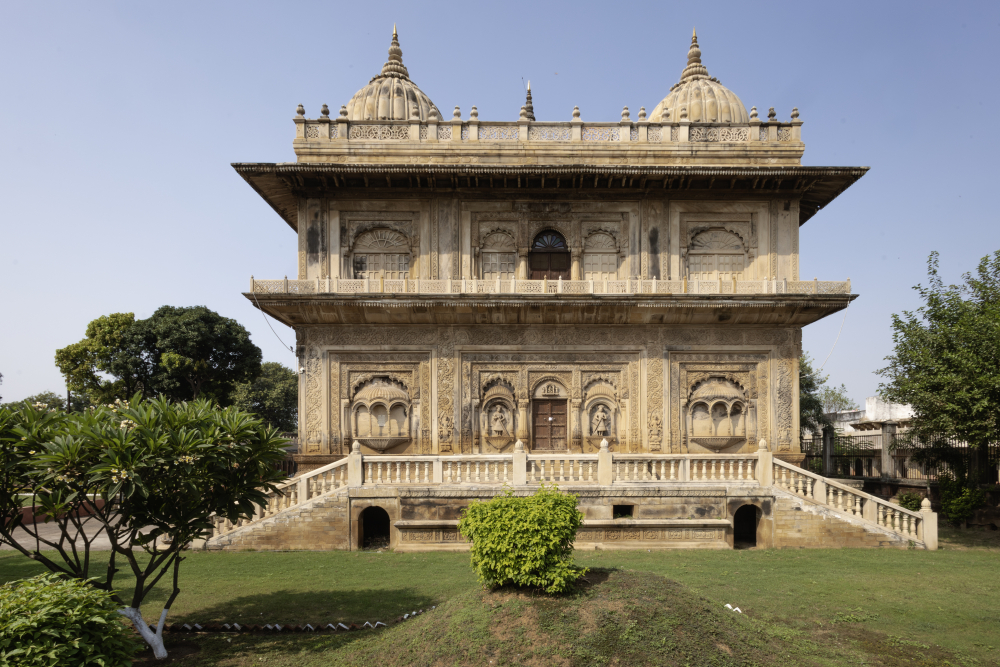
European double-staircase in front of the Jayajirao Scindia chhatri. (Picture Credits: Pranjal Jain)
Jayajirao was succeeded by Madho Rao I, whose chhatri is located in Shivpuri, a 100 km drive from Gwalior. Shivpuri was the summer capital of the Scindias. Madho Rao, in his lifetime, had built a chhatri here dedicated to his mother, Sahkyaraje Scindia. The chhatri, much like a Mughal tomb, was laid out in a garden with a water tank right in front of it. In 1925, when Madho Rao passed away in Paris, he was cremated at Père Lachaise Cemetery and his ashes were brought back to India. A portion of the ashes was likely interred in the ground at Shivpuri, on top of which a beautiful marble chhatri was built by his successor, Jivajirao Scindia (r. 1925–47, monarchy abolished). Madho Rao’s chhatri, built not far from the chhatri of his mother, was the first Scindia chhatri to be built entirely in marble. It was also the last grand Scindia chhatri to be built. The later chhatris, starting from those of Jivajirao, his widow Vijaya Raje, and successor, Madhavrao, were built in the newer Taal Katori complex. Although built in marble, they lack ornamentation and are much more modest in scale.
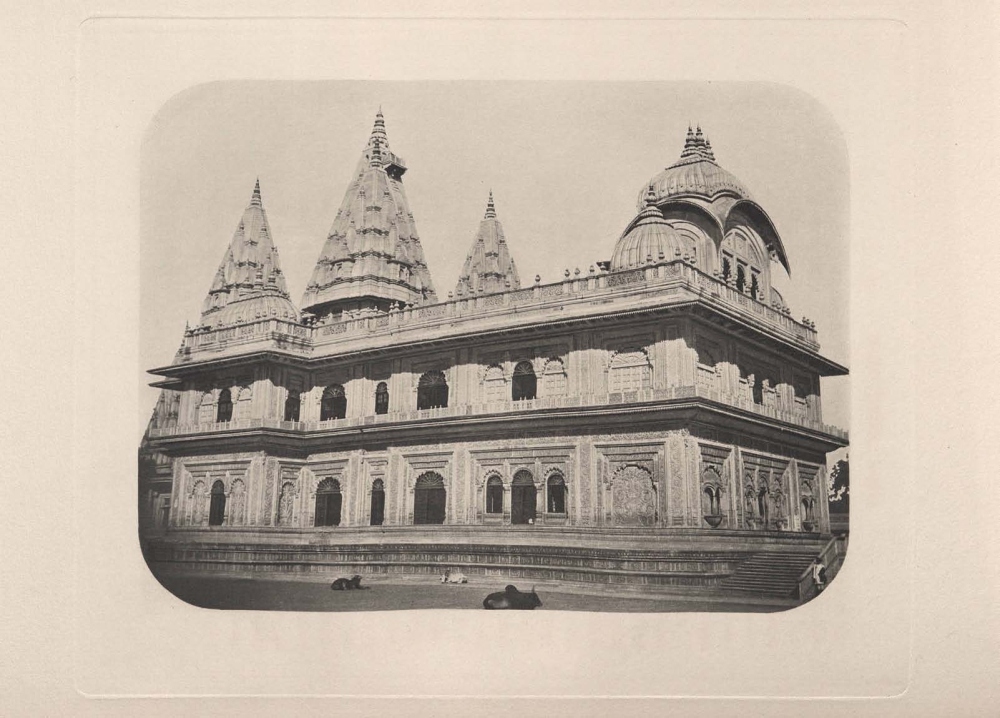
Chhatri of Sakhya Raje Scindhia in Shivpuri. (Picture Courtesy: Amit Sen/Wikimedia Commons)
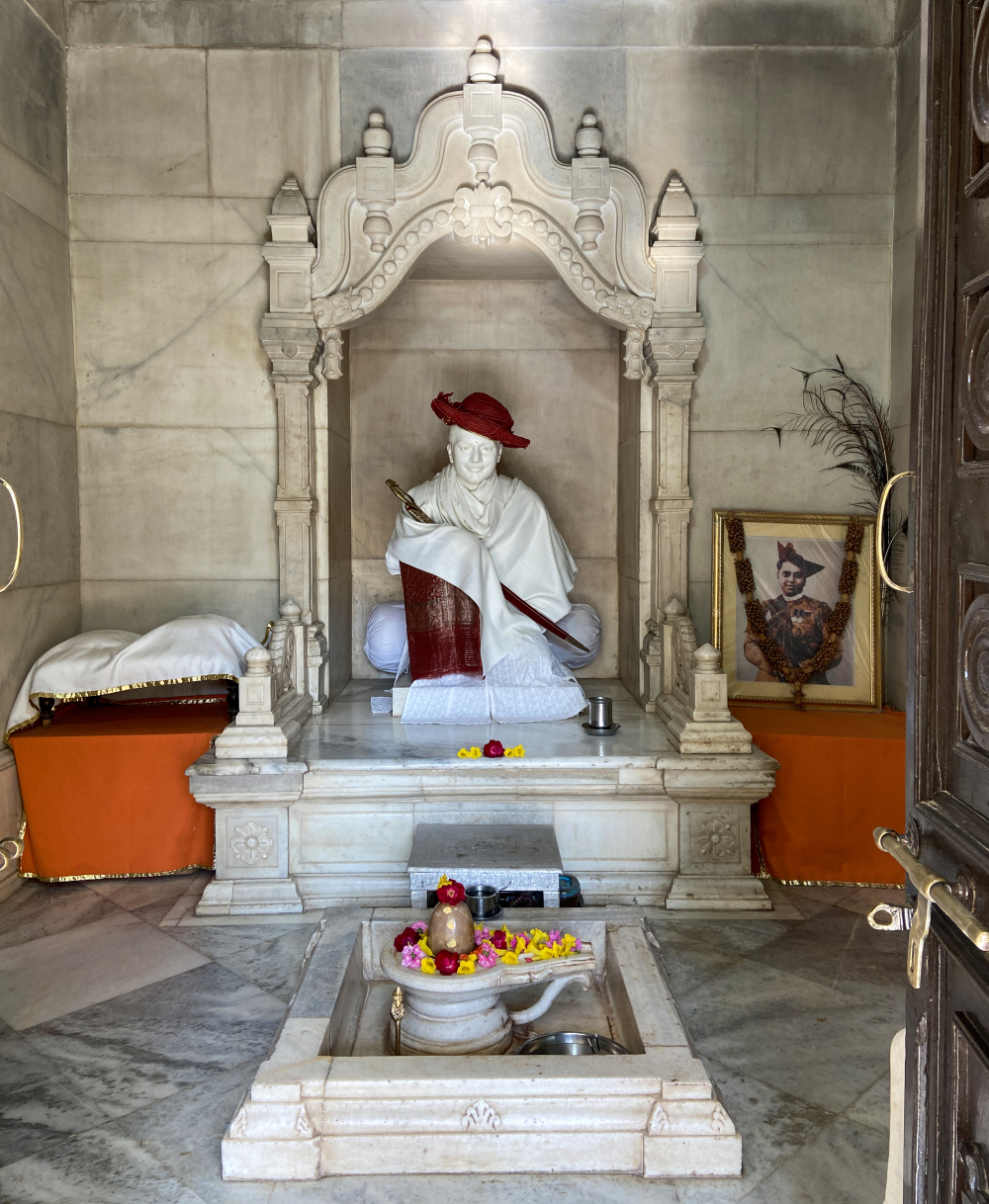
Inside the sanctum of the chhatri of Jiwajirao Scindia. (Picture Credits: Austin Coutinho)
To conclude, as Bose argues, all of the Rajput dynasties, be it the Kachwahas, the Rathores or the Sisodiyas, appropriated the practice of commemorating their ancestors through permanent architectural structures from the Indo-Islamic tombs. These tombs and chhatris, as shown, carried far deeper meanings than just an act of memorialisation. The Marathas, in turn, appropriated from the Rajputs the practice of building chhatris and, in the process, made it distinctively their own. For the Scindias, the chhatris, an already recognised royal medium, legitimised their political authority over Gwalior.
Bibliography
Bose, Melia Belli. ‘Keeping Up with the Rajputs: Appropriation and the Articulation of Sacrality and Political Legitimacy in Scindia Funerary Art.’ Archives of Asian Art 61 (2011): 91-106.
Bose, Melia Belli. ‘The 'Writing' on the Wall.’ Ars Orientalis (2009): 7-34.
Bose, Melia Belli. Royal Umbrellas of Stone: Memory, Politics, and Public Identity in Rajput Funerary Art. Vol. 48. Leiden: Brill, 2015.
Farooqui, Amar. Sindias and the Raj: Princely Gwalior c. 1800-1850. New Delhi: Primus Books, 2011.
Gordon, Stewart. The Marathas 1600-1818. Cambridge: Cambridge University Press, 2007.
Mishra, Om Prakash, and S. Pradhan. ‘Sati Memorials and Cenotaphs of Madhya Pradesh—A Survey.’ Proceedings of the Indian History Congress, vol. 62 (2001): pp. 1013-1019.