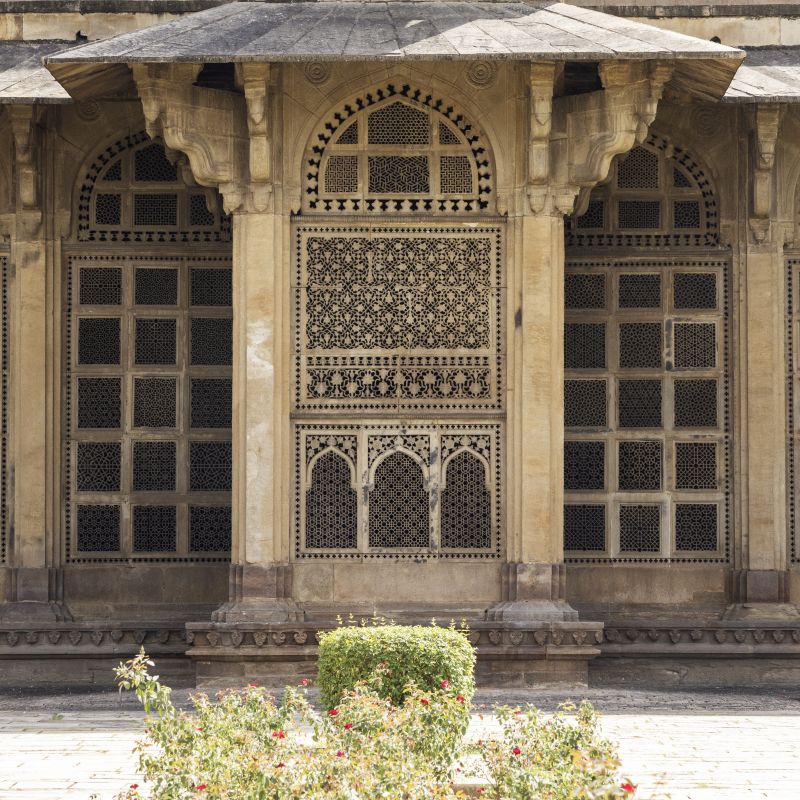

Nestled below the fort, standing amidst one of the oldest areas in the city of Gwalior is the tomb of Muhammad Ghaus (1500–1562). The sacred and archaeological site is around a kilometre away from Kila Gate (literally, the gate to the fort). Reaching there is supposed to be easy: it is afterall situated right in one of the most densely populated parts of the city. But it is that very density that hides it from everyone that passes by. This is the consequence of jam-packed roads, hordes of people walking, and shopkeepers shouting about their wares — and yet, the moment one makes their way through the shops and through the gate, the atmosphere stills. The hustle-bustle of the city right outside the site has no effect on the visitors and devotees inside. Constituted of a huge dome, a maze of chhatris (dome-topped pavilions), hexagonal towers amidst the charbagh (the preferred style of garden plans of the Mughals), and a number of smaller tombs, the mausoleum of Muhammad Ghaus (Ghouse or Ghawth) is a material symbol of the philosophy of this Sufi Saint and the early-modern India he inhabited.
A Brief History of Ghaus
The life and beliefs of Muhammad Ghaus are as interesting as the structure inside which he is entombed. A major saint of the Shattari Sufi order, Ghaus spent time with the yogis of India and developed the text Bahr al-Hayat (the Ocean of Life). Written in Persian, this text is thought to be based on an earlier Arabic text named Hawd al-Hayat (the Pool of Life). This is, in turn, a translation of a now-lost Sanskrit text Amritakunda. In Bahr al-Hayat, Ghaus tries to equate the practice of yoga with that of Sufi Mysticism. In fact, Ghaus argues that the Sufi experience of kashf (unveiling of the world) is similar to the trance-experience of the yogis. This does not mean that Ghaus was arguing that Sufi mystical thought and yogic practices are the same; instead, he was acknowledging the capacity of yoga as a practice to attain a state of mystical existence. These writings of Ghaus hints towards a conversation and a world where the lines between religions felt more permeable.
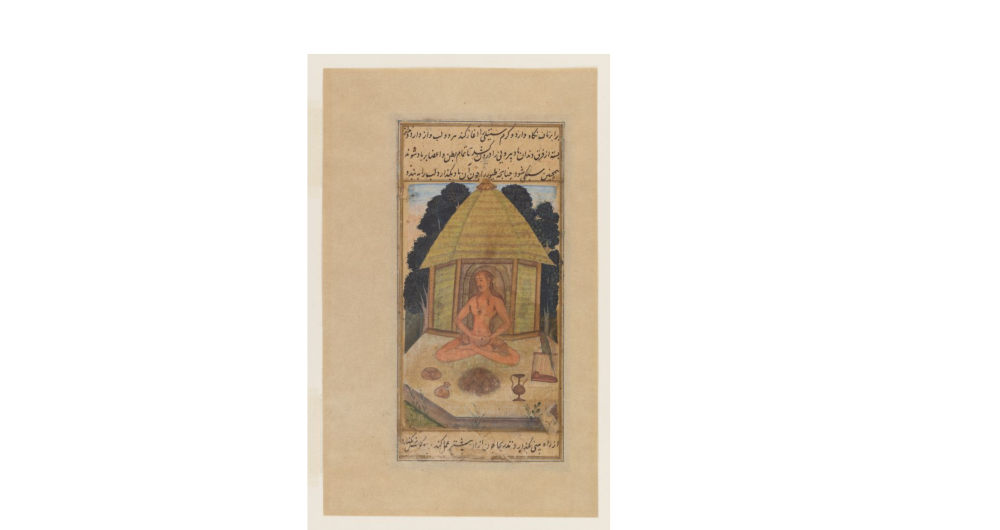
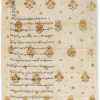
Yogi seated in sitali posture (cross-legged), from the Bahr al-Hayat, 1600-1604. (Picture Courtesy: Chester Beatty Library)
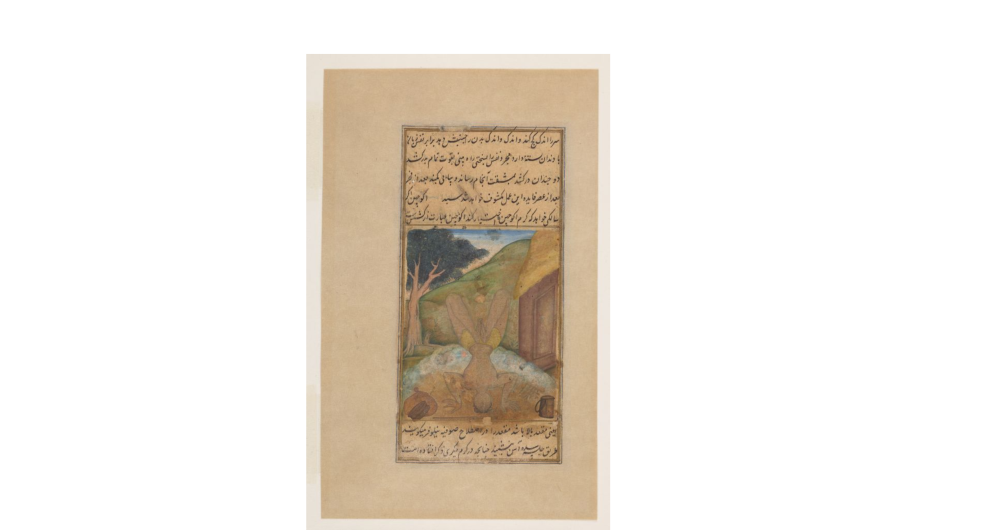
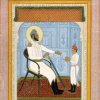
Yogi in akucchan (headstand), from the Bahr al-Hayat, 1600-1604. (Picture Courtesy: Chester Beatty Library)
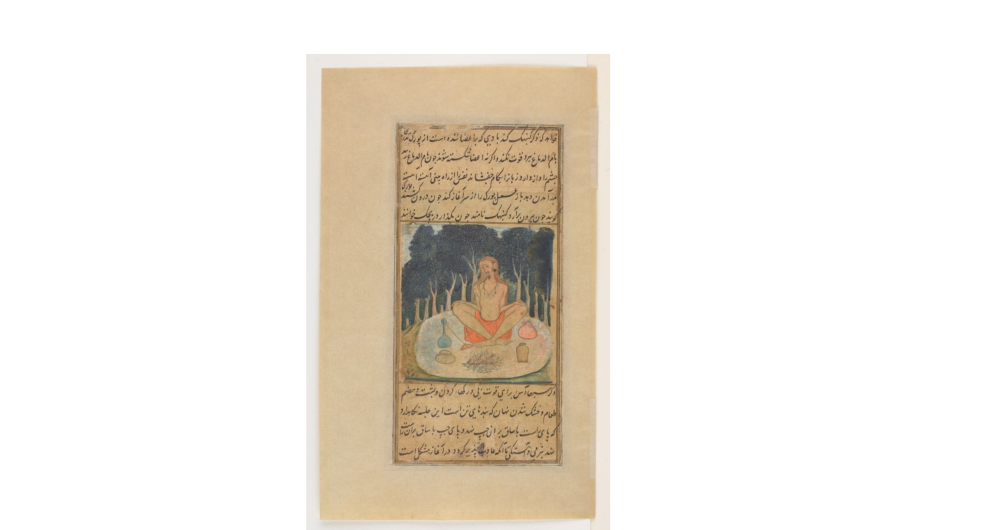
Yogi is seated in a kumbhaka position, from the Bahr al-Hayat, 1600-1604. (Picture Courtesy: Chester Beatty Library)
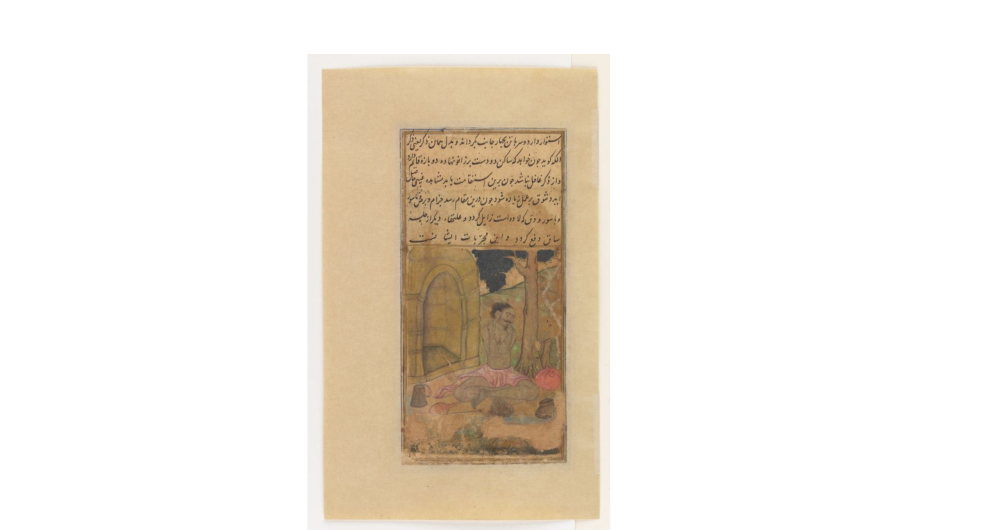
Yogi seated in Sthambha (thambasana) position, from the Bahr al-Hayat, 1600-1604. (Picture Courtesy: Chester Beatty Library)
This fascination with yogis is a result of Ghaus’ personal life, details of which come to us from his hagiography or the manaqib. Born somewhere in Uttar Pradesh, he had left home around 1501 to learn as a disciple in Jaunpur. His master is said to have asked him to be like a mendicant. Hence Ghaus spent around 13 years near Varanasi, in Chunar, in the wild and among the natives, gathering spiritual experiences that later became the basis of his writings. He is believed to have spent 6 months without sleeping. He also spent considerable time meditating with the followers of Hatha Yoga there, which was the gateway for his eventual theory on Sufi-Yogic connections.
Ghaus found popularity in Chunar: people often climbed up the hills to meet him, which greatly annoyed him since his aim was isolation and mystical rigour. It was this experience in Chunar that is said to have led to the writing of his Jawahar al-Khams, which would go on to be taught as far away as Mecca. In this, he outlines the process of a man’s ascension to heaven, based on a vision after a man requested to become his disciple. At around the age of 21, Ghaus is believed to have climbed up a higher, more isolated mountain and stopped eating altogether: his body grew so thin that ‘if the wind were blowing behind him he would go three or four times faster than a normal person, but if the wind were blowing against him, he could hardly take a single step.’
Ghaus would move to Gwalior only after he had already become a popular saint, with expertise in astronomy and astrology. This was post Lodhi ascension in the city, though he had fragile relations with the new kingdom: he refused to bless the Lodhi king, branding him a despot. The relationship between the Mughals and Ghaus, however, was a special one. Eventually, Ghaus’ brother Shaykh Bahlul would take Humayun on as his disciple. It is said that Ghaus’ followers were famous for calling upon God to replace the Lodhis with the Mughals. This context meant that when Babur was besieging Gwalior Fort after defeating the Lodhis in the battle of Panipath, the governor was unsure whether to remain loyal to the fallen Lodhis or surrender the fort to the incoming Mughals. Muhammad Ghaus was critical in persuading the governor to permit a small Mughal contingent into the city to negotiate — they then overthrew the governor and established Mughal rule in the city. These events also show that Sufi orders like that of the Shattaris were often political actors, aiding and abetting rulers. Their involvement was also beneficial for the ruling classes, as their decisions in turn received sacred validation and legitimisation from these saints. At times, this also affected the status and lives of the saints: Ghaus was exiled due to his known Mughal loyalties the moment Sher Shah Sur overthrew them again. He moved to Gujarat, where he remained steadfast in his loyalty to Humayun, even predicting his return. His Bahr al-Hayat is said to have been written in Gujarat. By the time, the region was not fully assimilated into the new Mughal system and Ghaus had rivals. Moreover, it was his theological beliefs that led Shaikh Ali Muttaqi to oppose him. First, he fled Ahmedabad to Baruch but was sent back to Ahmedabad by the governor there. He eventually lived peacefully in Ahmedabad, eventually establishing a khanqah (Sufi Hospice) and a mosque in the city.
When Ghaus returned to Delhi and Agra from exile, he must have expected a grand welcome from the Mughals whom he had supported throughout his life. But with the start of Akbar’s reign, the Mughal relationship with Ghaus changed to a considerable degree. The new emperor showed a preference for dead saints like Muinuddin Chishti and was closer to the Chishti silsila. But the nobles in Akbar’s court were opposed to Ghaus, roused by religious scholars who disagreed with his spiritual claims.
Ghaus finally passed away in Agra and was entombed in Gwalior.
Ghaus’ Tomb and Afterlife
His tomb, commissioned by Akbar, shows the transition between the Sultanate Era architecture — sturdy, almost military-like structures – to the more symmetrical elegance of the Mughal era tombs. Ghaus’ tomb shares similarities with that of Humayun in its massive, dominating tomb, the overall plan, and the use of chhatris and jalis (latticed screens). The jalis might be the most striking feature in the structure. These screens do more than cool the interior. They act as a physical metaphor for Ghawth’s philosophy of kashf (spiritual unveiling) — the harsh outside light is filtered and transformed into soft, patterned shadows within the sanctum. The use of jalis might be an influence that the Sufi saint himself brought from his days in Gujarat. Local elements are seen not only in the use of the ubiquitous sandstone, but also in the popular and common wave-shaped brackets and the floral motifs on the plinth. Planned in the charbagh style, the tomb was originally surrounded by gardens divided into four quadrants with the structure standing in the centre.
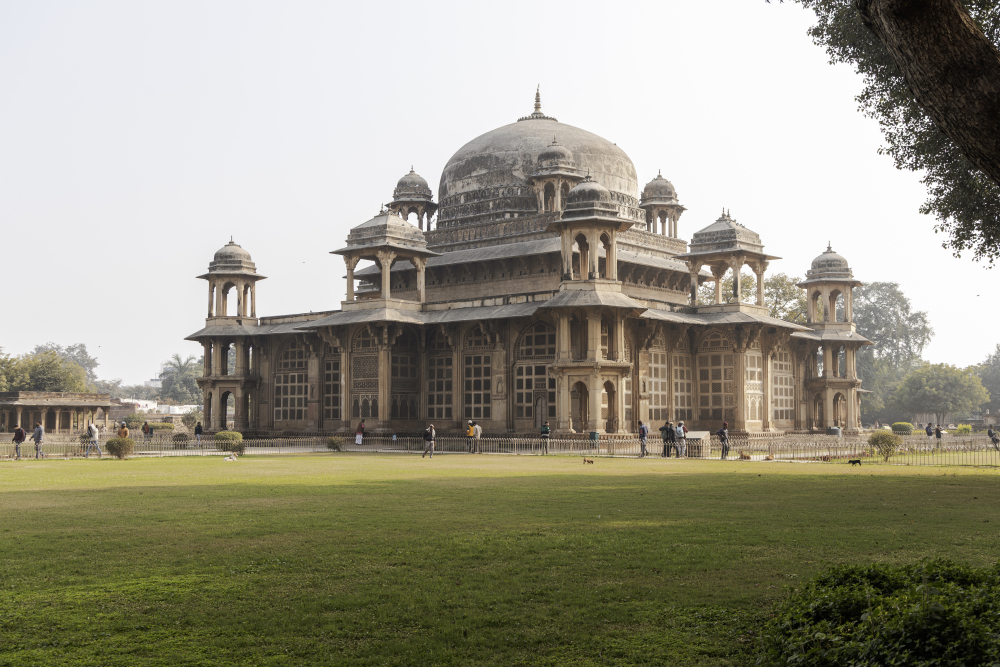
The tomb of Muhammad Ghaus. (Picture Credits: Pranjal Jain)
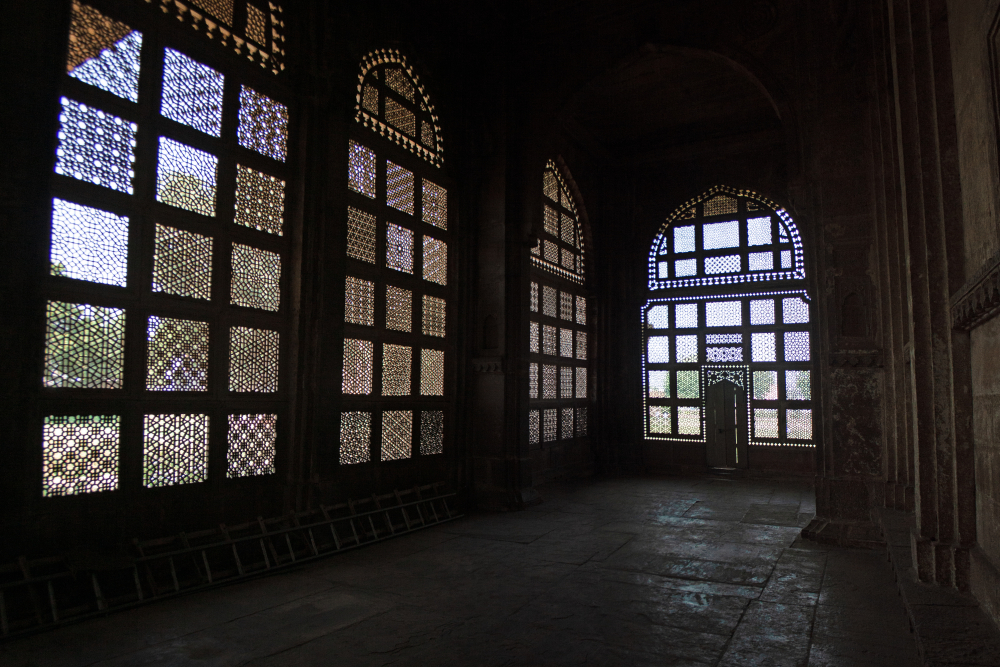
Jalis (latticework) in the tomb of Muhammad Ghaus. (Picture Credits: Ayan Ghosh)
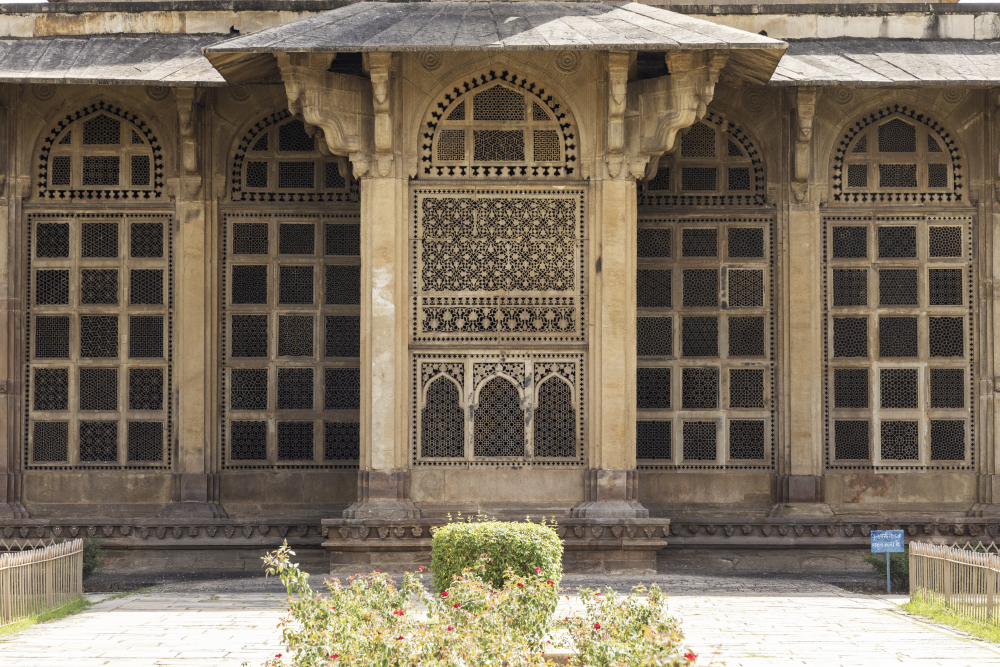
Jalis (latticework) in the tomb of Muhammad Ghaus. (Picture Credits: Pranjal Jain)
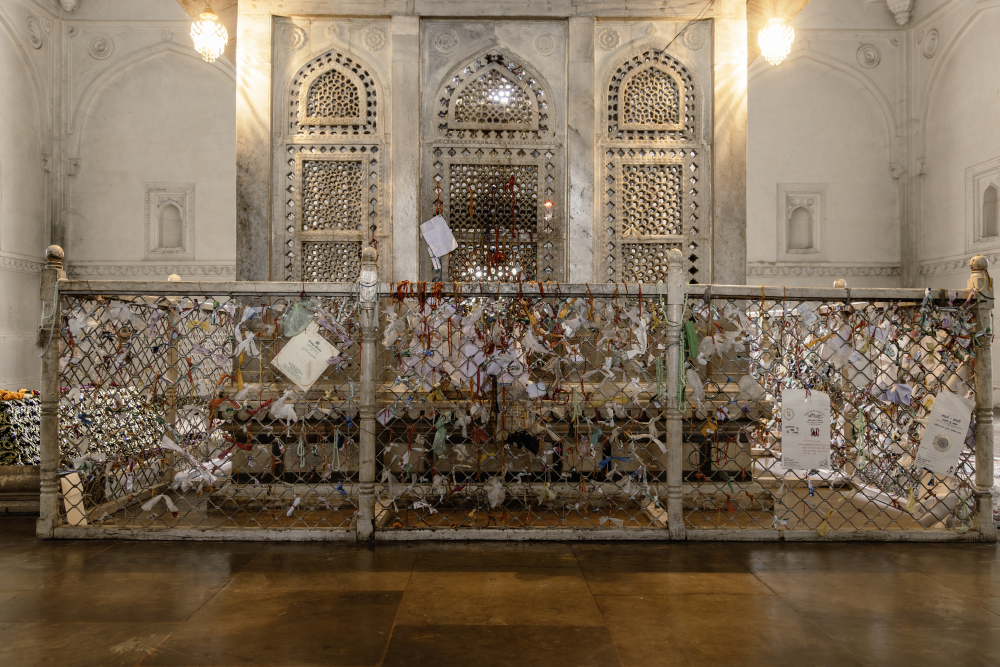
Inside the tomb of Muhammad Ghaus. (Picture Credits: Pranjal Jain)
Today, the whole site is a massive necropolis, home to the burials of Ghaus’ followers and disciples all around the structure. In Sufi beliefs, it is considered to be a huge privilege to have one’s final resting place next to their spiritual preceptor. Among these disciples is Mian Tansen, a famous musician of Akbar’s court. Tansen is buried alongside Muhammad Ghaus in a humble, canopied tomb in the complex. The only other full-fledged structure in the site is called ‘Bahu Sahiba ka Maqbara’.
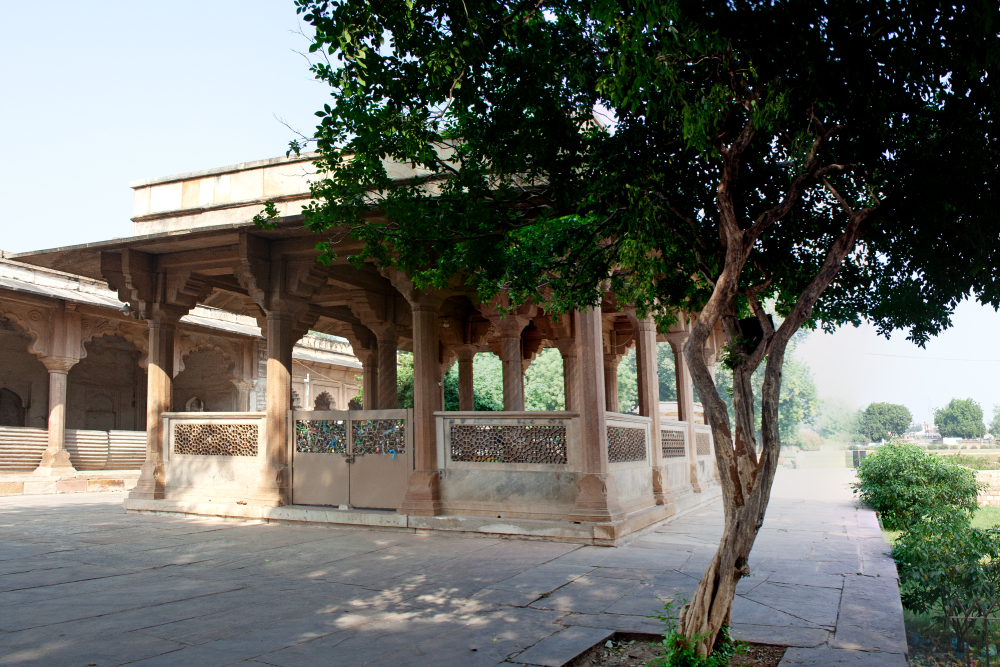
Tomb of Tansen in Muhammad Ghaus. (Picture Credits: Ayan Ghosh)
The tomb is a living sacred site with devotees still crowding the structure especially during the saint’s urs (death anniversary). Locals visit for morning walks as the garden is well-maintained by the Archaeological Society of India and local authorities. Musicians too visit the place in order to seek the blessings of Tansen. The tomb complex continues to be the site of Tansen Samaroh, an annual music festival with Hindustani classical performers visiting from across the country. Today, the whole site is more well known as Tansen’s Tomb following the popularity of the legendary musician. Yet the Sufi Yogi continues to be a subtle presence in Gwalior, despite his tomb being hidden away between alleyways and markets.
Bibliography:
Asher, Catherine B. The New Cambridge History of India: Architecture of Mughal India. Cambridge: Cambridge University Press, 2001.
Asher, Catherine B., and Cynthia Talbot. India before Europe. Cambridge: Cambridge University Press, 2006.
Codingest. “Shah Muhammad Ghaus Gwaliori: The Sufi Yogi of Shattari Tradition.” Islamonweb English, June 13, 2025. https://en.islamonweb.net/shah-muhammad-ghaus-gwaliori-the-sufi-yogi-of-shattari-tradition
Ernst, Carl W. “Persecution and Circumspection in Shaṭṭārī Sufism.” In Islamic Mysticism Contested. BRILL, 1999. https://doi.org/10.1163/9789004452725_024.
___________ Refractions of Islam in India. Gurugram: Sage Publications, 2016.
___________ “Situating Sufism and Yoga.” Journal of the Royal Asiatic Society 15, no. 1 (2005): 15–43. http://www.jstor.org/stable/25188502.
___________ “The Islamization of Yoga in the ‘Amrtakunda’ Translations.” Journal of the Royal Asiatic Society 13, no. 2 (2003): 199–226. http://www.jstor.org/stable/25188362.
kevinstandagehotography. “Tombs of Mohammad Ghaus and Tansen – Gwalior.” Kevin Standage, April 15, 2019. https://kevinstandagephotography.wordpress.com/2019/04/15/tomb-of-mohammad-ghaus-tansen-tombs-gwalior/.
Kugle, Scott A. Hajj to the Heart: Sufi Journeys across the Indian Ocean. North Carolina: University of North Carolina Press, 2021.
___________ ‘Heaven's Witness: The Uses and Abuses of Muhammad Ghawth's Mystical Ascension.’ Journal of Islamic Studies 14, no. 1 (2003): 1-36.
Nomadographer. “Muhammad Ghaus Tomb: Gwalior’s Lesser Known Gem.” January 16, 2019. https://nomadographer.com/2019/01/16/muhammad-ghaus-gwalior-nomadographer/.
orientalarchitecture.com. “Muhammad Ghawth and Tansen Tombs, Gwalior, India.” Asian Architecture. https://www.orientalarchitecture.com/sid/1831/india/gwalior/muhammad-ghawth-and-tansen-tombs.
The Jahangirnama: Memoirs of Jahangir, Emperor of India, translated by Wheeler Mcintosh Thackston. New York: Oxford University Press, 1999.
This essay has been created as part of Sahapedia's My City My Heritage project, supported by the InterGlobe Foundation (IGF).