
Pondicherry, somewhat like Russian nesting dolls, is a city within a district within a Union Territory (UT), all sharing the same name. The UT of Pondicherry comprises four geographically distinct districts that were former French colonies: Pondicherry, Karaikal, Yenam and Mahe. Of these, the district of Pondicherry lies embedded in the larger Tamil landscape on the east coast of India, and is in turn, further broken down into 4 taluks made of 12 non-contiguous enclaves. The strangeness of the map of Pondicherry is attributed to the Anglo-French Treaty of Paris (1813), when the British agreed to return the low-lying areas of their colony to the French but kept all the high-lying areas to prevent them from re-building fortifications. Within one such enclave, hugging the Bay of Bengal, lies the city of Pondicherry. It spans an area of 19.5 sq km, with the erstwhile French quarter occupying an area less than 3 sq km within it. While this quarter displays remnants of its colonial history, Pondicherry more largely shares culture, language, and heritage with surrounding Tamil Nadu.
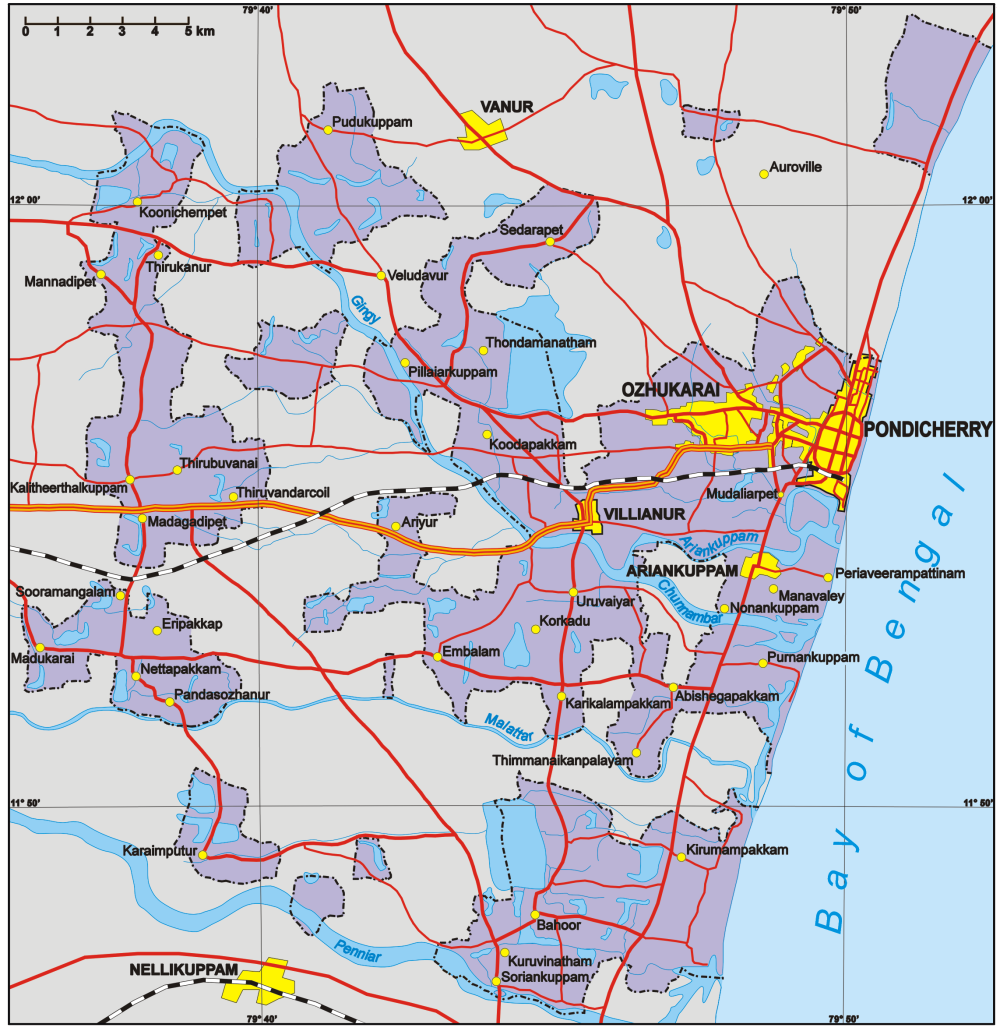
Map of the Puducherry District (areas in purple only), Union Territory of Puducherry. (Picture Courtesy: Aotearoa from Poland/ Wikimedia Commons)
Ancient Unknowns: Precolonial Era
Four kilometers south of the historic quarters of Pondicherry lies an archeological site named Arikamedu. In Tamil, the name means ‘an eroding mound’. Arikamedu is the site of an industrial port city with links to Imperial Rome between roughly 300 BCE and 300 CE. It was referred to as Poduke in the Periplus of the Erythraean Sea, a Greco-Roman record, and sat on the eastern bank of the Ariyankuppam River close to its mouth opening into the Bay of Bengal. The settlement was known for producing fine muslin textiles, terracotta objects, and a wide range of beads in glass, semi-precious stone, and gold. Ships from other major ports such as Muziris and Anuradhapura used it as a point of transshipment for trade with Southeast Asia, so the settlement had contact with regions including present-day Indonesia, Thailand, China, and regions in northeastern India.
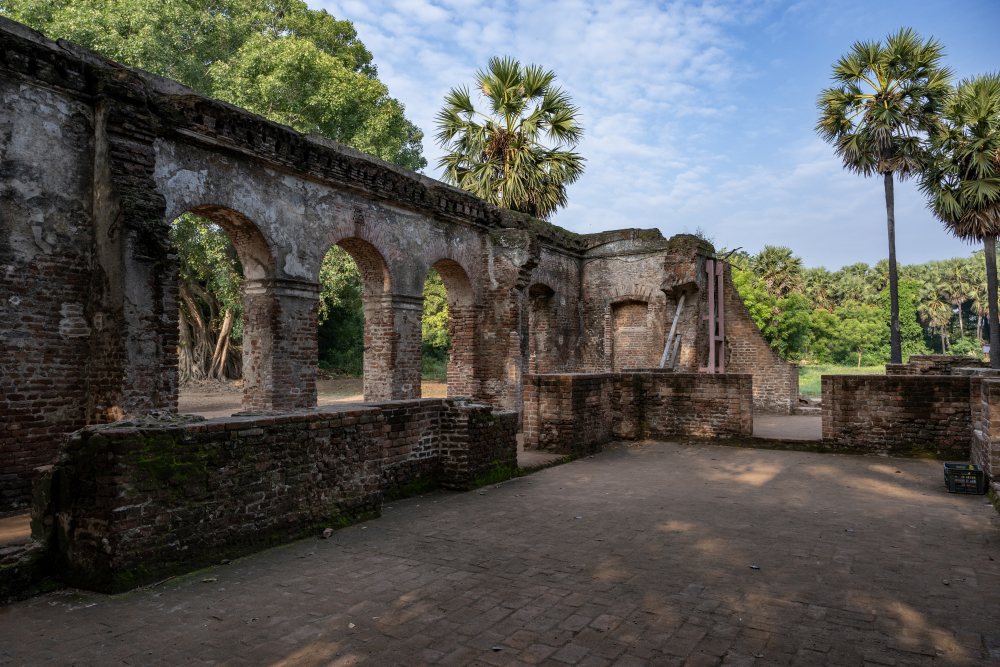
Arikamedu currently has visible remnants of only an eighteenth-century monastery. (Picture Credits: Joseph Rahul)
Archaeological work since the early twentieth-century has revealed a settlement with two interconnected zones at Arikamedu. The northern part, closer to the sea, functioned as the harbour and seems to have hosted a community of Yavanas or people of Greco-Roman origin. The southern part contained workshops and residential areas of local craftspeople. There is evidence of the settlement having been continually inhabited until 1500, after which it seems to have been abandoned. Towards the end of the eighteenth-century, the area was again briefly occupied, when a seminary and residence were constructed for Jesuit missionaries who had been expelled from Siam between 1771 and 1773. The seminary was abandoned in 1783, but its ruins are today known as the Mission House and remain the only visible structure at the archaeological site.
While colonial historians tended to equate this ancient port of Poduke with present day Pondicherry, historian J. B. P. More argues that they are distinct despite their geographical proximity. Poduke was a seasonal coastal market dependent on the navigability of the Ariyankuppam River, rather than a permanent urban centre. Moreover, Sangam literature, medieval records, and temple inscriptions make no reference to Arikamedu or Poduke, or any major port at that site.
In the medieval era, the Coromandel coast including Pondicherry was under the rule of the Pallavas (325–900 CE), followed by the Cholas (900–1279 CE) who built several Shiva temples including the famous one at Villupuram, and later the Pandyas (1279–1370 CE). Through the fourteenth-century, it came under the Senji (Gingee) Nayaks of the Vijayanagara Empire. There is no consensus among historians regarding the exact origin of Puducherry, but it is agreed that a settlement pre-dating the arrival of the Europeans existed in present-day Pondicherry. It is inferred that between the tenth to fifteenth-century, a large settlement called Olukarai extended between the present Eglise Notre Dame and Oulgaret, about 5 km inland from the French quarter.
J. B. P. More notes that the urban centre of Pondicherry makes an appearance as Bandikeri, located above Cuddalore, in the late fifteenth-century or early sixteenth-century travelogues of the renowned Arab navigator, Sulaiman Al Mahri. From 1553 to 1614, the Senji Nayaks allowed the Portuguese to establish a godown for trade in the location that is present day Pondicherry. Goods were transported via bullock-carts called vandi in Tamil. The settlement that developed in this area came to be known as Vandicheri, with ‘cheri’ meaning town. In Telugu, the language of the Senji Nayaks and many local merchants, Vandicheri became Bandicheri, which resembles the Bandikeri mentioned by Sulaiman. Over time, it became Pandichery: the land of the Pandis or Tamils who were predominant in the region. This was later adapted by the French as Pondichéry and by the English as Pondicherry. Another reference to the name of the town was ‘Puducheri’ by sixteenth-century Portuguese historian Joao de Barros, ‘pudu’ meaning ‘new’ in Tamil, hence Puducheri meaning ‘new town’.
Arrival of the Europeans
In 1614, the Senji Nayaks expelled the Portuguese, but they were soon replaced by the Dutch and then the Danes. From approximately 1648, the Coromandel coast was controlled by Sher Khan Lodi, a pathan vassal of the Sultan of Bijapur. He invited the French, the last Europeans to set foot in India, to establish a trading station on Pondicherry. Initially, Indian rulers, eager to increase revenue through foreign trade, encouraged European trading companies to establish godowns to facilitate trading. Over time, the trading companies expanded their territories and established factories, where they employed local craftsmen to manufacture goods for export.
The French East India Company eventually arrived in Pondicherry in 1673 and made it their central settlement in India. From 1673 to 1693, under François Martin’s leadership, they established a factory at the site and constructed a fort, warehouses and trading facilities, drawing in weavers, painters, merchants and other craftsmen.
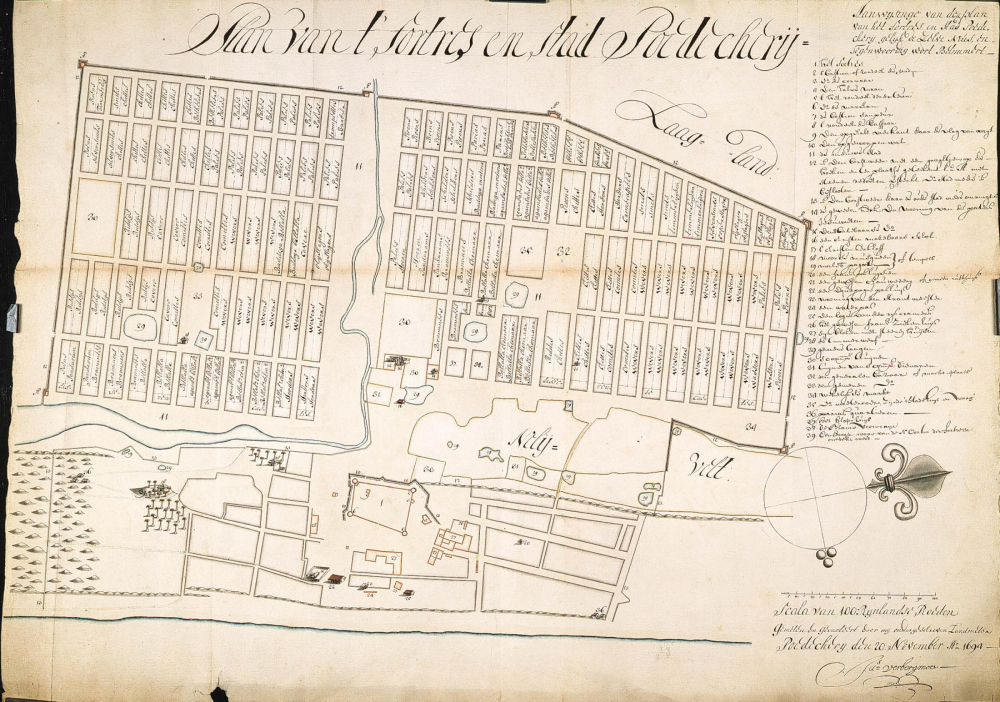
Map of Pondicherry from 1694. Created by Jacob Verbergmoes (land surveyor/mapmaker). (Picture Courtesy: Dutch National Archives/Wikimedia Commons)
In 1693, the Dutch captured Pondicherry after two weeks of bombing. Although they hung on for only six years till 1699, they substantially influenced the future of the town by introducing a gridded town-plan. The plan organised the area on the west of the Uppar river into rectangular blocks that segregated and housed different Indian communities, like the brahmins, weavers, merchants, farmers and craftsmen. The French regained control of the town in 1700, secured their presence by building a pentagonal citadel in the centre named Fort Louis, and constructed a fortified enclosure with curtain walls, bastions, parapets and a surrounding ditch. The fortification had prominent gates, including the New Madras Gate to the north and the Valudavur and Villiyanur Gates to the west, and the roads leading to these gates became the town’s main thoroughfares.
The Growth of Empire: Eighteenth-Century
In 1701, Pondicherry became capital of the French colonies in India. Over the next decades, the French expanded their presence in Pondicherry by colonising surrounding villages and towns like Ariyankuppam, Kakayanthoppe, Villianur and Bahour, all places with histories predating European arrival. They also expanded their presence in the subcontinent by acquiring Mahe, Yanam, and Karaikal.
By 1741, Pondicherry had grown into a major urban centre with a population of about 1,30,000. The town was racially segregated into two parts separated by the Grand Canal, a stormwater drain built to carry excessive water to the sea. To the east of the canal by the coast was Ville Blanche, ‘White Town’, for Europeans, with wide streets and large plots and houses. To the west of the Canal was Ville Noir, or ‘Black’ Town, for the native Indians with narrow streets and smaller plots. Like many early modern Indian towns, Pondicherry had a mixed population. Europeans were divided into two broad categories: the white population from France, and the mixed-heritage topas, who were regarded as socially inferior by the white settlers.
Among the locals, Hindus formed the majority—most of them Shaivites—and were organised along caste lines. Muslims were also internally stratified along caste-like hierarchies. The Christian population included upper-caste converts known as choutres as well as outcaste Pariahs, who were evangelised by Roman Catholic and Jesuit missionaries brought in by the French.
The French relied on intermediaries known as dubashes or Mudaliars to liaise with local Tamil and Telugu communities. These middlemen earned commissions from both foreign buyers and local suppliers, exercised certain judicial functions, and enjoyed significant privileges. Ananda Rangapillai, the dubash to Governor Dupleix, kept a detailed diary from 1736 to 1761, which remains an important primary source for the history of eighteenth-century French Pondicherry.
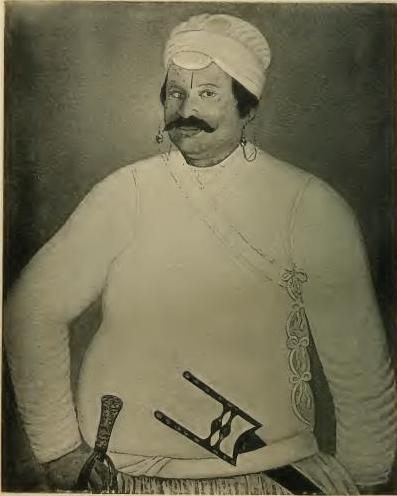
Portrait of Ananda Rangapillai, the dubash to Governor Dupleix. (Picture Courtesy: Wikimedia Commons)
Over the next century and a half, embroiled in Anglo-French conflict resulting in the Carnatic wars, Puducherry shifted hands between the two colonial powers. In 1761 and 1814, the British left the town destroyed, and Pondicherry was rebuilt ground-up by the French.
Economics and Employment: Nineteenth-Century
Agriculture was the main source of revenue in Pondicherry with the cultivation of crops such as millets, maize, groundnuts, coconuts and indigo. However small holdings prevented intensive cultivation and self-sufficiency, which meant that rice — the staple food in the region — had to be imported from British India or French Indochina. Socially, the French administration’s introduction of private land ownership led to the emergence of a small but powerful landowning elite that was privileged over the much larger class of agricultural labourers.
In the nineteenth-century, Pondicherry saw the establishment of cotton mills, which later expanded to include weaving and other textile production. By the mid-nineteenth-century, there were three textile mills in the town, all owned by the French. Indigo manufacturing and dyeing, however, remained predominantly in Tamil hands. By the end of the century, nearly one-sixth of Pondicherry’s population depended directly or indirectly on the mills for their livelihoods.
Besides these ventures, Pondicherry was, in many ways, a colonial backwater. Its port lacked strategic importance: ships could not berth close to shore, and the town lay in the shadow of the far larger and busier port of Madras. Industrial development was limited, and the French enclave depended heavily on British India for basic supplies such as cotton, coal, petroleum, medicines, and electricity. Despite these constraints, the French introduced certain modern amenities. French and Tamil printing presses were established in 1817 and 1828 respectively. A lighthouse was built on the seafront in 1836, a railway line connecting Villupuram to the pier was laid in 1879, and the first telephone network was set up in 1887.
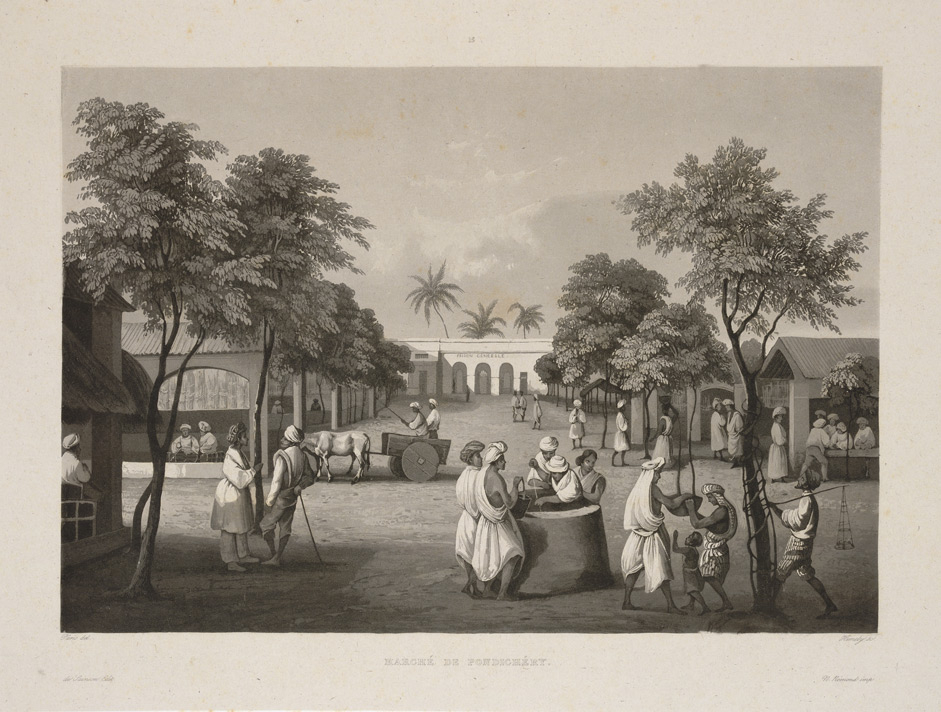
Painting of Pondicherry market c. 1850. (Picture Courtesy: Wikimedia Commons)
Over this century, French colonial policies changed. The Third Republic, initially guided by assimilationist ideas, granted male Indian subjects the right to vote in 1871, although elections in Pondicherry were largely regarded as a sham. In 1881, they were offered the option of full French citizenship, provided they renounced their personal status under Hindu or Muslim law and accepted the French Civil Code. Those who chose this path came to be known as the renonçants. Eventually however, assimilation gave way to association, as administrators concluded that governing through existing local customs and institutions was a more pragmatic means of ruling colonial subjects.
During this period, many Franco-Pondicherrians sought their fortunes in French Indochina (Vietnam, Cambodia and Laos). Several Tamil merchants from Pondicherry established themselves in Saigon and other port cities through businesses as traders, contractors, moneylenders, and shipping agents. Over time, some families acquired great wealth. Remittances flowing back home funded purchase of land and construction of large properties, enhancing the families’ social prestige within Pondicherrian society. But migration to Indochina was not restricted to the upwardly mobile. Men from economically disadvantaged classes enlisted in the French colonial army or worked in lower-ranking administrative and clerical posts which ensured regular pay and sometimes French citizenship and pensions. This enmeshing in the colonial network and exposure to the French language and culture went on to reinforce a Francophone identity within the lot.
Colonial historians have often portrayed colonisation as a peaceful process in which European rulers and their Indian subjects shared a mutually beneficial relationship. Critical scholarship has since exposed how colonisers relied on violence, superior weaponry, and religion to subjugate the Indian population. Paradoxically, France justified its colonial project through claims of cultural superiority over non-European societies, asserting it was both their right and duty to “civilise” the natives—a position frequently articulated by Republican political leaders. In practice, however, the colonised were treated less as citizens than as subjects, bearing more obligations than rights.
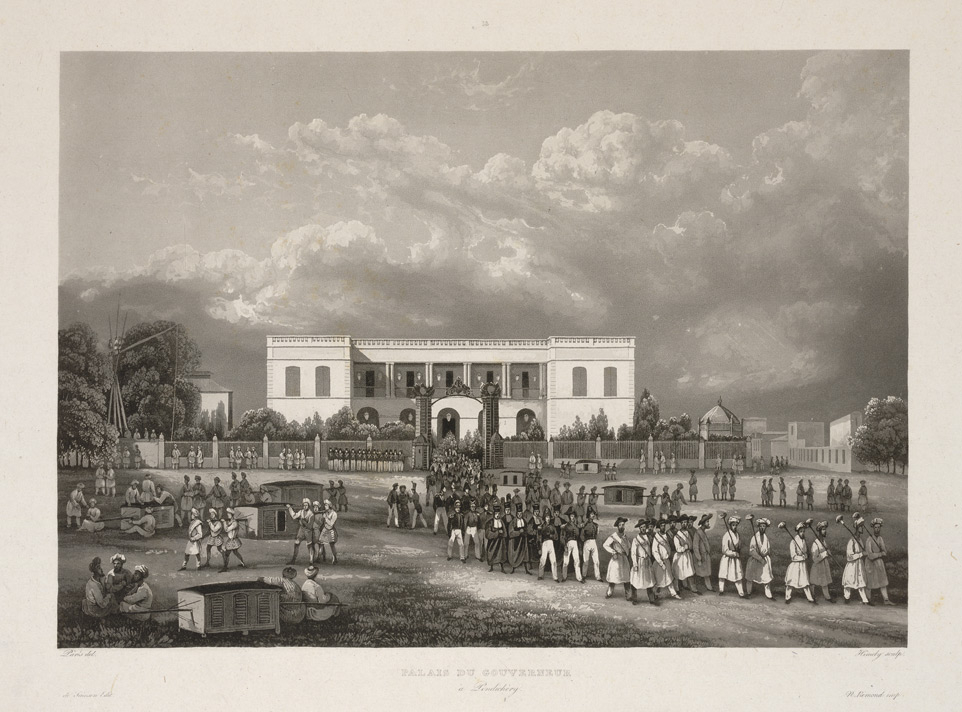
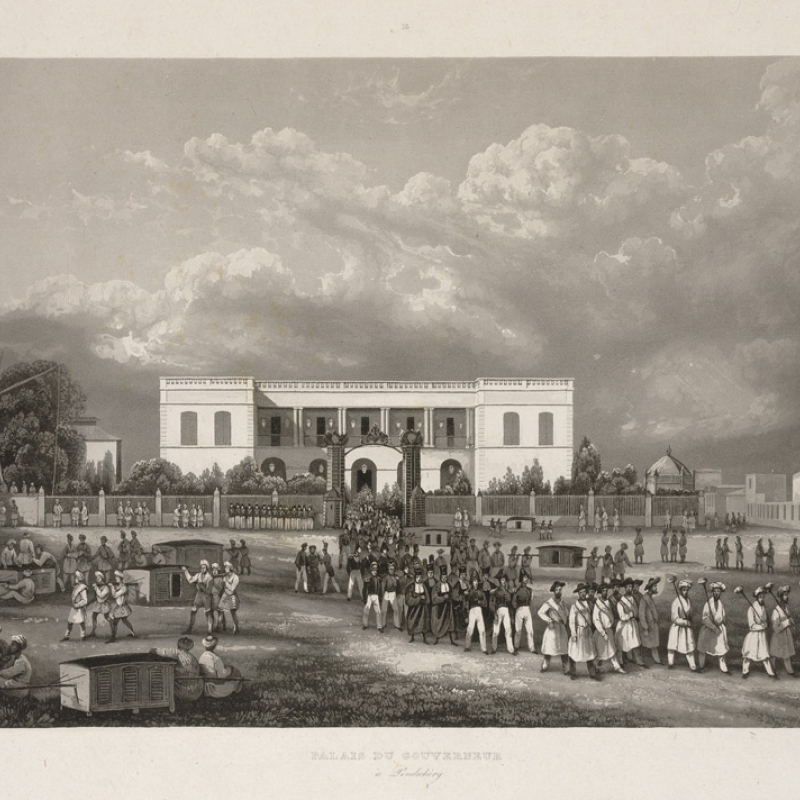
View of the Governor's palace around 1850. (Picture Courtesy: S Himely/Wikimedia Commons)
Anne Raffin has noted that from the 1830s onward, and more rapidly after the permanent abolition of slavery in 1848, the French transported thousands of economically disenfranchised Indians under the indentured labour system to Martinique, Guadeloupe, the French Antilles, Indonesia, and Réunion to work on sugar plantations. There, they were poorly treated, often compelled to work without pay, and struggled to assimilate into the local population due to widespread local resentment.
Treading Independence: Twentieth-Century
In the beginning of the twentieth-century, with the rise in nationalistic fervor in British India, many freedom fighters sought temporary refuge in Pondicherry since the convention of 1876 protected political refugees from extradition. Fleeing British prosecution for his fiery writings and associations with revolutionary circles, Subramania Bharathi spent a decade between 1908–18 in Pondicherry. During this time, he wrote profusely in Tamil, and his work includes poetry, essays and journalistic pieces advocating swaraj (independence), social reform, women’s emancipation and caste equality. Other members of the Congress party such as Mandayam Srinivasachari, Neelakanta Brahmachari, and V. V. S. Iyer also followed.
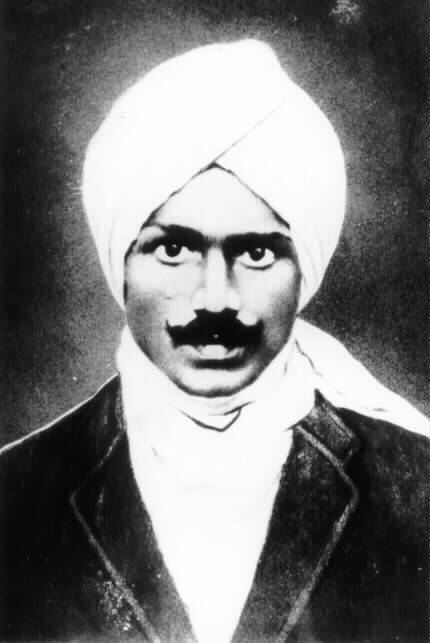
Subramania Bharathi. (Picture Courtesy: Unknown/Wikimedia Commons)
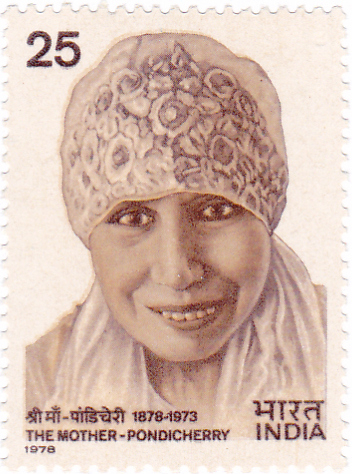
Mirra Alfassa 1978 stamp of India. (Picture Courtesy: India Post, GoI/Wikimedia Commons)
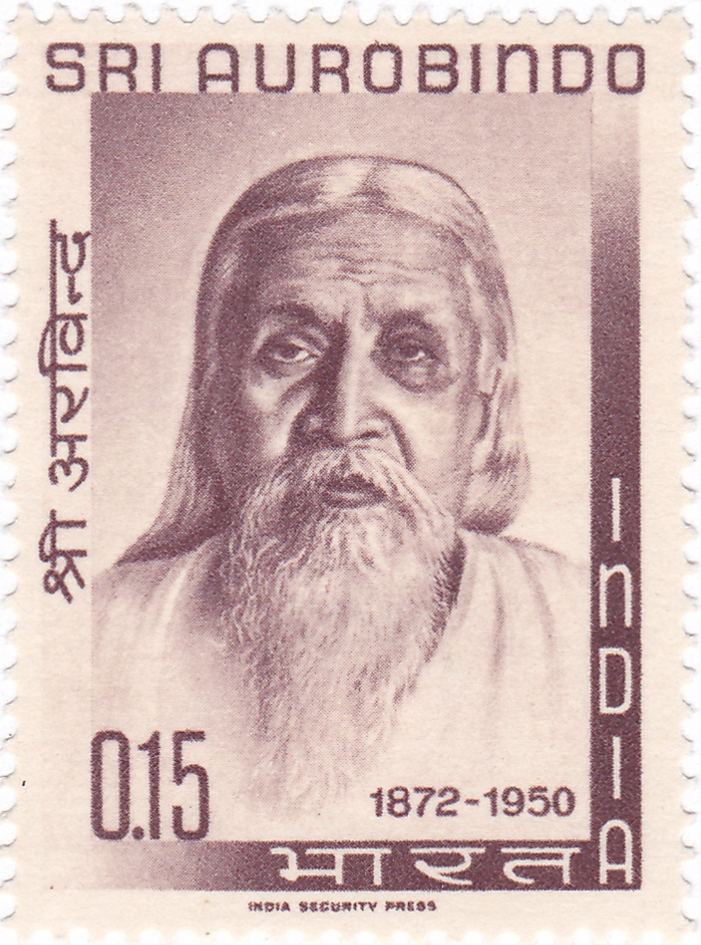
Sri Aurobindo 1964 stamp of India. (Picture Courtesy: India Post, GoI/Wikimedia Commons)
In 1910, Aurobindo Ghosh arrived in Pondicherry seeking refuge from British prosecution. Over time, his focus shifted towards spiritual work, and he gathered a number of followers. In 1920 he was joined by his spiritual collaborator — a French national named Mirra Alfassa, who came to be known as The Mother. The Sri Aurobindo Ashram was established in 1926 in Pondicherry’s White Town. Not a traditional Hindu ashram (spiritual hermitage or secluded retreat center), the Sri Aurobindo Ashram propounded their philosophy of Integral Yoga and garnered a substantial following from India — especially Bengal, Odisha, and Gujarat — and even internationally. The inflow of devotees to the Ashram altered the social fabric of Pondicherry. The Ashram enjoyed support from the French administration and went on to own several large properties within the French town and establish cultural and educational institutions. Although Sri Aurobindo was formerly a radical nationalist, the Ashram remained politically detached through the decades leading up to Independence, neither aligning explicitly with the pro-French nor with the pro-merger factions.
In fact, as Ajit Neogy points out, political consciousness in Pondicherry arrived rather late. In the First and Second World War, youth from Pondicherry seemed to have voluntarily enrolled in the French Army. French Indians, especially families prospering from businesses in Indochina, contributed substantially to France’s war funds. Even 1942’s Quit India Movement did not stir nationalistic fervor in Pondicherry, partially because there was no Congress Party in the enclave. After Indian independence in 1947, pressure intensified on France to clarify the status of Pondicherry, Karaikal, Mahe, and Yanam.
In a bid to continue the possession of these territories, the French government proposed the status of an autonomous state under the French Union to Pondicherry. This idea was supported by the Socialist Party of Pondicherry on account of their belief that although Indian by ethnicity and language, the Pondicherrian population had a distinct identity through their assimilation of French culture; being a part of the French Union would protect this identity of the population. This position differed sharply from that of the Congress and the Communist Party, which demanded full independence and a merger with India, without detailing how the specific interests of French Indians would be protected.
By the early 1950s, however, there was a growing pro-merger sentiment, and the French government proposed a referendum to determine the settlements’ future. Pondicherry was of strategic importance to France since it served as a logistical point for Southeast Asia. However, after the signing of the Geneva Accords and withdrawal of its forces from Vietnam in 1954, the territory ceased to be of significance to them.
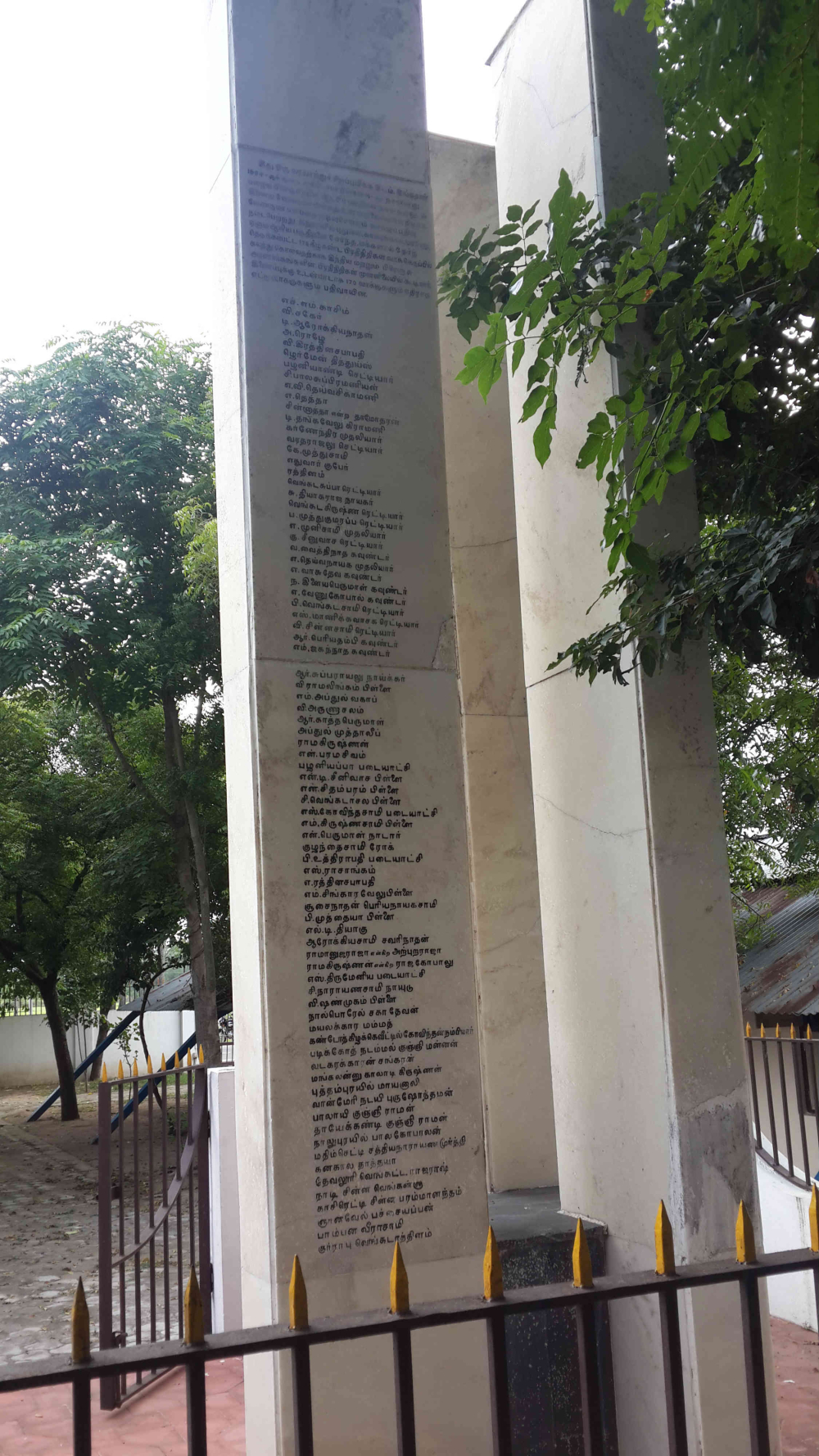
Kizhoor Declaration Monument which lists the names of all 178 members who voted in the referendum to merge with India. (Picture Courtesy: Vayuyatra/Wikimedia Commons)
In October 1954, elected representatives from the four settlements met at Kizhoor and voted overwhelmingly for merger with India. On 1 November 1954, a de facto transfer occurred. French administrative authority ended although sovereignty legally remained with France. A Treaty of Cession was signed in 1956 but was ratified by the French Parliament only in 1962 after resolution of the Algerian crisis. The treaty allowed former French citizens to choose between French and Indian citizenship, and 4944 individuals, most of them descendants of renonçants, chose to retain their French nationality. Amongst other provisions, the Treaty also enabled France to retain ownership of certain properties and educational institutions.
Post-Independence
In 1963, the Indian Parliament passed the Government of Union Territories Act which allowed the formation of Legislative Assembly and council of ministers in five Union Territories. This included Pondicherry. Édouard Goubert who had by then aligned with the Indian National Congress became the first Chief Minister of the UT.
Since 1963, Pondicherry—renamed Puducherry in 2006—has retained its separate administrative status and resisted proposals to merge with Tamil Nadu. The most significant confrontation occurred in 1978–79, when suggestions from the Morarji Desai–led central government, along with support from some political leaders, triggered widespread opposition. In January 1979, protests escalated into violence, termed politically as a “Day of Sorrow” and even described as a “second freedom struggle.” Police firing followed; accounts differ on the number of casualties, citing either two or thirteen deaths.
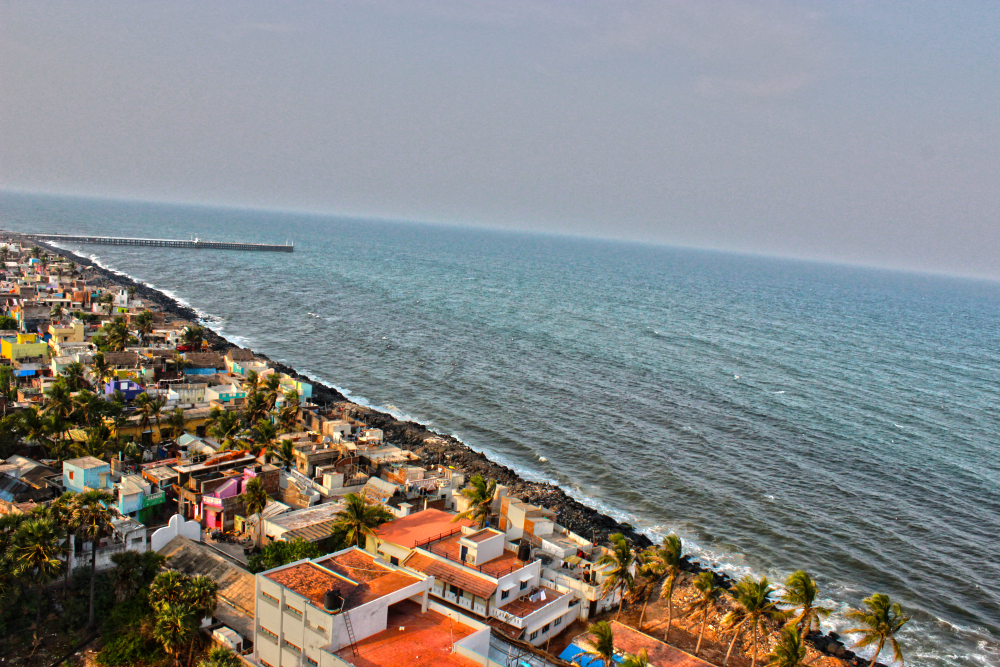
Aerial view of the city's coast. (Picture Courtesy: Karthik Easvur/Wikimedia Commons)
Pondicherry’s resistance to the merger has always been on the grounds of preserving a distinct political and cultural identity, shaped by nearly 280 years of French rule, along with a fear of losing economic advantages such as lower taxes and liquor policy. Currently, it is one of the three UTs in India, along with Delhi (NCT) and Jammu & Kashmir, to have partial statehood with its own elected government.
Bibliography
More, J. B. P. Pondicherry, Tamil Nadu and South India under French rule: From François Martin to Dupleix, 1674–1754. London: Routledge, 2021.
___________ Towards Freedom in Pondicherry: Society, Economy and Politics under French Rule (1816-1962). London: Routledge, 2022. https://doi.org/10.4324/9781003341475
Neogy, Ajit K. Introduction in Decolonization of French India. Puducherry: Institut Français de Pondichéry, 1997.
Raffin, Anne. Republican Citizenship in French Colonial Pondicherry, 1870-1914. London: Routledge, 2025.
Rai, Animesh. Introduction, in The Legacy of French Rule in India (1674-1954). Puducherry: Institut Français de Pondichéry, 2008.
Weber, Jacques. Foreword. In Decolonization of French India. Puducherry: Institut Français de Pondichéry, 1997.
Yechury, Akhila. ‘Imagining India, decolonizing “L’Inde française”, c. 1947–1954.’ The Historical Journal, 58, 4 (2015): 1141–1165. http://www.jstor.org/stable/24532013
This essay has been created as part of Sahapedia's My City My Heritage project, supported by the InterGlobe Foundation (IGF).