
The history of Gwalior’s music is famous, but what is less recognised is the Urdu poetry that continues to find a home in the city. More recent history has witnessed figures such as Jan Nisar and Javed Akhtar, both born in Gwalior, who are widely known for their works as lyricists and writers in the film industry, as well as celebrated poets in their own rights. Also associated with Gwalior is Nida Fazli, popular for his work in cinema. Yet the history of Urdu poetry in Gwalior goes back much further.
The Beginnings of Urdu
The figure of Muhammad Ghaus (Ghouse or Ghawth), among the most influential in the history of Gwalior, is also distantly connected to poetry. His grandson, Shah Mubarak Abroo, was among the first poets who shaped Urdu as the language it is today. Shamsuddin Rahman Farooqui describes Abroo as “the first major poet in Delhi”. Born in Gwalior in 1683, he was a contemporary of Mir Taqi Mir, the famous Urdu poet who moved from Agra to Delhi. These early poets were closely interconnected. Abroo became a disciple of Siraj-ud-din Ali Khan Arzoo, the maternal uncle of Mir, in Agra.
Abroo was an innovator in his style of poetry. He frequently used iham or puns, experimenting with the intricacies of Urdu. Punning has been a feature of Indian literary culture since the days of Sanskrit kavyas (songs-poems): called slesha in Sanskrit, this seeped down to other Indic languages like Brajbhasha. Brajbhasha poetry, in turn, had an intimate relationship with the city of Gwalior, indicating a potential source of inspiration for Abroo’s puns.
Take the following verse: tumhare log kahte hai kamar hai/kahan hai kis tarah ki hai kidhar hai. (Your people say it is a waist/Where is it? How is it?) Here, kamar could refer to a waist — or if pronounced slightly differently, a moon, thus changing the entire meaning of the verse.
The Akhtar Family
Descendants of Fazl-e-Haq, himself a renowned Hanafi jurist who issued a fatwa (a legal ruling on a point of Islamic law) of war against the British, also became pivotal architects of the Urdu poetic landscape.
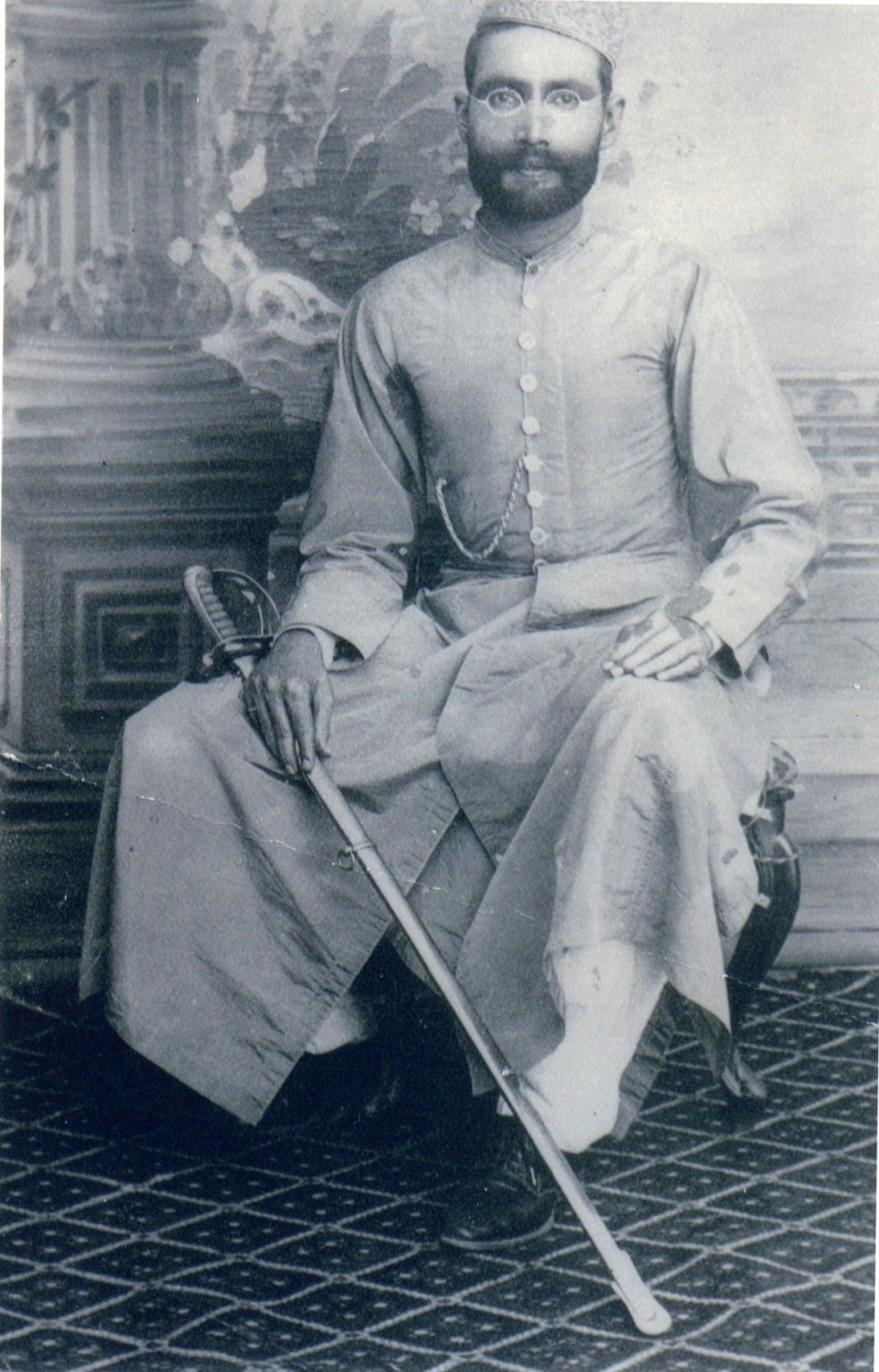
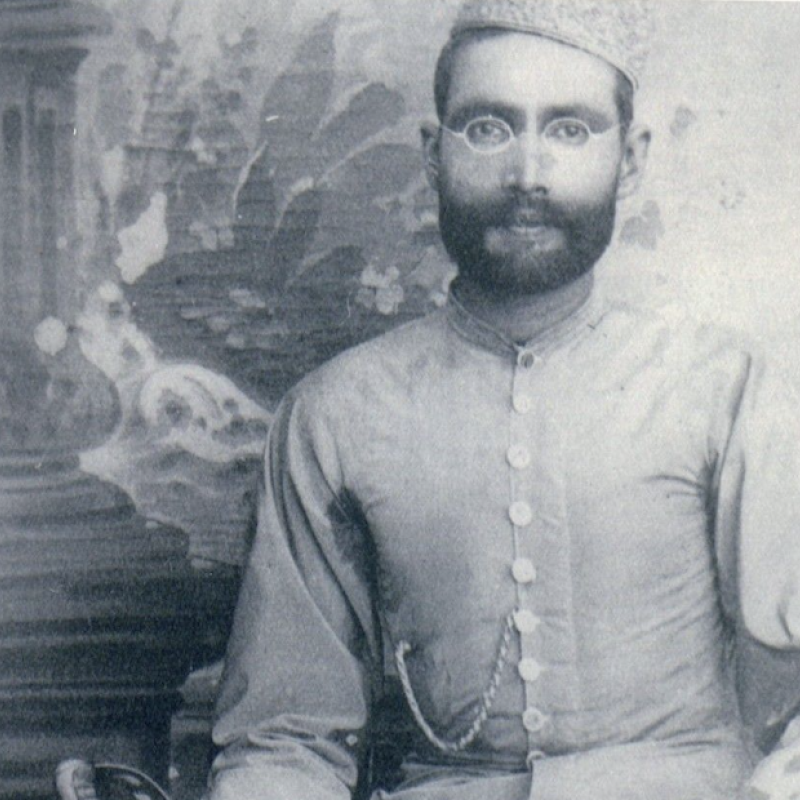
Photograph of Muztar Khairabadi. (Picture Courtesy: Wikimedia Commons)
Fazl’s grandson, Iftikhar Hussain, adopted the pen-name ‘Muztar’. Princely states used to employ people of scholarly repute and Muztar was scouted by Rampur and Tonk, before he finally arrived in Gwalior. In Gwalior, he took his responsibilities as a judge in full stride, even getting into a conflict with the rulers. When the Maharaja wanted a man named Nuthmul to be convicted of a crime, Muztar still found him innocent. To avoid further conflict or persecution, he consequently fled to Bhopal and later to Indore. Yet it was to Gwalior that he returned to spend his final days, eventually being buried in the city too. In his time as a poet, Muztar wrote four collections of Urdu poetry and began the literary magazine Karishama-e-Dilba.
Muztar’s son, Jan Nisar, was also a scholar and a poet. He taught at Victoria College in Gwalior (today the Maharani Lakshmibai College) and became a part of the Progressive Writers Movement, eventually serving as its president. This group sought to move from the poetics of romance and tragedy to the poetics of politics and equality, urged by the context of India’s anticolonialist struggle and the rising fascism of the world. Imbued by the politics of socialism, the group sought to break away from traditions and structures of socio-political inequality.
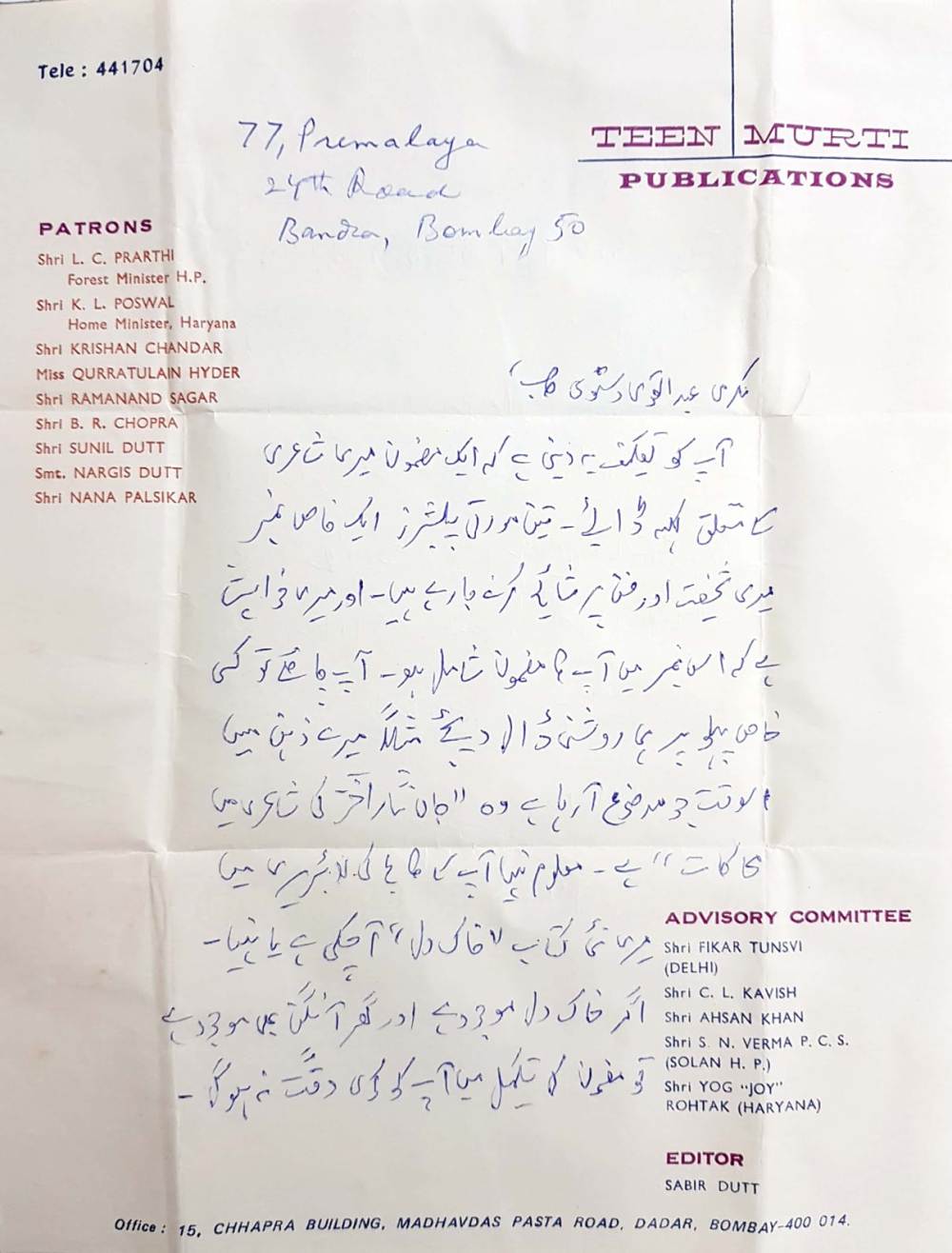
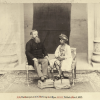
A letter from Jan Nisar Akhtar. (Picture Courtesy: Voidbaba/Wikimedia Commons)
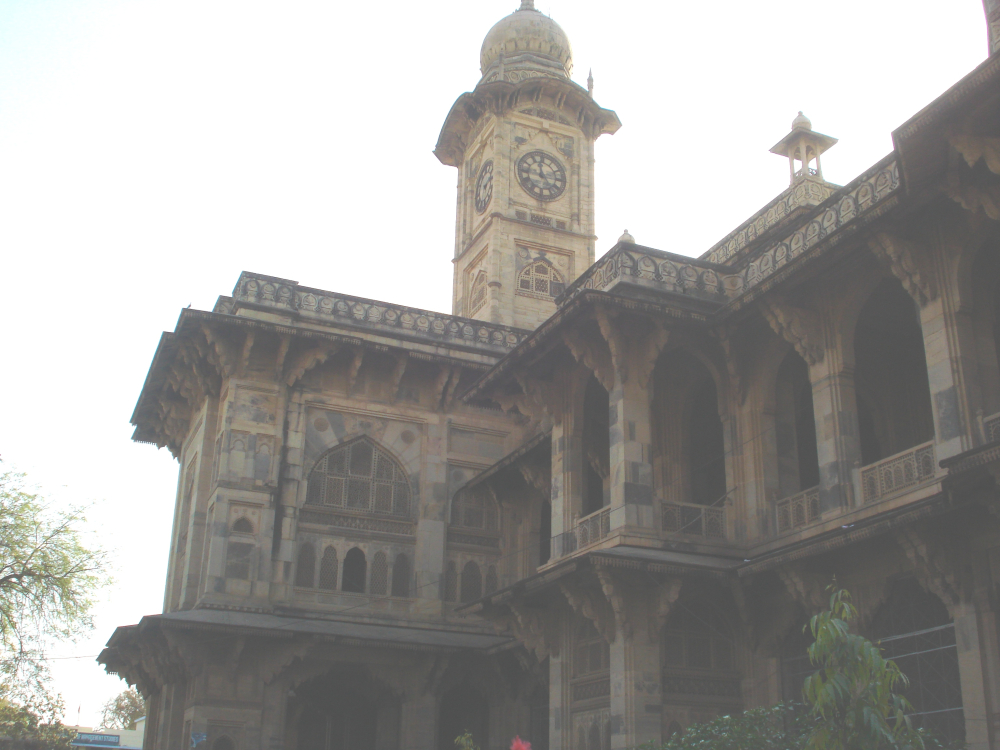
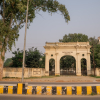
MLB Government College. (Picture Courtesy: Gyanendra Singh Chauhan/Wikimedia Commons)
Yet the literary works of the members approached revolution from different perspectives, not necessarily focused solely on revolution. Jan Nisar, for instance, wrote the Ghar Aangan, a collection of geets and rubais (poems) from the perspective of a housewife. Take this verse from it: gulnar dekhti hai ye mazdur aurten/chehron pe khaak dhuul ke ponchhe hue nishan (the labouring women look at the pomegranate flowers/the marks of ash and dust on their faces). Eventually, Jan Nisar would leave the movement on account of considering it propaganda.
After moving to Bombay in 1949, he found fame as a composer in Hindi cinema, with popular songs like Aankho Hi Aankho Me in Guru Dutt’s CID (1956) and Aaja Re in Noorie (1979) attributed to him.
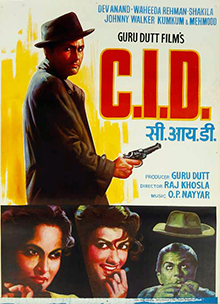
Poster of Guru Dutt’s 'CID'. (Picture Courtesy: Wikimedia Commons)
His move to Bombay separated him from his wife, Safia, and their children. Their letters to each other, collected in Tumhare Naam, depict the warmth of their relationship in the years before Safia passed away in 1953. She left their children, including Javed Akhtar, in Gwalior with her family. Javed Akhtar, in turn, would later become one of the most prolific scriptwriters and songwriters in the Hindi film industry.
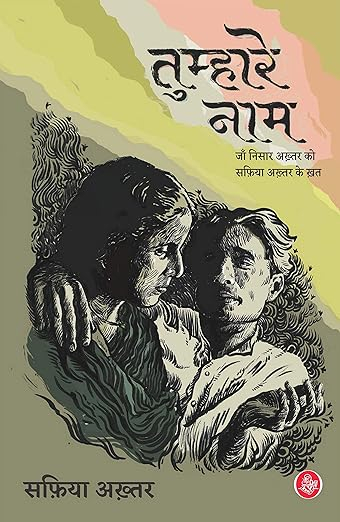
Cover of 'Tumhare Naam', a collection of Safiya Akhtar's letters to Jan Nisar Akhtar, published by Rajkamal Prakashan in 2004. (Picture Courtesy: Publisher)
The Next Generation
Among later poets associated with Gwalior, two well-known names are Shifa Gwaliari and Nida Fazli. Shifa Gwaliari, born in the early twentieth-century, became a poet in the tumultuous years preceding Independence. Nida Fazli, on the other hand, is likely the most well-known poet from Gwalior outside the Akhtar family. His father too was a poet under the pen-name Murtaza Hassan. Fazli’s personal life was shaped by Partition: his family and wife-to-be moved to Pakistan post 1947, but Fazli chose to stay in India. In his autobiography, he recounts how his father was a follower of Muhammad Ali Jinnah and he himself was influenced by Maulana Abul Kalam Azad. His brother, Tasleem Fazli, in a mirroring parallel, found fame in the film industry in Pakistan.
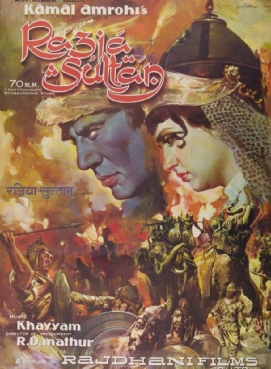
Poster of Kamal Amrohi’s 'Razia Sultan'. (Picture Courtesy: Wikimedia Commons)
Nida Fazli, meanwhile, moved to Bombay in the 1960s and made a name for himself by composing songs for Kamal Amrohi’s Razia Sultan (1983). However, he soon passed away soon after. A polymath at heart, Fazli was steadfast in his message of peace and communal harmony across the country, often writing columns for organisations like the BBC. A representative verse from Fazli goes: Kabhi kisi ko mukammal jahaan nahi milta/Kaheen zameen to kahin aasman nahi milta (No one gets a perfect world/If you get land, you don’t get the sky).
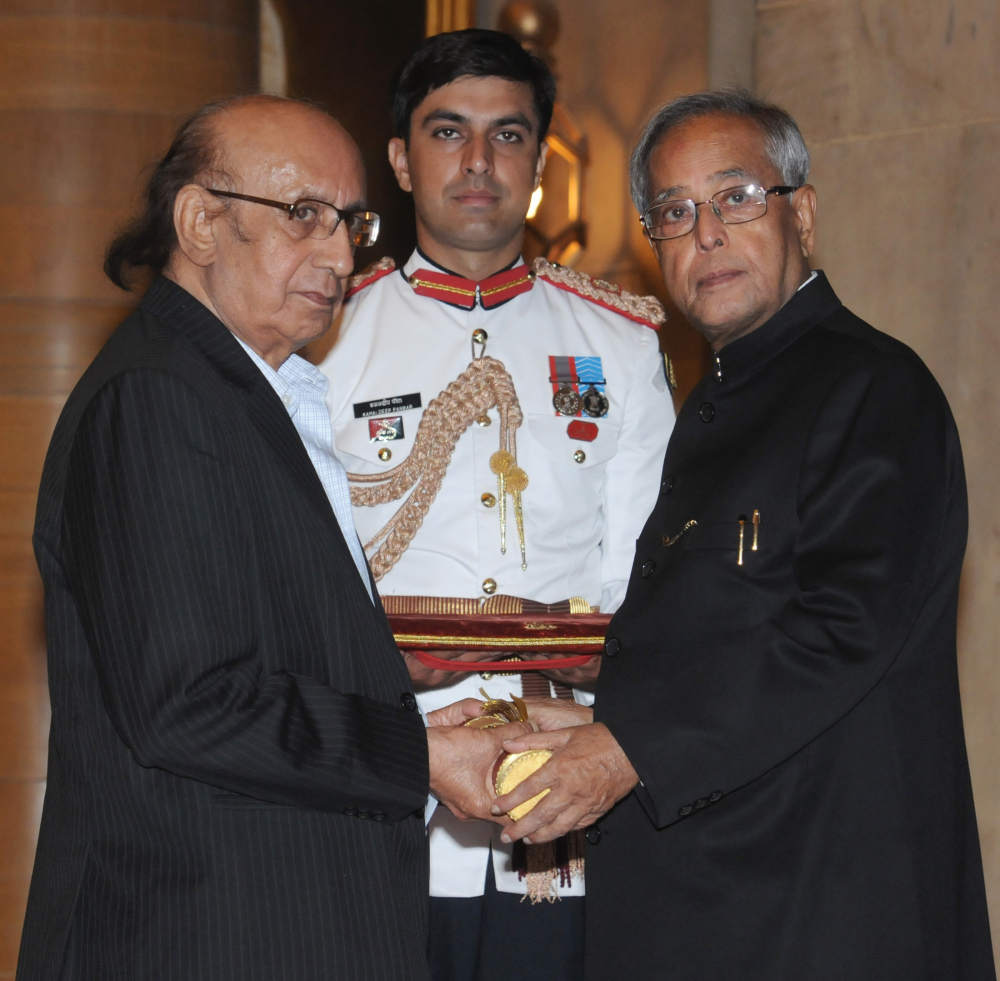
Nida Fazli being awarded with the Padma Shree Award. (Picture Courtesy: President's Secretariat/Wikimedia Commons)
These famous names and figures, often through their varied writing — poems, lyrics, compositions — have left lingering associations of Urdu poetry with Gwalior that are rarely explored. From Aabroo’s initial contributions to Urdu poetry and its form, Gwalior has always been somewhere on the scene in Urdu’s history. Even as Urdu became the language of Bollywood, Gwalior was present.
References
Cinemaazi. “Nida Fazli.”
https://cinemaazi.com/people/nida-fazli-lyricist?ctr=437&filterBy=n&search=&people=.
Faruqui, Shamsur Rahman. “A Long History of Urdu Literary Culture, Part 1.” In Literary Cultures in History: Reconstructions from South Asia, edited by Sheldon Pollock. Univ of California Press, 2003.
Naseem. “Muztar Khairabadi.” Sher-o-Sukhan. https://www.urdushayari.in/2011/11/muztar-khairabadi.html.
Rahman, Anisur. Hazaron Khawaishen Aisi: The Wonderful World of Urdu Ghazals, Harper Collins, 2018.
Rekhta. “Nida Fazli - Profile & Biography.”.
https://www.rekhta.org/poets/nida-fazli/profile.
Saran, Suvir. “Why No One Sings This Song Anymore.” The Indian Express, September 21, 2025. https://indianexpress.com/article/express-sunday-eye/why-no-one-sings-this-song-anymore-suvir-saran-10260549/?utm_medium=echobox&utm_source=Facebook&utm_channel=echoboxfb#Echobox=1758441072.
Sufinama. “Profile of Muztar Khairabadi.”
https://sufinama.org/poets/muztar-khairabadi/profile.
This essay has been created as part of Sahapedia's My City My Heritage project, supported by the InterGlobe Foundation (IGF).