
Gwalior is known as the “land of music.” Even the children of Gwalior are reputed to wail melodiously. Over the years, the city, a vibrant and innovative hub of musical history, gave rise to a variety of styles, many of which have found worldwide recognition. Therefore, it is not surprising that Gwalior was referred to as India's cultural center by Faqirullah, the administrator who translated the Mankutuhal (1666 CE) into Persian during Aurangzeb's reign.
The Reign of Dhrupad
It was Raja Man Singh Tomar (1486-1516) who founded the Gwalior School of Music. His durbar (court) was adorned by a galaxy of nayakas (scholar-musicians) whose caliber was considered superior even to the court musicians of Akbar. He and his queen Mriganayani were accomplished musicologists themselves. Raja Man, with the help of his court musicians, wrote the musical treatise Mankutuhal (or Man Kautuhal) on contemporary music and established a music school at Gujari Mahal in Gwalior fort. He is also responsible for the innovation and popularisation of the dhrupad style by using Brajbhasha, the popular language of central India, for the lyrics of the compositions; hence he is also called the father of dhrupad.
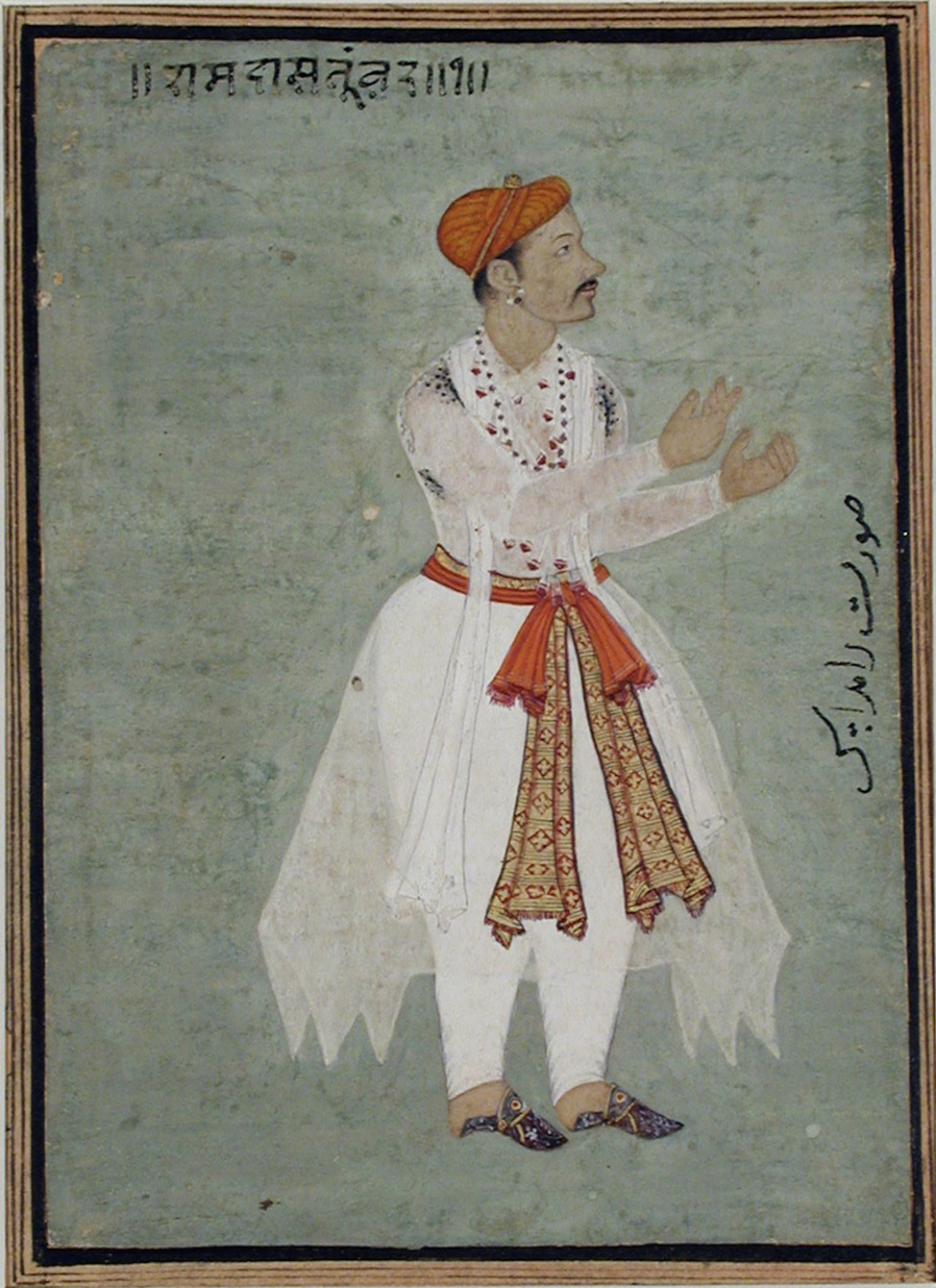
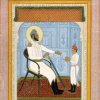
Man Singh Tomar of Gwalior. (Picture Courtesy: San Diego Museum of Art)
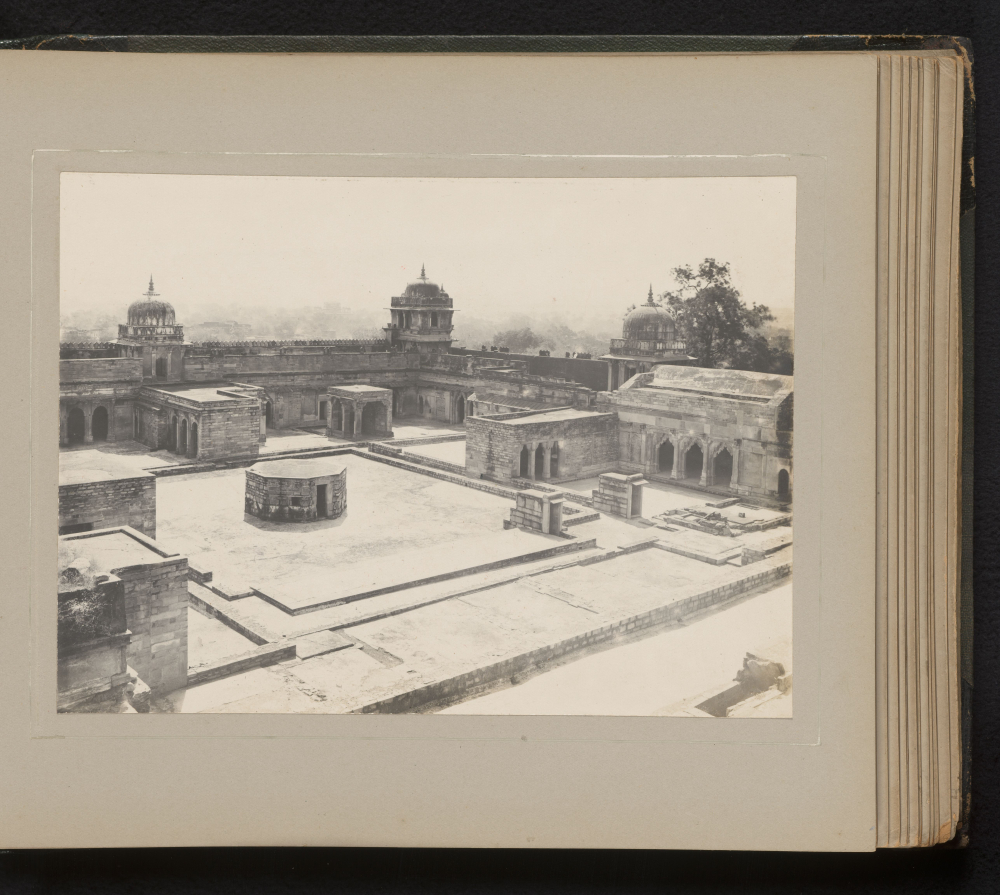
Gujari Mahal in c. 1900. (Picture Courtesy: Rijksmuseum/Wikimedia Commons)
This laid the foundation for musicians with the extraordinary calibre of Tansen, about whom it was said “bhuto na bhavishyati” (there never was, nor will there be another), who was born in the household of Makarand Pandey in Behat village near the city of Gwalior. Abul Fazl praised him in the Akbarnama as “a musician born once in a thousand years.” When Akbar heard Tansen for the first time, he was so captivated that he rewarded him with two lakh dinars (gold coins) and made him one of the nine jewels of his court.
Even after Akbar’s reign, the Mughal courts continued to echo with the music of Gwalior’s renowned musicians. Mian Tansen was an exceptionally creative genius and a master musician, composer, and musicologist. He introduced several new ragas (a series of musical notes on which a melody is based) that remain popular to this day, such as mian ki todi, mian malhar, and darbari kanada, along with several dhrupads. Tansen’s rich musical legacy was carried forward by his illustrious disciples and family members across the Indian subcontinent.
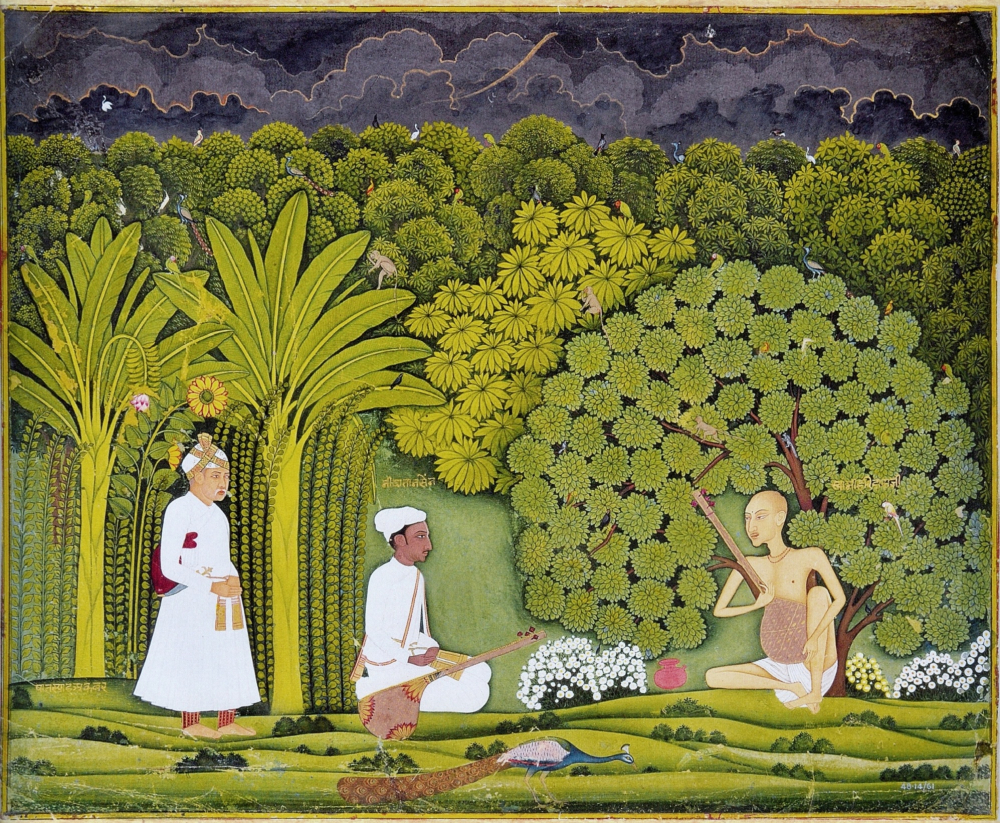
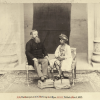
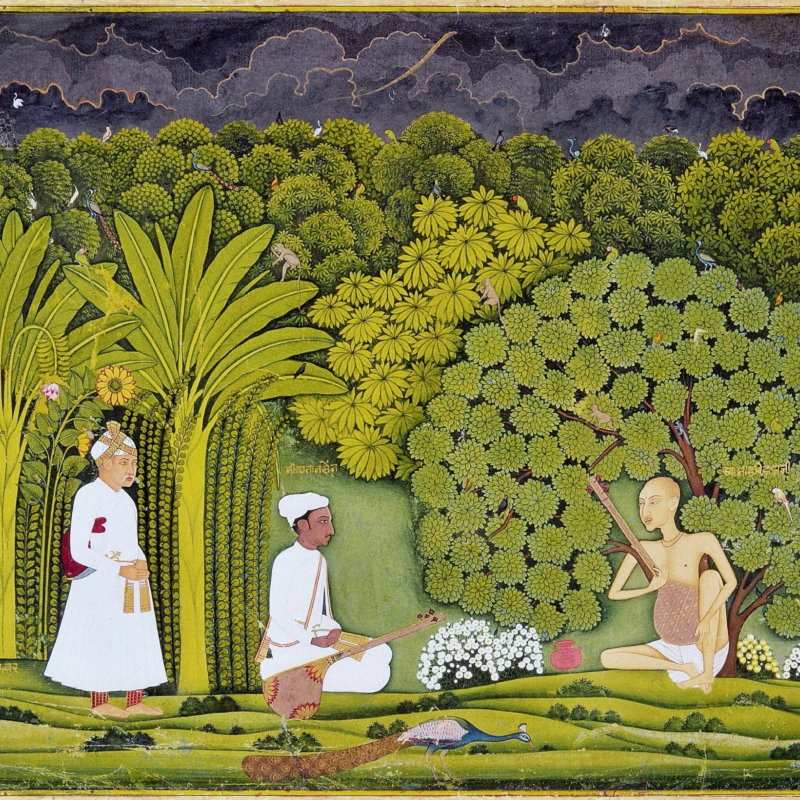
Swami Haridasa with Tansen and Akbar at Vrindavana. (Picture Courtesy: National Museum/Wikimedia Commons)
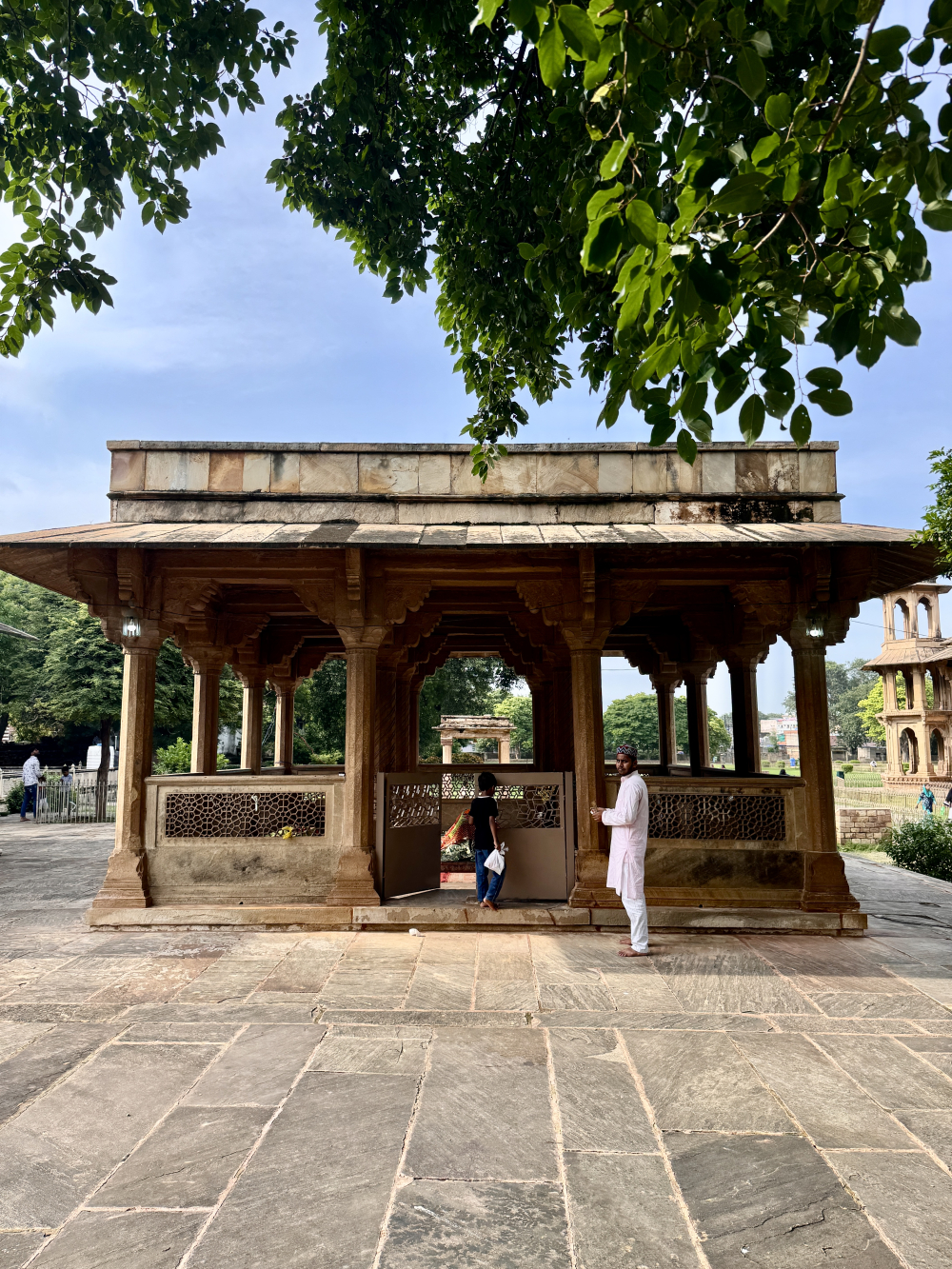
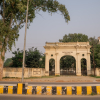
Tomb of Tansen in Muhammad Ghawth’s Tomb Complex. (Picture Credits: Meenakshi Vashisth)
Though this recognition led Tansen to move from Gwalior to the imperial court at Agra, his spirit remained deeply rooted in the soil and atmosphere of Gwalior. Near the Gwalior Fort stands his tomb, beside which grows a tamarind tree. According to local belief, anyone who eats its leaves is blessed with a melodious voice. This belief became so widespread that not only the leaves and branches but even the roots of the original tree were consumed; the tree now standing there is one planted later. I remember, in my childhood, my grandfather Pt Krishnarao Shankar Pandit, mentioning the renowned actor and singer K. L. Saigal visited the Shankar Gandharva Vidyalaya in Gwalior. On asking about the purpose of his visit, he mentioned only his desire to meet Pandit ji and to taste the leaves of this legendary tree. As the story of the tree shows, the name of Tansen remains inseparably linked with Gwalior.
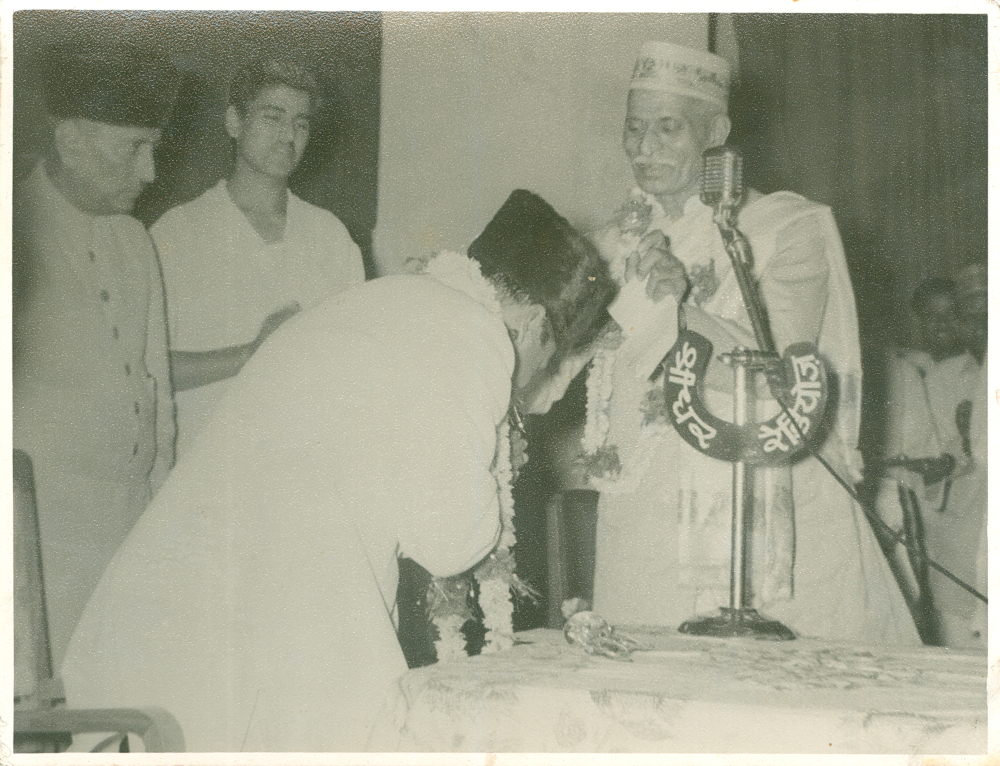
60th Birthday celebrations, Pt Krishnarao Pandit being honoured by Srimant Jiwaji Rao Scindia. (Picture Credits: Dr Meeta Pandit/Pandit Family Archive)
Dhrupad to Khayal
After the Tomar dynasty, music in Gwalior received fresh impetus under the royal patronage of the Scindias, particularly Daulatrao Scindia (1794–1827) and Jayajirao Scindia (1843–86). Their court was adorned with ustads (master musicians), who were granted generous stipends amounting to hundreds of rupees at a time when government officials earned merely 15-20 rupees per month. The Scindias held their musicians in great esteem and cared for them with reverence. Court musicians received substantial salaries along with lavish residences, horses, and even elephants. The silver coins presented as remuneration were so heavy that ustads often transported them home by elephants, horses, or palanquins.
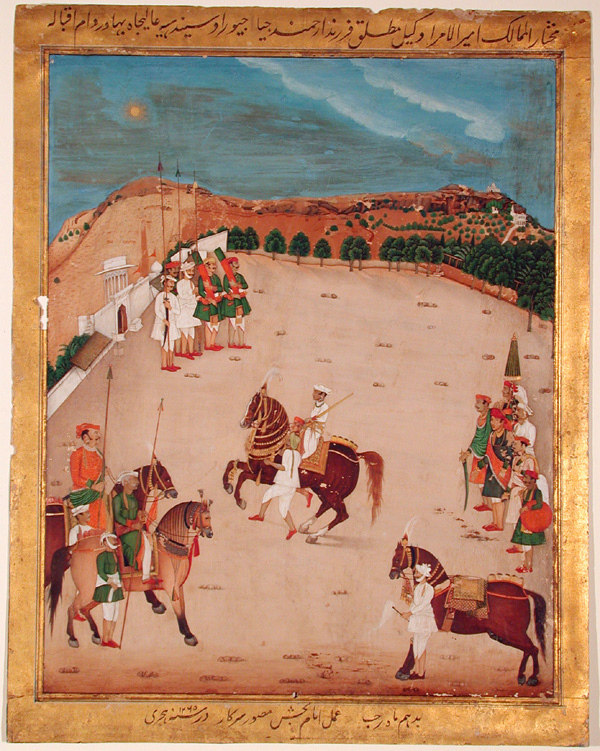
Jayaji Rao Sindhia, Maharaja of Gwalior. (Picture Courtesy: San Diego Museum of Art)
By this period, the new style of Khayal Gayaki, which allowed more room for personal interpretations of the ragas, had begun to surpass dhrupad in prominence. Gwalior’s dhrupad-trained singers played a pivotal and revolutionary role in this transition. Although khayal was not entirely new, it was popularised through the introduction of Ashtang Gayaki within the prevailing musical style — the balanced integration of eight elements such as alap (slow melodic elaboration), taans (fast melodic runs or musical phrases), bol-taans (melodic patterns using lyrics), layakari (rhythmic play), gamak (oscillation of notes), meend (gliding between notes), and other ornamentations.
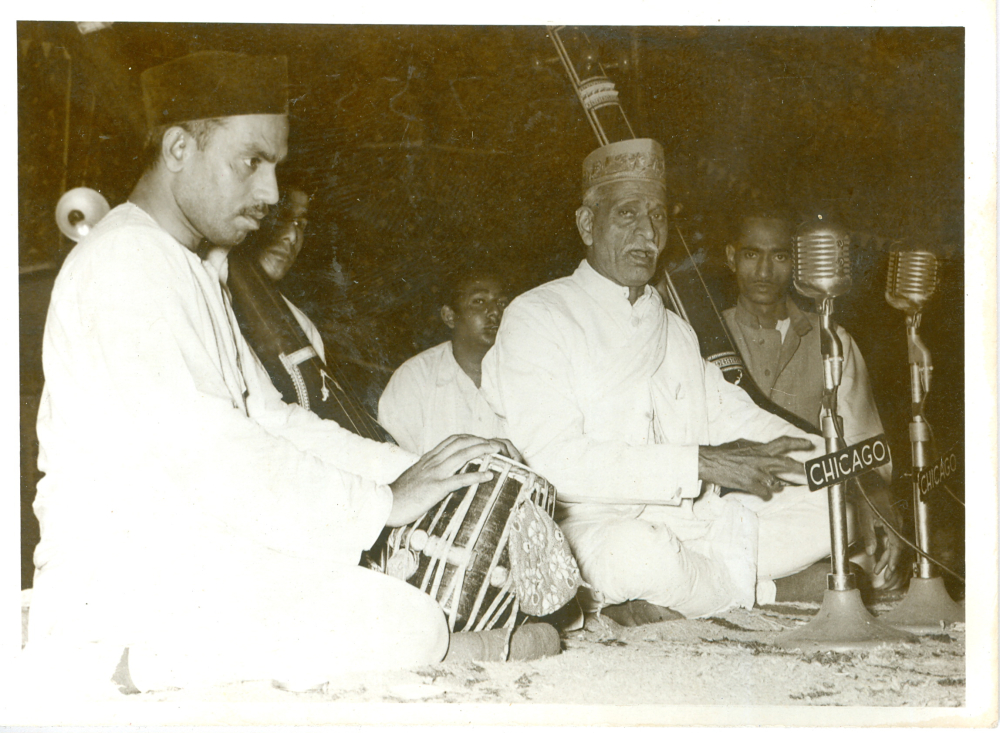
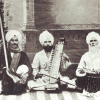
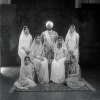
L-R Pt Anokhe Lal accompanying Pt Krishnarao Shankar Pandit, Tanpura Pt Sita Ram Sharan, Pt Laxman Pandit. (Picture Credits: Dr Meeta Pandit/Pandit Family Archive)
Credit for this transformation is attributed to Ustad Naththan Pir Bux, regarded as the innovator of the Gwalior khayal style. Ustad Naththan Pir Bux was a descendant of Shah Sadarang, the renowned musician-composer of the Tansen tradition who himself composed numerous khayal compositions. However, being a beenkaar (a musician of the been, an ancient instrument), Shah Sadarang did not develop khayal gayaki extensively, particularly its vilambit (slow tempo) aspect.
It was Daulatrao Scindia who desired Ustad Naththan Pir Bux to develop a distinct Gwalior, or Lashkari, khayal gayaki. After the early death of Ustad Naththan Pir Bux’s son, his grandsons Hassu and Haddu Khan, along with his nephew Natthu Khan, were trained under Naththan Pir Bux and rose to great prominence. During Daulatrao’s reign, these three brothers secretly learned the musical patterns of the rival lineage of Ustad Bade Mohammad Khan. Hidden beneath the Maharaja’s throne during performances, they absorbed the taans and blended them with their own style, giving birth to the Gwalior khayal gayaki. A later incident involving the powerful kadak-bijali taan is believed to have contributed to the early death of Ustad Hassu Khan.
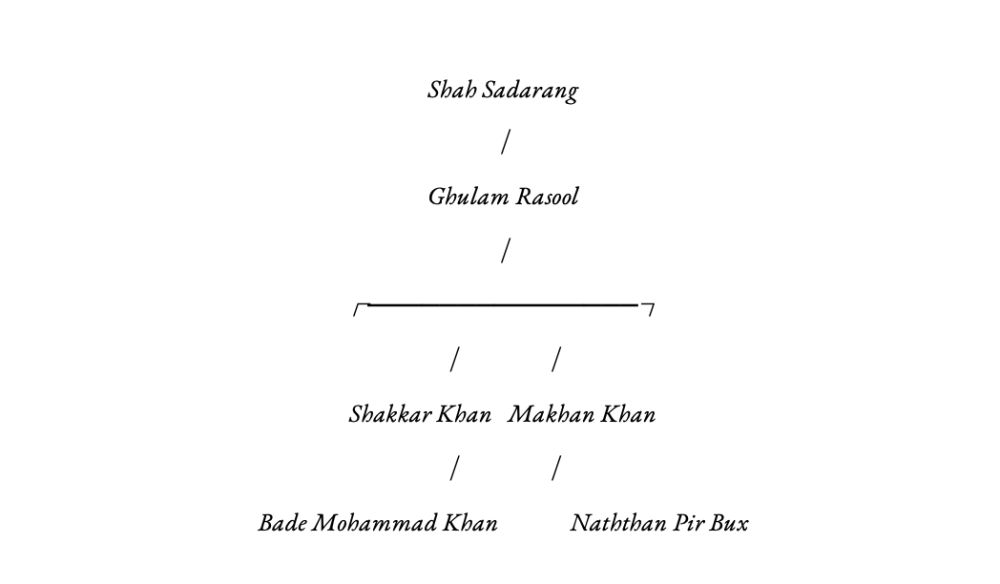
Thanks to Hassu, Haddu, and Natthu Khan, the khayal style of Gwalior reached its pinnacle during their own lifetimes. Their era is remembered as the golden age of the khayal tradition, with experts considering Haddu Khan to have been an unparalleled khayal vocalist. In those times, music in Gwalior enjoyed such high social prestige that even businessmen valued ragas as highly as silver and gold. Even as vocal traditions took centre stage, instrumental lineages such as that of the sarod also found a place within Gwalior’s musical landscape. The city became a sacred pilgrimage site for music lovers and students from across the country, who came to learn according to their capacity, sat at the feet of these masters, and then spread across India, making the Gwalior gharana immortal.
Pandits of Gwalior
In the early nineteenth-century, when the Scindias made Gwalior their capital (1810), my ancestors — Pt Ramchandra Chinchwadkar and my great-grandfather’s father Pt Vishnu Shastri Chinchwadkar — moved there from Chinchwad, near Pune. As kirtankars (narrator-teacher-singer, usually of religious tales or learnings) and scholars of Sanskrit and Vedic studies, they were deeply connected with music. Over time, the family name changed from Chinchwadkar to Pandit, which we carry today.
My ancestors’ love for music brought them close to many renowned musicians, including Ustad Naththan Pir Bux. Vishnu frequently visited the Khan Saheb household, teaching Ustads Hassu, Haddu, and Nathu Khan Sanskrit shlokas (prayer-chants) and Marathi arya abhangas (devotional-poems) by the poet Moropant. The three brothers often sang these along with Maharaja Scindia in his devghar (house-of-god).
Vishnu Pandit's four sons — Pt Gopal Rao, Pt Ganapat Rao, Pt Shankar Rao, and Pt Eknath Pandit — also accompanied him to the Khan Saheb home, particularly to the talghar (basement), where the ustads did their riyaaz (practice). Ustad Rehmat Khan, adored by music lovers and known as “Bhugandharva” (heavenly singer, a title bestowed on musicians), was also present, learning from and singing with Ustad Haddu Khan. These sessions formed a remarkable musical gathering that lasted for hours. Rehmat Khan later moved to Maharashtra with the Chattre brothers, pioneers of the Indian Circus. His style too influenced many stalwarts.
Haddu Khan recognised the talent of Vishnu Pandit’s four sons and accepted them as his disciples, taking special interest in Shankar Rao for his remarkable voice. A deep bond formed between them; Haddu Khan Saheb often made Shankar Pandit sing before his own performances, and would sometimes stay at Panditji’s home for days. After Haddu Khan’s death in 1883, their training continued under Ustad Nathu Khan, who also passed away in 1884. Their talim (training) then continued under his adopted son, Ustad Nissar Hussain Khan, known as Kothiwale Gawai (treasure-house of compilations) for his vast repertoire of khayal, tappa, and tarana. Through his virtuosity, dedication, and guru-bhakti (devotion for his master), Shankar Pandit won his guru’s heart so deeply that Hussain Khan would say: “If anyone wants to hear my singing from my youth, they should listen to Shankar Pandit. Shankar is shakkar (sugar).”
Eventually, after the Maharaja’s death, musicians faced neglect and salary cuts, leading Nissar Khan to leave the royal court and live with his disciple, Shankar Pandit, from 1886 until his death in 1916. Khan Saheb living as a family member in a Brahmin household was extraordinary for two reasons: music training then was rigorous and rarely granted, and social norms made it unthinkable for a Muslim ustad to reside in a Brahmin disciple’s home. Yet he embraced the family so fully that he called himself Nissar Bhatt, wore the sacred thread, and practised vegetarianism. Even his final rites were performed by Shankar Pandit. This unique relationship marked a historic moment in musical tradition. The event also highlights the Pandit family’s significant role in preserving and carrying forward the Gwalior tradition, especially since the original musical lineage left no descendants.
The Pandit family would continue to supplement Gwalior’s music in manifold ways. Pt Eknath Pandit, uncle of Pt Shankar Pandit, contributed over 500 compositions to Pt Vishnu Narayan Bhatkhande, later published as the Kramik Pustak Malika. Disciples of the Pandit family also assisted Bhatkhande in preparing the series, as well as running music colleges.
Krishnarao Shankar Pandit, a prodigy with a remarkable eight-decade career, gained fame for his distinct style. In 1914, he founded the Shankar Gandharva Vidyalaya, known for its ongoing “Thursday Concerts,” which provide a performance platform for students, teachers, and visiting artists. He also created an independent, simplified notation system and published seven music books for the Vidyalaya’s courses.
The Afterlife of the Khans
Haddu and Natthu Khan were amongst the first musicians to break the age-old custom of limiting musical talent to blood relations. Besides their family members, they trained disciples from well-educated and cultured families. Disciples from every nook and corner of the country thronged to Gwalior to learn from them. The majority amongst them were Hindu and Maharashtrians. Haddu Khan would tell my great-great grandfather Vishnu Pandit that Maharashtrian Brahmins, lacking great musicians of their own lineage, would remember him as their guru, while his Muslim disciples would credit their ancestral teachers instead. This was indicative of the openness of the Khans and how their teachings thus spread far and wide.
There were several other prominent disciplines of the Khan Sahebs, who would go on to shape the music of Gwalior, including
-
Hassu Khan: Gule Imam Khan, Baba Dixit, Vasudeo Rao Joshi, Bade Balkrishna Bua, Devji Bua.
-
Haddu Khan: Nissar Hussain Khan, Rehmat Khan, Chatre Brothers, Inayat Khan, Shankar Rao Pandit, Eknath Pandit, Ganapat Rao Pandit, Bande Ali Khan, Banne Khan.
-
Natthu Khan: Nabbu Khan, Nissar Hussain Khan, Shankar Rao Pandit, Eknath Pandit, Ganapat Rao Pandit, Jayajirao Scindia.
-
Nabbu Khan: Bala Guruji.
-
Nissar Hussain Khan: Shankar Rao Pandit, Eknath Pandit, Ganapat Rao Pandit, Ramkrishna Bua Vaze, Nazir Khan, Mehandi Hussain.
Many later musicians learned directly or absorbed the Khayal tradition from these masters and went on to form new gharanas. The Khan Sahebs’ disciples became stalwarts who widely propagated the Gwalior gayaki. For example, Balkrishna Bua Ichalkaranjikar (disciple of Vasudeo Rao Joshi) and his disciple Vishnu Digambar Paluskar played key roles in spreading and popularising this music, including through the establishment of the Gandharva Mahavidyalaya in 1901. Ustad Banne Khan further carried the Gwalior style to undivided Punjab. Thus, the Gwalior gayaki spread across India.
Even today, the Gwalior gharana gayaki is distinguished by its technical purity, discipline, and artistic depth, rooted in the Dhrupad tradition. It emphasises rigorous voice culture, natural voice development, and mastery over three octaves, along with clarity of pronunciation, posture, and raga purity. Beyond khayal, Gwalior musicians excel in several allied forms, enabling rich emotional expression. It is where styles like dhrupad, khayal, tappa, tarana, and pad found new exponents; where they were further innovated; and where forms such as bol-baant thumri and ashtapadis evolved. A number of new sub-genres, such as tapp-khayal, khayal-numa tarana, tapp-tarana, and tapp-thumri, also emerged. Despite strong gharana discipline, the style offers a wide scope for individual creativity. Gwalior has thus produced an illustrious lineage of musicians, composers, scholars, and teachers, whose legacy continues through eminent contemporary exponents.
The innovators of the Agra gharana, Rampur-Sahaswan gharana, and Patiala gharana were all guided by the Gwalior gharana. The founders of the Agra and Rampur-Sahaswan traditions were direct disciples of master musicians from Gwalior.
Ustad Ghagghe Khuda Bux of the Agra gharana learned the khayal style from Ustad Natthan Pir Bux, while Ustad Inayat Khan, a key figure in the Rampur-Sahaswan gharana, was a disciple of Ustad Haddu Khan. The founders of the Patiala gharana, Aliya and Fattu, who identified themselves as disciples of Haddu Khan, came to Gwalior to seek validation of the authenticity of their khayal from Pt Shankar Pandit, who guided them in this regard. This account was later confirmed by Ustad Baqar Hussain Khan of Malerkotla, the khalifa of the Patiala gharana.
Ustad Banne Khan, a disciple of Haddu Khan, was instrumental in spreading khayal in western Punjab (now in Pakistan). In western India, Pt Balkrishna Bua Ichalkaranjikar, a disciple of Pt Vasudev Rao Joshi, propagated khayal gayaki in Maharashtra. This lineage continued through Pt Vishnu Digambar Paluskar, a disciple of Balkrishna Bua, who played a crucial role in disseminating this tradition across India.
Pt Vasudev Rao Joshi himself was a disciple of Ustad Hassu Khan. Alongside him, other prominent disciples of Haddu Khan, such as Ustad Nissar Hussain Khan and Ustad Rehmat Khan, as well as leading figures like Pt Devji Bua and Pt Ramkrishna Bua Vaze, contributed significantly to the spread and consolidation of the Gwalior khayal tradition.
The Gwalior gharana has given Hindustani music a remarkable lineage of celebrated musicians whose contributions have shaped the very foundations of khayal gayaki. From the pioneering masters Haddu Khan, Hassu Khan and Natthu Khan to illustrious exponents such as Vishnu Digambar Paluskar, Krishnarao Shankar Pandit, Vinayakrao Patwardhan, Narayanrao Vyas, Omkarnath Thakur, D. V. Paluskar, Sharadchandra Arolkar, Kumar Gandharva, Laxman Krishnarao Pandit, Vidyadhar Vyas, Malini Rajurkar, Veena Sahasrabuddhe, Neela Bhagwat, Sharad Sathe and many others, the gharana has enriched the world of music through its scholarship, artistry and unwavering commitment to tradition.
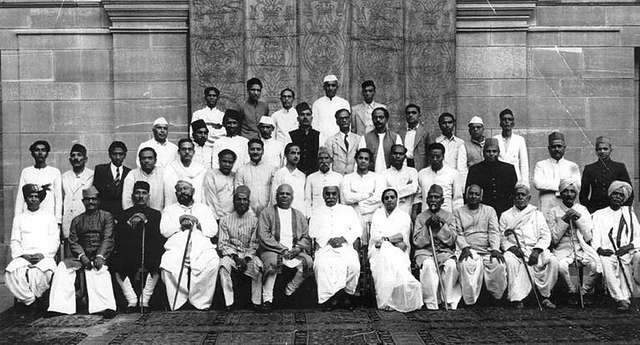
Indian musicians, including Krishnarao Shankar Pandit, at the first music conference after India’s Independence in 1948. (Picture Courtesy: Wikimedia Commons)
These names represent only a few among the many distinguished musicians who have carried forward the legacy of Gwalior gayaki. As the oldest khayal gharana, its journey continues to inspire generations of students and performers. It is our earnest hope that the Gwalior gharana continues to flourish through dedicated disciples, thoughtful scholarship and creative exploration, while preserving its timeless values and embracing new dimensions of musical expression.
Bibliography
Dwivedi, Hariharniwas. Appendix to Man Singh and Mankautuhal. Gwalior: Vidyamandir Prakashan, 1953.
Pandit, L.K. Pandit Krishna Rao Shankar Pandit. Roli Books, 2005.
_________ भारतीय संगीत के अमर साधक पंडित कृष्णराव शंकर पंडित. Bhopal: Madhya Pradesh Hindi Granth Academy, 2002.
Pandit, Meeta. India's Heritage of Gharana Music: Pandits of Gwalior. Gurugram: Shubhi Publications, 2018.
Pandit, Tushar. Bharatiya sangeet ke mahaan sangeetkar Pandit Shankar Pandit. Kanishka Publications, 2002.
Shankar Pandit, Krishnarao . “Memoirs of Pt Krishnarao Shankar Pandit”. Unpublished Manuscript. n.d.
The Great Masters, “Interview of Pt Krishnarao Shankar Pandit” aired on Doordarshan.
This essay has been created as part of Sahapedia's My City My Heritage project, supported by the InterGlobe Foundation (IGF).