
Gwalior is not only made up of its fort and palaces, but also of its smaller, less visible geographies — its lanes and neighbourhoods that continue to shape everyday life in the city. These spaces, often overlooked in formal histories, offer a different way of reading the city: through its people, their routines, and their patterns of inhabitation.
Once, this was a city of small colonies, with streets sewing up neighbourhoods into the sizes of lanes — in which lives and routines were crowded in close contact. These ancient lanes continue to be social, intimate, and fiercely inhabited. While monuments tend to dominate historical narratives, these lanes trace quieter histories: of people, continuity, development, endurance, and survival of the locals.
The Growth of the Olis
Gwalior was a crucial administrative, military, and trading hub during the rule of the Rajputs, Mughals, the British, and eventually, the Scindias. This prolonged political existence led to the existence of many heritage areas, old market places, and narrow lanes with neighbourhoods, which characterise the city even now. Over time, this led to the formation of three settlements, namely Old Gwalior, Lashkar, and Morar. After the establishment of Lashkar, Gwalior started receiving soldiers and their families, traders and craftsmen, and diverse communities of service, which in turn led to the development of the different lanes. All these zones were formed in various periods of time and contain traces of that era’s political, social, and economic metamorphoses. Most of these areas are further subdivided into groups of central markets and lanes. One of the oldest groups of market-areas are called bazars, which consists of Chatri Bazar, Mor Bazar, Sarafa Bazar, Topi Bazar, Chawri Bazar, and Lala Ka Bazar.
By their side ran the major narrow lanes, also known locally as goths, galis, or olis. These include Mali Wali Gali, Batase Wali Gali, Rane Khan Ki Gali and Dana Oli, Kasera Oli, Lasera Oli, Didwana Oli, Chitera Oli, and Mochi Oli.
Olis were not architecturally planned, but developed organically as allied lanes around specialised services, markets, and traditional trades. Many of them are centuries old, with their foundations taking shape during the consolidation of Scindia rule in Gwalior. The Scindias actively encouraged skilled artisans as part of their efforts to shape Gwalior into a thriving center of craft, trade and services. At the same time, the relative political and cultural stability of the period drew artisans from Maharashtra, Bundelkhand, the Deccan, Rajasthan, and neighbouring regions to the city. As these craftspeople settled in Gwalior, they clustered in particular areas depending on their occupations. Consequently, each oli became a specialised economical and social unit, where communities of a specific trade-craft worked and resided. These lanes gradually developed into closely-knit communities with their own distinct economic, architectural and religious heritage. These lanes are therefore not merely streets, but the amalgamation of dense clusters of houses, markets, crafts, and communities that come together in a tight urban structure, comparable in some way to the pols of Ahmedabad or the peths of Pune.
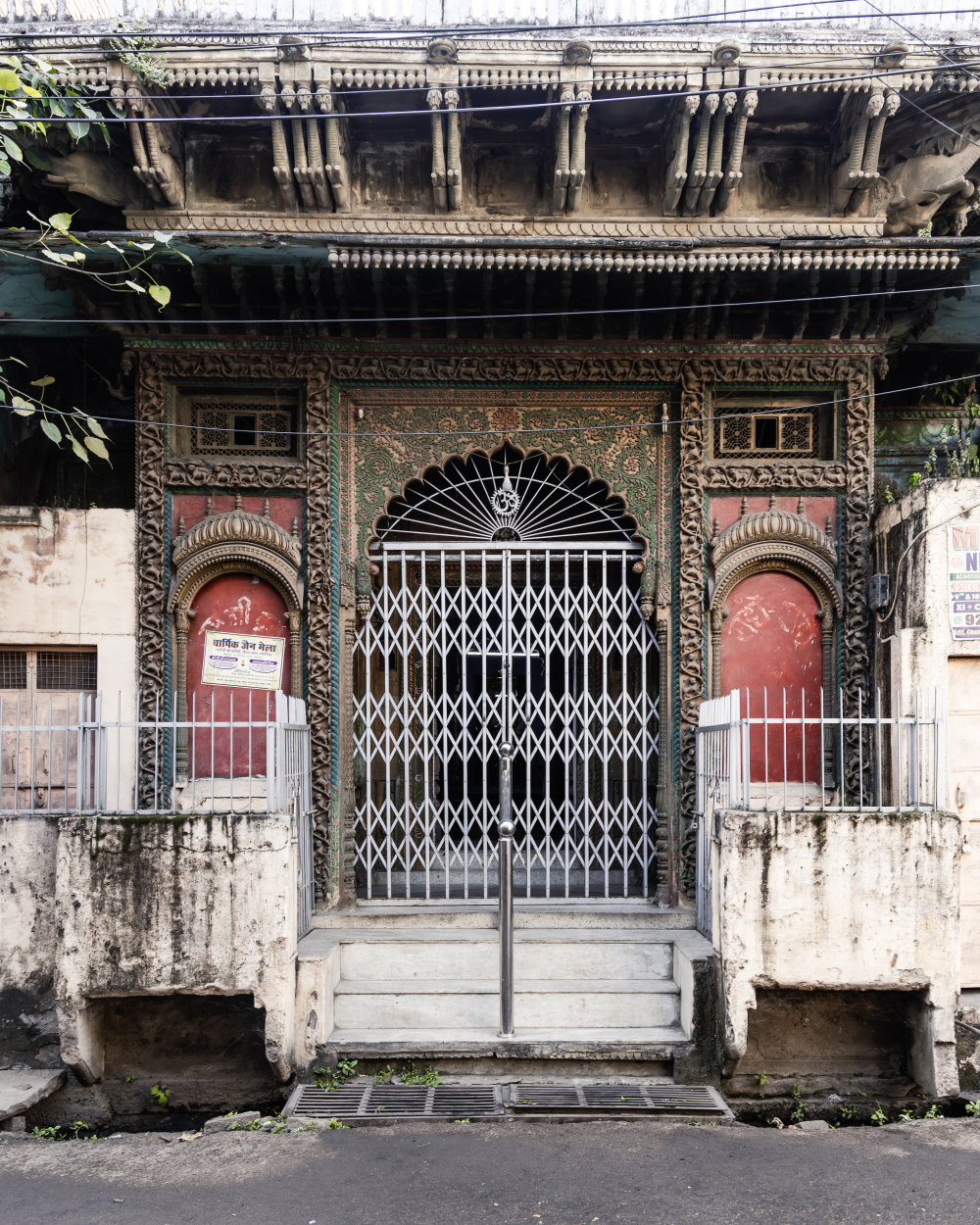
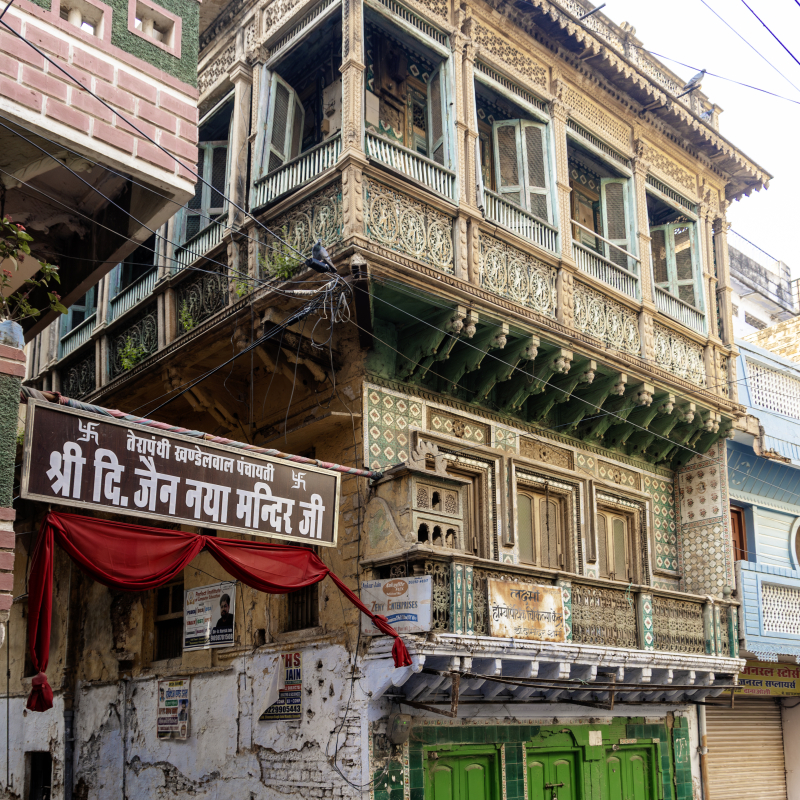
An old Jain temple in Dana Oli. (Picture Credits: Pranjal Jain)
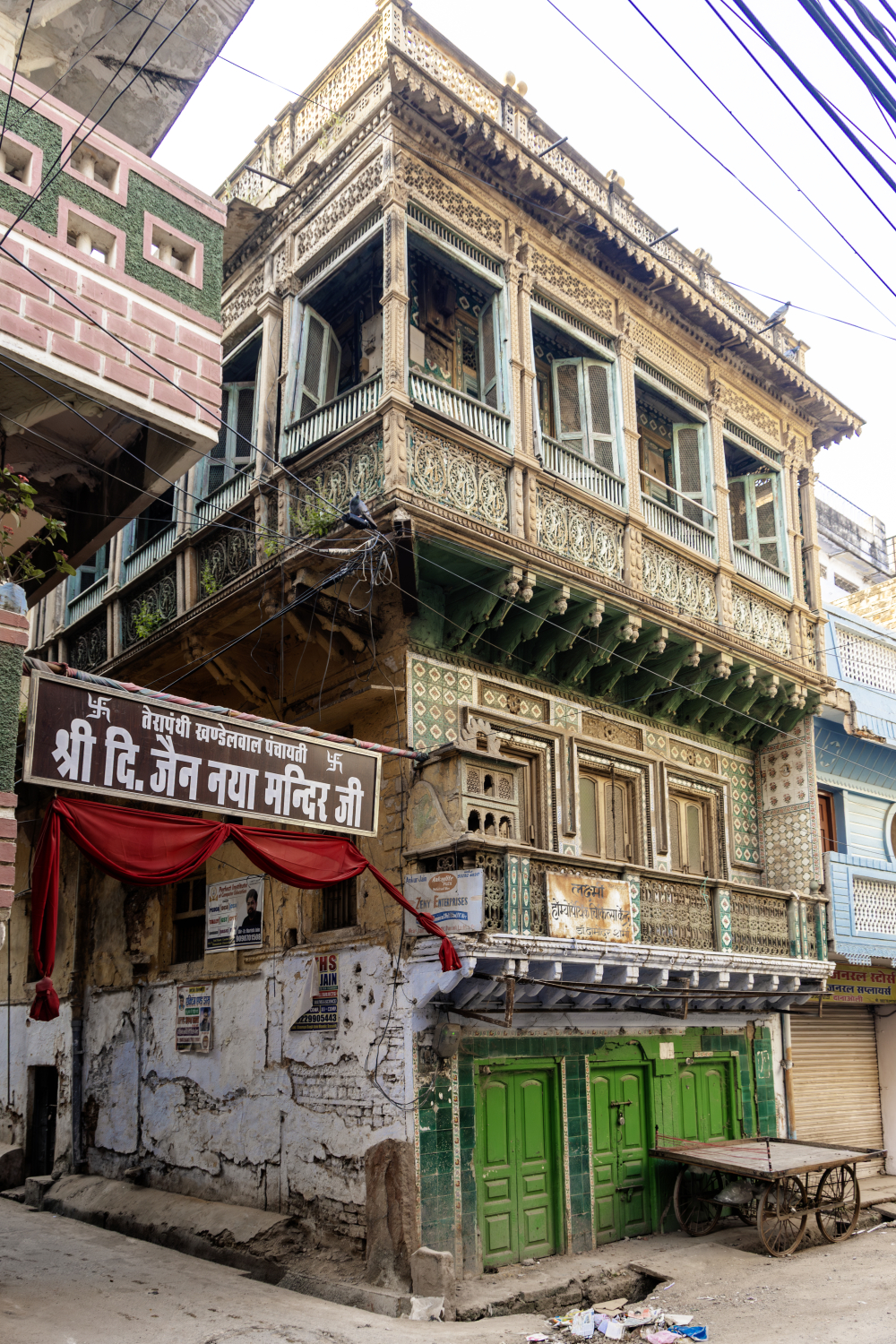
An old house in Dana Oli. (Picture Credits: Pranjal Jain)
Several olis have also emerged as sites of cultural and religious significance over time, including ancient temples and shrines such as Chaturbhuj Nath Temple, Goverdhan Nath Temple, Santoshi Mata Temple and a number of Jain temples. Some of the existing olis are:
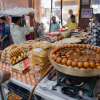
Dana Oli, often referred to as the halwai gali (sweets-seller's street), is renowned for its ancient sweet stores, traditional halwais, and ghee-rich, soul-stirring delicacies. Old havelis (mansions), winding narrow streets, and Jain temples, famous gajak (crunchy Indian dry sweet made primarily from sesame seeds and jaggery) and petha (a translucent candy-like sweet made from ash gourd) shops, and stuffed choti kachoris (deep fried snack filled with savoury lentil mixtures) define its character.
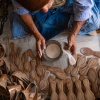
Kasera Oli was home to craftsmen of brass, aluminium, and iron utensils. Kaseran was the common surname of the community.
Mochi Oli housed cobblers engaged in leatherwork and shoe repair.
Chitera Oli was for the painters of chitera (a traditional wall-painting), which originated in Gwalior. This art, which held religious value for the Marathas of Gwalior, once decorated the entrance-gates and the temple-walls of houses. The paintings were not merely decorative, but signs of auspiciousness and protection. Over time, chitera paintings were adopted by families across communities and integrated into the cultural environment of the city.
The Olis Today
Post-independence, Gwalior experienced significant demographic and economic changes. As many Maratha families slowly migrated to the other cities, the occupation-clustering that once characterised the olis started to vanish. Workshops were either closed or reduced in size. Households were divided or turned to other uses.
The chitera oli, for instance, is fading out slowly. Changing architectural practices, shifting aesthetic preferences, along with the growing use of manufactured materials, have placed chitera on the fringes. There are only a few remaining practitioners of the art-form that once defined domestic visual culture in the city.
A similar transformation can be seen in the halwai shops, many of which are more than a century old. These establishments do not work with a fixed menu or annual consistency. They produce sweets and modify recipes in response to seasonal changes and occasions of rituals, ensuring minimal wastage. Some sweets are only available during specific months; some are prepared exclusively for weddings, festivals or community rituals. The rhythms that once supported such a lifestyle have been transformed by the passage of time as they do not conform to the mass production needs of the contemporary day.
Despite this, the olis continue to endure — gajak, petha, seasonal sweets, traditional utensils, and handicrafts from these olis are still prepared and passed over the counter, even sold and shipped all around the country. Old craftsmen still toil next to cell-phone repair shops, the ringing of the temple bells can be heard over the sound of traffic, old houses still bear painted doorsteps and common yards. The stories of living culture contained in the olis are a reminder that cities and their cultures survive not merely via monuments, but through people who continue to practice their everyday practices and crafts, despite the fact that the world around them has altered.
Gopi bhaiyya, a metal artisan I visited in one of the lanes, is one such archive. The fourth in his family to enter this trade, he tells me his forefathers moved from Jhansi to Gwalior during the time of the Scindias. To hear the stories of craftsmen like him, hearing the fading chitera patterns, and eating the sweets of these olis, is not a desire to freeze practices in time. Instead, the impulse is to identify practices with meaning, rather than only use, and ensure that they are not lost to memory.
The fact that the olis are still in operation, though under strain, reminds us that heritage is not fixed but negotiated daily. These lanes are labour neighbourhoods, which have been carved out by migration, patronage, decay, stability, and persistence. They are to be walked through and encountered – which is how we see that cities and their cultures survive not merely via monuments, but because of a great number of people who continue to practice their tasks and crafts, despite the fact that the world around them has altered. To hear the stories of craftsmen such as Gopi bhaiyya, observe the fading chitera patterns in local spaces, and eat the sweets of these olis is about identifying the practices that have meaning, not only usefulness, and ensuring they are not lost to memory.
This essay has been created as part of Sahapedia's My City My Heritage project, supported by the InterGlobe Foundation (IGF).