
One of the stories Pondicherry most likes to tell about itself is of its Frenchness. It does this in many ways, culling the sparse remnants of 138 years of French presence in this town from the much longer, denser history of the area. There are street names like Dumas, Lally Tollendal, Romain Rolland, Francois Martin, retained as a condition of the 1956 Treaty of Cession. There are the surviving instances of French architecture or elements incorporated into other constructions. In the evenings, groups of men play pétanque (a French lawn bowling game) in nearby open grounds. The local French consulate, with the support and participation of local expat groups, ensures that Bastille day is celebrated annually with pomp. Somewhat less flatteringly, bar signs are invariably in the colours of the French flag. Most important among all these signifiers, of course, is the town’s regional gastronomy.
Pondicherry-French?
What counts as French food in Pondicherry, however, is anybody’s guess. True enough, there were once several Vietnamese restaurants in the city. Many of these were home-based eateries established by those pensioner “soldats” who had fought in the French army or other Indians who had sought fortunes in French Indochina–much like Indians from British Indian domains sought opportunities in Burma and returned, too, after the Japanese invasion of these territories in the Second World War. “The way we go to the West now is how we once went East,” is a refrain I have often heard in conversations about local histories and earlier migrations; erstwhile villages like Reddiyarpalayam had nary a family without a Vietnamese connection. Families returning from these regions naturally brought the tastes acquired abroad back home with them. But their new fondness for chaiyo (from cha gio, the South Vietnamese fried spring/egg roll) or noodle soup is of course not French at all. These were merely Eastern influences which travelled as they did thanks to the channels of Empire.
What French influence there has been on local eating appears to have emerged from the demand of French or Créole households for specific foods. “Thym-laurier” (dried bay laurel leaves bundled with thyme) could be brought from abroad, but daily bread needed to be procured locally. Enterprising Tamils, some of whom had been trained as cooks in French households, stepped up to the task. A dwindling number of the single-room wood-fired bakeries, which thrived then, today tell tales of supplying to families who lived in the racially distinguished “White town.” “Roll roti” was an everyday bread of choice; “erral roti” was the croissant (for its curved resemblance to shrimp, erral in Tamil). The former was distributed to servants as well, and consumed by dipping in sweetened tea or coconut milk. Milkmen coming to the door may also have partaken of the house’s soups (with bread as the natural accompaniment), so much so that ingredient bundles like “soup kaay,” or the selection of vegetables required to prepare a stock, sometimes found their way into local market vendors’ baskets.
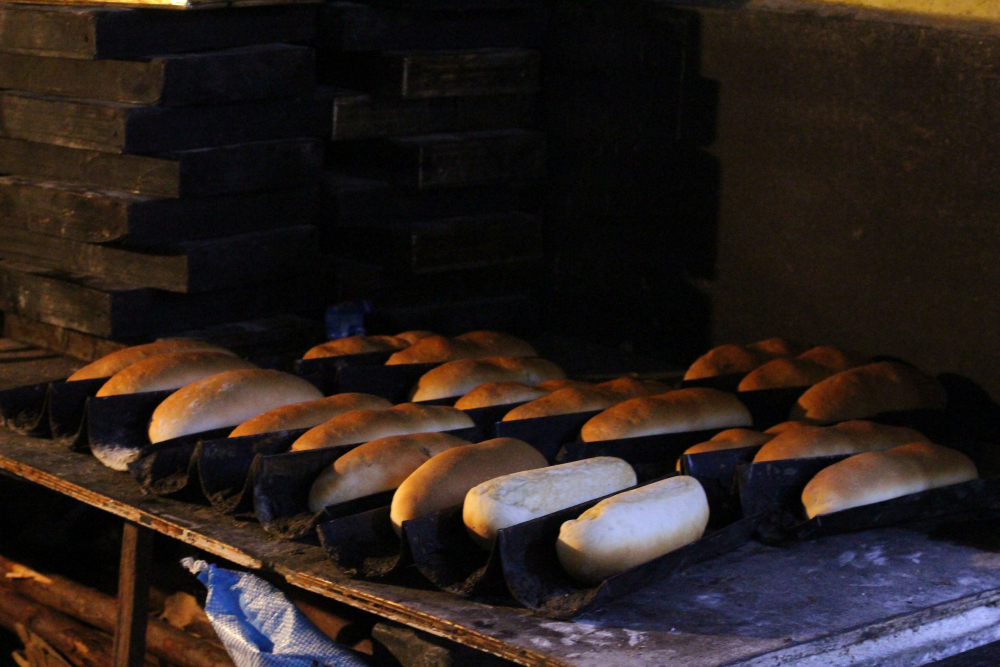
Roll rotis from one of the few remaining wood-fired bakeries in Pondicherry’s commercial district. (Picture Credits: Deepa Reddy)
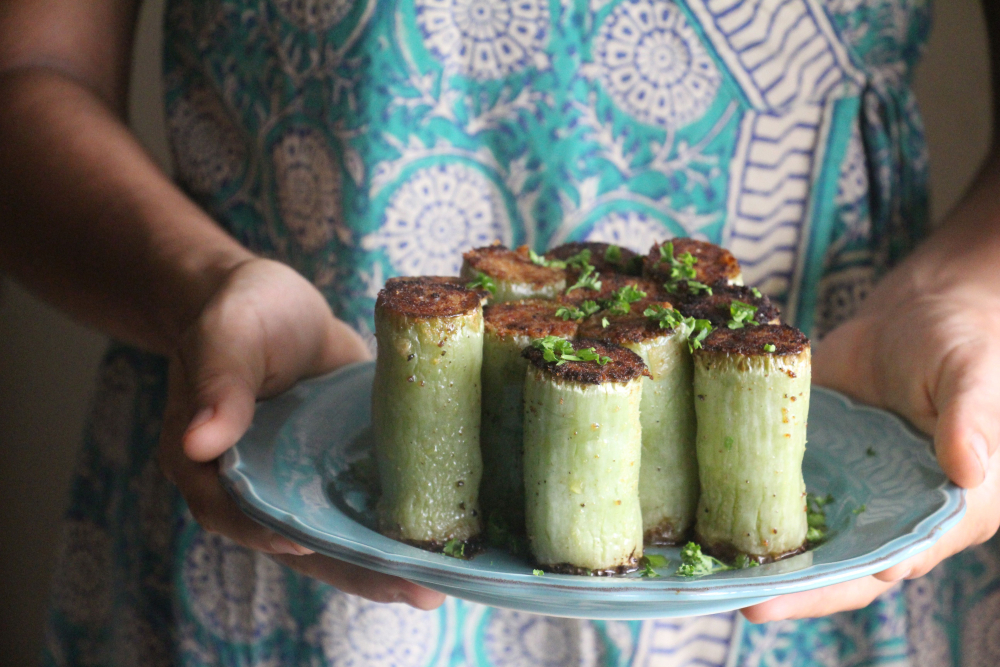
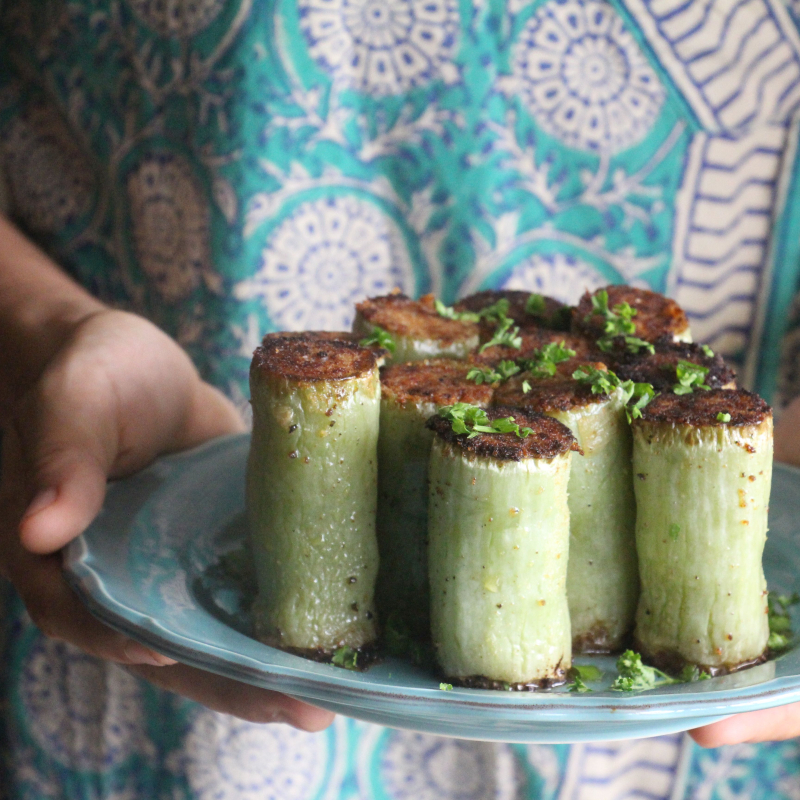
Petits farcis provençaux — a Classic recipe from southern France, adapted by using hollowed snake gourd instead of the traditional marrows. (Picture Credits: Deepa Reddy)
So it was that roll rotis came to stay. These are still baked daily and consumed locally, though the buyers have changed and the pairing with sweet coconut milk appears not to have entered public eateries any more than bouillabaisse (puyabaise, in local Tamil pronunciation), petits farcis, or any other such Provençal classics prepared for Pondicherry’s most elegant of Franco-Tamil home tables. Besides, those who cooked these foods have either resettled in France or passed on, leaving their culinary legacies largely to their trained cooks, who only sometimes brought these into public domains. The few Franco-Tamil descendants who return with longing for the Pondicherry they once knew try to reinstate a Francophone créole cuisine. At best, however, this celebrates the cookery of Tamil Catholics with particular meat dishes, some toned-down spice combinations and cakes. The once-aspirational, cosmopolitan foodways of communities who were once embedded in French colonial administration or part of its wider networks somewhat disproportionately stand in for the ways in which all local communities ate, either at home or elsewhere.
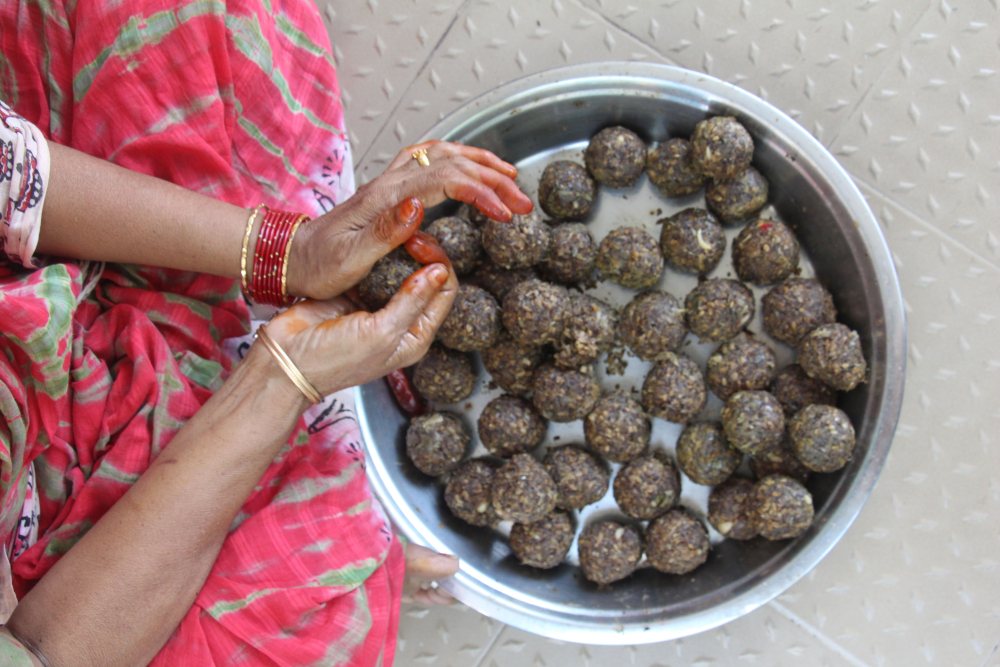
Traditional vagagam preparation in a Reddiyar household. (Picture Credits: Deepa Reddy)
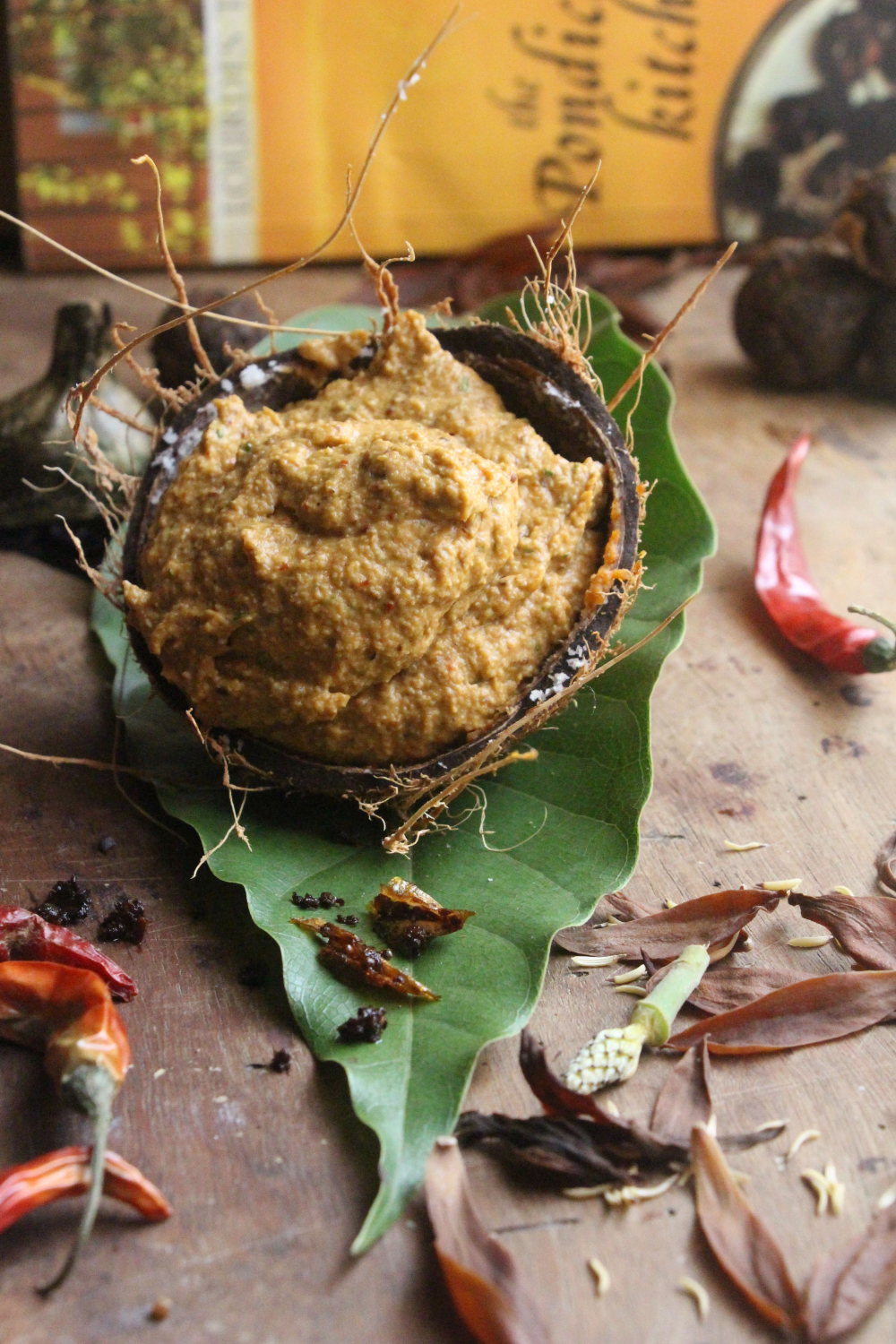
Vadavam chutney with smoky roasted eggplants, from the collection of catholic family recipes in Lourdes Tirouvanziam-Louis’ The Pondicherry Kitchen. (Picture Credits: Deepa Reddy)
This emphasis on the Frenchness of Pondicherry’s food, in other words, almost entirely effaces its fundamentally local moorings. Even when it is creolized, Pondicherry’s cuisine has always been predominantly Tamil, retaining the importance of the spiciest milagu kuzhambu (pepper gravy), alongside kozhakattai (modakas) or a thala kari (goat head curry), while making room for cakes or incorporating cosmopolitan cooking methods. So-called “French” tastes are often limited to the more subtle use of spices in the annual preparations of vadavam (sun-cured seasoning balls), for instance, or at times the admission of wine and vinegar. Créolisation is often signified by coconut milk, used at times in place of vinaigrettes to dress salads, or to mute spices in other dishes. Some go as far as to suggest that the abundant use of thengai-paal is a veritable sign of the way Pondicherry’s cooks adapted to French taste, though the other coastal cuisines of Tamil Nadu, Kerala, and even Karnataka, with their equally heavy reliance on coconut milk, could easily challenge that conclusion.
Pondicherry-Tamil
Regional food in Pondicherry, no less than elsewhere, is a mélange of local community foodways, but broadly and fundamentally Tamil ones. It is comprised not only of Tamil Catholic fare, but also the diverse preparations of the Chettiars and Mudaliars, prominent merchants in Pondicherry’s once-designated “black” areas; the fishermen whose profession defines both their own foodways and that of many others; Vanniars, Gounders, Jains, Muslims and others almost never accounted for in the culinary tales told here. Koozh (a fermented ragi porridge), pazhaiya soru (fermented day-old rice), avusu (a Tamil khichdi), sora pinji (vadas soaked in coconut milk), vettu sambar (a quick, low-cost “killi-potta” or “pinched-off chilli”-spiced sambar) are common dishes in these communities, much beloved and trusted for ease of preparation, low-cost, taste, and health-sustaining qualities. But they lack cosmopolitan glamour; many are thought of as being rustic and not rich enough, though pazhaiya soru is undergoing something of a retro-revival as a fermented, probiotic, zero-waste dish which is still part of the living memory of the traditional way of consuming the day’s leftover rice. The family which taught me to make vettu sambar, for example, extolled its virtues. My host’s grandfather had been a mason, and his father a postman. “Nothing like this with hot rice and lime pickle to satisfy hunger,” he gushed, recounting stories of eating it regularly in leaner days while growing up, with near-emotional relish. But now with greater means of their own, the family prepares this dish simply to demonstrate its method to me, replacing it with thicker, vegetable-based sambars in their own daily fare.
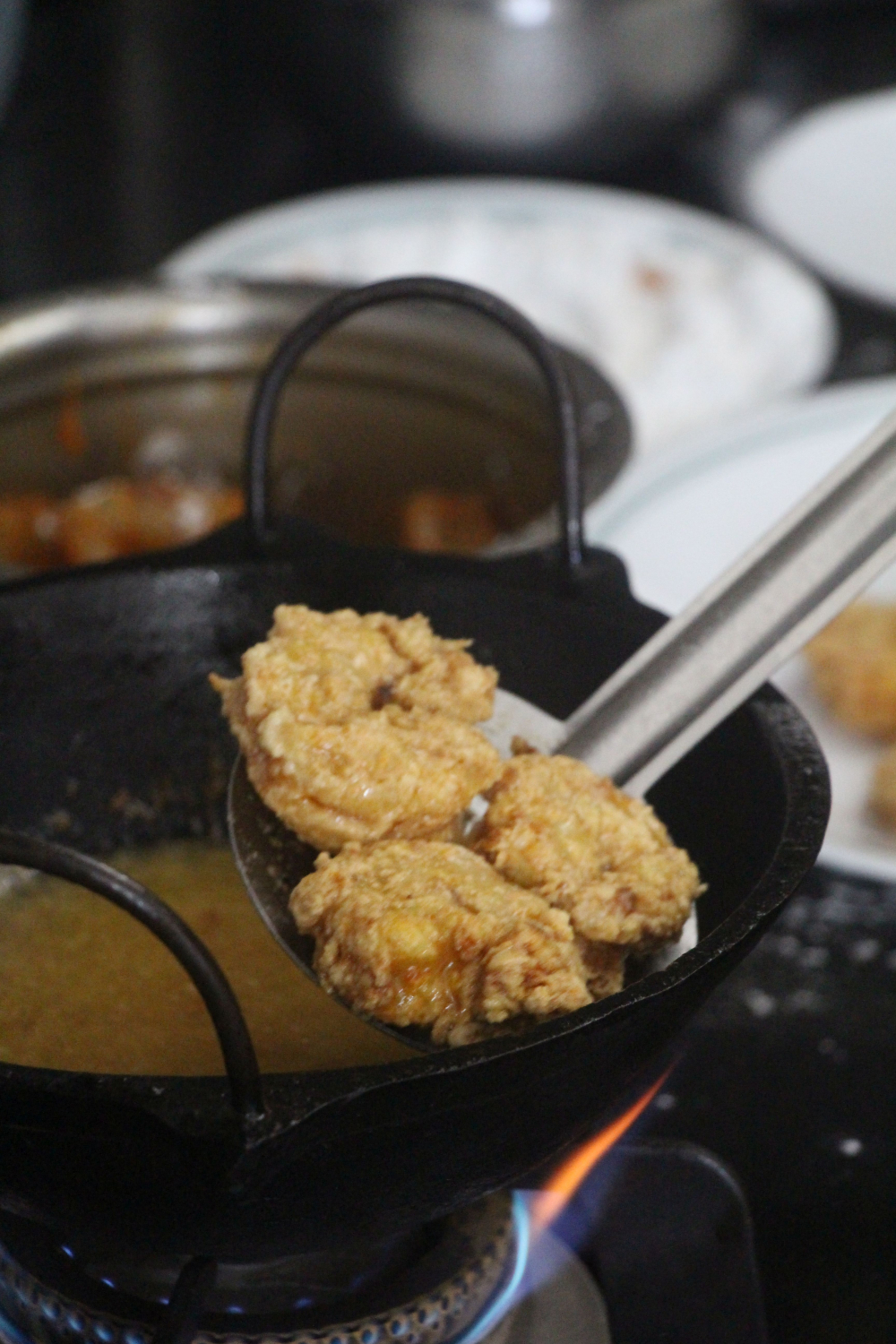
Prawn fritters being made in a Catholic family home. (Picture Credits: Deepa Reddy)
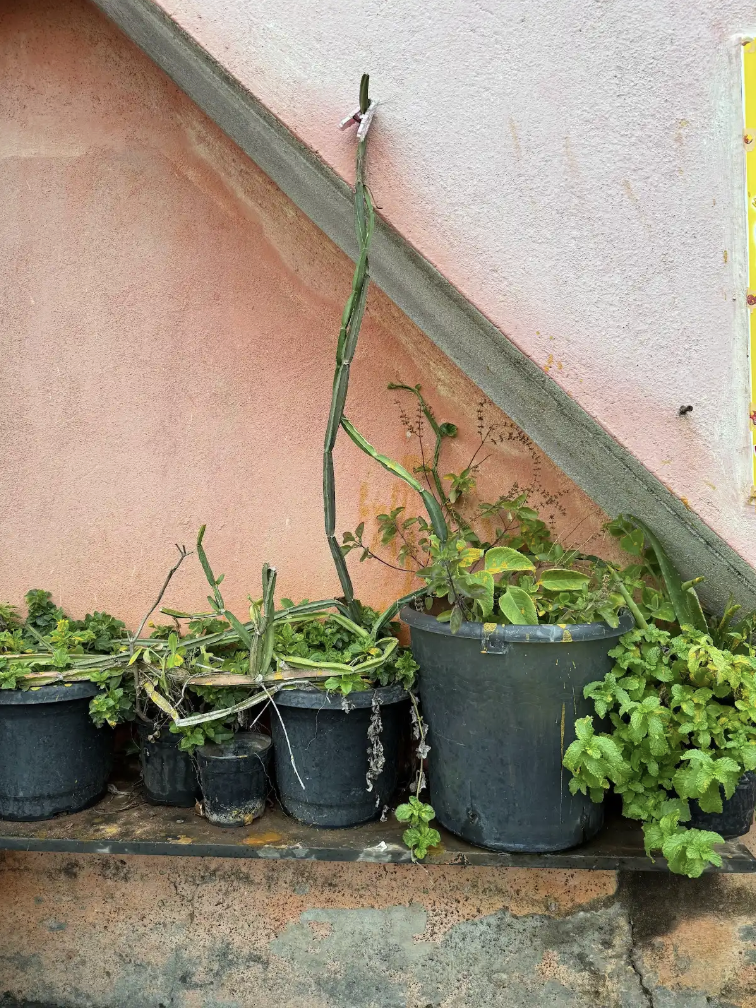
Little gardens in humble homes invariably grow karpooravalli, pirandai and aloe for dhrishti. (Picture Credits: Deepa Reddy)
Simply walking around the city’s many markets and older neighbourhoods, many of which still retain a semi-urbanized village-like atmosphere, further reveals the city’s hyper-local Tamil culinary moorings via sought-after and cultivated culinary plants. It is not uncommon to see pirandai (Cissus quadrangularis, the adamant creeper) being trained to climb from small pots; this ingredient is notoriously difficult to prep (oxalates in the skin cause contact dermatitis), but is prized for its value as a digestive aid and in promoting bone health. Likewise, even families with hardly any garden space grow karpooravalli (Plectranthus amboinicus, Indian borage) for coughs and colds and cultivate kodi-pasalai (Basella alba, Malabar spinach) for a ready source of nutrients. Women collect thandu keerai (a thick-stemmed amaranth) and thutthi keerai (Abutilon indicum, the Indian mallow) from some locations when it is in season, and even the smallest free public areas are quickly planted with aranelli (Phyllanthus acidus, star gooseberry) and murungai (Moringa oleifera, drumstick) trees. Granny vendors at the local farmers’ market stock a supply of medicinal herbs and native greens, many of them foraged and bundled in readiness for efficient home-preparation (kalavai keerai, mixed greens). The knowledge-base that informs such market availability and associated culinary practice may not always be comprehensive, but it is substantial — and it reveals a continuing reliance on older Siddha-Ayurveda-moulded understandings of the body, health, and nutrition. All these remain core to local Tamil foodways, with the ingredients more accessible and the practices more evident in Pondicherry than in more urbanized areas elsewhere in the state.
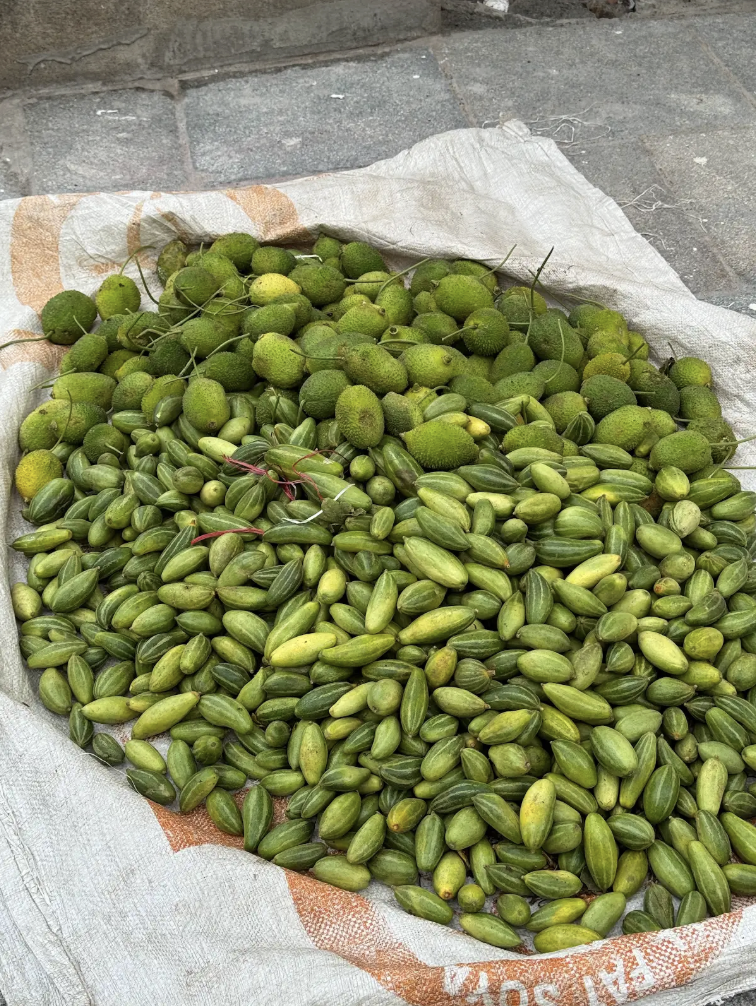
Potol (pointed gourd) and Kakrol (Teasel gourd) being sold by a roadside vendor, especially to Bengali and Odia families associated with the Sri Aurobindo Ashram. (Picture Credits: Deepa Reddy)
Pondicherry’s Mélange
Then there are multiple other external influences, some subtle and difficult to trace. Fish assad often numbers among the dishes counted as uniquely Pondicherrian — though by itself it is Portuguese, from the classic “assado” or roast, the Sardinha [Sardine] Assado being a popular Kerala Anglo-Indian dish. Dr Lourdes Tirouvanziam-Louis, an old acquaintance and author of The Pondicherry Kitchen, herself part Vietnamese, once insisted to me that there is no Portuguese influence on Pondicherry’s cuisine; she distinguished even the classic Portuguese vinegar-based vindaloo from the local vindail as a red wine and garlic preparation: vin et ail. But the dishes are in truth a razor’s thickness apart, and other dishes classed straightforwardly as Pondicherrian often carry rather distinct Portuguese traits. The vivika, for example, generally regarded as a Pondicherrian (once again the Tamil Catholic community) Christmas cake, is most likely a derivative of the Goan bebinka, versions of which dot many old port regions once commanded by the Portuguese. It is true, however, that Portuguese influences tend to be oblique and modulated, in spite of being quite widely broadcast.
Such small signs of non-Indian influence equally coexist with many cross-regional Indian exchanges. Pushcart vendors occasionally setting up near the Sri Aurobindo Ashram, not far from the French Consulate in the centre of Pondicherry’s old town, are often stocked with only potol (Trichosanthes dioica, pointed gourd), kakrol (Momordica dioica, teasel gourd), and muri (puffed rice made presumably from favoured Bengali heirloom rices like gheus or kanakchur) — but they sell out fast, telling of a substantial Bengali and Odia presence which has a not-insignificant impact on market supply. “That Pinto,” an old Bengali Ashramite once remarked to me one early morning, referring to the vendor selling exclusively potol, “He makes his whole year’s profits just selling to us.”
Of course, these ingredients go towards the preparation of home foods, or at most, the food supplied by the Ashram’s dining room to its inmates–dishes which are generally not documented, never mind entering restaurant menus. They remain, therefore, largely hidden, never visible enough to represent Pondicherry’s culinary heritage. Then again, neither do the city’s many Reddiyar, Naidu, and Andhra messes become definitive, despite their enduring presence and successes in providing simple, low-cost meals to vast numbers of eaters. Nor do we particularly hear of the hereditary lineage of cooks from nearby Kalayur, famously called upon across Tamil Nadu to prepare food for large community events. These were once mostly Vanniars, trained generations ago by Reddiyars settled in the Cuddalore area, where therukoothu (folk-theatre) artists would enact stories of King Nala and Bheema (of the Mahabharata) becoming legendary cooks. From then on, this village of professional cooks have carried forward the tradition of cooking for large temple events, functions, and marriages.
Pondicherry à la mode
Over-writing all these many, rich dimensions of regional cuisine, both home and “outside” fare, some unspecific notion of French-créole remains à la mode — what visitors seek and what restaurants scramble to produce. Ananya Jahanara Kabir writes of separating “real” créole from “fake” in her own research: the dishes historically connected with families and communities whose lives did in fact result in culinary creolization versus those mimics and doppelgängers introduced later. But créolization as a process of racialized mixing and recombination de facto exists alongside “fusion,” as I found in a recent visit to a prominent heritage hotel, where the one was simply presented as the other. These are perhaps signs of a city reinventing itself for new, up-market guests, less as a consequence of its own social evolution than in pursuit of its (tourism department-backed) commercial aspirations.
The proprietors of the old bakeries I met are surprisingly nonchalant about the disappearance of their old clientele, despite being eclipsed by more than a few swanky nouveau French café-style restaurants, which now have vastly diversified what French food can mean in Pondicherry. Several new entrepreneurs are drawn by the continued attractions of the Sri Aurobindo Ashram, nearby Auroville, and an imputed “timeless” colonial charm that continues to efface the region’s Tamil roots. Several others merely evoke Frenchness as click-bait, using “La” prefixes with little substance to draw customers. But the roll roti bakers, some of whom have been in the profession since childhood, remain unflappably old-world. “You cannot look at change as a loss,” they told me, rejecting my offer of social media sharing, “People still come and buy from us and that is enough.”
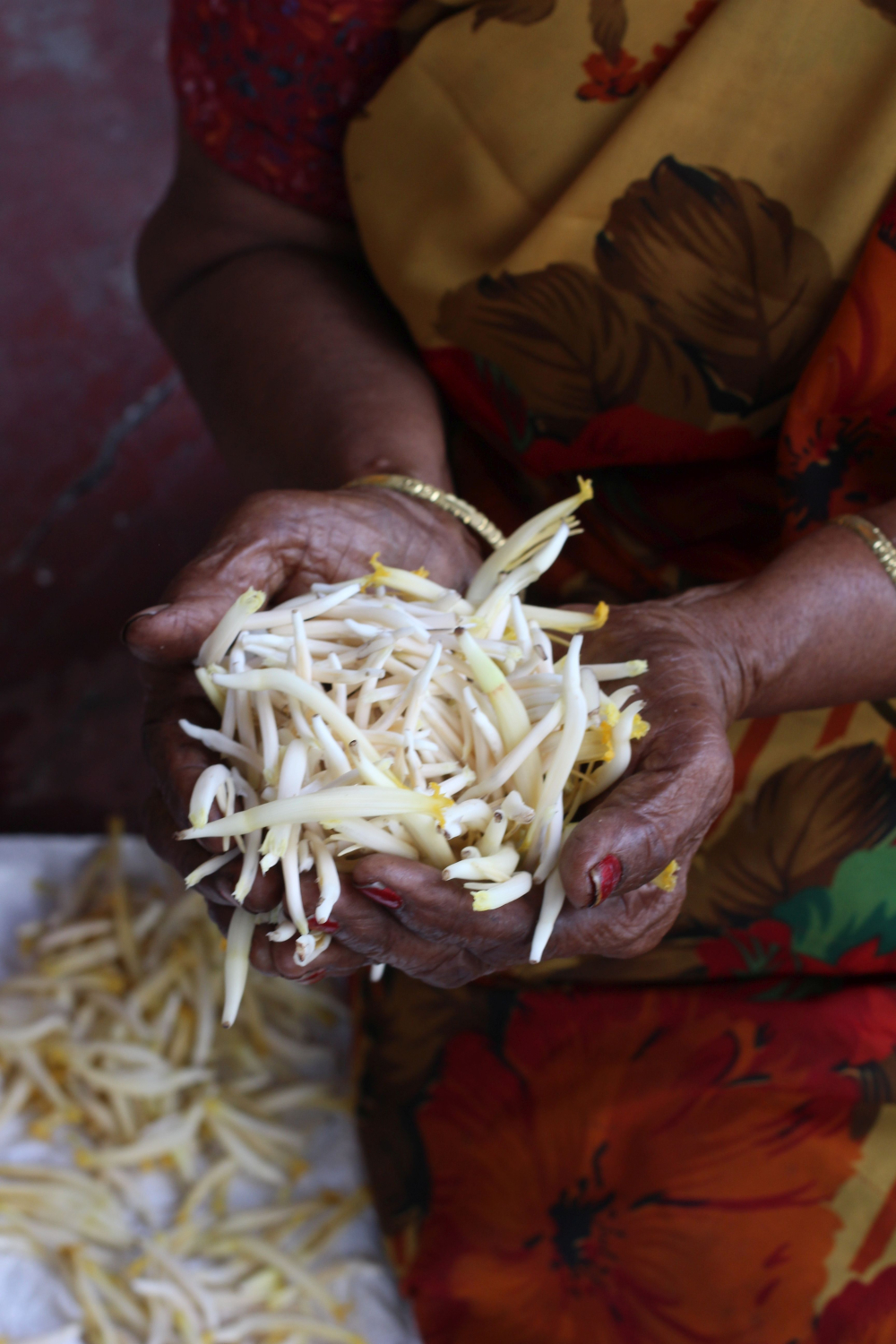
Banana flowers, their thick “kallan” (“thief”) stamens removed, prepped by a roadside vendor and made ready for quick kitchen use. (Picture Credits: Deepa Reddy)
Meanwhile, a street photographer I encounter on Pondicherry’s famed beachfront promenade tells me of visitors from Madurai who came searching for croissants, but discarded what they found after just a taste. When he asked them why, they explained that these breads resembled the vegetable, chicken, and other stuffed puff pastries available at local bakeries — but not in a good way. “We thought they would be special! But they were like bland puffs, so we threw them away,” they said. Not far away, a chic promenade restaurant had, some time ago, removed the classic vazhaipoo (banana flower) vadas from its menu. What counts as culinary heritage now is this kind of push-pull of taste and expectation amongst the many groups that continue to seek Pondicherry’s culinary distinction.
Bibliography
Kabir, Ananya Jahanara. “Creolizing Archipelagic Intimacies: Remembering India and Vietnam via Pondicherry.” Verge: Studies in Global Asias 11, no. 1 (2025): 132–166. https://doi.org/10.1353/vrg.2025.a951541.
Tirouvanziam-Louis, Lourdes. The Pondicherry Kitchen: Traditional Recipes from the Indo-French Territory. Chennai: Westland, 2012.
This essay has been created as part of Sahapedia's My City My Heritage project, supported by the InterGlobe Foundation (IGF).