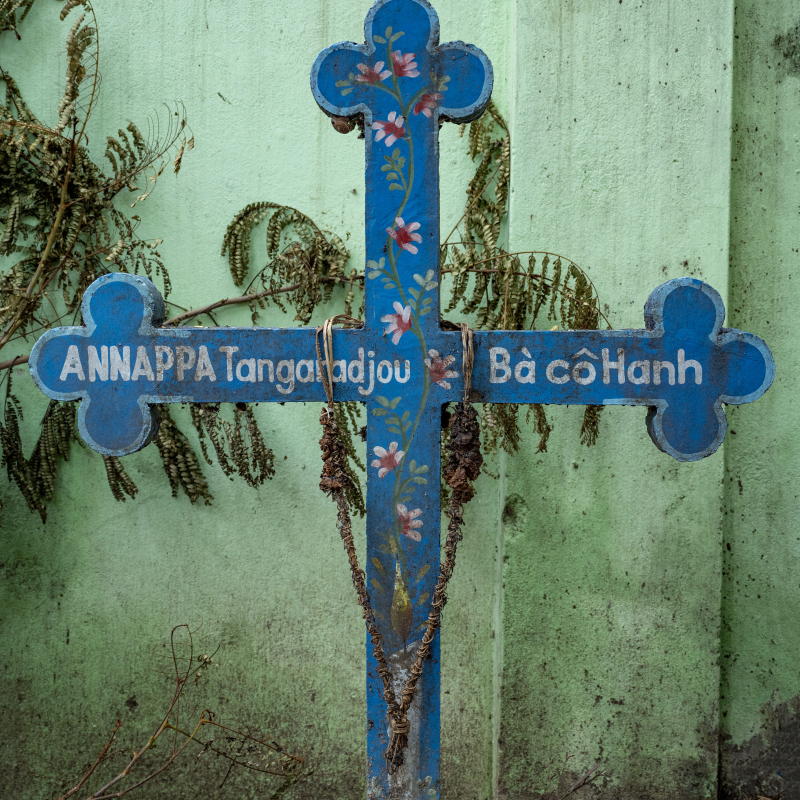

Pondicherry, the centre and headquarters of French India, shares deep connections with other cities and places worldwide that, like it, were once part of the French Empire. One such city is Ho Chi Minh City in Vietnam, known as Saigon when it was capital of the Southeast Asian French colony of Indochina (comprising present-day Cambodia, Laos, and Vietnam). From the nineteenth-century onwards, as the French consolidated their imperial presence in the Indian Ocean world, demographic transformations increasingly linked Pondicherry and Saigon as the major hubs in the older (Indian) and newer (Indochinese) colonies. Entire families now living between France and Pondicherry have spent generations in Vietnam. Their parents, grandparents, and great-grandparents served the French Empire as bureaucrats, schoolteachers, and soldiers; others had sailed to Indochina from Pondicherry and its sister port of Karaikal to serve the social needs of the colony in capacities ranging from merchants and financiers to milk-suppliers. People descended from these transnational families were, and often still are, fluent in Tamil, French, and Vietnamese. Whether they live in France, Pondicherry, or elsewhere, they continue to incorporate Vietnamese dishes into their home cuisines. While inter-marriage between Indian men and Vietnamese women resulted in multiple generations of mixed-race children, what was more striking was the cultural transformation of entire families through long association with Vietnam.
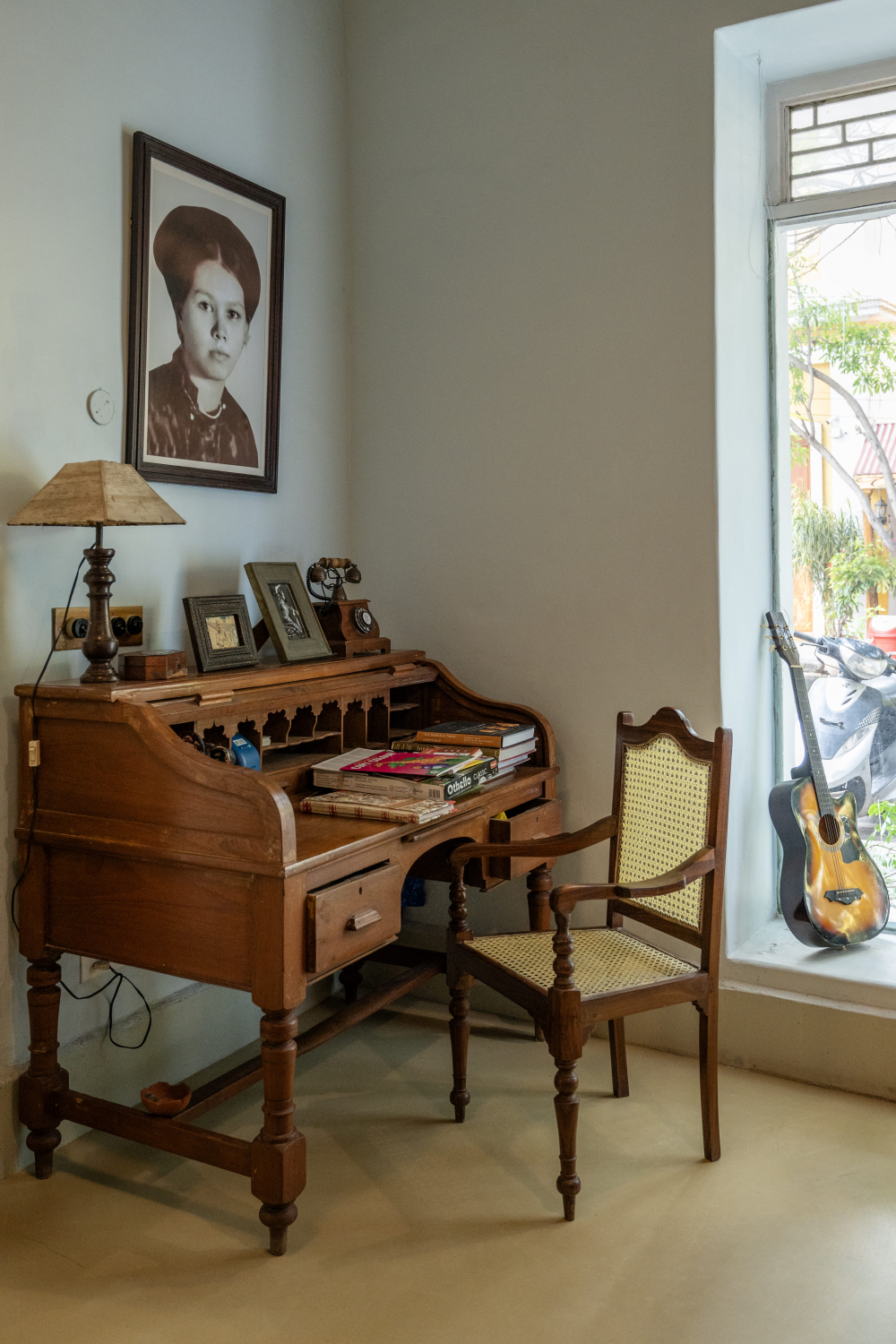
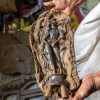
Photograph of a Vietnamese ancestor at the Jardin Suffren. (Picture Credits: Joseph Rahul)
A strong Vietnamese thread thus runs through the Franco-Pondicherrian community, which formed through numerous diasporic moves across the French Empire and its postcolonial geographic imprint during the long twentieth-century. In Pondicherry today, there are very few Franco-Pondicherrian families that will not possess this kind of Vietnamese connection — but you will need to ask first. Their stories belong to a period of Indian Ocean mobility that lasted from the early nineteenth to the mid-twentieth-century; within the abruptly changed cartographies of decolonization and the Cold War, they are sensed as having little relevance. As Natasha Pairaudeau observes of this once-dense, now forgotten intra-imperial encounter, ‘France’s Coromandel ports, which form part of the Union Territory of Pondicherry, and the modern state of Vietnam, are two parts of the former French Empire which became dissociated from one another with the falling away of imperial frameworks and the construction of new national ones.’ Hence, while they are not forgotten, these connections are not really publicly memorialised. As a result, traces of an Indo-Vietnam history are to be found everywhere in Pondicherry, but we must look hard to locate and even recognise them. This essay will, accordingly, highlight three main categories of heritage in which these rather elusive traces are registered: domestic interiors; public memorials; and foodways.
Social Remnants
In the words of French scholar Pauline Burtin: ‘If one lingers to read the inscriptions that the Indian city of Pondicherry preserves in its streets, its churches and its cemeteries, one guesses a special link with a foreign country whose name has become historic: Indochina.’ At the time of writing, neither public nor private heritage initiatives in Pondicherry curate in any cohesive way this lasting impact of the Indochina link on its urban spatiality, whether expressed within the exterior or interior of built architecture. As with the Chettiar mansions of inland Tamil Nadu, however, domestic interiors in Pondicherry reveal Vietnamese influences in details of tiling, furniture, displayed photographs, and even the arrangement of space, decoration, and layout. While tourists or casual visitors would not be able to access these domestic interiors, some of these features are visible and indeed showcased within homes that have been transformed into guesthouses, Airbnbs, or boutique hotels. The guesthouse Jardin Suffren, for instance, displays numerous framed photographs, wall hangings, and furniture in its reception area, which is open to anyone that wishes to visit the guesthouse, even if only to eat at its café. These visual elements, especially the photographs of the owner’s sari-clad Vietnamese grandmother, her forehead marked by a pottu (bindi), her ears and neck adorned by Indian-style jewellery, make visible the familial connection between Pondicherry and Vietnam, even though no textual or narrative explanation is supplied alongside them.
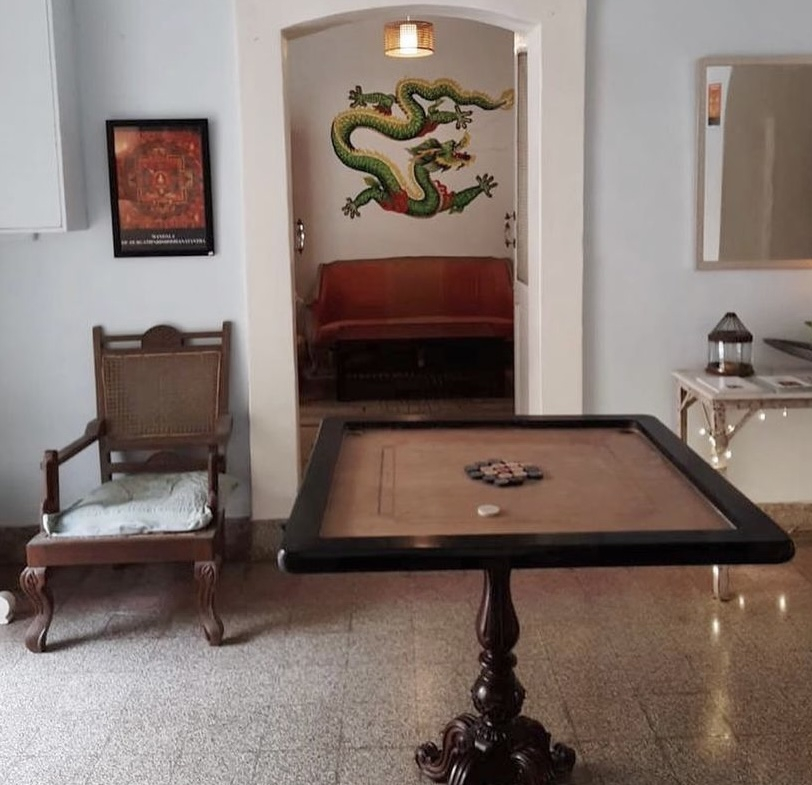
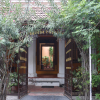
Interiors showing Vietnamese influence. (Picture Credits: Ananya Jahanara Kabir)
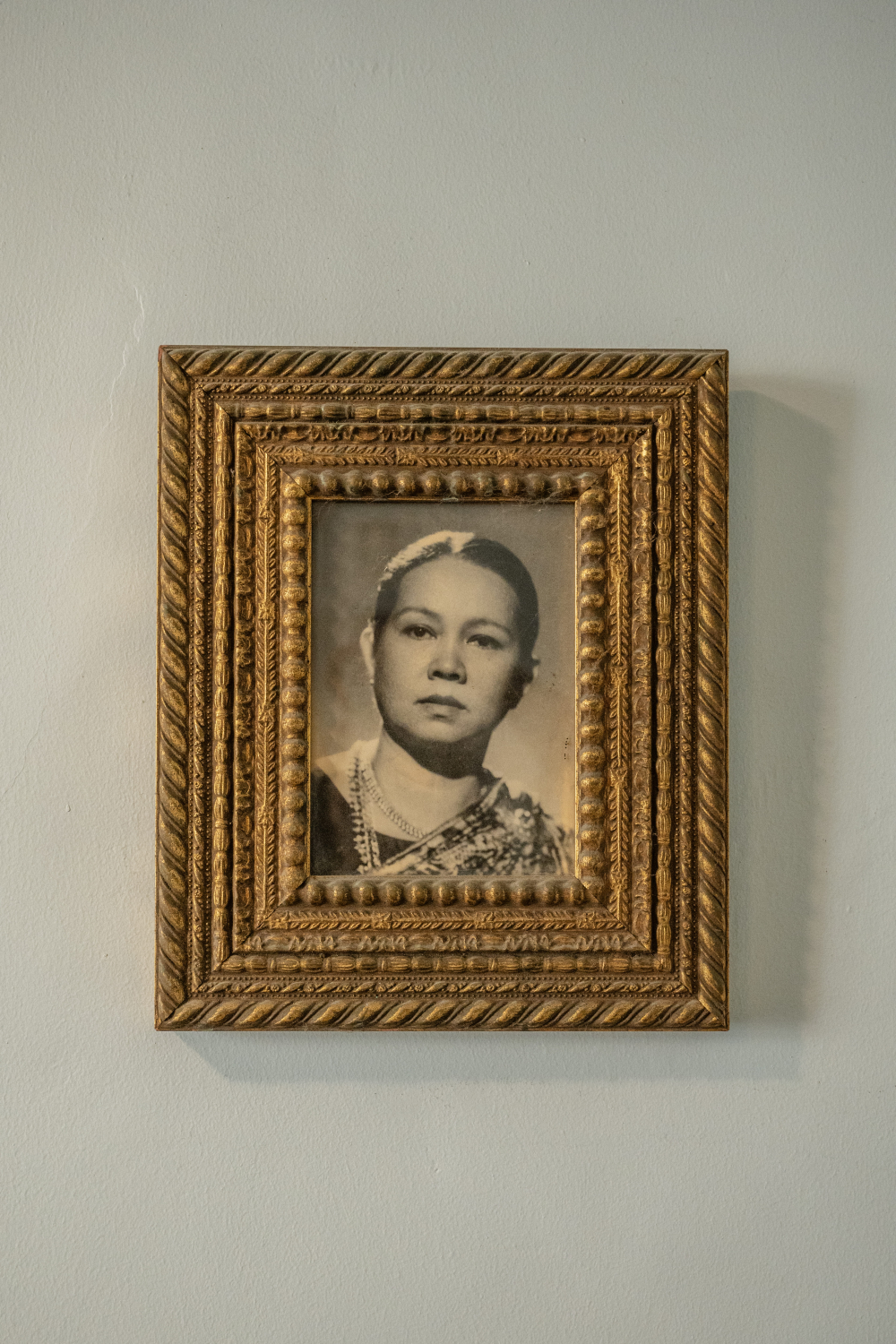
The owner of Jardin Suffren's Vietnamese grandmother. (Picture Credits: Joseph Rahul)
Such explanations are lacking also for public monuments which openly memorialise the connection between Saigon and Pondicherry. In Pondicherry’s vast Uppalam Cemetery, which currently stretches on two sides of the State Highway RC-2, there are numerous graves with details of the deceased person’s employment in Indochina inscribed on their headstones. Beyond Uppalam, in the Reddiarpalayam suburb locally called ‘Little Saigon’ because of the number of people it sent to Indochina, a lane leads to the small St Anthony’s Church, built in Indo-Iberian baroque style. A few hundred yards before it, protected by a wrought iron railing and shaded by banana trees, is a stone plinth painted the standard yellow and cream of Indo-French architecture. On it stands a white stone statue of Marianne, personification of France, an arm protectively around a mustachioed Franco-Pondicherrian poilu (infantryman) rendered one-third her size and painted dark green. An inscription on the plinth’s base declares it ‘a gift of the Saigonese originating in Reddiarpalayam, 1917’ (‘Don des saigonaises originaire de Rettiarpaléom, 1917’); above it, we read, ‘Long live the French Army’ (‘Vive l’armee française’). In Pondicherry’s White Town, outside the Immaculate Conception Cathedral, a bronzed statue of Christ the King was similarly gifted by Madame Marie Louise Pregassam of Saigon in 1925.
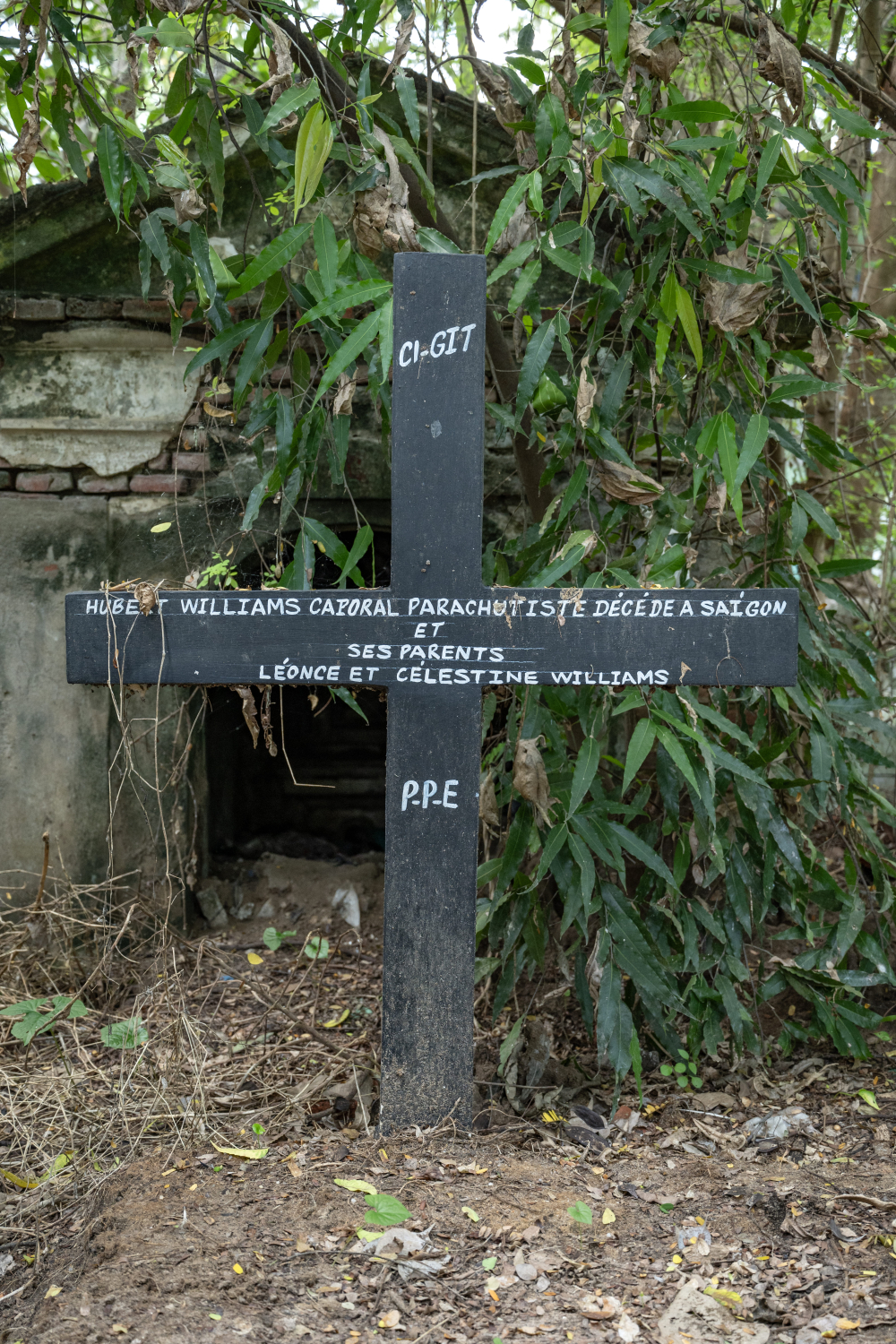
Grave at the Uppalam Cemetery of a Franco-Pondicherrian soldier killed in Siagon. (Picture Credits: Joseph Rahul)
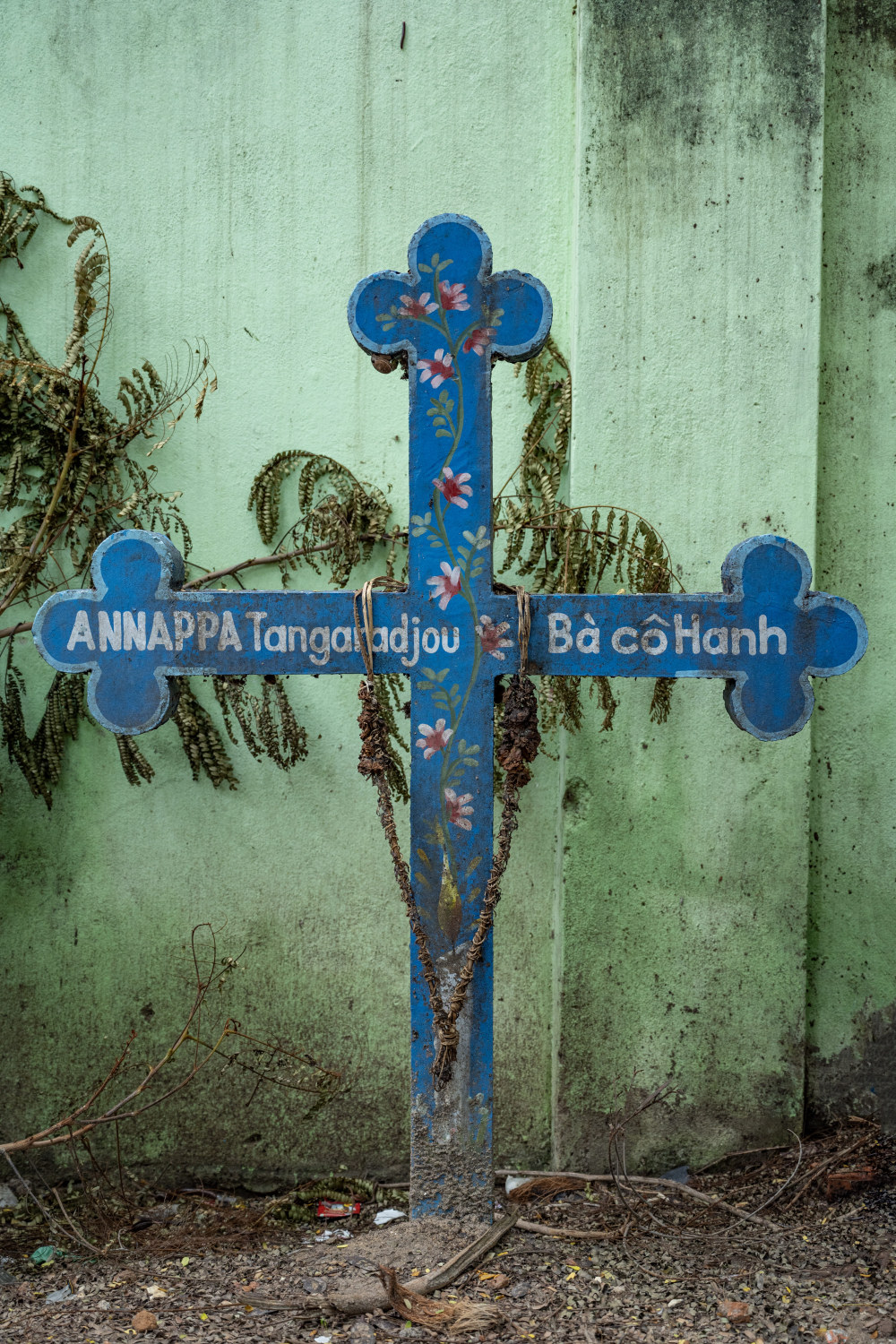
Gravestone of a Tamil-Vietnamese couple. (Picture Credits: Joseph Rahul)
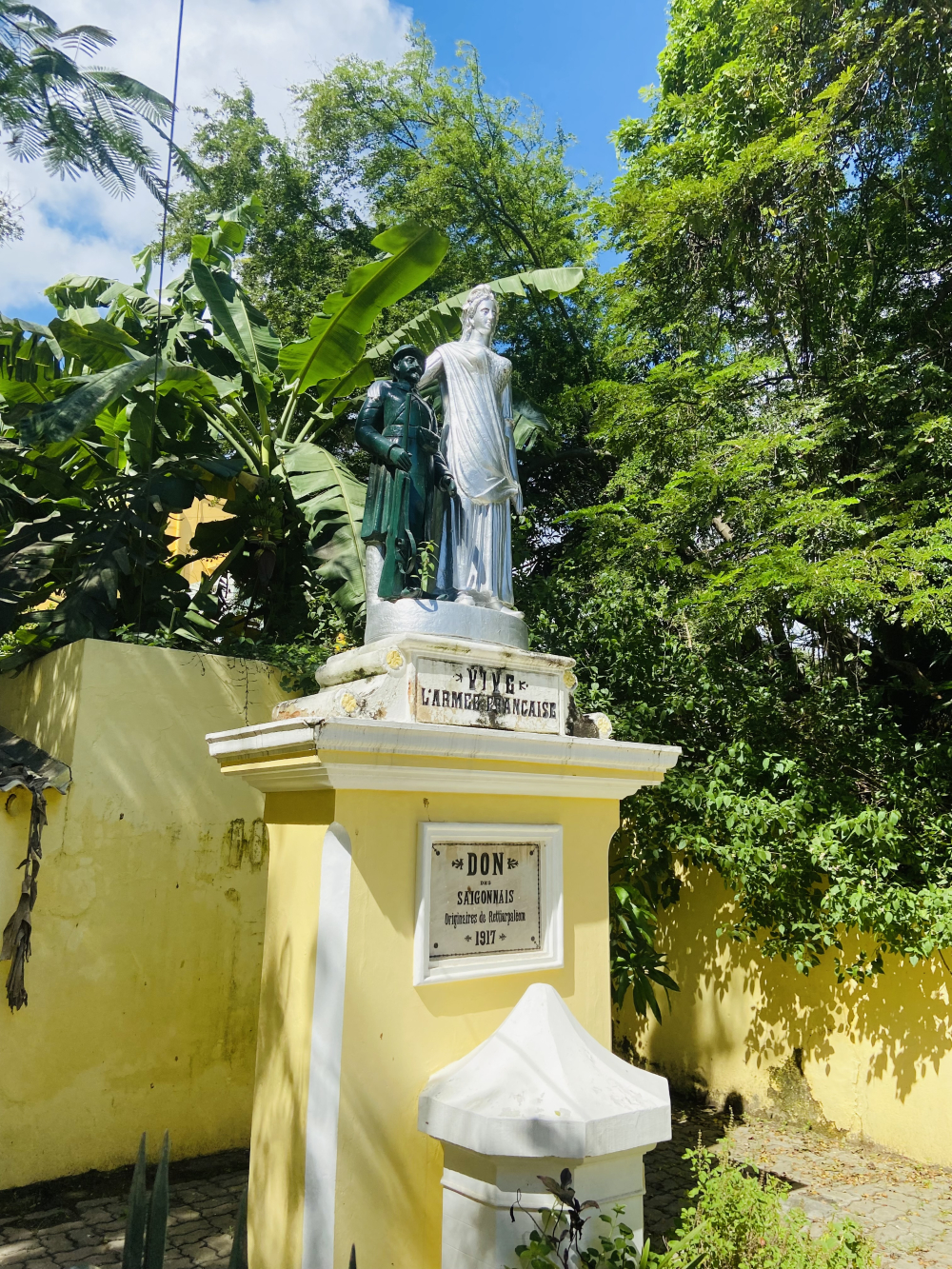
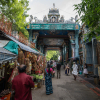
Gift of the Siagonese at Reddiarpalayam. (Picture Credits: Ananya Jahanara Kabir)
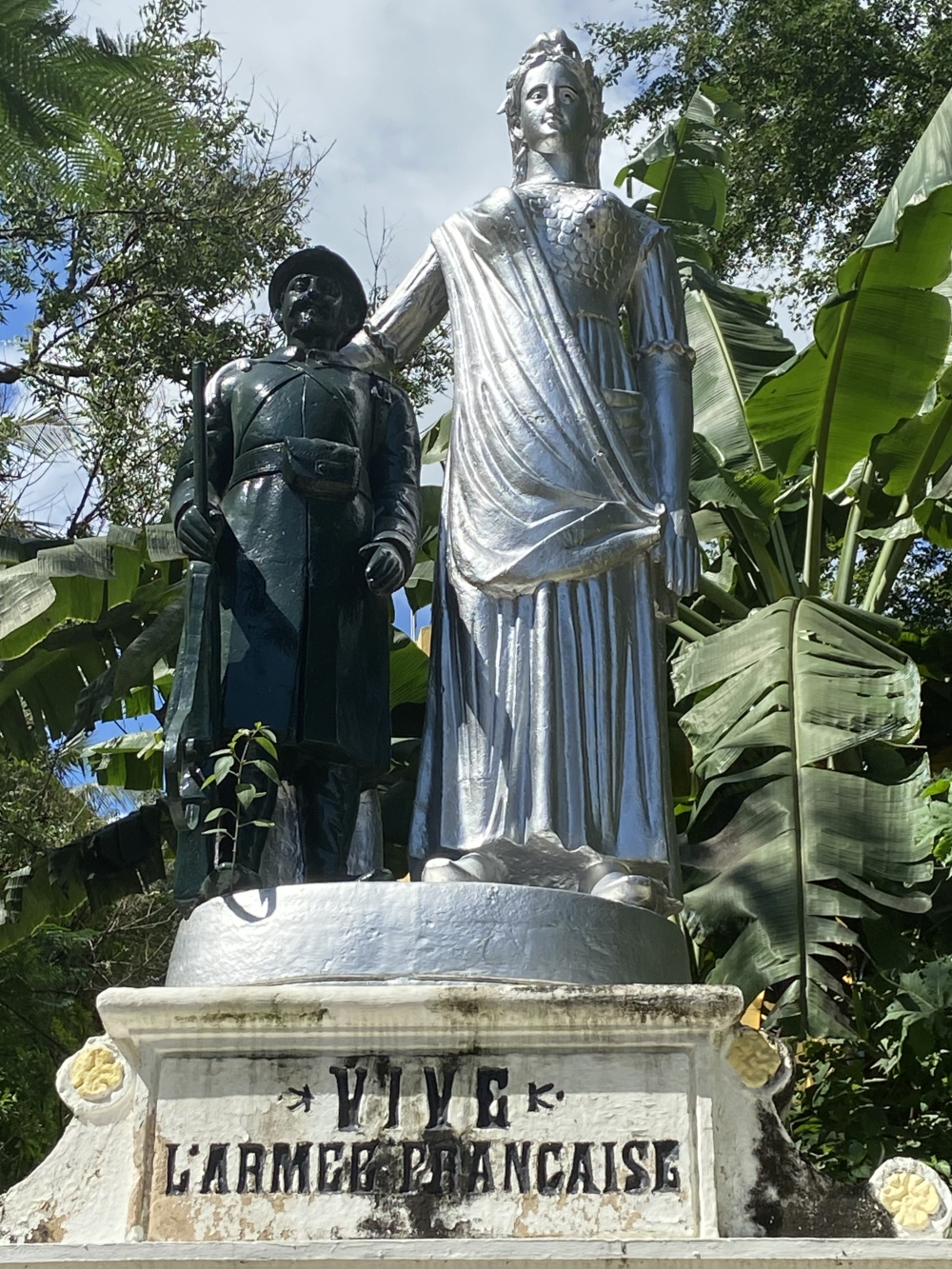
Gift of the Siagonese at Reddiarpalayam. (Picture Credits: Ananya Jahanara Kabir)
Interpersonal Inflections
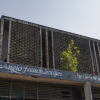
Through gifts and declarations, diasporic Pondicherrian families domiciled in Indochina converted economic to cultural capital to maintain their connections to a city that was now an imperial hub in the Indian Ocean. The gifts could also be of personal or professional effects, as with the Adiceam Bequest, which occupies an entire room lined from ceiling to floor with bookshelves in the École Française d’Extrême Orient, a handsome yellow and white colonial building very close to the Jardin Suffren guesthouse in the White Town. The Adiceam Bequest comprises the personal library of Franco-Pondicherrian civil servant Emmanuel Adiceam. Thick handwritten ledgers record the hundreds of thousands of books including literary and philosophical works from classical antiquity, and in Sanskrit, Tamil, French, and English that Adiceam accumulated as he moved around North Africa, Europe, South Asia, and Southeast Asia delivering France’s linguistic and educational mission as schoolteacher and geographer. Even as Saigon’s link to Pondicherry receded from public view following France’s exit from Vietnam in 1954, books that once circulated with their owners came to rest as gifts in Pondicherry, donated to institutional libraries dotting the White Town under the flag of the French government. Meanwhile, print culture kept alive the Pondicherry-Vietnam connection in different ways. From 1946, the gazette Le trait-d’Union began expressing the interests of Saigon’s Franco-Pondicherrians, presenting news from Saigon while being published from Pondicherry. All its volumes can also be read in the École Française library.
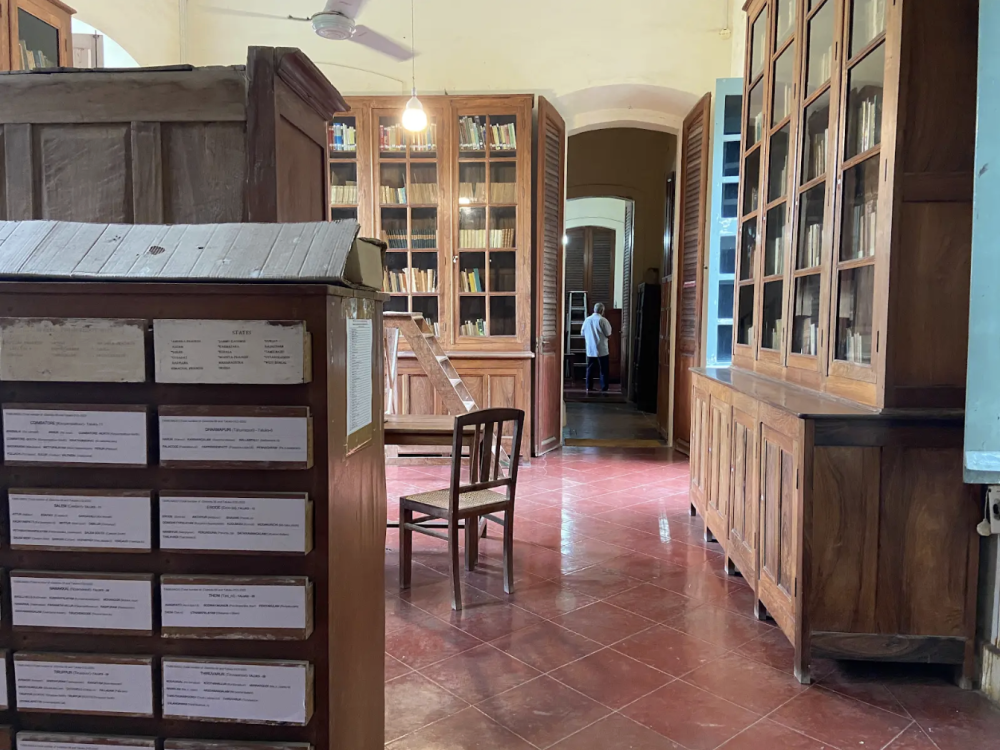
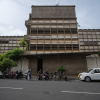
The Adiceam Bequest. (Picture Credits: Ananya Jahanara Kabir)
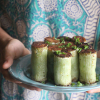
While books and inscriptions on monuments are difficult to decipher by those unfamiliar with the French language, the one aspect of the Pondicherry-Saigon connection that is in theory more accessible is gastronomy. As noted by Claude Marius, another Franco-Pondicherrian civil servant with a Vietnamese family history: ‘Vietnamese food is the link that unites all the Pondicherrians of Indochina.’ Emblematic of this ‘migratory memory’ is the Vietnamese spring roll nem, called ‘chaiyo’ by Pondicherrians after ‘cha gio’, the term used in South Vietnam. Absorbed into Pondicherry’s foodways to the extent that its street food hawkers can ‘describe in great detail each step in the production of spring rolls, in French as in Tamil, without ever having been in Vietnam’, this snack is a favourite at Franco-Pondicherrian social gatherings worldwide. But, until recently, the only restaurant in Pondicherry serving it was the rather dated and faded Paris Restaurant. Despite Pondicherry’s numerous restaurants offering ‘Creole’ and ‘Indo-French’ cuisine, Paris used to be the sole sit-down purveyor of Vietnamese food, combining tattered menus and old-fashioned interior with dishes announced as Vietnamese, but lacking vibrancy of taste. However, if you know Anita Decanaga through the Franco-Pondicherrian circuit, you can enjoy Vietnamese dishes cooked by her mother Pushpa at their home. At Decanaga’s table d’hôte venture, ‘Chez Pushpa’, delicious home-cooked meals laced with stories of Saigon open up to a discerning public their multi-generational familial presence in Indochina.
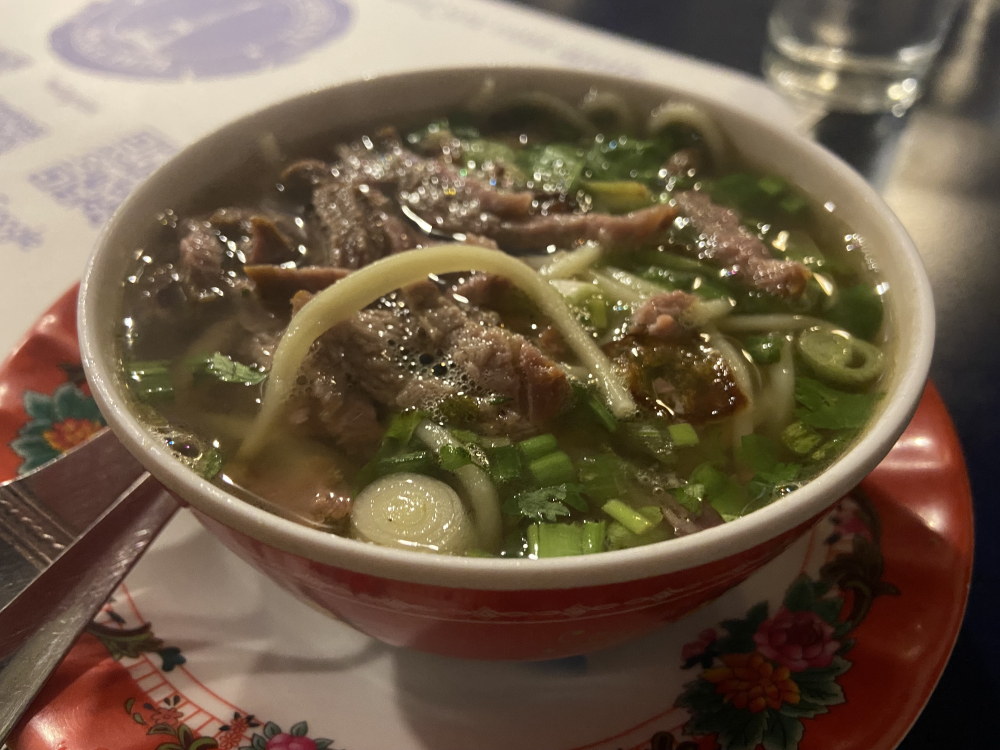
Vietnamese Pho at Paris Restaurant. (Picture Credits: Ananya Jahanara Kabir)
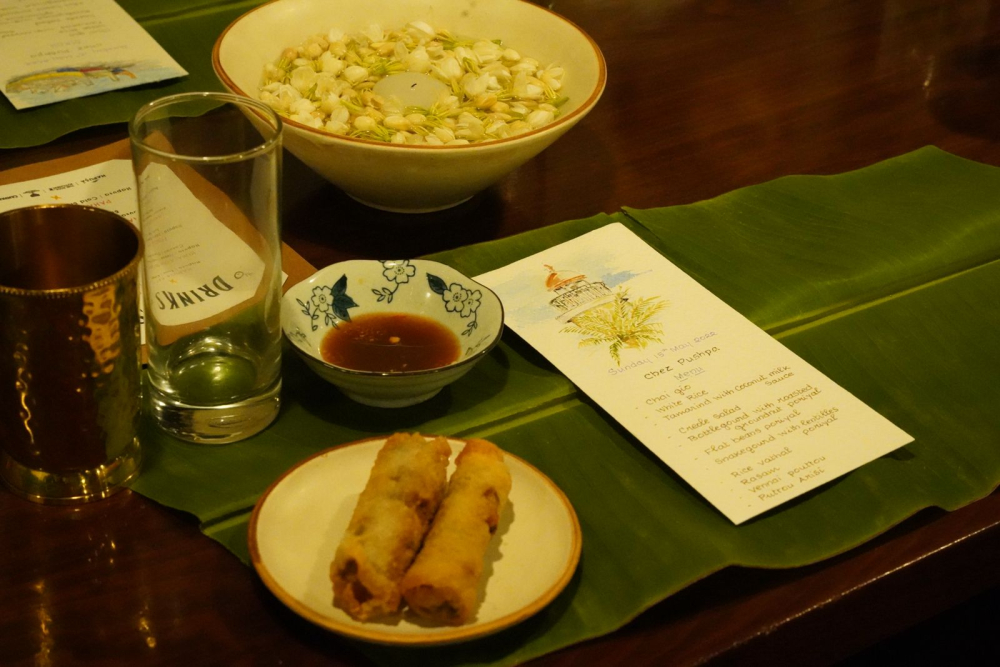
A meal at Chez Pushpa, starting with Cha gio. (Picture Credits: Ananya Jahanara Kabir)
Late in 2023, however, the Bel-Ami Café opened in the heart of the White Town. It brings together Pondicherry-Vietnam cuisine as well as a family history of Saigon entanglements via the well-known family of Ragounath Manet, one of Pondicherry’s best- known Bharatnatyam dancers, whose mother was Vietnamese. The author of one of the most acclaimed Pondicherry cookbooks, Lourdes Tirouvanziam-Louis, also has a Vietnamese mother; and one of Argentina’s most interesting winemakers, Aziz Abdul, is Franco-Pondicherrian via Vietnam. Spread out between Paris, Pondicherry, and the world are many more writers, hoteliers, chefs, musicians, and cultural entrepreneurs waiting in the wings whose family histories join Indochina’s material transformation of Franco-Pondicherrian foodways, interiors, and urban spaces as palpable yet elusive deposits of the past on the city and the body. The time is hopefully not far off when these histories will be told in a manner that does justice to this rich and vibrant heritage — as the Bel-Ami Café already confirms.
Bibliography
Burtin, Pauline. ‘De Pondichéry à l’Indochine française, réminiscences croisées: Exposer les récits de migrations intercoloniales françaises en Asie.’ Hommes & migrations,4 (2019): 182-186.
Chanda, Nayan. ‘Indians in Indochina.’ In Indian Communities in Southeast Asia, edited by Kernial Singh Sandhu and A. Mani, 31-45. Singapore: ISEAS Publishing, 2006.
Jørgensen, Helle. ‘‘Out through the door and in through the window?’: Positioning colonial nostalgia for French India in Puducherry.’ International Journal of Francophone Studies 25, no. 1-2 (2022): 59-92.
Kabir, Ananya Jahanara. ‘Family History, in a Wine Bottle: From Vietnam to Argentina, via Pondicherry and Paris.’ Scroll.in, November 6, 2022. Accessed February 12, 2026. https://scroll.in/article/1035069/family-history-in-a-wine-bottle-from-vietnam-to-argentina-via-pondicherry-and-paris.
Kabir, Ananya Jahanara. 2025. ‘Creolizing Archipelagic Intimacies: Remembering India and Vietnam via Pondicherry.’ Verge: Studies in Global Asias 11, no. 1 (2025): 132-166.
Marinadin, Daniel. Saigon-Pondy: The Heritage Cookbook. Pondicherry: BUUKS, 2020.
Marius, Claude. Receuil d’articles sur Pondichéry et les Pondichériens. Société Historique de Pondichéry: Le Trait-d’Union. Pondicherry: Mother’s Grace Offset, 2017.
Pairaudeau, Natasha. Mobile Citizens: French Indians in Indochina, 1858-1954. Copenhagen: NIAS Press, 2016.
Tirouvanziam-Louis, Lourdes. The Pondicherry Kitchen. Delhi: Westland Books, 2012.
This essay has been created as part of Sahapedia's My City My Heritage project, supported by the InterGlobe Foundation (IGF).