
In the Eastern Himalayas, traditional knowledge systems have long guided local communities in maintaining sustainable relationships with their environment. Among the many plants central to this ecological interaction, Edgeworthia gardneri, also known as argeli, lokta, or kuntu, holds a distinctive place. This evergreen shrub thrives in moist temperate forests at altitudes ranging from 1500 to 2700 meters. It grows on shaded slopes and riverbanks, contributing to slope stability and biodiversity.
Native to Sikkim, Nepal, Bhutan, and surrounding regions, argeli bears clusters of fragrant yellow flowers but is best known for its strong, fibrous bark. Its durable fibres, resistant to insects and decay, form the foundation of a long standing tradition of handmade paper. Before argeli was widely used in paper-making, it played an essential role in the daily lives of the Lepcha people of Sikkim. This essay explores the cultural and ecological history of Edgeworthia gardneri, tracing the plant’s journey from a utilitarian household material to a culturally significant and economically valuable resource across the Himalayas.
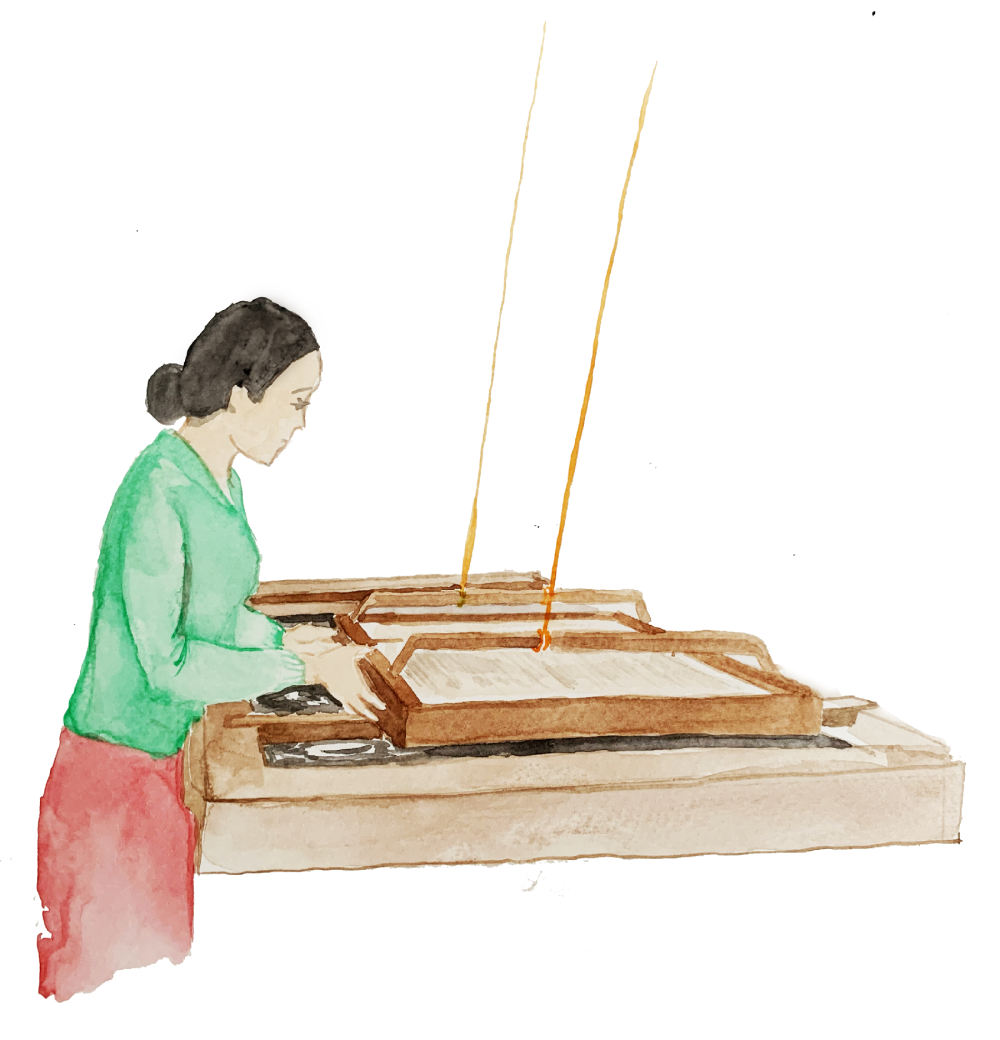
Handmade paper-making. (Illustration Credits: Jisha Unnikrishnan)
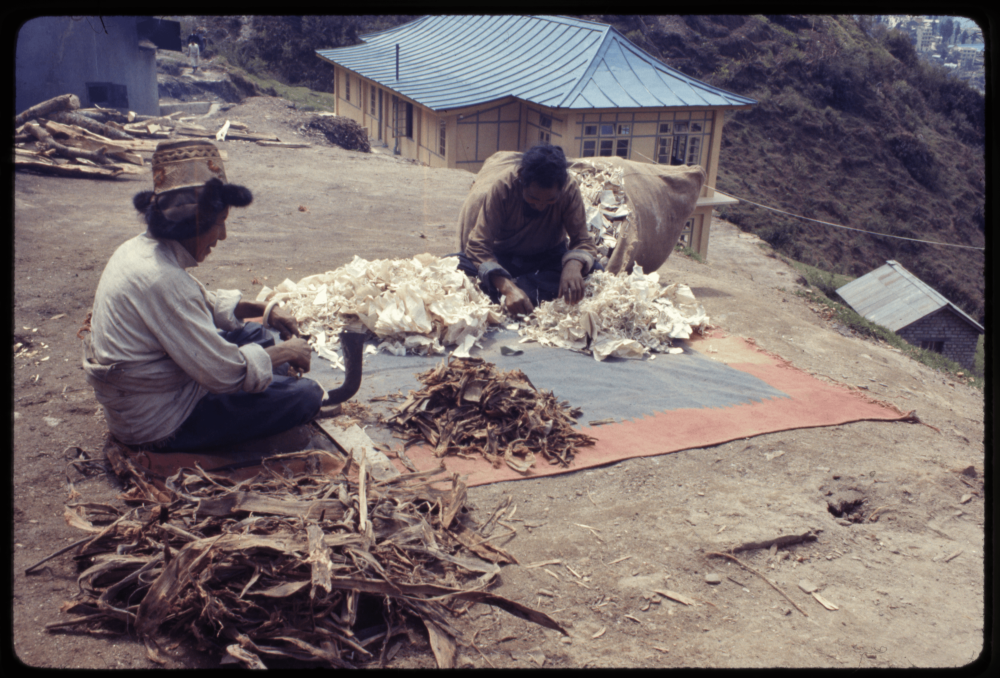
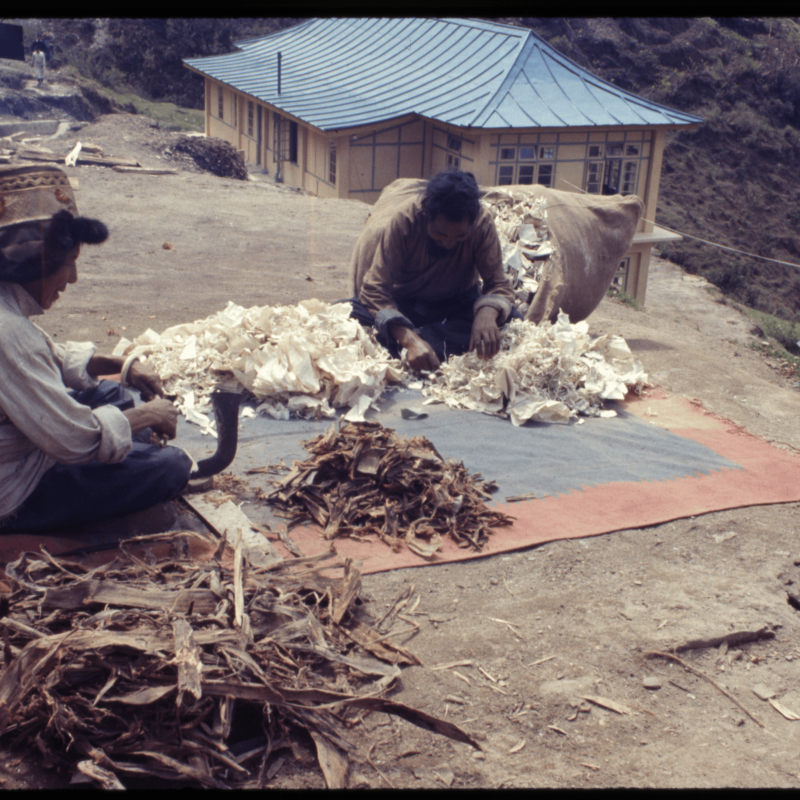
Paper Making. (Picture Courtesy: Alice Kandell/Library of Congress)
Ethnobotanical Context and Traditional Knowledge
The Lepchas, considered among the earliest inhabitants of Sikkim, have long maintained a deep spiritual and practical relationship with the natural landscape. They developed a sophisticated understanding of forest plants. In the Lepcha language, argeli is known as kuntu, and its bark was traditionally used to make rope for fastening baskets, weaving harnesses, and securing household items. As the bark of Edgeworthia gardenia regenerates after harvesting, the plant serves as a renewable resource that supports sustainable use. Traditional harvesting practices, such as stripping bark from mature branches without uprooting the shrub, by the Lepcha helped ensure long-term regeneration and prevent soil erosion. This adaptive use of argeli demonstrates a deep understanding of ecological processes.
Monastic Demand, Trade, and Transformation
The arrival and spread of Buddhism in Sikkim during the seventeenth-century marked a major shift in the cultural importance of argeli. As monasteries such as Pemayangtse, Tashiding, and Enchey gained prominence, the demand for durable writing materials increased. Sacred texts, mantras, and ritual manuscripts required paper that could withstand humidity, insects, and the passage of time. The bark of Edgeworthia gardneri proved ideal for this purpose. Over time, paper-making techniques spread through Himalayan monastic networks, drawing on long-established traditions from neighbouring regions. Specialised workshops were established under the patronage of monasteries and royal courts to produce high-quality paper for religious and administrative purposes. As Buddhist institutions adopted the plant for paper-making, its cultural role expanded while remaining consistent with sustainable use.
By the eighteenth and early-nineteenth centuries, handmade argeli paper had become a valued commodity in trans-Himalayan trade. Bark harvested from forests in Sikkim and Nepal was transported to artisanal papermakers, who produced sheets that were traded with Tibet in exchange for wool, salt, and other essential goods. Even as colonial influence expanded across the region, handmade Himalayan paper continued to hold importance. Industrial paper lacked the strength, durability, and longevity required for monastic manuscripts, so many monasteries continued to rely on traditional paper. Villages in South and West Sikkim sustained household-based paper-making, preserving the craft and supporting local livelihoods — indicative of how traditional systems adapt to external pressures.
Ecological Adaptation and Sustainable Practice
In the late twentieth-century, global interest in eco-friendly products led to a renewed appreciation of handmade Himalayan paper. Nepal and Bhutan developed thriving industries based on argeli and related species, producing journals, stationery, and art papers for export.
Sikkim also initiated efforts to revive and promote the craft through government support and community-based projects. Enterprises such as the Borong-Polok, a paper unit, demonstrate how traditional craft knowledge can be combined with modern economic opportunities. Argeli paper production requires minimal energy, produces biodegradable waste, and allows for bark harvesting without killing the plant. It therefore represents a model of environmentally responsible industry rooted in indigenous knowledge.
Despite its long history, argeli faces modern challenges. Deforestation, habitat loss, and overharvesting pose significant threats to natural populations in certain areas. Climate change also poses risks by altering the moisture and temperature conditions necessary for the plant’s growth.
Further, younger generations are increasingly moving to urban areas, leading to a decline in traditional craft knowledge. Addressing these challenges requires integrated conservation strategies, including community-led resource management, eco-certification of handmade paper, and educational initiatives that emphasise traditional ecological knowledge. With careful stewardship and modern support, argeli can continue to serve as a cultural and ecological resource for future generations.
The story of Edgeworthia gardneri, from Lepcha rope to monastic scripture, from trade commodity to eco-friendly craft, encapsulates the resilience and creativity of Himalayan societies. Through tracing this, it becomes clear that indigenous communities have long understood the importance of balancing use with conservation. Argeli’s enduring importance demonstrates how cultural heritage and environmental stewardship are deeply interconnected. In a time of global environmental uncertainty, such traditions offer valuable lessons in sustainable living. The Lepchas’ intimate knowledge of kuntu reminds us that ecological wisdom often lies in the everyday practices of communities that have lived closely with their environment for generations. Honouring and learning from this knowledge can guide the Himalayas and the world toward a more sustainable and culturally grounded future.
Supplemented by interviews with Namgyal Lepcha and Pili Rigam, research scholars.
This essay has been created as part of Sahapedia's My City My Heritage project, supported by the InterGlobe Foundation (IGF).