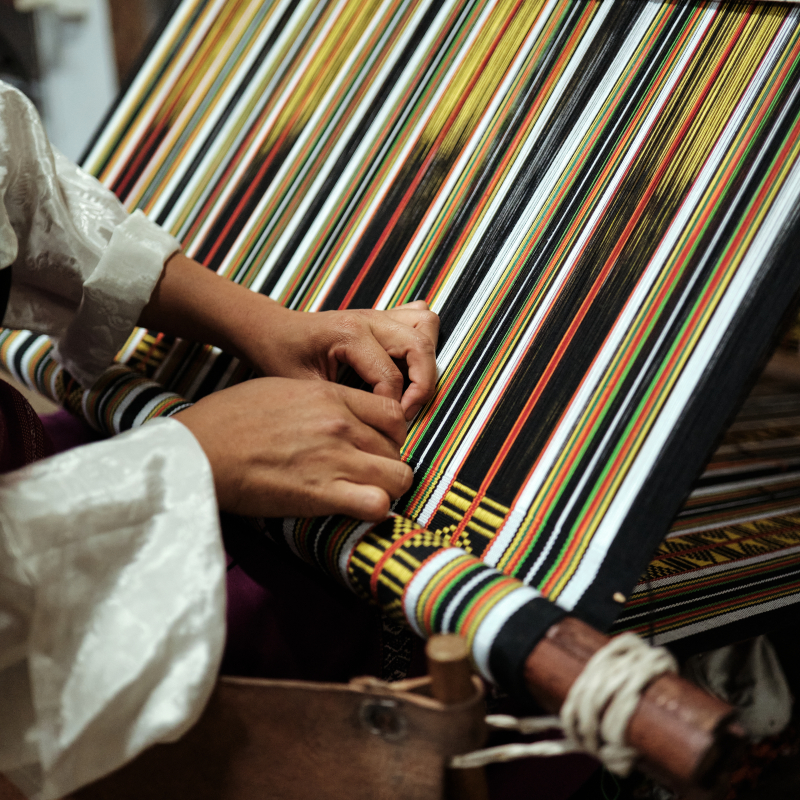

The diverse handloom and handicraft practices of Sikkim and its neighbouring regions have evolved through processes of ecological adaptation, migration, cultural exchange, and patronage. Among these traditions, weaving occupies a significant place — not merely as a craft practice but as a material expression of community identity, environmental knowledge, and social continuity.
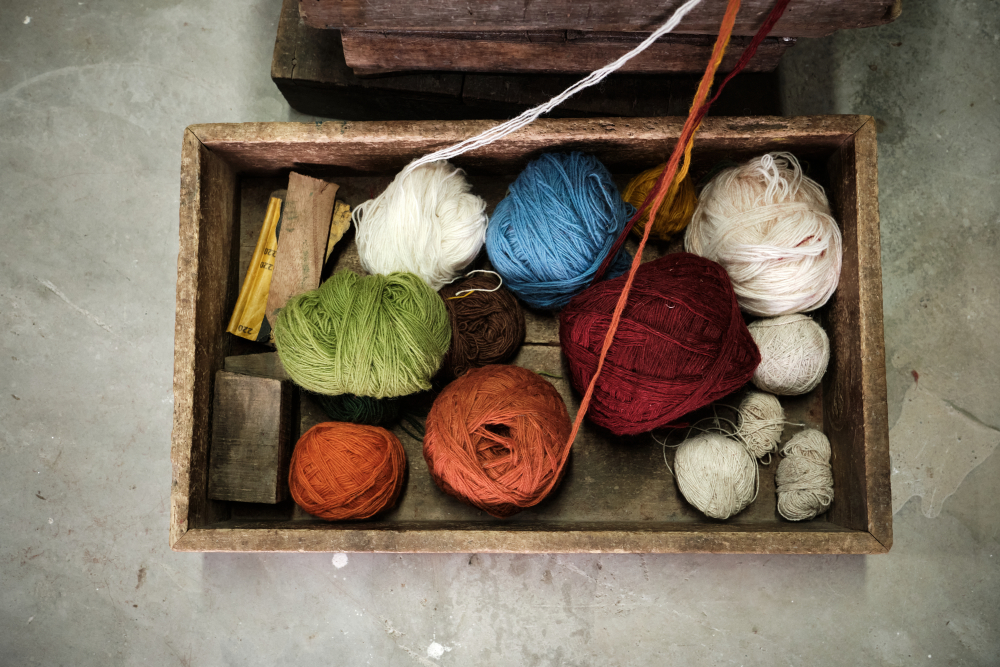
Dyed woolen yarn balls at DHH. (Picture Credits: Abhishek Anil)
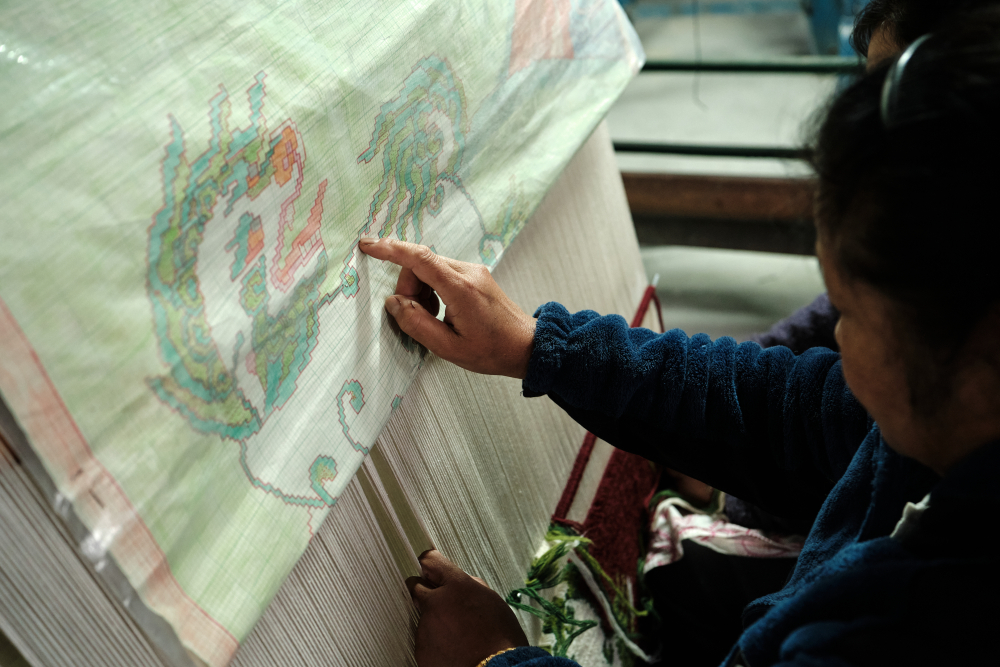
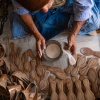
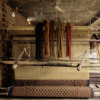
Carpet weaving at DHH, Gangtok. (Picture Credits: Abhishek Anil)
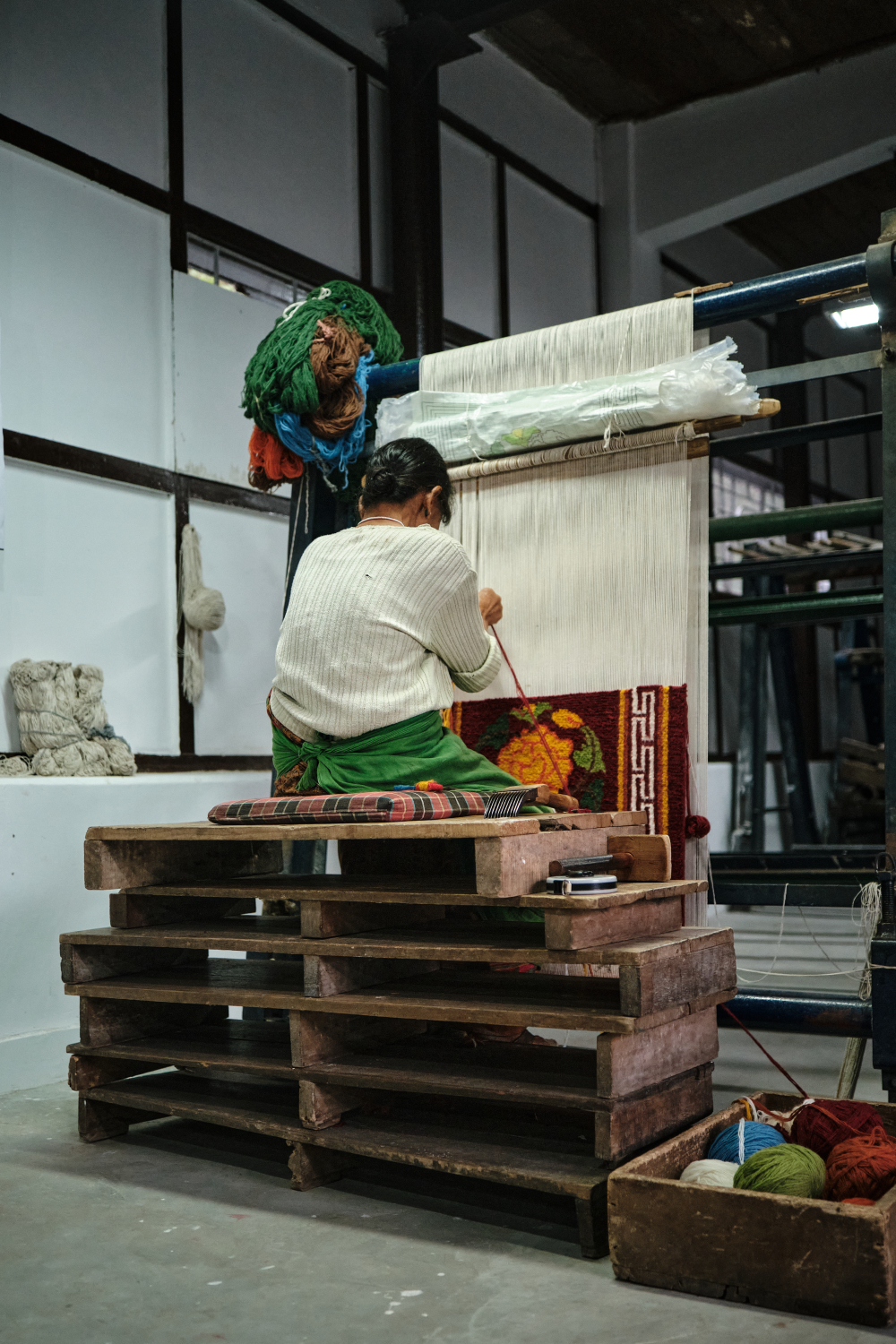
Lady sits on wooden steps to weave carpet. (Picture Credits: Abhishek Anil)
One of the most well-known weaving traditions in the region is traditional woollen carpet weaving, commonly practiced in Bhutia households and today institutionalised through vocational training at the Directorate of Handicrafts and Handloom in Gangtok. Another significant tradition is the rari, associated with the Gurung community — a black-and-white chequered textile made of coarse goat wool and used as a blanket in colder altitudes. Hay, an agricultural by-product, is also woven into seats and mats. While some of these traditions have received state patronage, others remain fragile and increasingly rare in urban centres.
Within this wider landscape of Himalayan weaving traditions, this essay focuses on the weaving practices of the Rong community of the Eastern Himalayas of Sikkim, Kalimpong, Darjeeling, Nepal, and Bhutan. For the Rong, weaving is not only an artisanal skill but an integral part of lived experience and ecological adaptation.
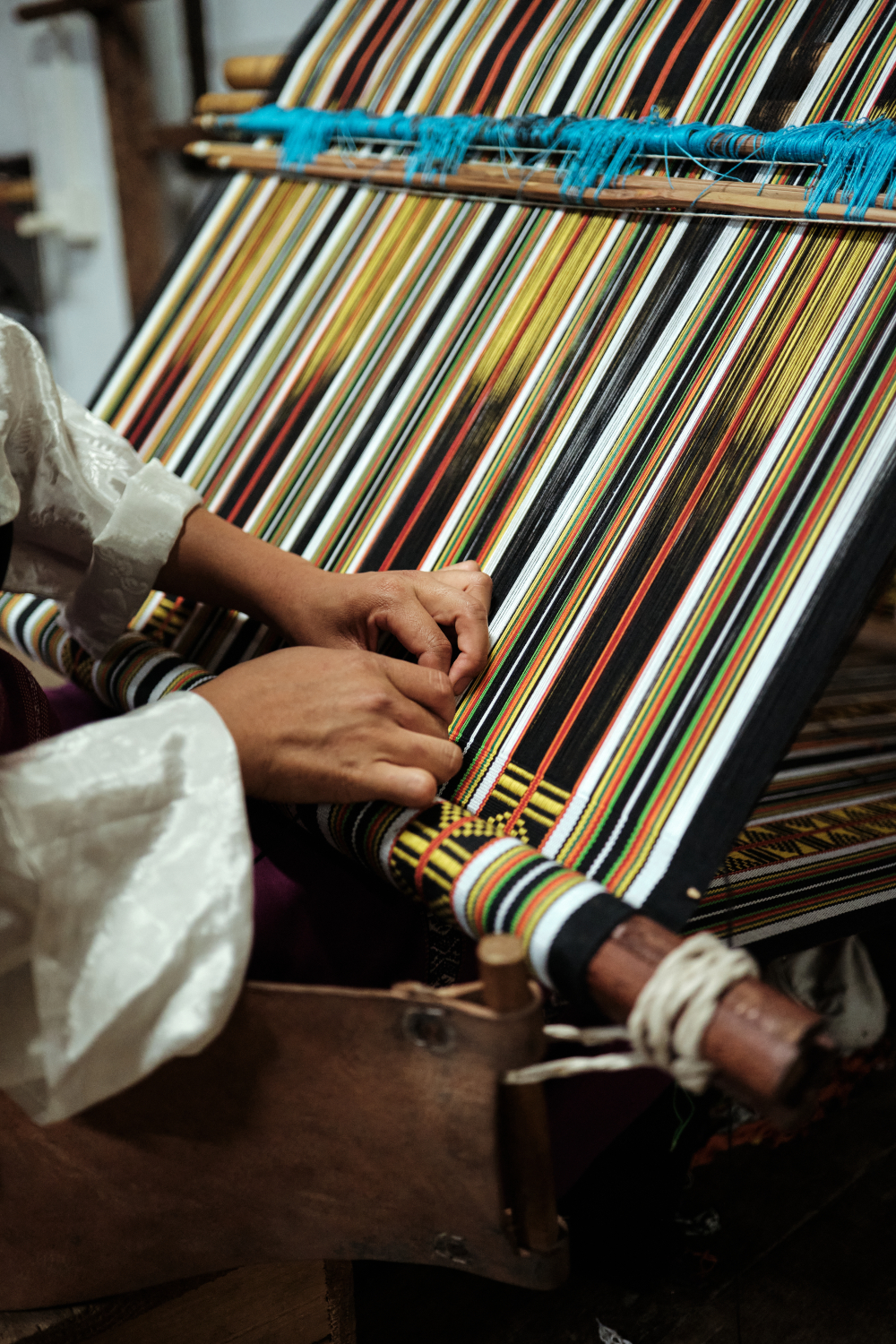
Weaving of the thara textile used to make the dumpra, at DHH. (Picture Credits: Abhishek Anil)
As an indigenous scholar belonging to the Rong community, I approach this subject not only through research but also through memory and inherited knowledge. In tracing the journey of Rong material culture — from production processes to symbolic meaning leading to identity — I draw upon both community scholarship and personal experience, situating weaving as a practice where ecology, identity, and everyday life intersect.
The Rong community has been using a variety of weaving techniques to convert natural resources to cultural materials. I personally have a deep connection to weaving, as part of my childhood was spent around looms and watching my nyokung (grandfather’s second sister) weave designs out of colourful threads everyday in her room. She would beat the threads tight and out emerged designs, all the while telling me and my sibling stories about British sahibs in the market or shape-shifting jhyamphi mung (yeti) and rainbows that chase people. In her small wooden ‘studio’, we saw fabrics flow out of pure imagination. This used to be every household in the village, which produced dumpra for their family.
Dumpra, the Garment-Blanket
Dumpra is the attire worn by the men of the community. However, the use of the dumpra reaches beyond the male identity. I say this because it is the women who create and weave these identities. Initially, as Tamsang says, “Each village produced dumpra for their men. Dumpra has dual roles. In the day, they are worn as garments, and during the night, they are used as blankets.” Kuzu (nettle plants) was woven into rough, thick fibers to endure the cold climate of the hills. These clothes are also called thokro-dum.
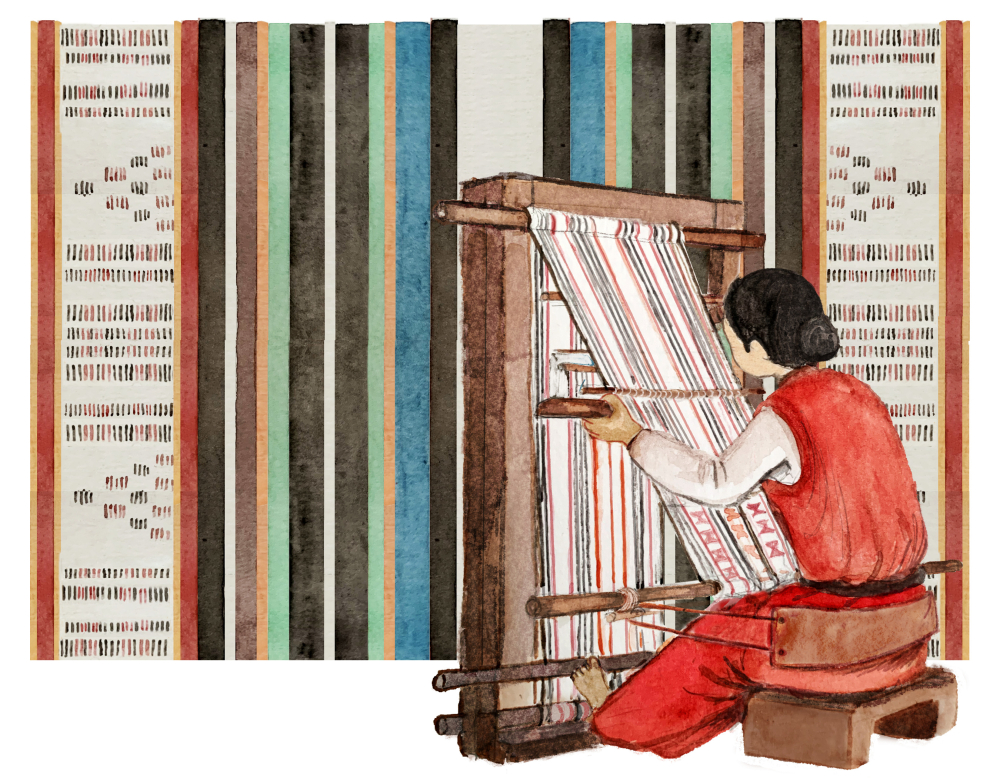
Thara weaving, commonly called Lepcha weave. (Illustration Credits: Jisha Unnikrishnan)
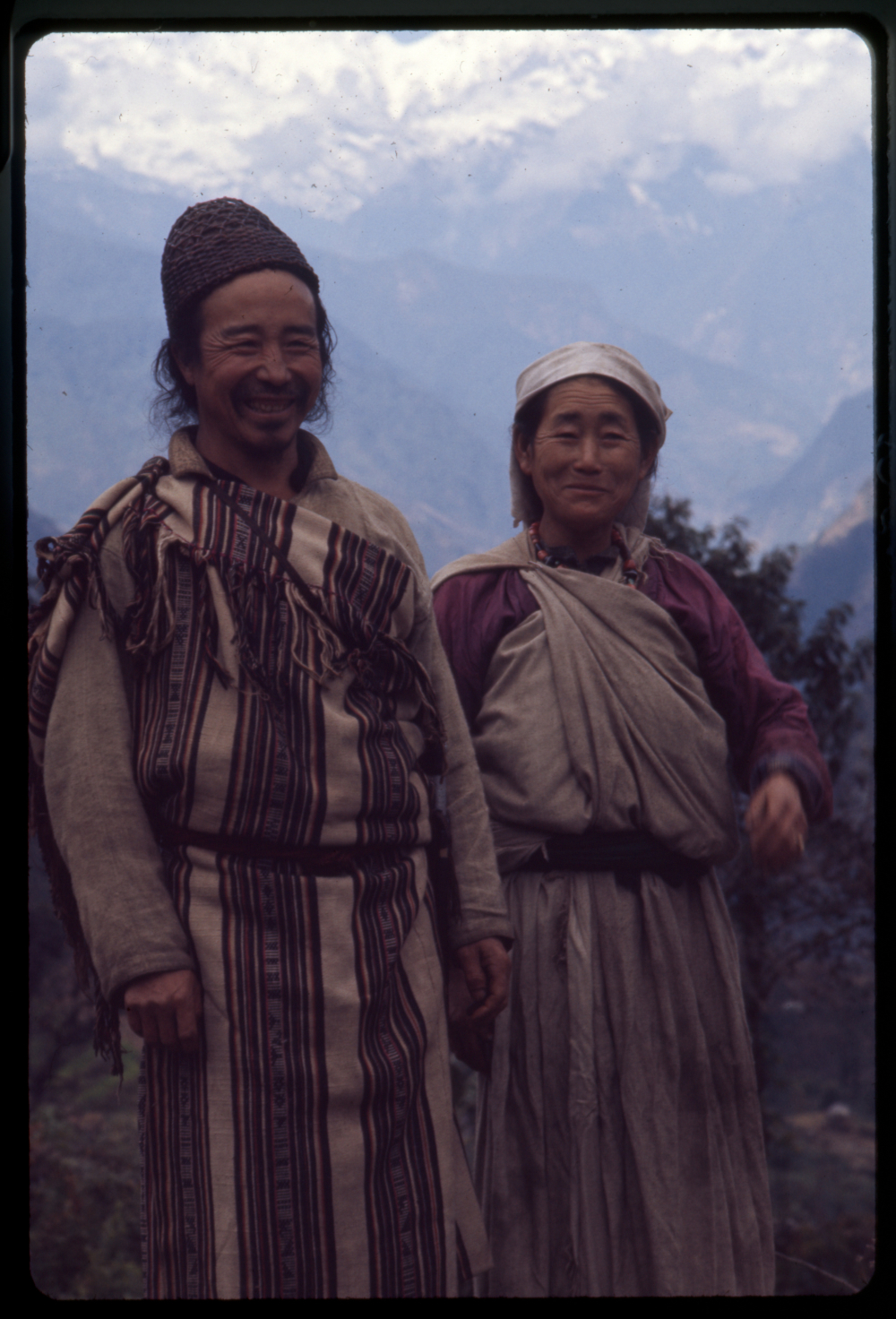
A man in dumpra and woman in damden, Lepcha traditional attire. (Picture Courtesy: Alice Kandel/Library of Congress)
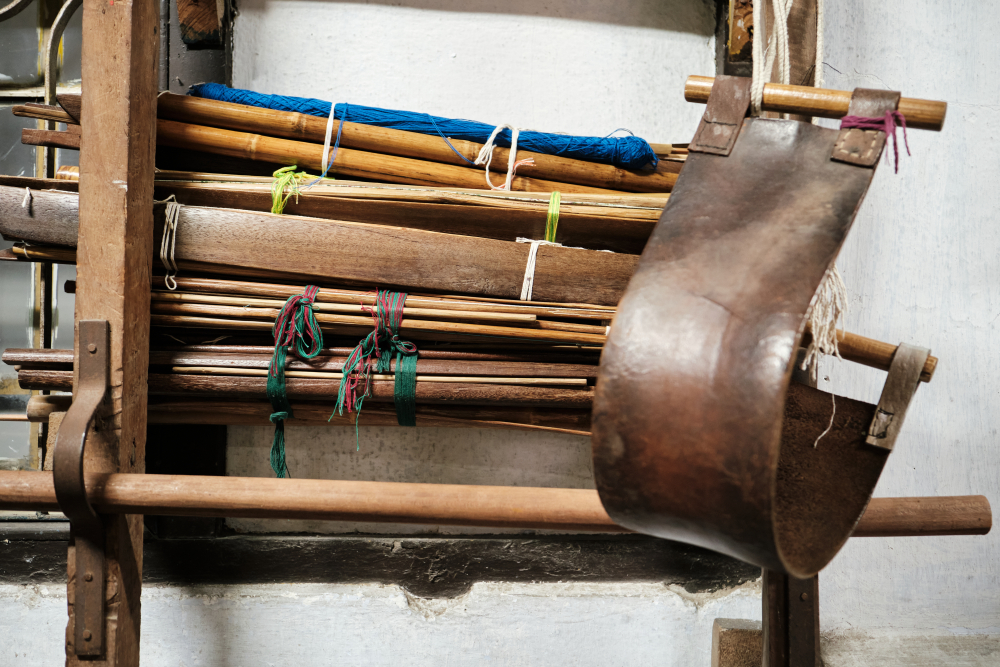
The weaving setup with stacked wooden and bamboo slats and a leather back strap at DHH. (Picture Credits: Abhishek Anil)
At present, dumpra is produced by cottage industries funded by the government, especially in Sikkim. In the case of Kalimpong and Darjeeling, with the decline of industrial handlooms, which once trained many in weaving and loom in the past, the production of traditional weaves has declined. However, young artisans are taking initiatives to revive the weaving practice.
The Rongs use different patterns in their attire, inspired by nature. The following are some of the principal weaving designs used in Rong attire:
-
Aa-shyer: the dumpra derives its name from this design. These are multicoloured stripes, which are usually in groups of eight or ten.
-
Po-chyak: this design is inspired by the bamboo-knot pattern. The name of the pattern comes from the Lepcha words, po meaning bamboo, chyak meaning the node or the eye. Thick and thin lines are laid horizontally. The number of lines depends on the weaver.
-
Sumok and subok: this design, which “symbolizes the headwear Samok” (Lepcha and Lepcha, 2010), is a triangle-shaped design inspired by the headwear of the Rong known as sumok thyaktuk.
-
Tsulot-tyet: this design is inspired by the arrow tips, forming a sharp V-shaped pattern laid sideways. This design may have gained importance as the importance of the bow-and-arrow became more evident, as the Rongs are a hunting-and-gathering community.
-
Tungbrik: this design is inspired by insects or “stylized insects” (Lepcha and Lepcha, 2010).
-
Tungblyok: this design is “inspired from the spider Argiope magnifia which makes a prominent ‘X’ shaped design in its web to allure various insects” (Lepcha, 2021).
-
Aa-thyap-alyot: the final part, where the ends of the fabric on both sides are left with the threads hanging loose for a certain length, forms the adornment of the dumpra.
Bamboo as Kin and Resource
The Rong community is also known for their close relationship with bamboo, a fast-growing and versatile plant. It is one of the plants extensively used by the community for culinary, building, and household purposes. Various species of bamboo are used for making various household artefacts such as baskets, weapons, and even attire. Another important plant extensively used simultaneously with the bamboo is the ru (cane, calamus acanthospathus giff). Most often, one finds them used together to weave various artefacts, including daily household artefacts such as baskets and utensils, which are common commodities woven, circulated, and used by members of the community. The community also uses bamboo for making various musical instruments, objects of adornment, and tools of hunting and traps.
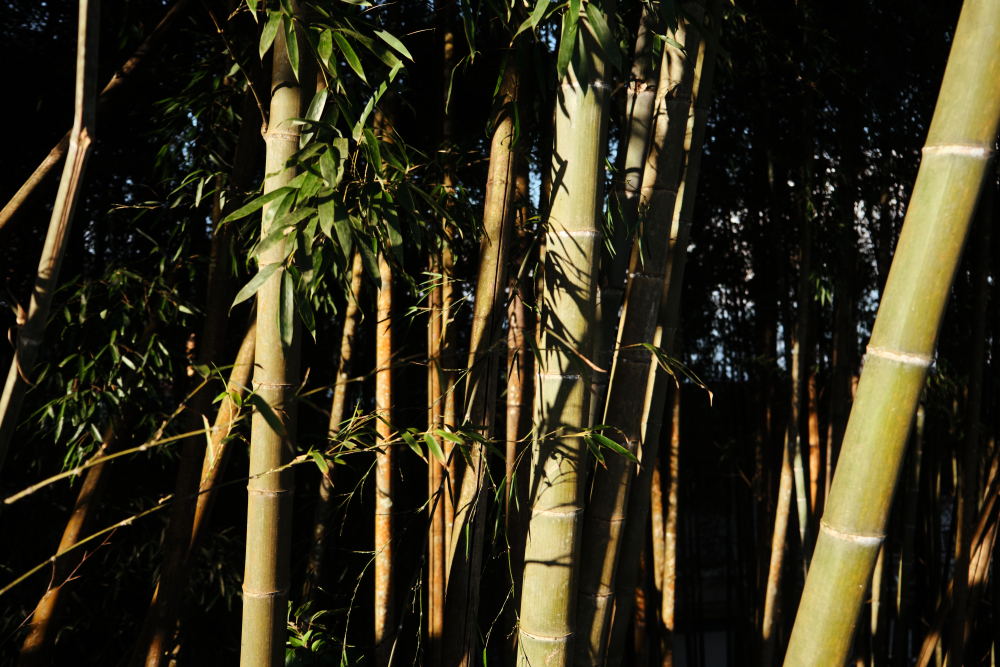
Bamboo Grove in Rumtek. (Picture Credits: Abhishek Anil)
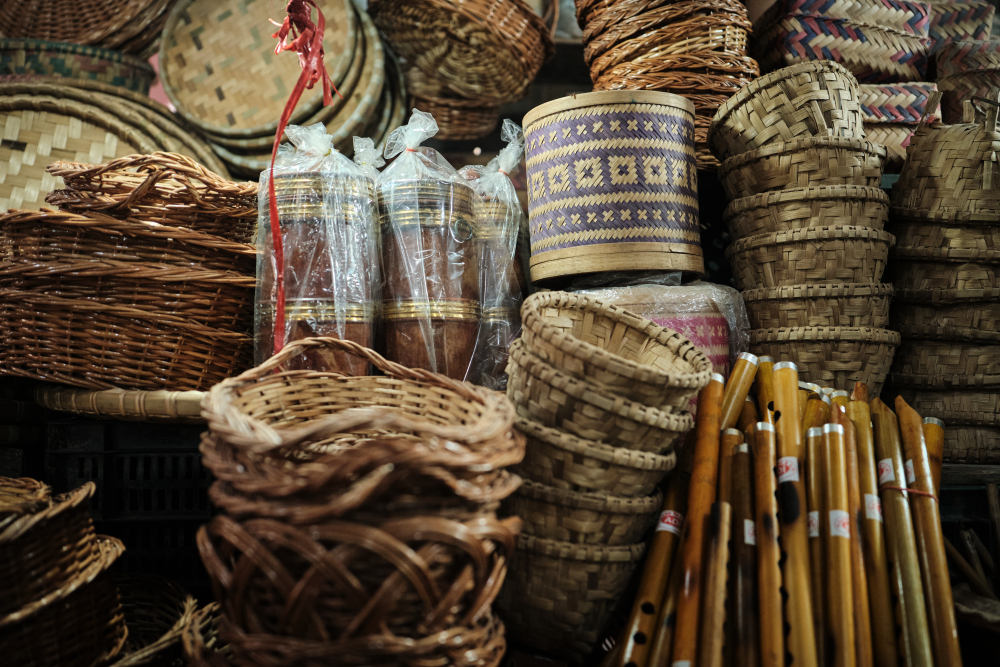
A variety of bamboo products for sale in Lall Bazaar, Gangtok. (Picture Credits: Abhishek Anil)
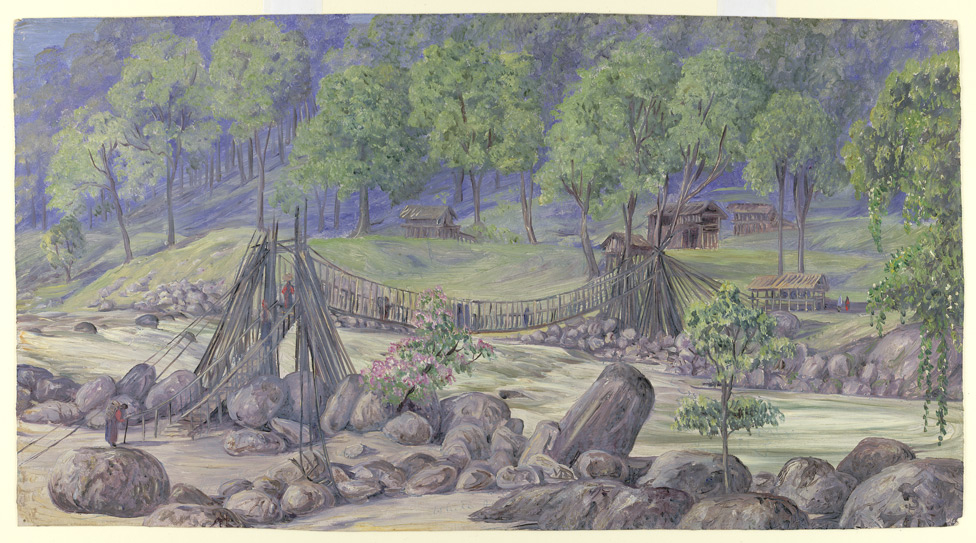
Traditional cane bridge over Rangeet. (Picture Courtesy: Marianne North/Wikimedia Commons)
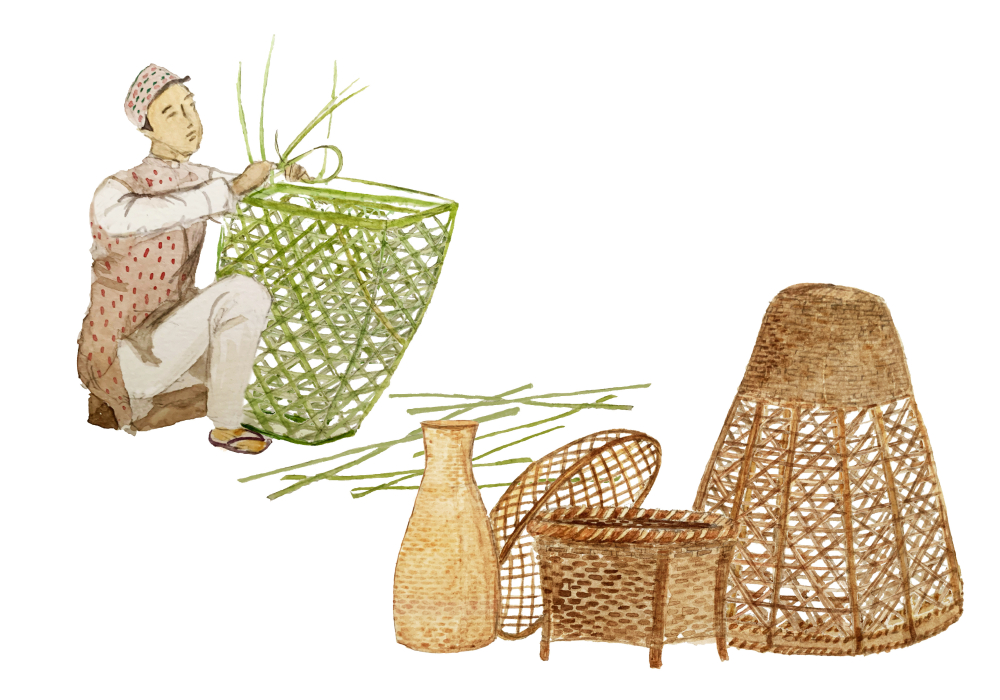
A man in Nepali clothing (daura-suruwal) weaving doko, a bamboo basket. (Illustration Credits: Jisha Unnikrishnan)
Bamboo is also synonymous with rituals for the Rongs, a constant reminder of the dependence of the community on this plant. In fact, bamboo is understood as a natural resource that Varto Amu (Mother Nature) provides for the Rongs. Till today, Rong people often say: “till bamboo exists, so will the Rongs.” From birth till death, bamboo has intricately woven itself with the Rong society and culture. Light and flexible, it can be molded into any shape, and the Rong community is expert in crafting elaborate designs with bamboo.
But one of the most resourceful uses of bamboo for the Rongs is hat-making. These hats, traditionally known as thyaktuk (thyak coming from the Rong word athyak, meaning head, and tyuk, meaning to wear), have three layers, with each layer beautifully crafted using available indigenous materials like bamboo, cane, tuklop (especially ka-fyer-lop, the leaf of Canna indica. L) leaves, and mica sheets. The material used in the making of these hats makes them strong, durable, and sustainable. These handcrafted hats are unique and exclusive to the Rong community.
The Rong community uses a few varieties of hats as part of their attire, but among them, the sumok thyaktuk holds a particular status in the community. It is seen as a symbol of identity and power.
Crafting a Thyakthuk
Making these hats requires a lot of time and skill from the craftsman. Knowledge of weaving is passed down from generation-to-generation in a family, although in some cases, it can be acquired by any individual who is willing to train under a master. Since the process of making these hats is painstaking, the production of these hats is limited to a small number of weavers.
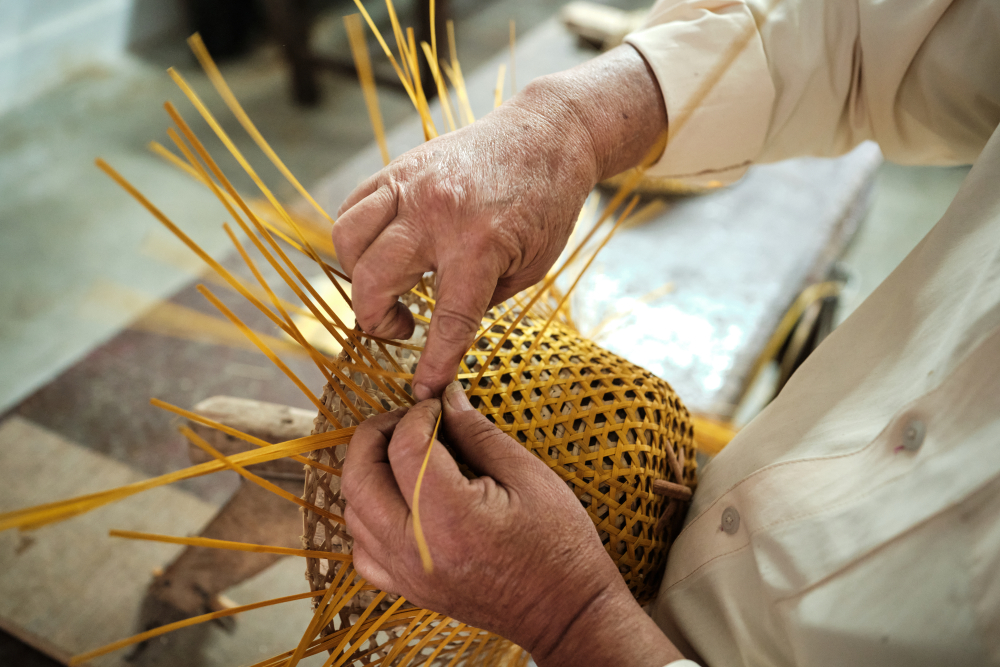
Weaving of a thyaktuk at DHH. (Picture Credits: Abhishek Anil)
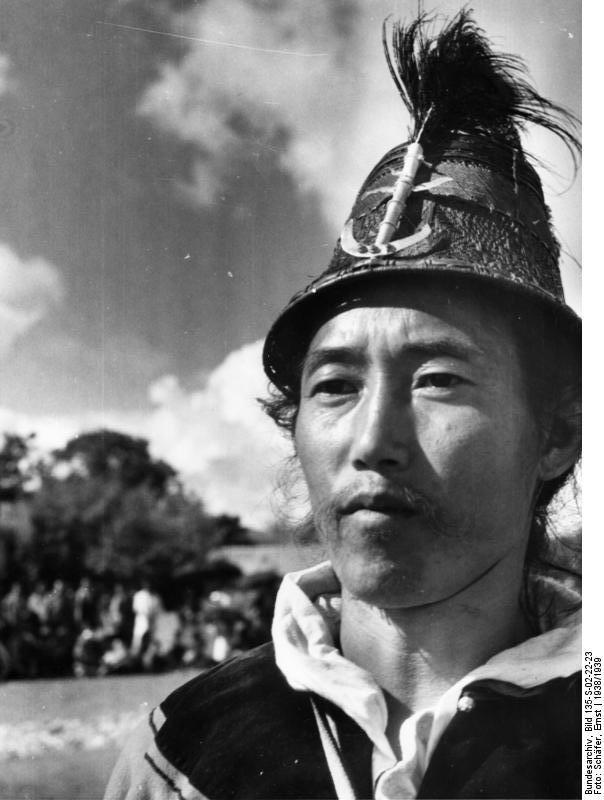
A man wearing thyaktuk. (Picture Courtesy: Ernst Schafer/Wikimedia Commons)
To make these hats, the best time to harvest bamboo, for their pali or sleekness, is between the months of April to June, after which the bamboos harden and become difficult to handle. They are then shaved into thinner and smaller sizes, the craftsmen seeking to make them as thin as human hair. They are then dyed with natural pigments of yellow and red, after which they are dried. One by one, these are then weaved and shaped into a thyaktuk. The thyathuk emphasizes the wearer’s identity as a Rong and becomes their most treasured object.
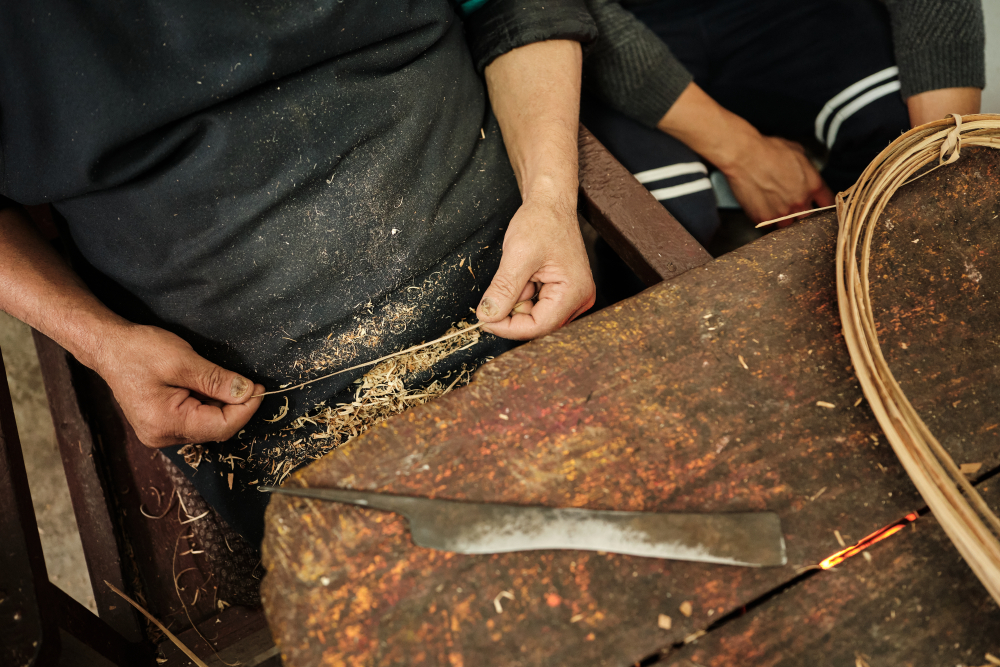
Shaving the bamboo into thin strands. (Picture Credits: Abhishek Anil)
Oral histories trace the origin of the thyaktuk to nonviolent beginnings. The story starts with dancing and singing: the god of music and dance, Narok Rum (rum here meaning god/deity), was so pleased with the Rong People that he bestowed on them a thyaktuk adorned with brightly coloured feathers. This gift from the gods then became part of the Rong identity.
The hat is made out of three layers. The first or the innermost layer is more casual and loosely woven, constructing the base shape of the hat. After this, a layer of tuklop, the dried leaves of the ta-fyer plant, is laid. Some thyaktuks also use kafer lop or pago-rip (Oroxylum indicum) leaves for the inner padding.
Finally, the outermost layer, which is very intricate and decorative, is woven. This layer consists of several different parts:
-
Sundyong song: A notable feature of this hat is that the topmost layer resembles a spider web. Divided into eight sections, the finely prepared ru molds the shape of this web.
-
Aa-mik: the Aa-mik, or eye in Rong, refers to the hexagonal-shaped spaces in the second layer of the hat. The shape and the hollow space represents the eyes of bees. This layer is looser with its weaving pattern; it is molded into the same shape of the hat as the outer layer and sits on the interior of the sumok. The two layers are gathered with the tuk-lop placed in-between them to act as a water repellent.
-
Sumok-tsum: for the third layer, more intricate designs are woven. Horizontal and vertical strips of ru and bamboo are interwoven into a diamond-shaped design, which symbolizes auspiciousness. There are three types of shape and style to the sumok-tsum. The plain one is known as amot or the female, the second type is adorned with intricate patterns and is known as abu or the male, and the third one is small in size, while holding the same shape, and known as akup or the child.
-
Aa-fyet: the bottom most part of the sumok, this accurately means ‘the end or bottom.’ Two thicker strips of bamboo are attached and interwoven with the help of smaller strips of ru into an exoskeleton that holds the headwear together.
The final part of the sumok is a small strap made of ru that holds the hat in place under the chin of the wearer. According to the craftsmen, this is optional, as some prefer their hats with the strap and some without it.
The sumok is usually also adorned with feathers. Colourful, extravagant feathers are preferred, though porcupine quills are also used. The most desired feather is the tail of the Nambong Ong Pano Foo (Racket Tailed Drongo), which is believed to be the king of birds according to the Rongs. A sun and moon symbol has been a recent addition to the hat, after the community came in contact with Buddhism. This borrowed symbol is now used to hold the feathers in the front of all Rong thyaktuks.
The Rong hats have also been a material of interest for those outside the community. The famous British Museum houses a sumok, collected in 1960 by Dr J. D Hooker when he came to Darjeeling and the Sikkim Himalayas for his botanical studies. The sumok there is displayed under registration number 1960, 10. 251, and described as a “hat woven from bamboo and leaves. Tall hat with wide, outwardly flaring brim: peacock feather affixed to the front of hat, twisted fiber affixed to underside of hat and would run under wearers chin.”
Styles of Thyaktuk
One popular style of thyathuk is the sumok thyaktuk: sumok is related to war, so this refers to a war-hat. One of the most extravagant of all hats, made of bamboo and ru. It is what Hunter describes as “extravagant, broad, and flat- brimmed.” This hat is usually seen worn during special occasions, like festivals and special rituals. It “was mostly popular during the time of the Chogyal, worn by the Lepcha home guards.”
One of the setbacks when it comes to the sumok thyaktuk is the meticulous craftsmanship it requires, which leads to the hat becoming valuable and very expensive. The price for one can range from fifteen-thousand to forty-thousand rupees. This has led to the creation of other versions of the thyaktuks, which are meant to be affordable for a layperson. One of these many styles is the pabri, which is also made of bamboo and cane. The shape of this headwear is cylindrical, smaller in size than the sumok thyaktuk, with a rounded top. The weaving pattern is similar to that of the sumok, but less elaborate and much simpler without any intricate patterns. It is also worn with feathers in the front.
Na-rek thyaktuk is another version of a bamboo hat, which is worn during cultural performances and dances. The name narek comes from the deity of dance and music Narok Rum. This headwear is loosely weaved and slightly conical in shape, held in place with a thin strip under a dancer’s chin so it does not fall while performing.
Thyaktuk in Culture
Culturally, the hat is often worn with traditional Rong attire, such as the thokro for men. It is particularly visible during festivals, where people come together and collectively celebrate their cultural heritage. During such events, the hat becomes a symbol of pride and identity, reminding the younger generation of their roots and heritage.
In modern times, the Rong hat continues to serve as a cultural emblem. Currently, more Rongs are reviving the use of the thyaktuk in everyday life. It has acquired an essential part in Rong ceremonies, cultural programs, and exhibitions showcasing indigenous traditions. Efforts to preserve and promote Rong crafts have also drawn attention to the hat as an example of sustainable, eco-friendly craftsmanship. The Rong hat is more than a traditional accessory; it is a meaningful cultural artifact of the Rong community. It embodies their history, creativity, and harmonious relationship with nature. Preserving such traditions not only honors the past, but also enriches the cultural diversity of the present.
Bibliography
Bhutia, Kalzang Dorjee, and Charisma. K. Lepcha. ‘Forest as Kin and Pantry in the Himalayas.’ SAPIENS, 18 June 2025. Accessed 26 January 2026. https://www.sapiens.org/culture/indigenous-food-sovereignty-himalayas-climate-crisis.
Hunter, William Wilson. A Statistical Account of Bengal. Vol. 10. 1876. Reprint, Delhi: Concept Publishing Company, 1984.
Lepcha, Charisma K. Religion, Culture and Identity: A Comparative Study on the Lepchas of Dzongu, Kalimpong and Ilam. PhD thesis, Northeastern Hill University, 2013. https://shodhganga.inflibnet.ac.in.
Lepcha, R. Dynamics of Material Culture of Lepchas in Sikkim, Kalimpong and Darjeeling. PhD thesis, Sikkim University, 2021.
Lepcha, T. T., and T. T. Lepcha. Indigenous Lepcha Weaves. Gangtok: Renjyong Mutanchi Rong Tarjum, 2010.
Tamsang, L. S. ‘Lepcha Dress.’ Aachuley: A Quarterly Lepcha Bilingual News Magazine 3, no. 2 (1988). Kalimpong: The Lepcha Literary Organisation.
This essay has been created as part of Sahapedia's My City My Heritage project, supported by the InterGlobe Foundation (IGF).