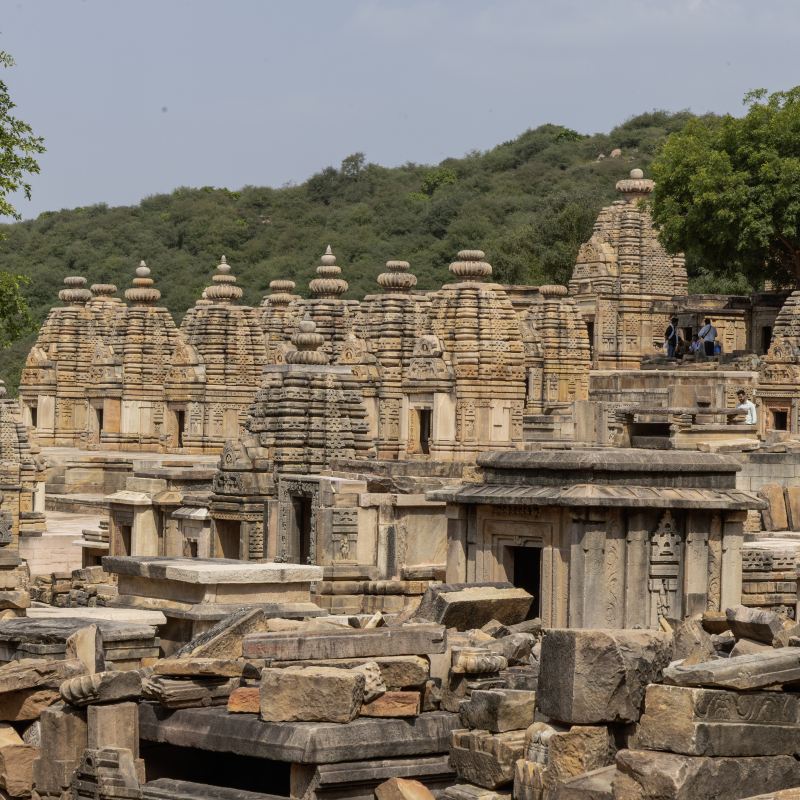

Bateshwar, which technically falls in the Morena district of Madhya Pradesh, lies just around 25 kilometers from the Gwalior airport. This site, nestled between hillocks, forests, streams, and fields, hosts over 200 temples dedicated to Vishnu, Shiva, and Shakti at the same complex. Bateshwar’s name gives it away: it stands for Bada Ishwar (a big Siva), with the term mostly used in Shaivite contexts. Standing in the 25-acre complex, surrounded by 200 temples and two, two small pools, gives one a sense of being amidst a jungle of temples.
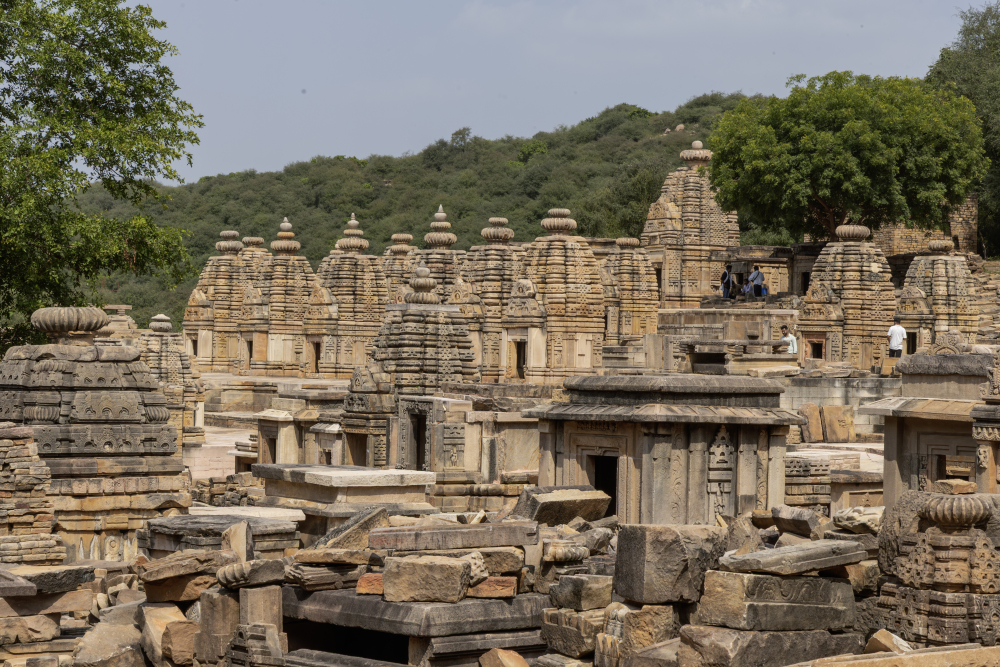
The Bateshwar Group of Temples. (Picture Credits: Pranjal Jain)
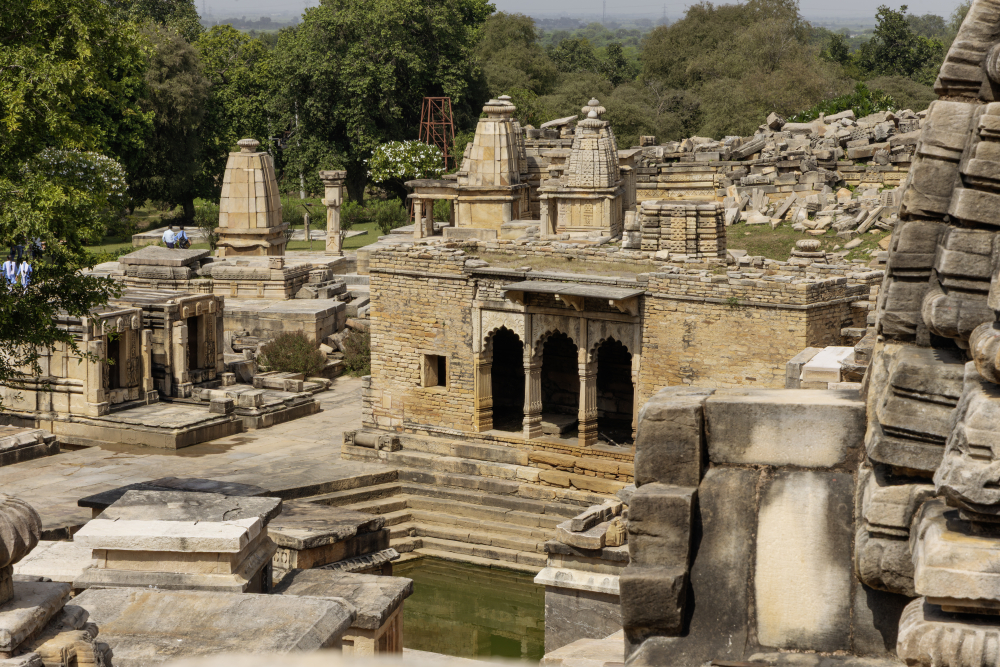
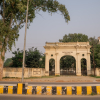
One of the two pools in Bateshwar. The Arched Structure next to it is a later addition, probably added by the Jat rulers of Gohad. (Picture Credits: Pranjal Jain)
Fatefully, the site also lies in the Chambal Valley, an area incredibly infamous for dacoity and lawlessness. As such, this location is also part of the story — far from the villages, the temple complex was forgotten once it succumbed to ruins, probably due to an earthquake in the fourteenth-century. The continuous neglect of the site and its eventual revival tells us a story not only about the fate of Indian monuments, but also of modern caste politics, archaeological discoveries, and the nuances of the ill-famed Chambal ke Dakoos (Dacoits of the Chambal).
A Representation of the Region
Originally built during the reign of the Gurjara-Pratiharas, between the ninth and eleventh-centuries, these sandstone ruins are exceptionally unique for the sheer scale and density of the temples at a singular site, especially in the region.
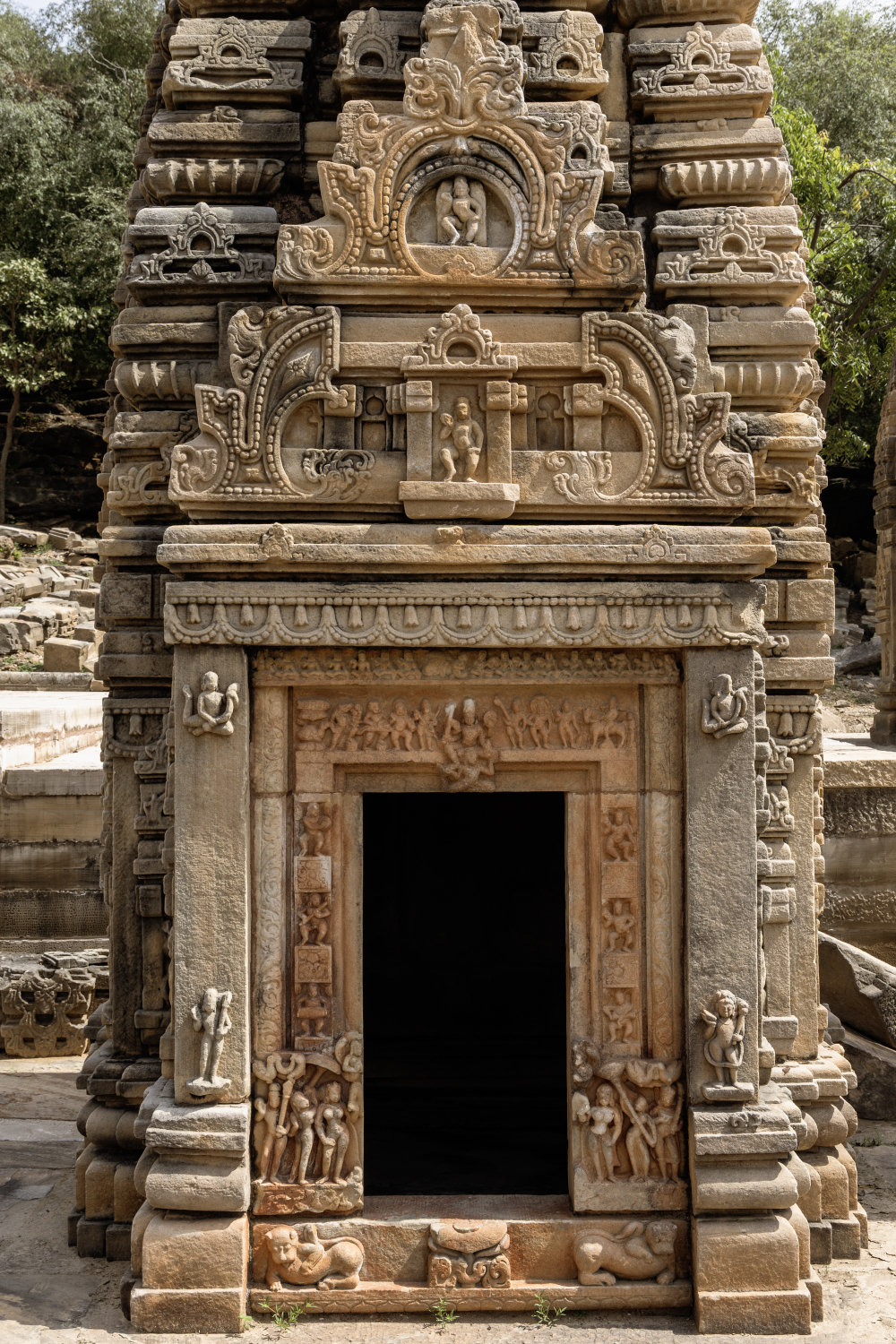
Entrance to one of the temples in Bateshwar. (Picture Credits: Pranjal Jain)
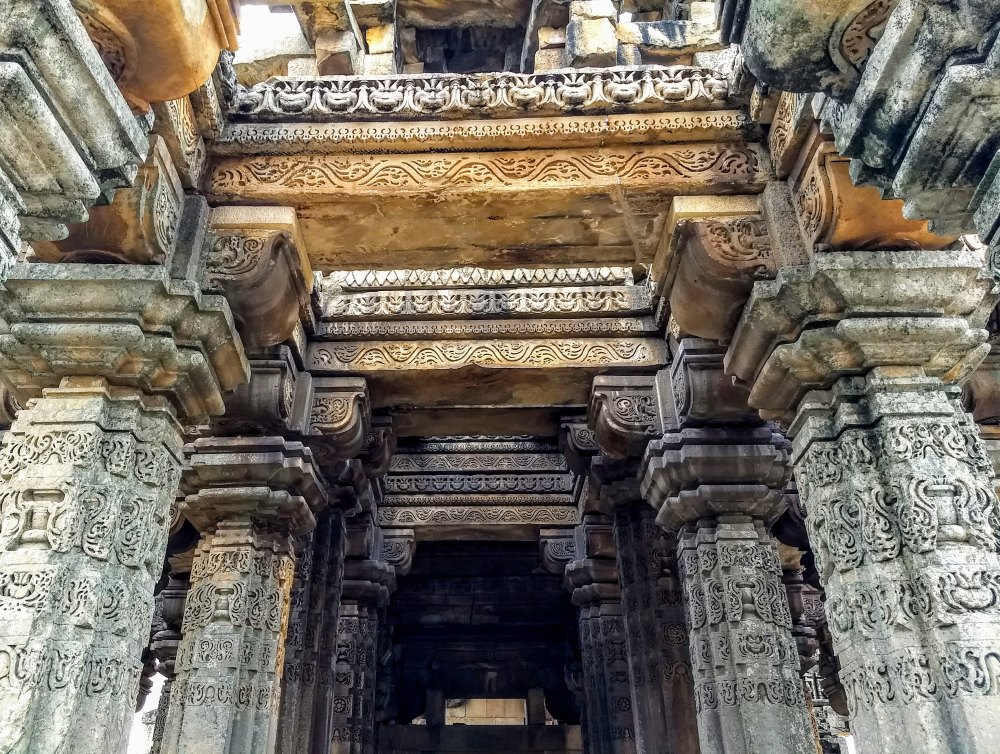
Sculptures inside Kakanmath Temple. (Picture Courtesy: Ramakrishna Kongalla/Wikimedia Commons)
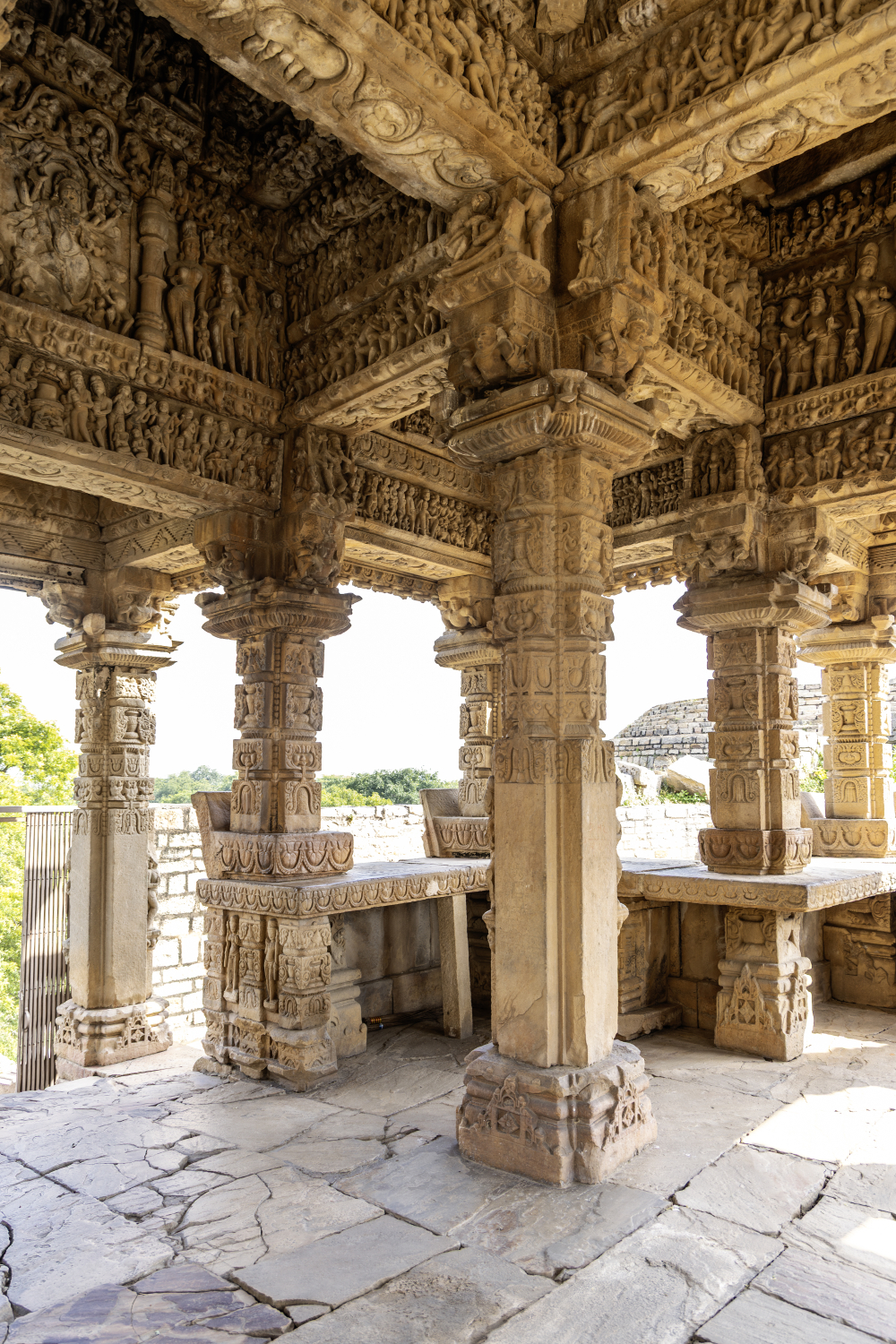
Sculptures inside Gadhi Padavli. (Picture Credits: Pranjal Jain)
But for all its singularity, there are also commonalities to be found between Bateshwar and other architectural structures built during the Pratihara-era in the vicinity, as well as with the fort of Gwalior. Firstly, the material of sandstone used in Bateshwar is ubiquitous not only in the fort, but also in early medieval temples dotted around Bateshwar, including Kakanmath, Nareshwar, Aiti, Mitaoli, and Padavli. The magnitude of the sculptures is also common to structures from this era: take, for instance, the Gadhi-Padavli Temple, which even outshines Bateshwar when it comes to the sheer density of its sculptures. The chandrashala (or gavaksha), literally meaning moon-window, is among the most recognisable architectural elements from the Pratihara-era sites in and around Gwalior, including Bateshwar: these horse-shoe shaped niches are stacked wonderfully, one top of another, creating a long vertical chain in many temples within the Bateshwar site. One can see this exact element used in the Teli-ka Mandir (studied extensively for its unique, Dravida-like shikhar or superstructure) inside the Gwalior Fort complex and in the Nareshwar group of temples not too far from Bateshwar.
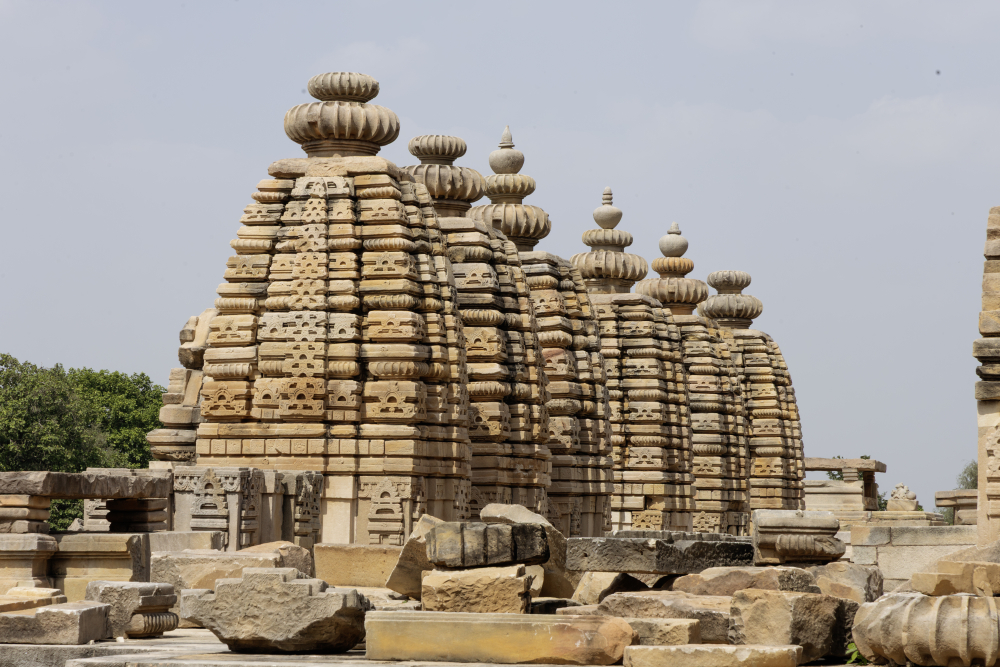
Chandrashalas or Moon-Windows in Bateshwar. This motif was widely used in the temples of the region. (Picture Credits: Pranjal Jain)
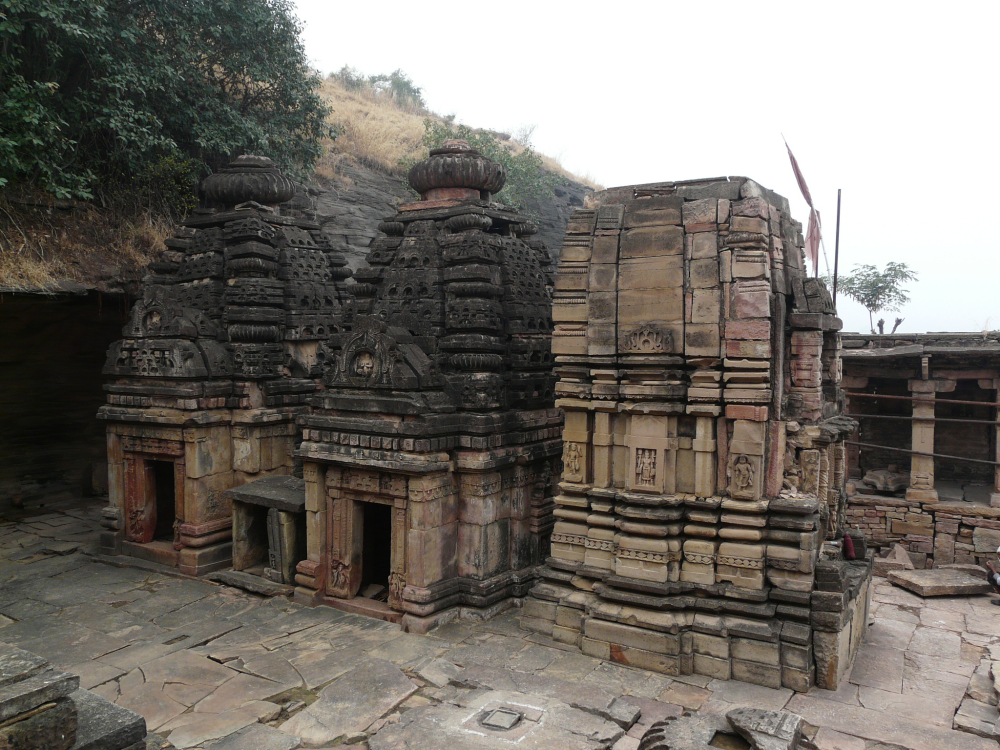
Temples in Nareshwar. (Picture Courtesy: Varun Shiv Kapur/Wikimedia Commons)
What Do the Ruins Tell Us?
The Bateshwar group of temples is not limited to the 200 semi-restored temples that one can see. Upon entering the site, one is greeted by free-standing sculptures, unfinished decorative elements, and stone ruins all around. Whether these were all parts of temples that once stood and just crumbled with time or if they were works in progress that never got to take their place in a standing structure, we cannot say. K. K. Mohammed, the primary archaeologist who worked on the restoration and documentation of the site, suggests that the site of Bateshwar was a kind of a prayogshala (laboratory) of temple-making. He posits that the site was used as a siddha-sthana (holy place) during its inception. According to him, this site was likely used by anyone who wished to construct a temple, since all the materials were readily available and would make the construction a streamlined process. If that is to be believed, then it makes sense to say that many of these buildings might be unfinished specimens that never got their time to shine.
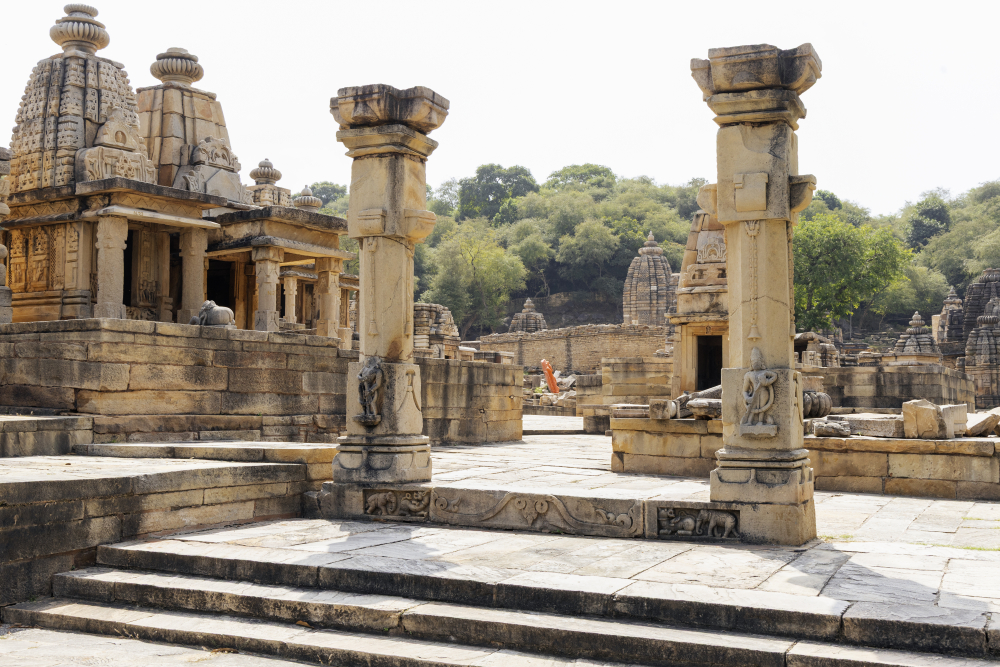
Remains of a torana (gateway) in Bateshwar. (Picture Credits: Pranjal Jain)
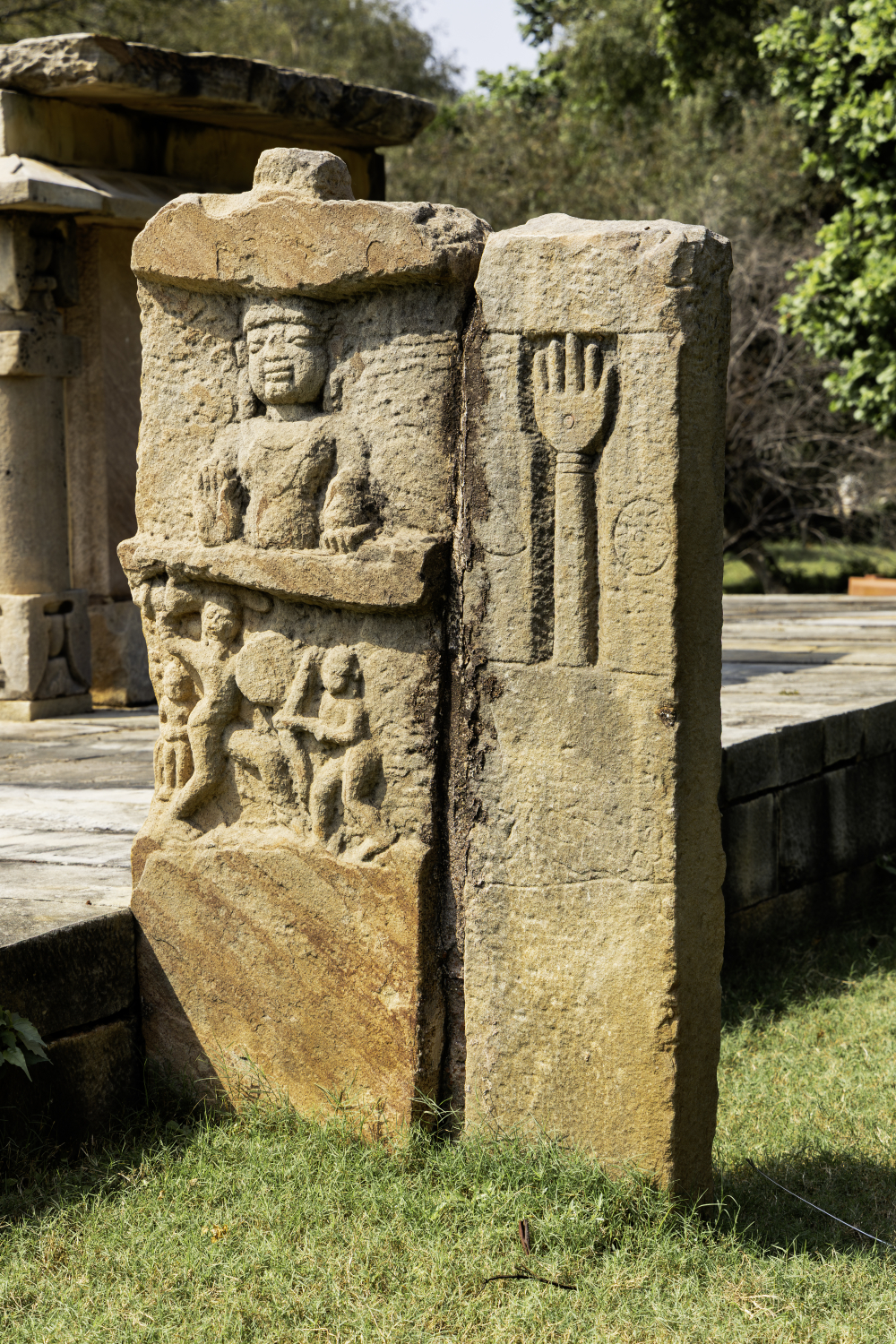
A fallen Sati Stone and a Hero Stone next to each other. (Picture Credits: Pranjal Jain)
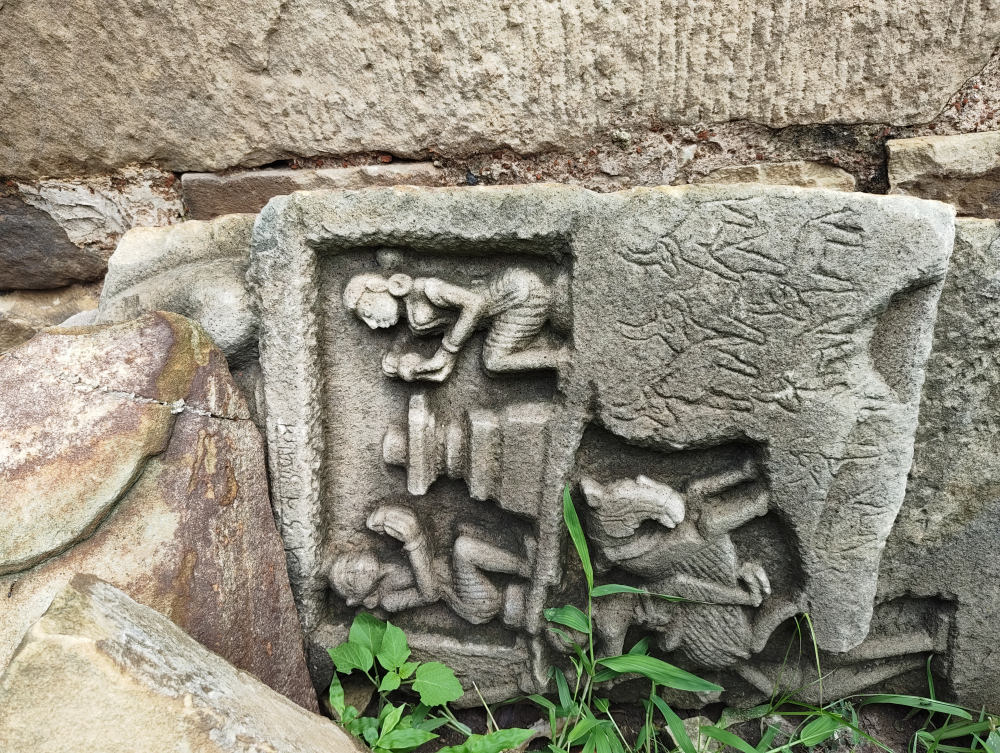
One glaringly obvious example of such an unfinished piece is the piece photographed right below. When I last visited the temple-complex, this particular sculpture was resting towards the farther wall (as one enters from the gate) of the main office building. Just strolling around, I came across this specimen, which in its unfinished state contains so much information about the process of sculpture-making and temple building. At the very top is an inscription, still unfinished. Below are two figures worshipping a linga, followed by a figure on a horse. Right next to this figure is what seems to be the outline of other animals. From the looks of it, this seems to be a hero-stone commemorating a cattle-raid. While such hero-stones are not too prevalent in North India, especially when compared to their prolific numbers in the Deccan, there are still a good number of them in the region. The Gujari Mahal Museum in the Gwalior Fort complex houses many of these stones, including five directly related to cattle-raiding. These stories in the sculptures also point towards the prevalence of a pastoral economy. The Pratihara state, and even its core territories, was never too physically or culturally far from the pastoralists, whose heroes often died in cattle-raids and not necessarily battling some foreign army.
These stones commemorate the death of male figures, valiantly dying in battle or cattle-raids. The valour of women, however, was only related to their immediate male relatives. Hero-stones were how the community remembered their fallen male heroes, but sati stones were how they remembered their women. In the Bateshwar complex, a sati stone greets us as one of the very first things we see, located towards the right as one enters from the gate. Unlike the unfinished hero stone, which is lying around without any eyes on it due to its incompleteness, the finished sati stone is hard to miss. Two elements on the sculpture – the raised hand, with the sun and moon motif – make it clear that this is a sati stone. It sits right next to another hero stone, an uniscribed one. Reading the pieces together, it looks like a man succumbed to death fighting and his wife had to immolate herself after the tragic event.
An unfinished Hero Stone in Bateshwar. (Picture Credits: Sarthak Sharma)
Unfinished artworks and hero/sati stones are neither unique to Bateshwar nor are they the most dominant structures inside the site. But they do hold their own significance. We have to start imagining our built heritage, our history, and our monuments, as living and thriving spaces in which several people participated. Bateshwar, in particular, is evidently not only a space for royalty, reserved for imperial propaganda and retelling the stories of great kingdoms. This was a space where communities remembered their fallen heroes, the most devout came for patronage, and where artists and artisans showed their talents on a grand scale. The lack of inscriptional evidence reinforces this idea of non-royal patronage at the site.
The Rediscovery
Possibly the most well-known aspect of Bateshwar’s history is its rediscovery and restoration. It starts with a related controversy, namely the controversy around the origins of the Pratiharas. As mentioned earlier, the site is dated to the Pratihara-era based on its architectural features. The dynasty is most well-known as the Gurjara-Pratiharas. Members of the caste-community known as the Gurjaras hence claim that the rulers of this dynasty were their ancestors. Members of the upper-caste Rajput community reject this, claiming the Pratiharas as their ancestors. This controversy routinely comes to public attention and eventually also played a role in the restoration of the Bateshwar Temple.
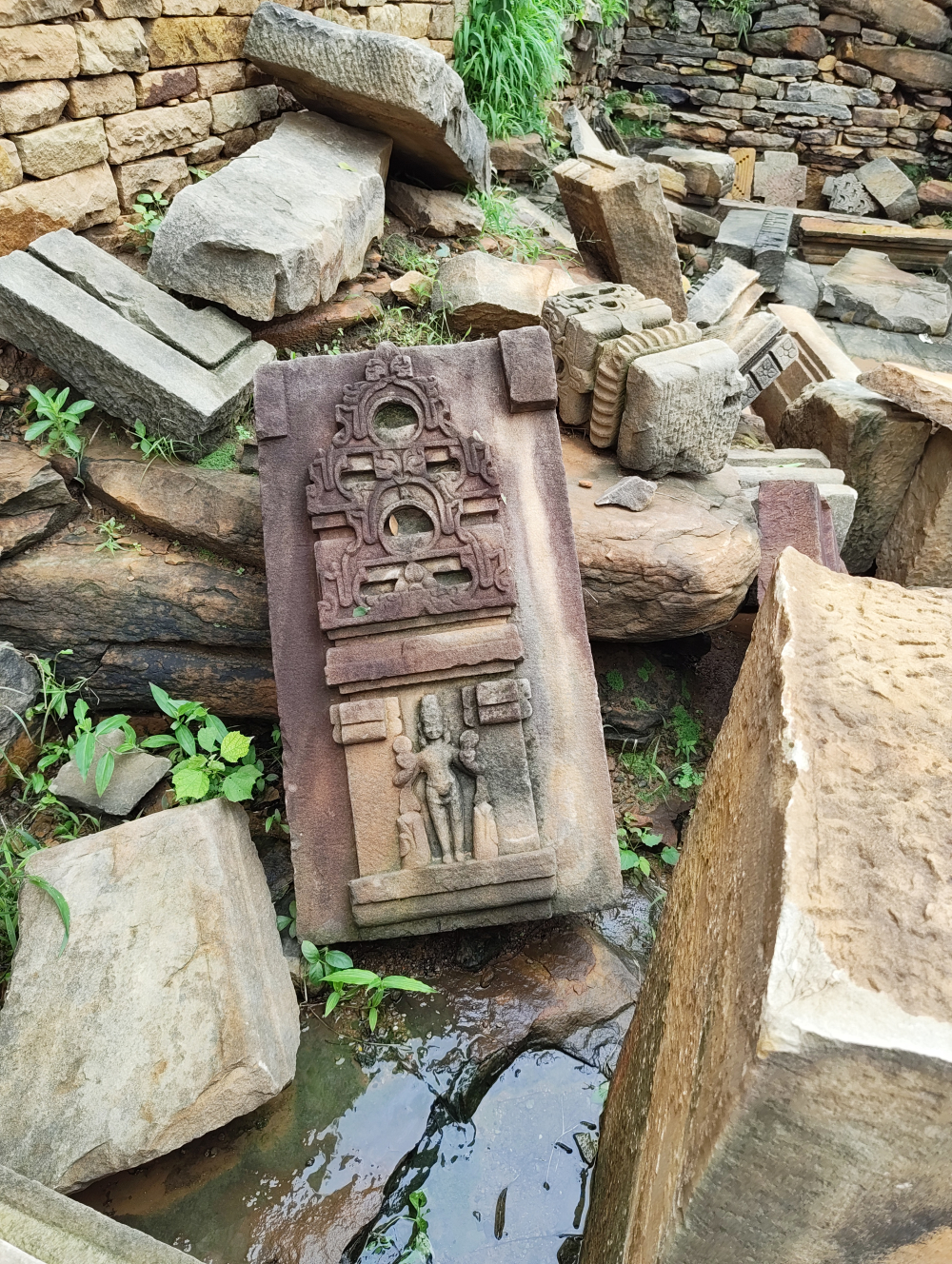
Sculptures lying around in Bateshwar. (Picture Credits: Sarthak Sharma)
Bateshwar, which was nothing but a pile of extremely detailed carvings and sculptures in the Chambal Valley, was still an area plagued by the dacoits at the beginning of 2000s, when the archaeologist K. K. Mohammed arrived at the site in 2004. Branding themselves as baaghis, or rebels, the dacoits ranged from Robinhood-esque figures with a huge following to opportunist upstarts looking to make a name for themselves. Caste played an important role in the make-up of gangs, with one of the last remaining gangs of the area belonging to the Gurjar caste. By the 2000s, Chambal, Morena, Gwalior, and the surrounding regions were slowly freed from the rule of these outlaws. Only Nirbhay Singh Gurjar, widely considered to be the last of the Chambal dacoits, remained in the area (and died, eventually, in 2005 during an encounter by the Uttar Pradesh police). When the restoration of the Bateshwar started, it was his ‘gang’ that still held the site as a hideout.
K. K. Mohammed says, “When I saw Nirbhay Gujjar for the first time in 2004, he was smoking a bidi (cigarette) on the stairs of the temple complex. I didn’t recognise him and admonished him for bringing disrespect to a holy place” (only to change his tone when he discovered the identity of the person he had just reprimanded). But Mohammad and his team convinced Nirbhay to help them restore the temple site, ostensibly by educating him that the site was a place of religious activity heralded by his ancestors, the ‘Gurjara’-Pratiharas.
Restoration work was carried off as though putting together a 3D puzzle. Among the rubble and huge numbers of stone sculptures just lying around the site, archaeologists from the Archaeological Survey of India (ASI) identified and repositioned these elements based on their structural role, stylistic features, and iconographic details. At the beginning, the bandits were quite helpful and played a role in this process. By 2006, with the death of Nirbhay Singh, the site was firmly in the hands of the ASI. By 2012, 80 of over 200 temples were restored and standing.
A major challenge for restoring and maintaining the site is the illegal mining around the region, which causes the soil to shake and makes such monuments especially vulnerable. The temple came into focus as locals and villagers, especially the ones belonging to the Gurjara community, wrote to the Prime Minister to resume restoration activities. While the work has begun again, it is difficult to say what will become of it. Whether this time there will be an honest restoration of the site with restrictions placed on mining to further stop damages, or if there will merely be a facelift for promoting tourism, it is difficult to say.
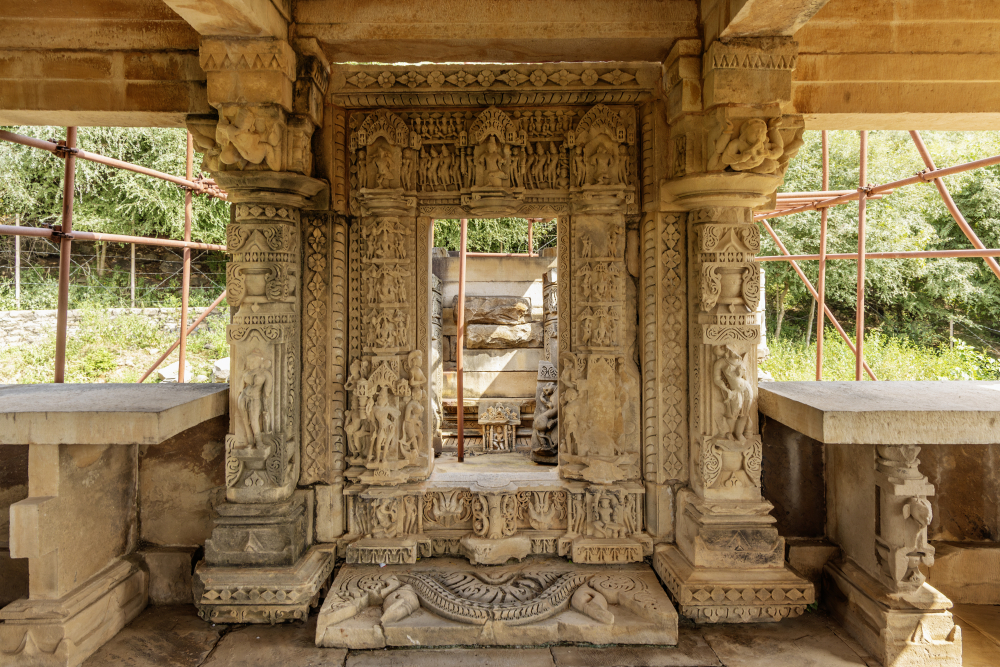
Door Jamb laid down in Bateshwar. (Picture Credits: Pranjal Jain)
The site remains, however, a space of interaction for its local community. Within is a Hanuman sculpture painted in vermillion, like many other Hanuman statues across North India. Archaeologist K. K. Mohammed tells us that before adventing to loot or before redistributing the looted booty among themselves, the dacoits would worship this Hanuman idol. Apart from the Hanuman, there is a relatively vast Shiva temple that continues to be an active place of worship. The latter was likely turned into a live temple after the restoration. From their ancient heights to long years of neglect and to the more recent restoration, the temples of Bateshwar seem to be coming full-circle. Look closer — and one will find that the spirit of worship and the communal drive to claim this space have had a parallel resurgence with the return of life to its physical structures.
Bibliography
Bajpai, Shashank Shekhar. ‘Bateshwar Village History: पत्थरों के ढेर के नीचे दबे थे 200 मंदिर, पढ़िए बटेश्वर की अनसुनी कहानी.’ Dainik Jaagran, September 7, 2024. Accessed April 17, 2026. https://www.jagran.com/did-you-know/general-bateshwar-mandir-morena-history-mp-bateswar-temple-story-23791719.html.
Günther-Dietz Sontheimer, Shadakshari Settar (ed.), Memorial Stones: A Study of Their Origin, Significance, and Variety. 1982.
Singh, A.K. ‘Some Hero Stones of Gwalior and their Inscriptions.’ Journal of the U.P. State Archaeological Organization no.5 (1994-5): 137-148.
Sharma, Jeevan Prakash. ‘ASI to resume restoration of Bateshwar temple complex in Chambal.’ Times of India, May 21, 2008. Accessed April 17, 2026. https://www.hindustantimes.com/india-news/asi-to-resume-restoration-of-bateshwar-temple-complex-in-chambal/story-kBaxGfcRWVsrNbw3Vw8dLN.html.
‘The Secrets of Bateshwar Temples | Tales & Trails.’ Filmed in 2021. Peepul Tree World, 27:01. https://www.youtube.com/watch?v=i5RQx8eA8lk
‘The Bateshwar Group Of Temples’, National Culture Fund.
https://ncf.nic.in/blog/bateshwar_temples.
This essay has been created as part of Sahapedia's My City My Heritage project, supported by the InterGlobe Foundation (IGF).