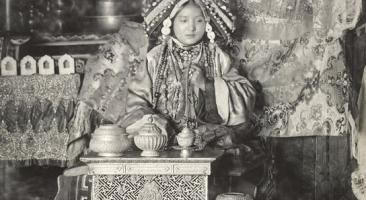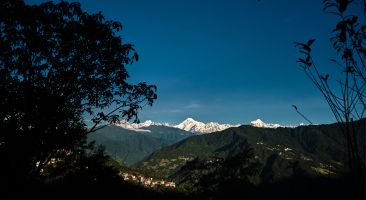
Gangtok rose to prominence when it became the fourth capital of independent Sikkim in 1894. It is a city shaped as much by trade and movement as by mountains and monsoons. For over 130 years, it has served as the administrative heart of Sikkim, enduring the tides of geopolitics, urbanization, and cultural exchange that have long defined this region. Yet to truly understand Gangtok is to situate it within the larger history of Sikkim — a small Himalayan state of just 2,740 square miles, the second smallest in India and the twenty-second to join the Indian Union, yet one of the world’s richest biodiversity hotspots with an equally vibrant cultural fabric with Khangchendzonga National Park earning the UNESCO World Heritage site in the mixed category.
Sikkim’s borders with Tibet, Nepal, and Bhutan have for centuries made it a crossroads of trade, migration, and religious exchange. These trans-Himalayan connections have shaped its landscapes and its people, fostering layers of belonging that are both rooted and fluid. Situated in eastern Sikkim, Gangtok, now marked by its tourist economy, is a city that emerges from the eastern Himalayan terrain.
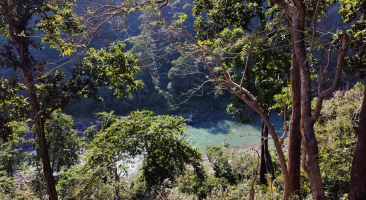
This booklet/curation invites you to explore Gangtok and Sikkim through multiple lenses: history and human geography, built form and social life, bodily practice and belief, craft and performance, taste and sound. Between Empire and Nation: A Historical Overview of Sikkim encapsulates Sikkim's journey as an independent kingdom under the Namgyal dynasty and the changing administration between the British Empire and the Indian nation state till its integration into India. The Peoples of Sikkim reflects on the diverse communities that animate the region, thinking through identity not as fixed categories but as lived and shared worlds. The Lores of Water: Rivers and Lakes of Sikkim explores natural heritage and its place in culture through folklore. Culinary traditions find expression in Sikkim’s Flavourful Kitchens: Grains on the Plate, reminding readers that foodways are vital sites of heritage.
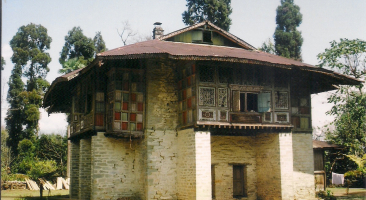
Reimagining the Roads of Sikkim as Vernacular Heritage reconsiders pathways not merely as infrastructure, but capillaries that connected the silk route along Kalimpong and Lhasa through Sikkim, facilitating economic, spiritual, and social interactions across the Himalayas. The evolving cityscape is explored in The Evolution of the Sikkimese House in Gangtok: From Vernacular Traditions to Contemporary Concrete, which traces shifts in domestic architecture — materials, layouts, and spatial practices — to understand how homes reflect changing histories and aspirations. Similarly, Art and Architecture of Monasteries of Buddhist Monasteries of Sikkim highlights sacred spaces that embody distinct artistic vocabularies and craft traditions integral to Sikkimese identity. The intangible dimensions of heritage surface more explicitly in Sang Incense as Cultural Practice in Sikkim, which traces the practice of incense and sang as everyday acts of devotion woven into the urban fabric.
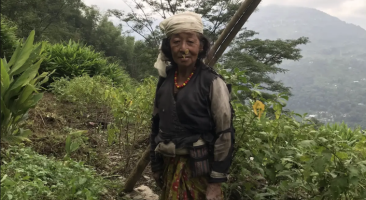
Indigenous practices and artisanal knowledge that have worked in harmony with ecology through bamboo craft and textiles of the Rongkup community are explored in the Patterns of the Hills: Rong Weaving Identity and Crafting Paper from Plants: The Cultural Ecology of Edgeworthia gardneri.
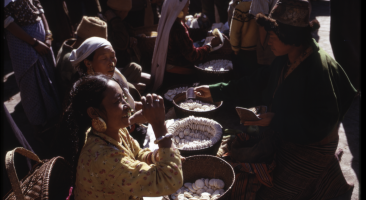
The bustling Lall Bazar: A Living Archive, a historic haat in the city, is explored as a living archive of encounters shaped by commerce and conviviality. Contemporary Gangtok continues to evolve within these layered inheritances. Emerging social spaces, including the growing café culture explored in Café Cultures of Gangtok, reveal how younger generations reinterpret urban life while remaining connected to place.
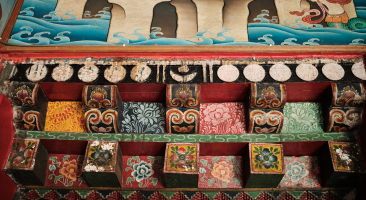
The history of exchange and migration has also impacted the craft of metal work as seen through Babu Kazi Sakya: Inside a Curio Shop in Gangtok, while Bending Notes: Hybrid Folk Music in Sikkim explores continuity and adaptations to modernity through music. The relationship between nature and culture finds resonance in Custodians of a Not-So-Hidden Land, where nature emerges as an ecological and cultural anchor.
Team
Curator: Abhibyanjana R Thatal
Photographer: Abhishek Anil
Editor: Shree Thaarshini Sriraman
Designers: Kaustav Purkayastha and Farishta Anjirbag
Illustrator: Jisha Unnikrishnan
________
Project Mentor: Vaibhav Chauhan
Project Head: Meenakshi Vashisth
Project Coordinator: Adit Shankar