
Having travelled from lands across Jaipur, Nepal, and into Sikkim, the sarangi sits in the hands of a man drawing his bow across its strings on the packed Tharo Line in Gangtok. In front of him lies a scarf with a few scattered notes of ten, twenty, and fifty rupees. He is playing various renditions of popular Nepali and Hindi music and vocalising alongside the tunes.
Music exists not only as performance on stage, but intrinsically in the sonic milieu of Gangtok and Sikkim. The myriad folk musical cultures at large are diverse and varied, even within such a small geographical location. When we speak of folk-music, we must also speak of the ‘folk’ who make it: communities shaped by ethnic identities, distinct languages, and histories. Folk musical practices are as wide and varied as the many ethnicities in Sikkim.
A wide array of folk-musical traditions is closely linked with ritualistic life, dictated by oral stories that have passed on narratives of origin of musical instruments or life-events. There are also some ethnicities and caste-based communities whose identity has been defined by their musical practices, such as the Damai and the Gandharbha communities of Sikkim, Nepal, Darjeeling, and the Kalimpong region in the Eastern Himalayan belt.
Musical Communities
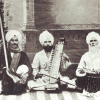
In a detailed account of the Gandharba communities of Nepal, Sikkim, and the surrounding hills, Anurag Gajmer notes that the Gandharbas are traditionally travelling musicians who sing to earn a living: their songs function as carriers of news and social commentary. Other forms of songs include ghatana geet (translated: “event-song”) and laure sandesh or laure geet (soldier’s songs), these songs were based on current events and happenings across the regions as well as songs that convey messages from soldiers serving in the army, reflective of a history of migration and military service among Nepali-speaking communities. Gandharba musical traditions also include dafe ra muralichari geet, which tell stories of the two Himalayan birds, and karkha, a genre celebrating the kings and warriors of Nepal. The sarangi and the arbaja play a central role among the Gandharbhas: where the sarangi carries melody, the arbaja provides a rhythmic base.
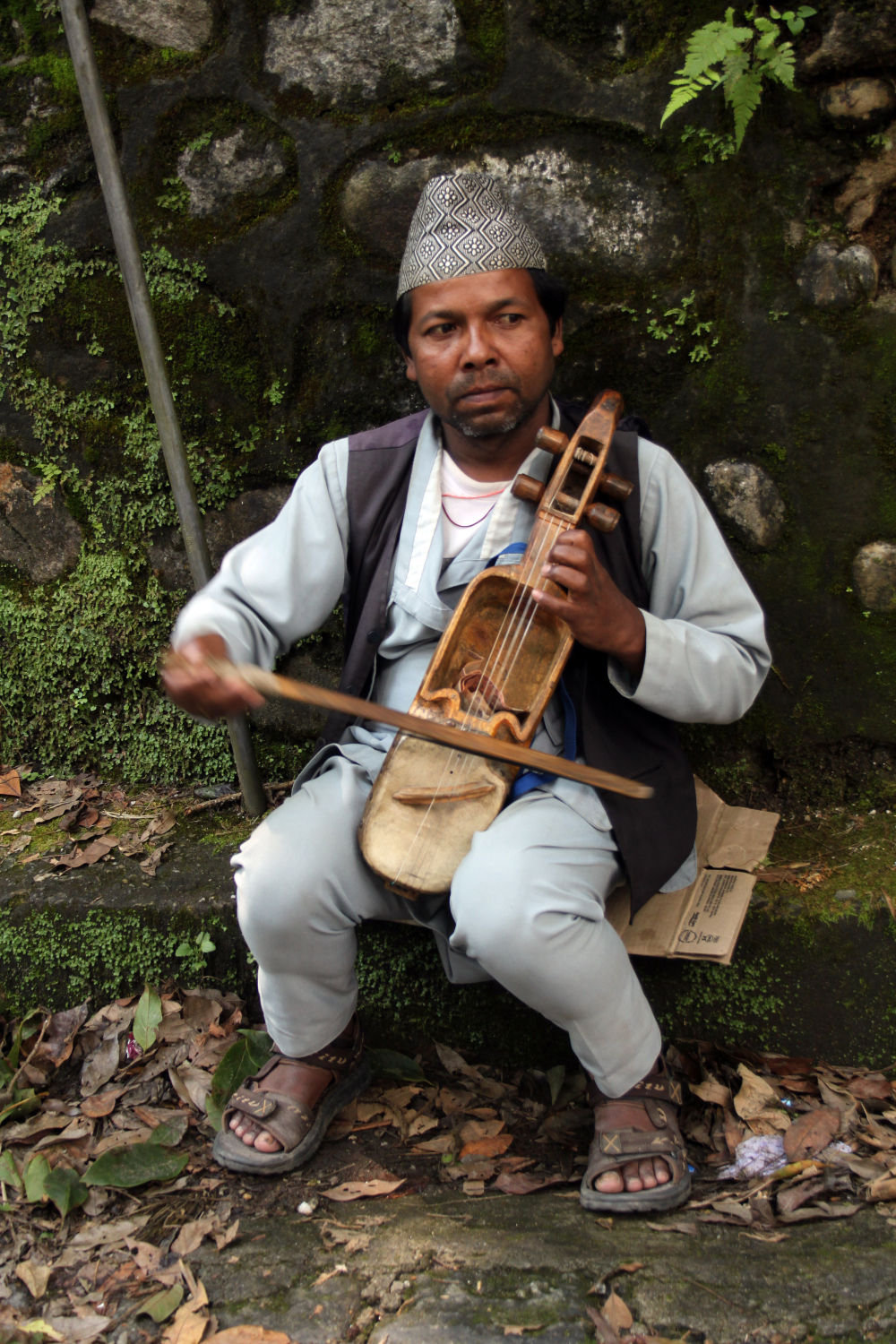
A man playing sarangi. (Picture Courtesy: flowcomm/Wikimedia Commons)
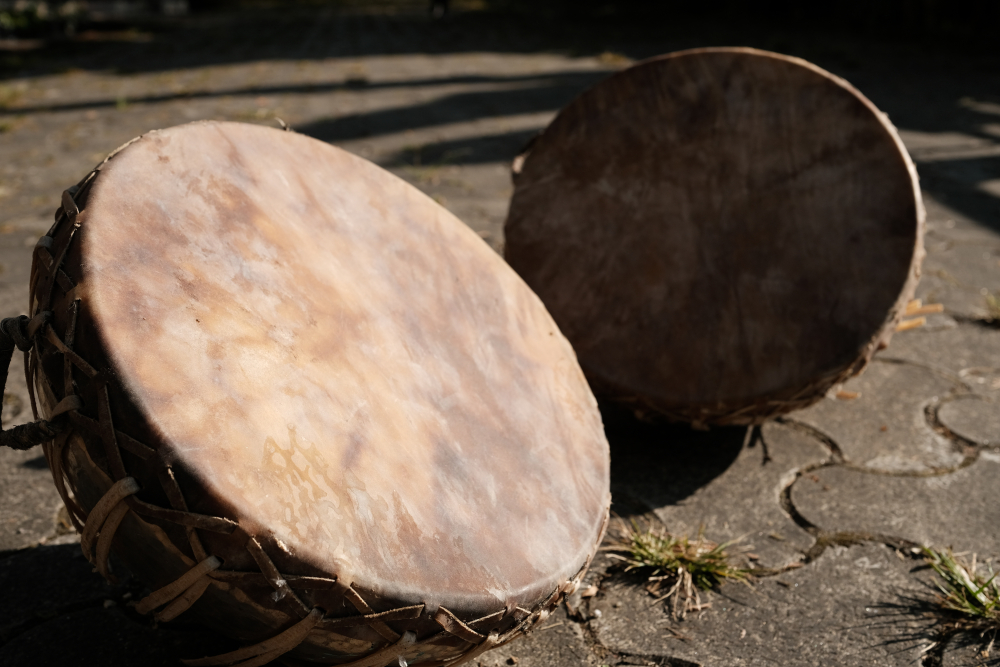
Damaha at the Sikkim State Archive, Culture Department of Government of Sikkim. (Picture Credits: Abhishek Anil)
The Damai, a caste-based community, have been musicians and tailors by professions. They are the main performers of the naumati baja or panche baja, an ensemble of percussion and wind instruments that are considered essential and auspicious in Nepali Hindu rituals. The term “Damai” itself is derived from damaha, the large kettledrum that anchors the ensemble. Although the Damai have historically faced severe social discrimination, the reputation of their ensemble emphasizes the paradoxical nature and position of music in Nepalese societies. Historically treated as untouchable and restricted in scenes of social interactions though the Damai are, their music ironically occupies a central place in ritual life, its presence indicative of the higher social status of a family during marriage ceremonies. The panche baja is performed during weddings, sacred thread ceremonies, festivals, and processions. While much of its repertoire includes secular entertainment music, the contexts in which it is performed are always sacred or semi-sacred. The ensemble serves multiple functions making auspicious moments, announcing transitions such as the departure of a bride.
In a 1995 study, Carol Tingey writes about how these musical traditions adapted to influences from radio broadcasts and film music, with the military band incorporating the panche baja. The inclusion of the band in the military led to the introduction of new rhythms and compositions known as paltan naya bakya (new army tunes), which have now become common processional music.
Myths and Legends of Music
Sikkim also has a fair share of musical myths associated with different communities.
The Limbus have a legend of the chyabrung (or ke) drum which is considered essential to their identity. The drum is believed to have been made from the skin of Keysami, the tiger son of Khappura, killed by her human son Namsami in order to protect himself and his mother. It is also used in ceremonies conducted by shamans such as phedangmas, yeba, and yema. During death rituals, the sound of the drum, combined with dance movements (Ke Lang), is believed to confuse evil spirits and keep them at bay.
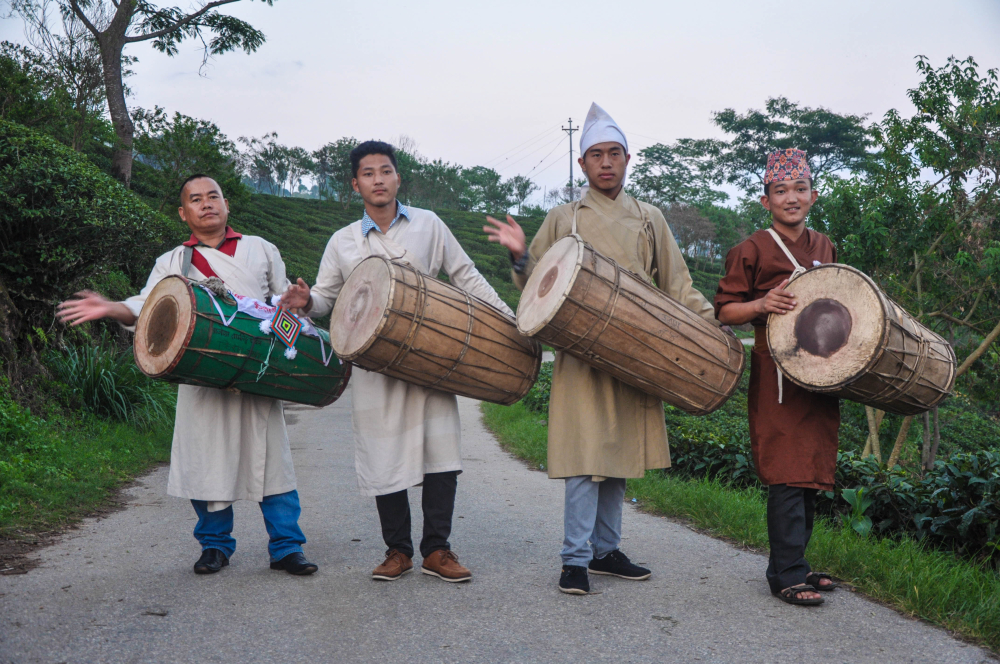
Men playing chyabrung drum. (Picture Courtesy: Hari Gurung/Wikimedia Commons)
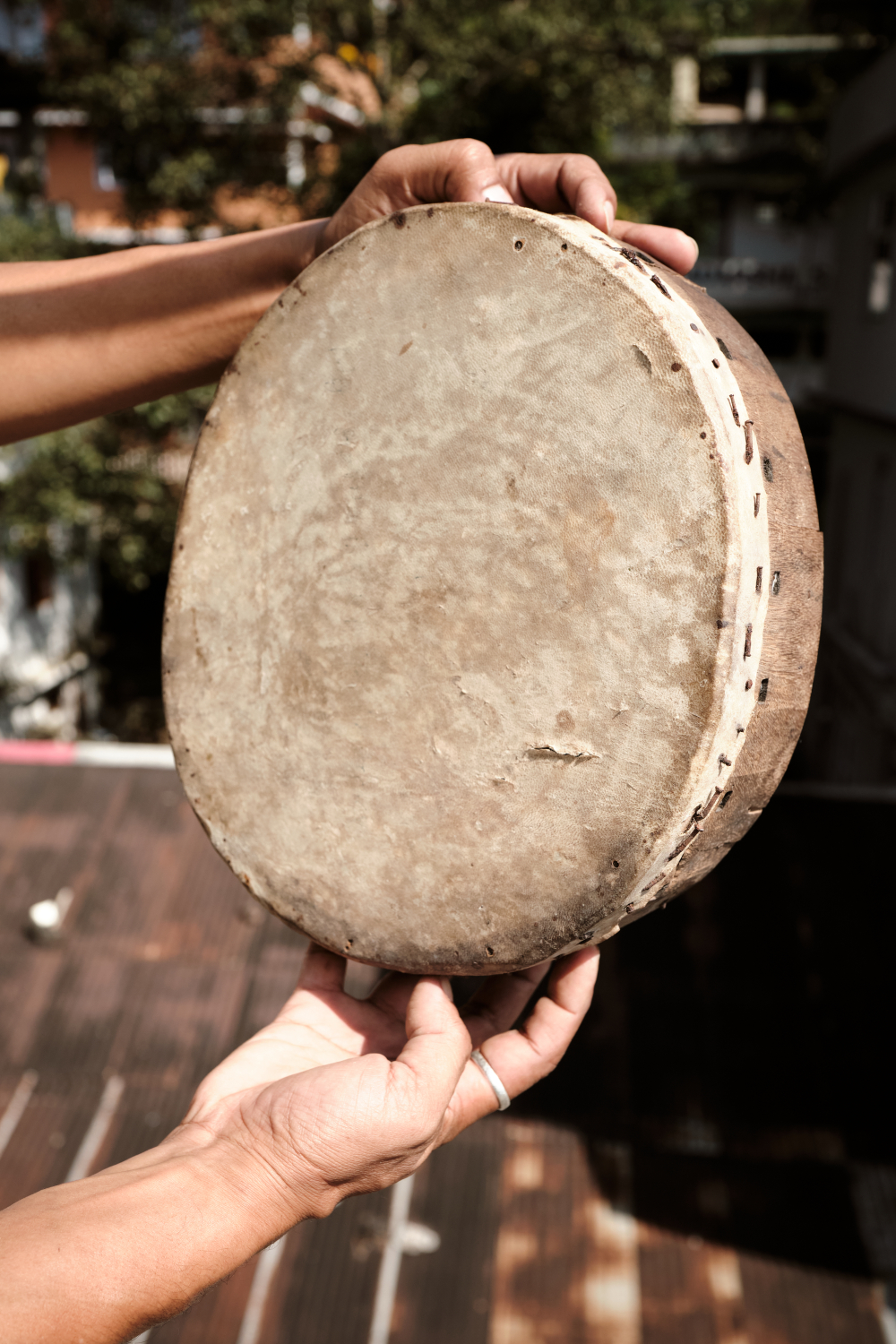
Damphu at the Ramgauri Sangralaya, Rhenock. (Picture Credits: Abhishek Anil)
Certain instruments like the damphu (associated with the Tamang community) trace their origins to the beginning of the universe. When Peng Dorjee hunted a goral, his wife Senje Ruisang (some versions of mythology equate them to the Hindu gods Shiva and Parvati) lamented in sorrow seeing her husband kill an innocent animal. Her cries filled Peng Dorjee with guilt and he made a drum out of the skin of the goral and played it. One day, upon hearing the beat of the drum, a danphe (Himalayan Monal) bird began dancing in joy — and henceforth the instrument was named damphu.
The Movement & Hybridization of Music
Traditionally, music in Sikkim is not an isolated performance, but embedded in ritualistic practices (such as Limbu shamans), agriculture and labour songs (Damokae Sanglo, Baramasey), harvest songs (Zo-Mal-Lok), love songs (Pamlo Sanglo, Juwari) and songs in communal gatherings (Rodi of the Limbu community, Chutka) and festivals songs (Deusi-Bhaili, Denjong Chaa-Lu). Yet music has evolved as an entity that increasingly demands its own stage, which is hardly surprising when one considers the nature of music. Under the expansive umbrella of what we call “folk,” there has been a steady fusion of musical elements, from Western classical scales to Hindustani influences, interacting with folk rhythms common in the region.
Tamang Selo, for instance, is an example of a popular folk musical style that has endured the influence of digital media and westernised musical practice to evolve into a different form. As the name itself suggests, this folk-musical and -dance form is attributed to the Tamang community. The Tamang language is categorised in the Tibeto-Burman family, with the Tamang Selo songs performed in Nepali recreationally as well as during festivals and weddings. Creolisation and adaptation have led to variations that are now heard in the music of blues and jazz bands such as Cadenza Collective (Blues Selo) and folk-rock bands like Gauley Bhai (Aunty Ko Tato Bagaicha, Aunt’s warm garden), in which you can hear rhythmic Tamang Selo influences. These conversations are further complicated when we see the musical form as a negotiation of Tamang ethnic identity with the larger Nepali identity. In Kalimpong, multi-genre artist Saila blends Nepali and English rap lyricism with hip-hop, rock, and Hindustani classical elements.
In Sikkim specifically, we can see such fusion taking place through examples. Take Sofiyum, a Lepcha band with rock elements, or Zeron, a singer-songwriter who sings in English and Lepcha, fusing modern popular tunes with Lepcha folk musical elements.
Whether in taxis or salons and shops, songs playing range from old to new Bollywood and Hindi-language popular music, Billboard topcharts, western pop icons like Rihana, Justin Bieber, or Ed Sheeran to regional Nepali music. Taxis in particular are never dull and always abuzz with the chatter of the local FM or the personal tastes of the driver.
Nepali rock music is the most popular with a strong listening base, as evidenced by Nepali headliners like 1974AD, Sabin Rai, and Albatross headlining concerts in and around Sikkim. Examples include the popular song Resham Firiri, which has been performed ubiquitously across the region and even at international gatherings such as Ethno-Music India.
One might generally interpret this onset of fusion and the adoption of Western popular music styles as a transgression of ethnic or caste-based identities in favour of migrating toward more translocal identities (Thatal, 2023). The role of churches is also significant in popularising Western instruments such as the guitar, drums, bass, and keyboards in the lives of people. In Sikkim, contemporary musical forms now carry different kinds of stories, often shaped by migration and issues of identity and informed by the emotional landscape of one’s personal lives.
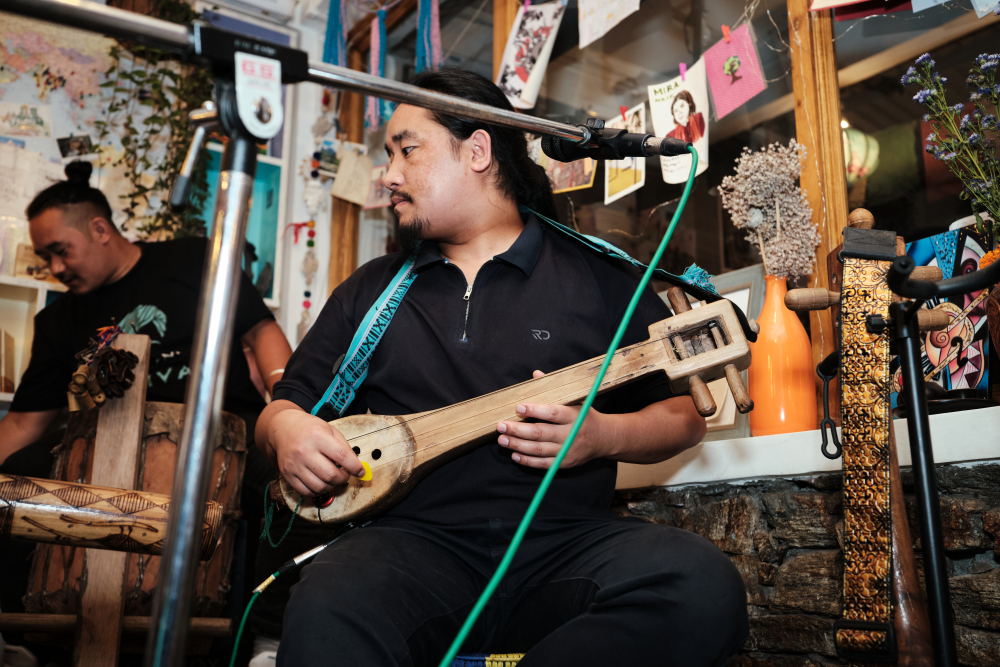
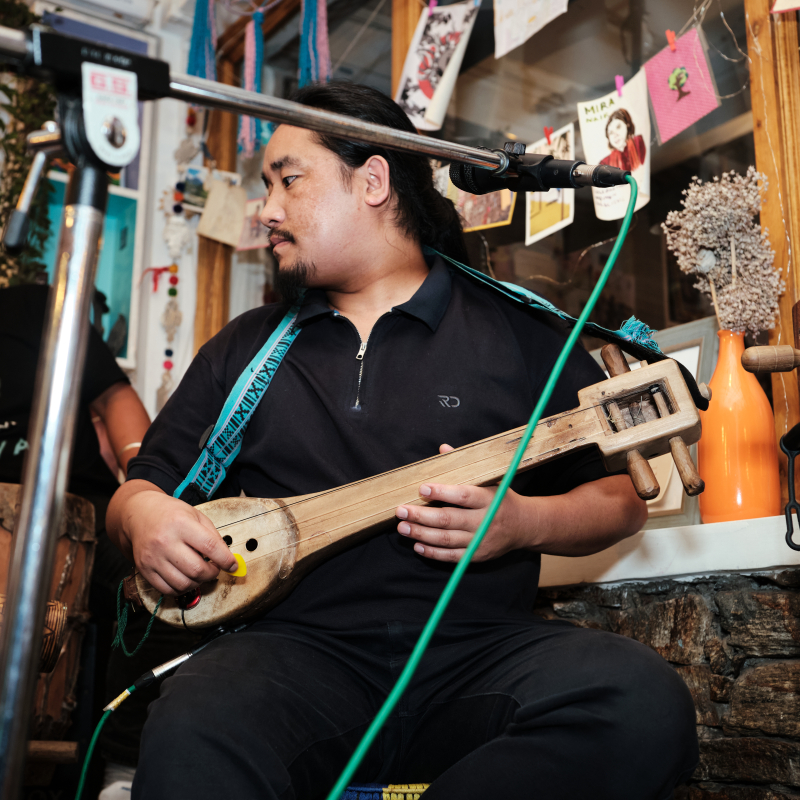
Lasomungkup performing at Travel Café Gangtok. (Picture Credits: Abhishek Anil)
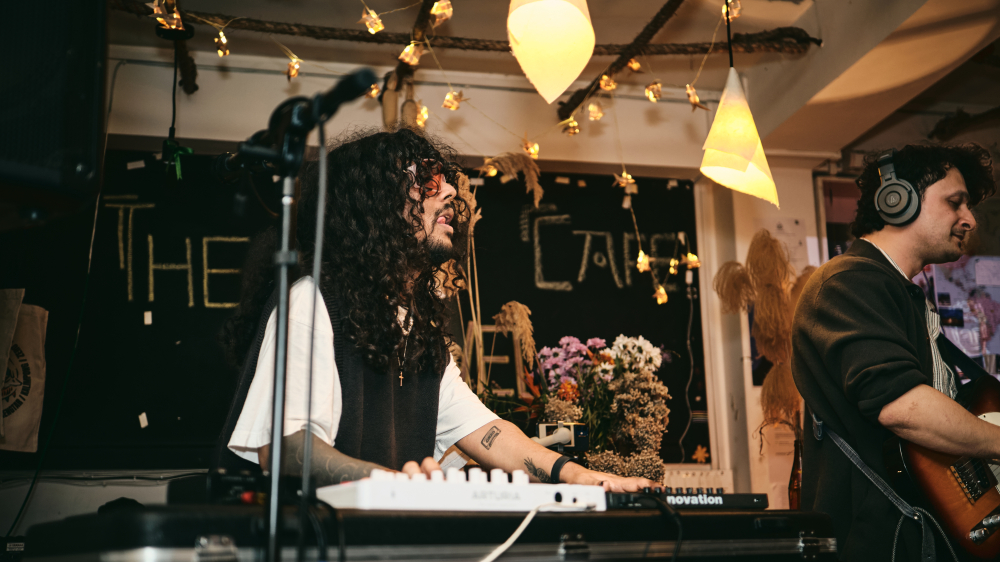
Aman Karna and Ankit Shrestha from Nepal perform at Travel Café. (Picture Credits: Abhishek Anil)
Before rock and metal rose to prominence in the rest of India, these genres had already found a strong foothold in the Northeastern regions of India for over fifty years. In the rock music scene in the hills, the transformation of the musical scene became especially visible. Rock, in its many forms, has an engaged fanbase in Sikkim, creating a space where folk-musical elements readily intersect with global genres. This meeting may not necessarily point to a rupture from tradition, but towards an ongoing evolution.
Although Sikkim has only a small number of live venues for music, with its oldest venue Café Live and Loud having shut down and so impacting the prevalence of metal music (which is still thriving elsewhere in the state), spaces such as Gangtok Groove and Travel Café still serve as sites to experience contemporary forms of musical performances. The extreme underground scene creates alternative niche spaces for expressions of existentialism and nihilistic questions, brought forward by masculine identities finding voices and ways of expression. While these scenes do not necessarily show the fusion of folk elements explicitly, we can clearly identify those in larger rock, jazz and blues music from the region.
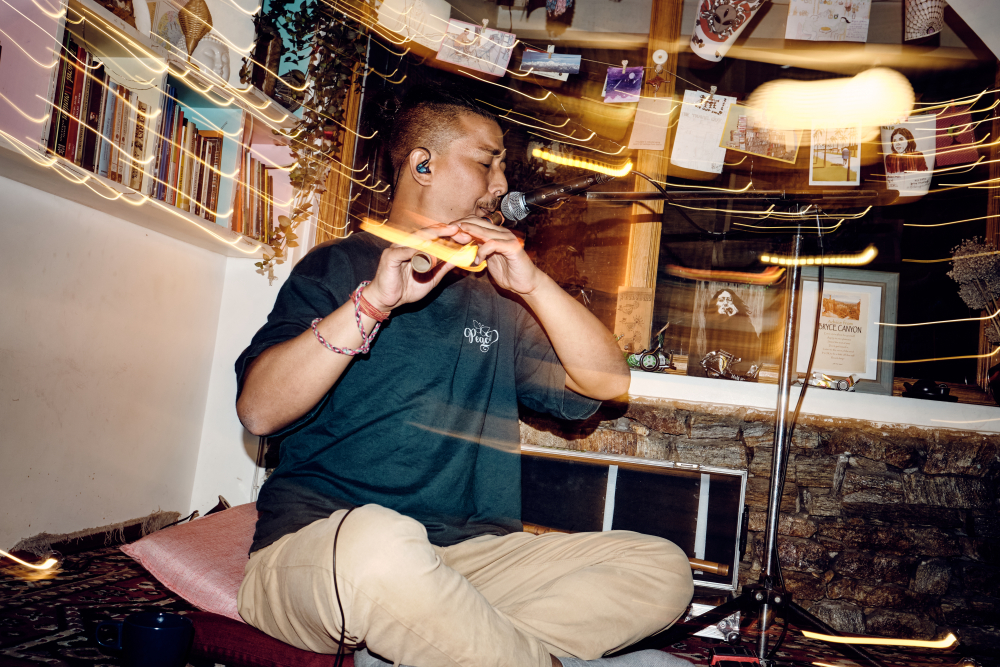
Flute artist Ashish performs at Travel Café. (Picture Credits: Abhishek Anil)
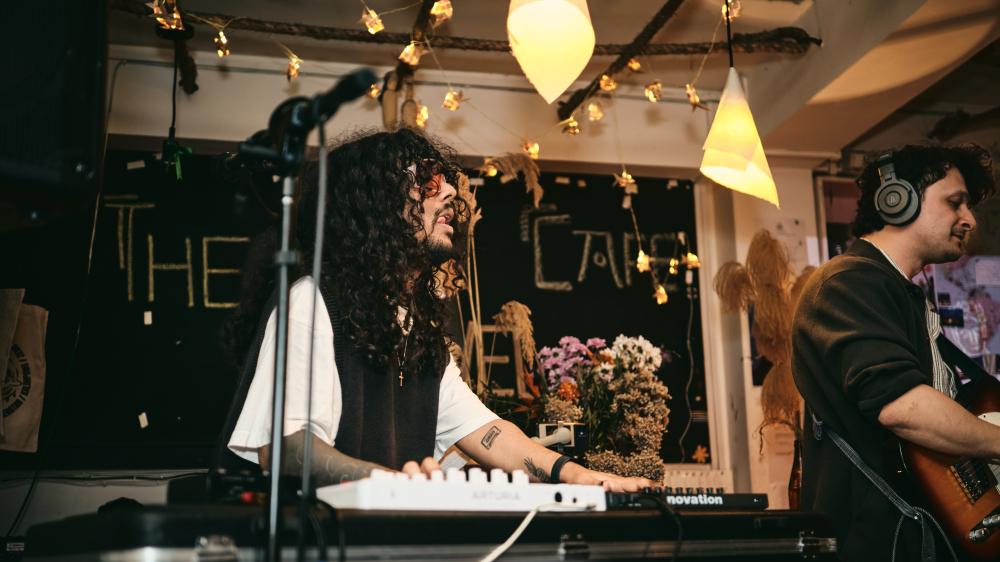
Aabishkaar, a singer-songwriter, performs at Travel Café. (Pictures Credits: Abhishek Anil)
Sikkim has been home to bands such as Tribal Rain, who fused math-rock elements with softer-rock sensibilities to create a unique experimental blend of Nepali music, earning international recognition; even after the passing of Rahul Rai, the band’s founding member, singer, and songwriter the band tours in countries with high Nepali population such as UAE, Nepal and Australia. Gangtok and other towns like Namchi have been home to a burgeoning underground scene featuring metal, grindcore, noisecore, and other niche genres. Sikkim has also produced a growing number of individual singer-songwriters. While it may be easy to attribute this shift solely to media influence, such explanations overlook the agency of people in actively choosing, adapting, and reshaping musical forms.
People are not passive recipients of influence. In the case of Sikkim, we see the emergence of creolised and hybrid forms of music that readily blend folk music as both a marker of ethnic identities negotiating with modernity, as seen through the music of Zeron and Sofiyum. Other expressions are not attempts to assert ethnic identity but inform a sense of a larger Nepali/Himalayan identity, as seen in artists around the region such as Zeron, Sofiyum, Tribal Rain, Saila, Cadenza Collective, Gauley Bhai, and Bipul Chettri to name a few.
Folk-musical cultures do not disappear, but co-exist and overlap: the sonic landscape of Sikkim today reflects these complexities, shaped by traditional practices and personal agency.
Bibliography
Gajamer, Anurag. Music of the Gandharba Community of Sikkim and Eastern Nepal: An Ethnomusicological Study. PhD dissertation, Sikkim University, 2022. https://www.dspace.cus.ac.in/jspui/handle/1/7777.
Ganguly, Aratika. ‘Tamang Selo Songs: Music as an Agent of Restoration of Ethnic Identity.’ Cafe Dissensus Everyday, October 17, 2020. https://cafedissensuseveryday.com/2020/10/17/tamang-selo-songs-music-as-an-agent-of-restoration-of-ethnic-identity/.
Pandey, Devendra. Folk Music and Folk Tradition among the Limboos in Sikkim: An Ethnomusicological Study. MPhil dissertation, Sikkim University, 2021.
Thatal, Abhibyanjana. What’s the Scene in Gangtok? Exploration of Music Scenes and Singer-Songwriter Genre in Gangtok. MA Dissertation, Tata Institute of Social Sciences, 2023.
Tingey, Carol. ‘The Pañcai Bāja: Reflections of Social Change in Traditional Nepalese Music.’ Kailash: A Journal of Himalayan Studies. Vol. 17, 1 & 2 (1995): 11–22.
This essay has been created as part of Sahapedia's My City My Heritage project, supported by the InterGlobe Foundation (IGF).