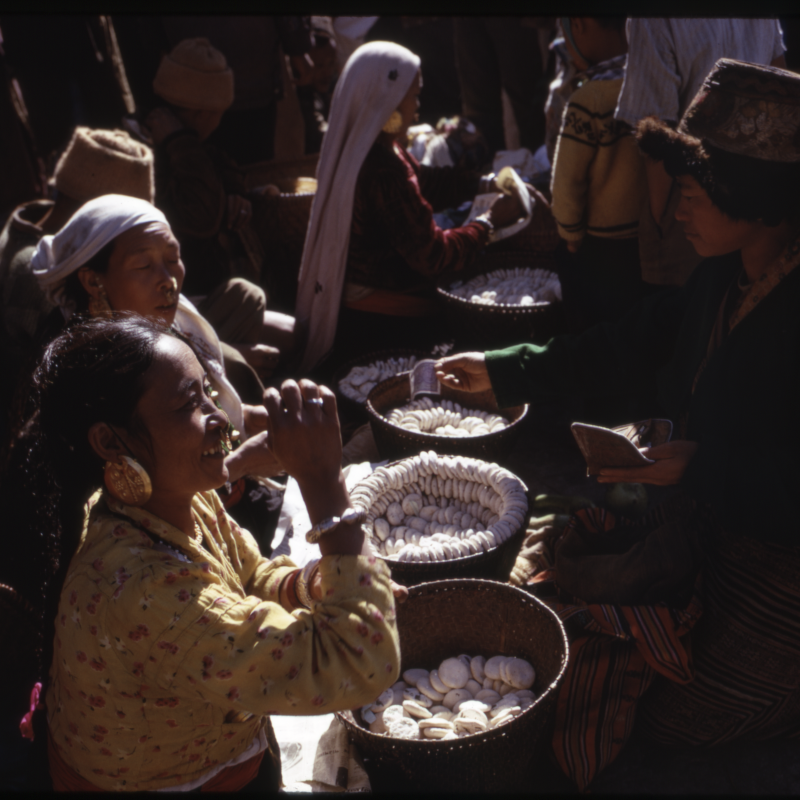

Sikkim, Mayel Lyang to the indigenous Lepchas since pre-history, and Beyul Demajong to the Bhutias who consolidated the land into a kingdom in the mid-seventeenth-century, carries a sense of “paradise” and “hidden” in these original names. At a superficial level, both these evocations — paradise and hidden — suggest homogeneity, since that is what one expects in closed lands. But that would be a very inaccurate way of looking at things, because for the people who gave these names, paradise equated to being pleasant and welcoming, and Beyul, the hidden land, was qualified as Demajong, literally the valley of rice, and translated more evocatively as the Bountiful Hidden Land. Both these attributes suggest openness, not barricades. In the story of how the kingdom came to be called ‘Sikkim’, one gets a stronger sense of the diversity that finds a home here. It is believed that when Thungwamukma, the Limbu princess married to Sikkim’s second Bhutia king, Tensung Namgyal, arrived at the palace in Rabdentse, she exclaimed, “Su-khim,” variously translated as “new palace” to “beautiful new home.” The invocation stuck, and the land itself got to be known as Sikkim in the following centuries.
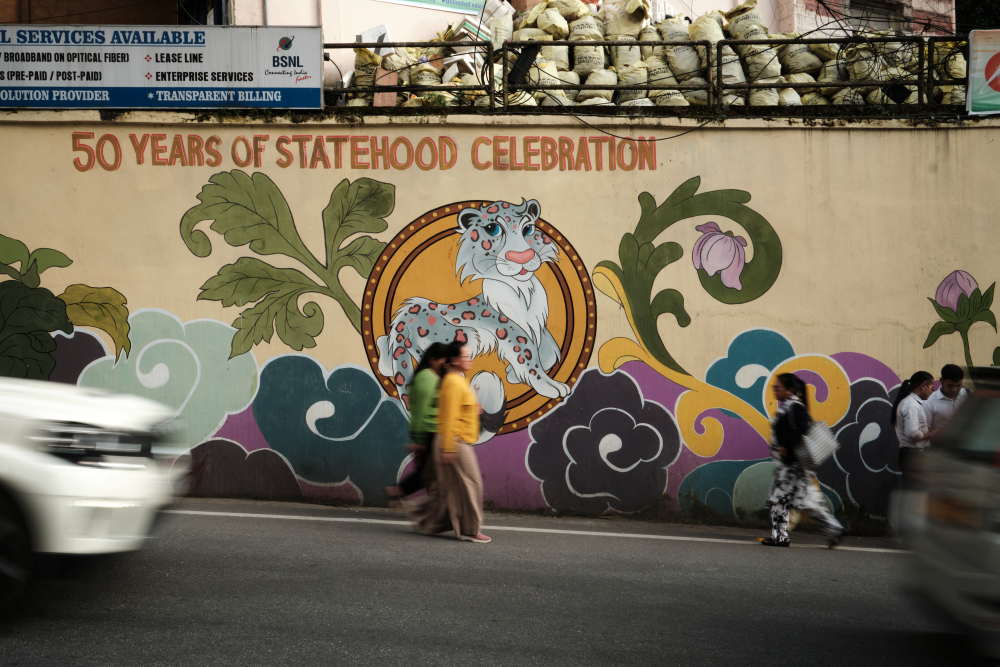
Street Art for "50 years of Statehood of Sikkim". (Picture Credits: Abhishek Anil)
Sikkim, hence, becomes a land which sources its identity, image, and name from how different communities looked at it, and in doing so, becomes a place which, not overtly, but in its own nuanced and evocative ways, accommodates diversity and celebrates individuality. The Government of Sikkim almanac is a good introduction to the ethnic makeup of Sikkim, the array of community-specific holidays marked in red on the calendar announcing just how many communities call Sikkim home and have been settled here long enough to enjoy a state holiday on their special days.
Incidentally, Sikkim, the second youngest Indian state, might also be the country’s least populous state, but just like the state’s barely 7000 square kilometres houses enviable biological and geological diversity, so do its barely 7,00,000 people represent an unequalled constellation of communities.
Sikkim’s current borders mark out a horseshoe bounded by the Singalila and Cho La ranges, tucking it into the eastern Himalayas bordered by Nepal, Bhutan, Tibet, and West Bengal. While the kingdom’s historical claims to territory extend much beyond its present borders, the present shape has always been its core, a location perched on a veritable crossroad of migrations, trade, invasions, and in more recent centuries, political intrigue and colonial adventures and expansionism. While all of these events shaped Sikkim’s history, they also peopled its ethnic landscape.
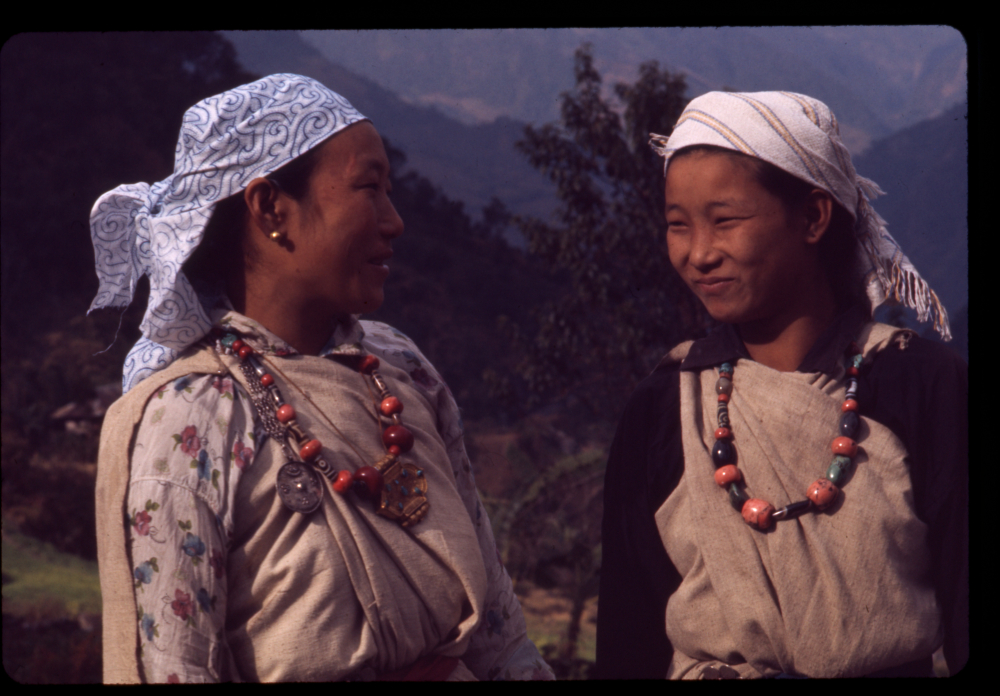
Lepcha women in Dumdyam. (Picture Courtesy: Alice Kandell/Library of Congress)
The strongest claim to indigeneity belongs to the Lepchas and Limboos (also called Tsongs in Sikkim), the only two communities whose origin stories and myths are located within Sikkim’s current geography. That said, there are no major geographical obstacles, save what must have at one time been dense and malarial forests to the South of the state, which would have kept people out. Hence it can be safely presumed that although the Lepchas and Limboos dominated the region, people from other communities too moved through, settled, and got assimilated in Sikkim even before larger-scale migrations occurred because of political and/or ecological reasons.
The seventeenth-century saw major turmoil in Tibet, which effected a turning point in Sikkim’s history with the arrival of Tibetan Buddhism, as a part of which project the Namgyal dynasty was established. The Bhutias of Tibetan origin, it is reasonably well-established, had already settled down in parts of East Sikkim by that time, but the founding of the Namgyal dynasty elevated them to prominence and led to Sikkim’s cultural, religious, and political landscape carrying a stronger Bhutia-Buddhist imprint.
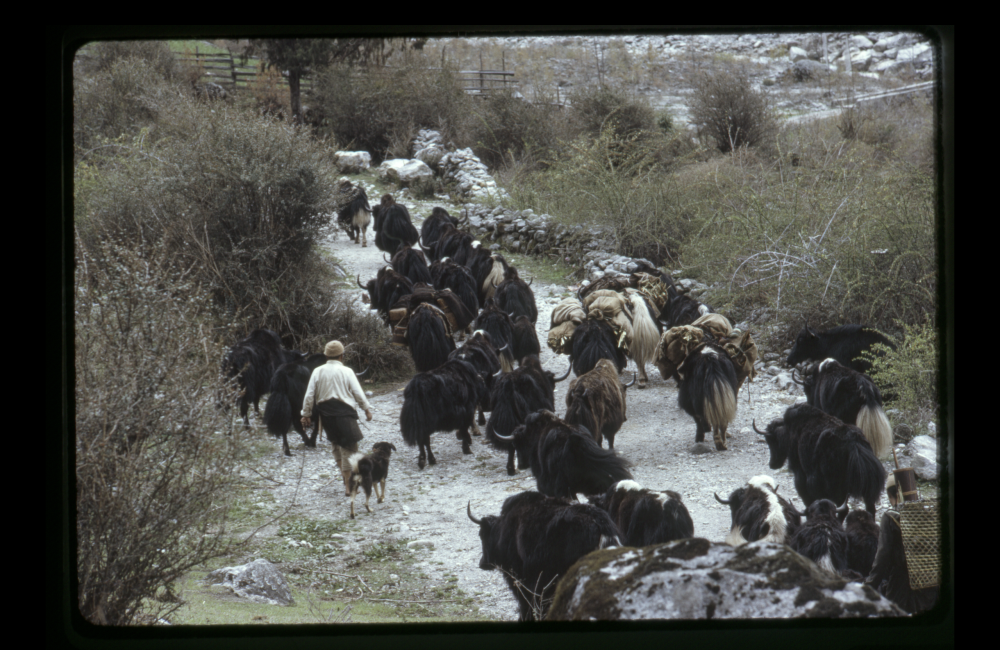
People herding yaks along a mountain path to higher grazing land, Sikkim. (Picture Courtesy: Alice Kandell/ Library of Congress)
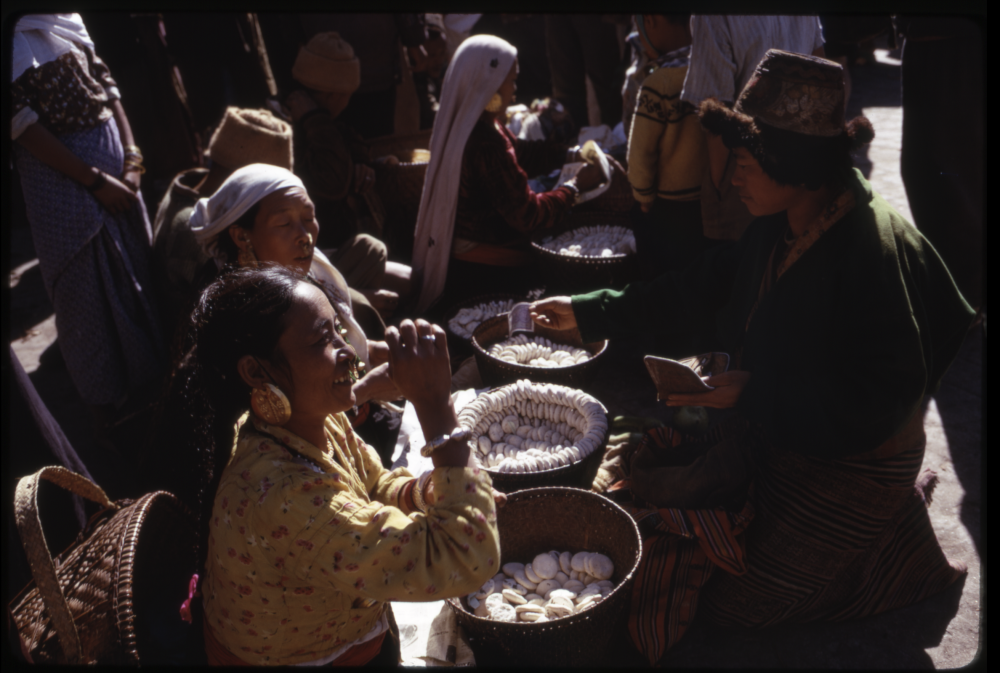
Old market in Gangtok with a mixed ethnic group of people. (Picture Courtesy: Alice Kandell/Library of Congress)
Meanwhile, before the kingdom of Sikkim was established, opportunities, opportunism, invasions and raids must have led to rather fluid movement of people in the region. Interestingly, even though Sikkim weathered through phases of occupation, alienation, even subjugation, the relationship between its different communities, which had their points of divergence and conflict, remained balanced and accommodating. A very organic representation of this balance and respect for boundaries is seen in the traditional ways of life of the people here: the Limbus and the wider Nepali constellation were traditionally engaged in agriculture and animal husbandry, Lepchas were hunter-gatherers, and the Bhutias were pastoralists. In the Sikkimese landscape, this meant that the Nepalis preferred the valleys and the open slopes, the Lepchas were at home in the more thickly forested mid-hills, and the Bhutias gravitated to pastures along the higher slopes. Of course, these vocations are no longer applicable, and were not necessarily watertight silos in the past either, but they serve to represent an individuality and inter-dependence that the Sikkimese had arrived at.
Sikkim is rarely recognised for the complex yet practical arrangements its people have practised to allow for the state’s ethnic plurality to flourish with reassuring empathy. This continues to be true in the more contemporary sociopolitical context. Take how Sikkim, even in the less politically conscious times of 1961, promulgated the Sikkim Subjects Regulation without discriminating between the Lepchas, Bhutias and Tsongs, all of whom were placed on equal footing and automatically recognised as Sikkim Subjects if residing in Sikkim. In fact, even if not domiciled here, members of the three communities could apply for subjecthood if they had not acquired citizenship elsewhere and had descended from a Sikkimese, including those Sikkimese from territories no longer part of the kingdom. These rules were eventually modified: in the very first amendment, ethnicity was completely disassociated from subjecthood and the rules rephrased such that only belonging and residence had to be established. This recognised that Sikkim had grown into a multiethnic population, with every community considered to be deserving of recognition, identity, and representation.
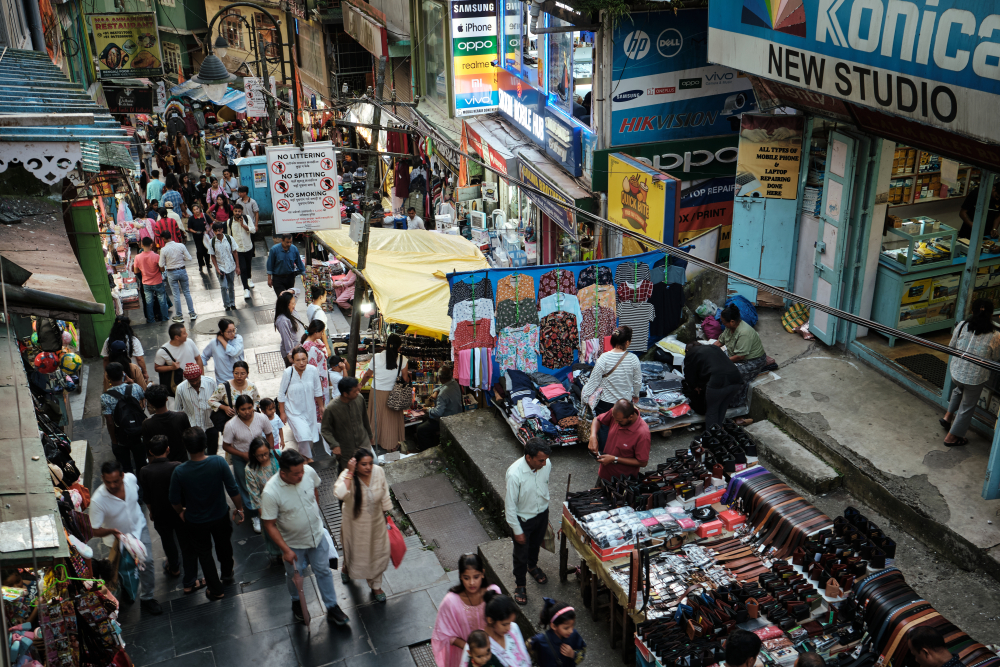
A crowd of people walk on the Thado Line, Gangtok. (Picture Credits: Abhishek Anil)
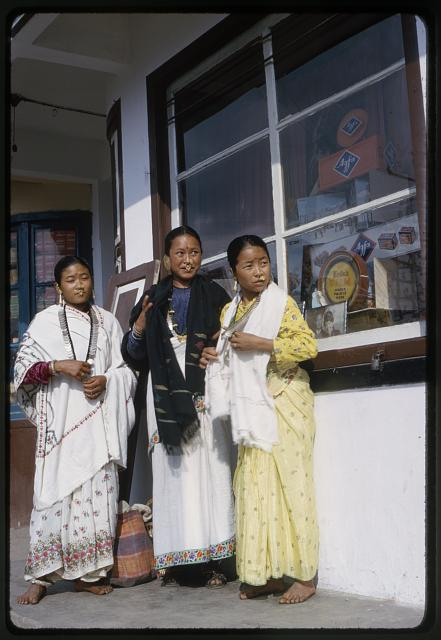
A group of Nepali women outside Light of Sikkim studio. (Picture Courtesy: Alice Kandell/Library of Congress)
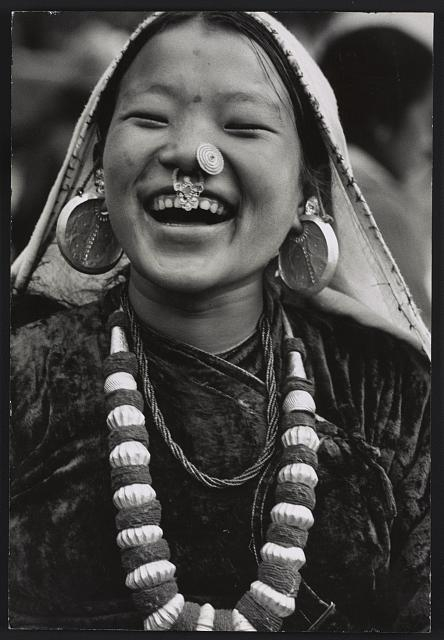
Sikkimese Nepali woman (unknown ethnicity). (Picture Courtesy: Alice Kandell/Library of Congress)
And that is how things have been ever since, forging a Sikkim which is not merely a geographical entity, but a living social mosaic which celebrates individuality and promotes confidence among all the communities. Consider, for instance, that when the Namgyal dynasty was established in 1642, the people primarily spoke Lepcha and Limboo languages. Tibetan became the Court language, while the Bhutias spoke Dejongke. By the time the Merger happened in 1975, Nepali had become the lingua franca. Nepali, in Sikkim’s context, should be seen only as a language, not as an ethnicity, and definitely not as citizenship. Communities now clubbed as Nepali, have lived here since before the kingdoms of Nepal or Sikkim were formed. Traditionally, Sikkim used to record the constellation of communities that make up the Nepalis as individual communities. The first census of Sikkim in 1891, for instance, recorded 14 communities, including slaves. Of these, the group now clubbed as “Nepalis” were tabulated as 11 individual communities, and that is how it remained until developments in the neighbourhood and political considerations in Sikkim in the 1950s led to this constellation of communities self-identifying as Nepali as a single ethnicity.
Among the more recent to make Sikkim their home would be members of the business community from the plains of India, who arrived with the British towards the close of the nineteenth-century, bringing their expertise in organising supplies and providing banking services. With their arrival, Sikkim graduated gradually from a barter-based economy to enterprise and trade. In a petition contested successfully in the Supreme Court, the group introduced itself as “Old Settlers of Sikkim.”
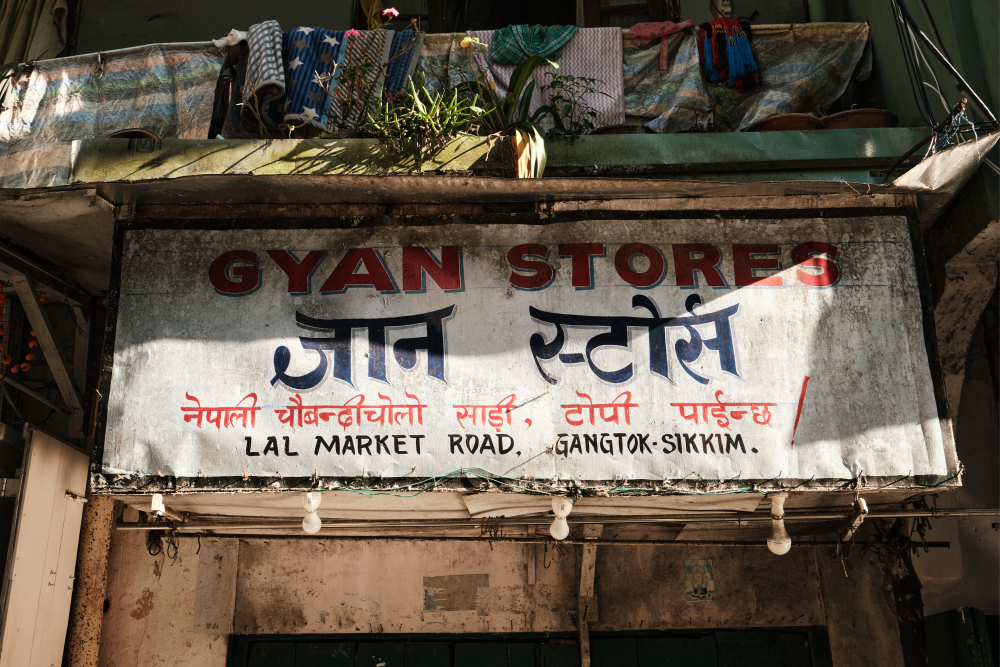
A sign board in English and Nepali language. (Picture Credits: Abhishek Anil)
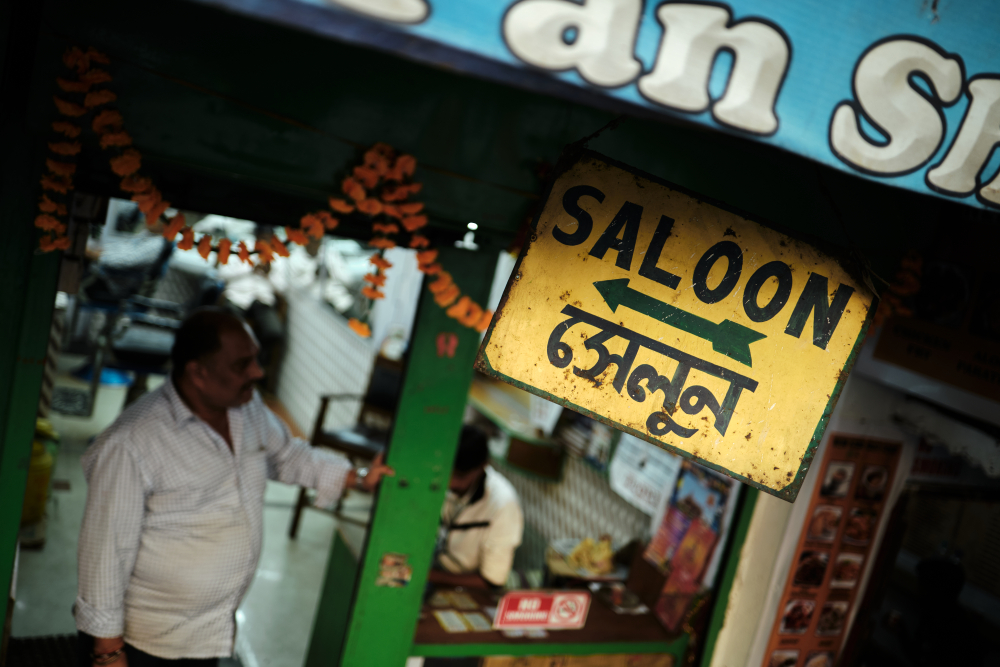
A sign board in English and Bengali in Gangtok. (Picture Credits: Abhishek Anil)
Mention should also be made here of the teachers and employees from outside Sikkim appointed to different positions in government service here in the fifties and sixties when the State was modernising its public administration but did not have enough qualified locals for the responsibilities. This group was extended some special considerations, and their children provided all privileges otherwise exclusive to Sikkim subjects. This arrangement has now run into some hiccups, but that complication is not in the purview of this essay to discuss.
Interestingly, Sikkim always had only English-medium schools. The formative years of the kingdom had seen disenchantments triggered by language imposition and it is to the kingdom’s credit that it did not attempt language domination when modern education was introduced here. The significance of this consideration in shaping the wider Sikkimese society remains under-appreciated. At present, the consequence is that Sikkim has 11 State languages: Bhutia, Lepcha, Limbu, Newari, Rai, Gurung, Mangar, Sherpa, Tamang, Sunuwar, and Bhujel. Even though the state continues to have English-medium schools, students now have the option of taking their mother tongues as a third language. Though no state language was accorded primacy when it comes to education, each was accorded recognition when it came to cultural expression.
This nuanced balance in Sikkim is incorporated as part of the terms of Sikkim’s merger into the Union of India. Article 371F of the Constitution of India, which outlines “special provisions with respect to the State of Sikkim,” allows for Sikkim to continue with its Old Laws, including those which are in conflict with the Constitution itself. Some of these Sikkimese practices, which continue to this day, further underline adjustments which promote trust and confidence. For instance, Sikkim, despite being a part of a secular India, has a seat reserved in its legislative assembly for a Buddhist monk. Called the Sangha seat, this is also the only legislative constituency in the country decided by an electoral college (made up of monks from a select clutch of Sikkimese monasteries). This is a carryover from the pre-Merger days but is not just a token gesture. Sangha MLAs have served as Ministers and Deputy Speakers in the past, with the present incumbent holding important portfolios in the Cabinet
Similarly, while the rest of India has seats reserved only for Scheduled Tribes (ST) and Scheduled Castes (SC), the case in Sikkim is different. While Sikkim has two SC reserved seats, it also has 12 seats reserved for Bhutia-Lepcha candidates, a manner of reservation which was unsuccessfully challenged in the Supreme Court. The idea behind this is obvious, meant to reassure members of the two communities that adoption of democracy will not sideline their interests and rights.
Another unique system which was allowed to continue is the Dzumsa system, practiced in parts of North Sikkim. The Dzumsas were kept out of the purview of the Panchayati Raj Act, as much to preserve their uniqueness as in recognition of their continued effectiveness as a traditional village council. The Dzumsas of Lachen and Lachung villages continue to govern land, resources, rituals and dispute resolution, blending customary law with community consensus. This is one of the only surviving indigenous self-governance institutions and is obviously of substantial vintage given that it continues to include only male household heads in the decision-making process.
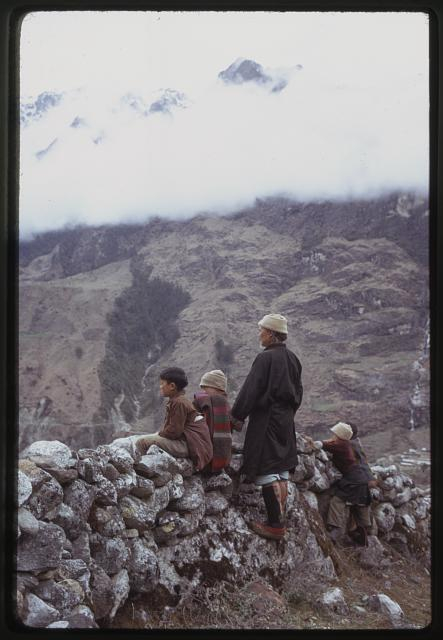
Pipon or the Dzumsa leader in Lachung. (Picture Courtesy: Alice Kandell /Library of Congress)
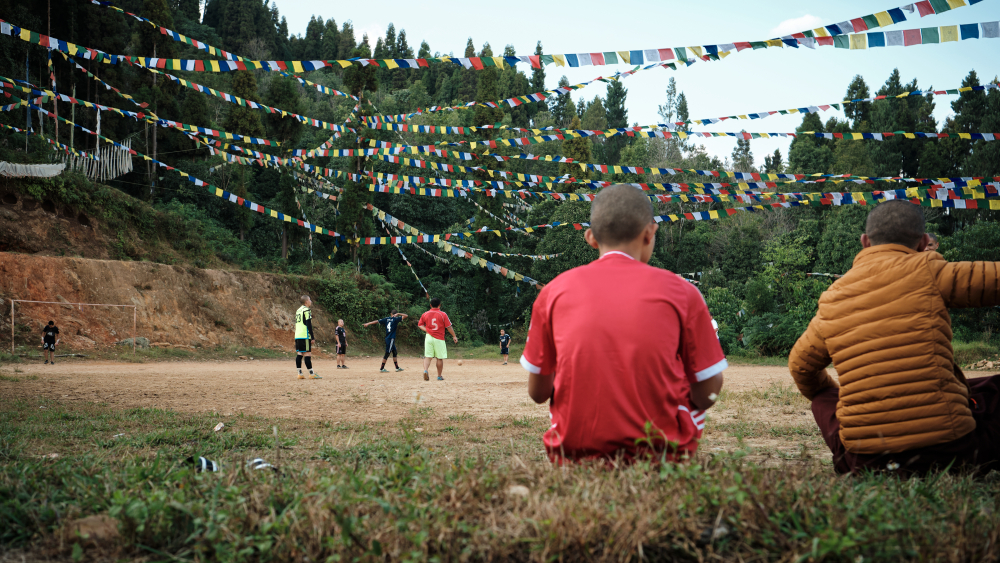
Young boys and monks play football in a ground near Rumtek Monastery. (Picture Credits: Abhishek Anil)
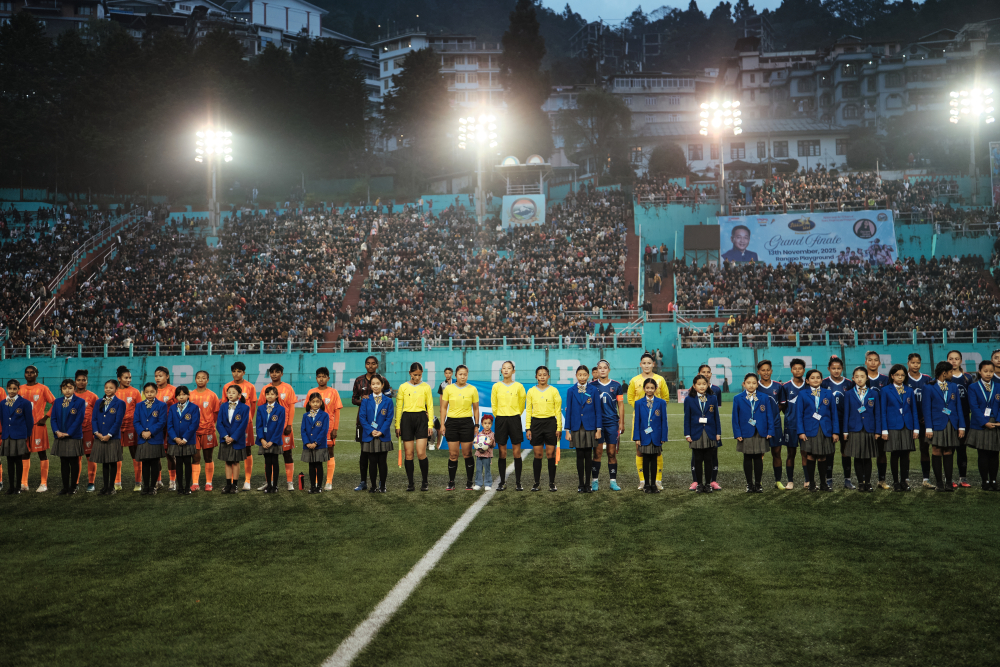
A football match at Paljor Stadium, Gangtok. (Picture Credits: Abhishek Anil)
Where some have seen the process of adjustments and privileges as a paranoid reaction to fears of being submerged by the Merger, a more positive approach would be to view Sikkim’s integration as a hybrid model — democratic yet protective — that has delivered relative political stability.
Sikkim offers a compelling model of how diversity can be institutionally recognized without descending into nationalism or sub-nationalism. Its ethnic landscape is the product of centuries of migration, accommodation, and political imagination, shaping a society that is neither static nor fragmented, but dynamically plural. The experience of Sikkim underscores the importance of sensitivity, inclusivity, and respect for indigenous knowledge and practices — socially, legally, and politically.
Bibliography
Dewan, Dick B. Education Today: A Darjeeling Hill Region—Perspective. Kalimpong: Sharda Enterprise, 2009.
Datta-Ray, Sunanda K. Smash and Grab: Annexation of Sikkim. New Delhi: Tranquebar Press, 2013.
Foning, A. R. Lepcha: My Vanishing Tribe. New Delhi: Sterling Publishers, 2003.
Namgyal, Thutob, and Yeshay Dolma. History of Sikkim. Translated from Tibetan by Lama Kazi Dawa Samdup. Unpublished typescript, 1908.
O’Malley, L. S. S. Bengal District Gazetteers: Darjeeling. Alipore: Government Printing Press, 1907.
Risley, H. H. The Gazetteer of Sikhim. Gangtok: Sikkim Conservation Foundation, 1989. Originally published 1894.
White, J. C. Sikhim and Bhutan: Twenty-One Years on the North-East Frontier 1897–1908. New York: Longmans, 1909.
Waddell, L. A. Among the Himalayas. Bibliotheca Himalayica Series 1, vol. 18. Kathmandu: Ratna Pustak Bhandar, 1978. Originally published 1899.
This essay has been created as part of Sahapedia's My City My Heritage project, supported by the InterGlobe Foundation (IGF).