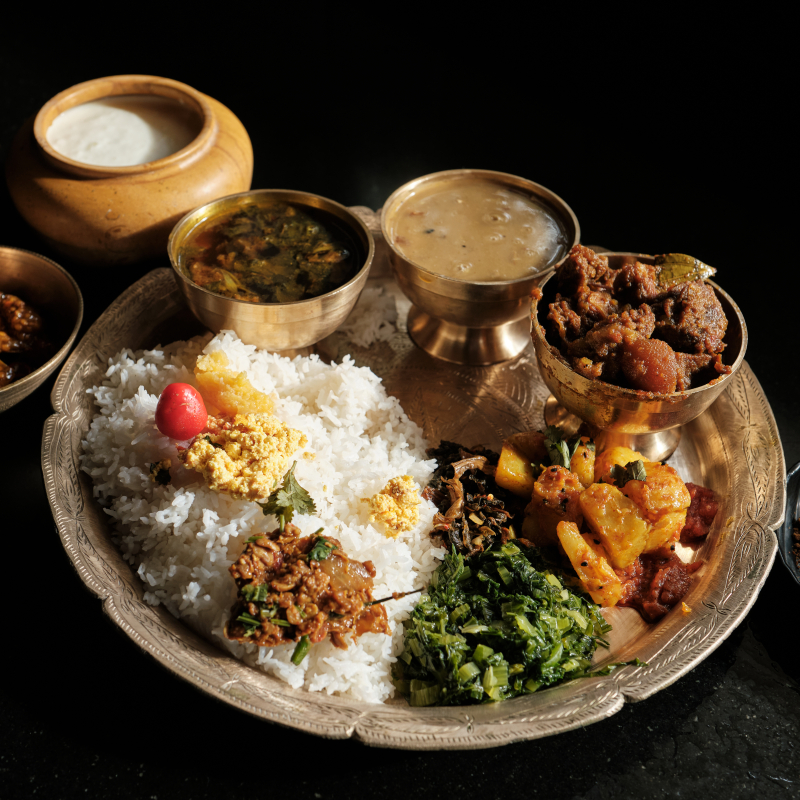

In Sikkim, which has undergone significant urban and climatic transformation, the region’s foods serve as an archive of memory, sustaining connections to the past through everyday practices. Its ecological past lives on through the food in its kitchen — mainly rice, meat, and millet — with each meal reminiscent of a landscape that modernity cannot fully do away with. At the heart of this continuity is food fermentation, a practice so central to Sikkimese identity that it turns regular ingredients into memories of the past and belonging.
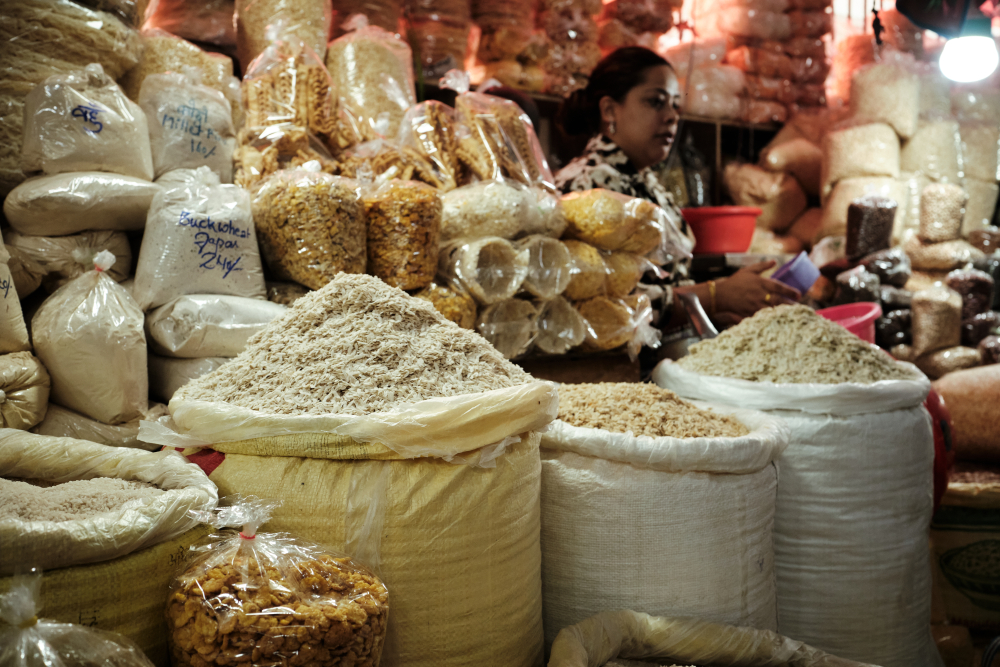
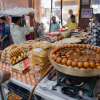
A variety of products made of rice, maize, buckwheat and millet for sale in market in Gangtok. (Picture Credits: Abhishek Anil)
Across the indigenous Lepcha, Bhutia, Rai, Limbu, and other communities in Sikkim, millets function as far more than just material for a meal. Millets appear not only as nourishment but as symbolic material, shaping practices that traverse ecology, ritual, and memory. Their existence is experienced in the slow ferment of chi or tongba (fermented millet) beverages, in offerings laid out during ancestral rites, and in the flow of agricultural and seasonal ceremonies. Through these practices, millet becomes a medium through which communities assert identity, continuity, and belonging in the Himalayas. This is also reflected in Rong (or Lepcha) tales. Take, for example, the tale of laso mung pano (the king of demons) which tells of the origin of chi millet: the grain is never a crop but a remnant of the sacred that is linked to Itbu Deboo Rum, the creator. Elders tell of a time when an ancestor gave their body to the earth, and from their heart sprang millet, the grain destined to endure cold winds and unforgiving slopes. In another version, sumong pho (blood pheasant) won over a sky-spirit and reinstated crops by bringing grains to a land that was devastated by floods in the valleys of Sikkim. These stories instill every bowl of millet porridge and every drop of fermented chi with a sense of heritage. Therefore among the Lepchas, millet becomes more than nourishment; it becomes a memory one can taste.
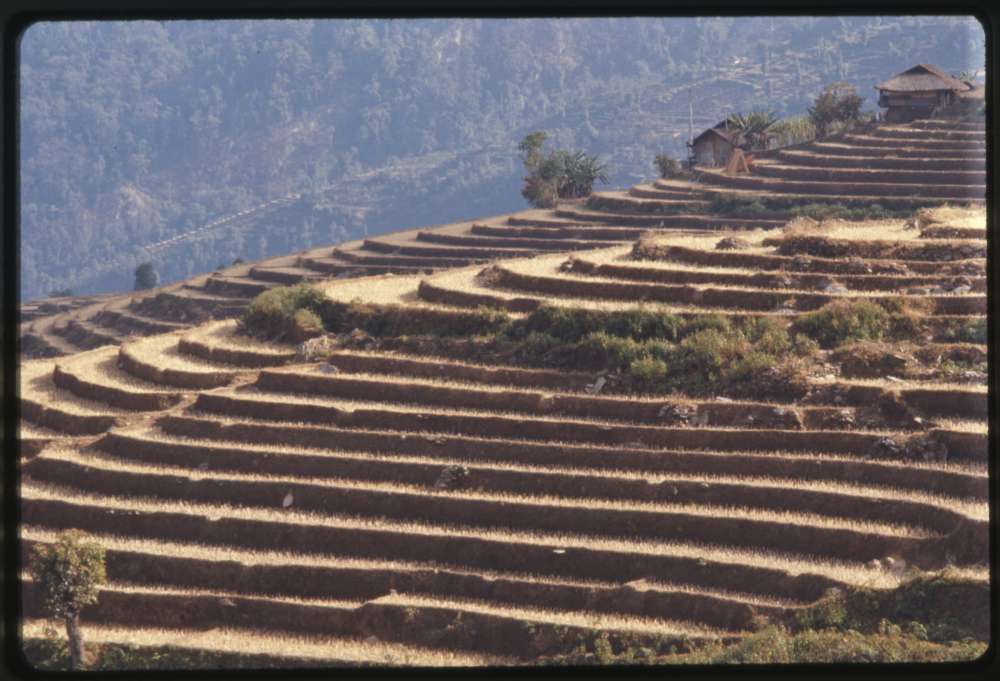
Sikkim, dry season, rice terraces. (Picture Courtesy: Alice Kandell/Library of Congress)
Rice, on the other hand, found its place in Sikkimese cuisine in more recent history. The growth of rice plantation in Sikkim has often been traced to Nepalese migration during the British colonial period and the Namgyal dynasty. While crops like buckwheat, barley, maize, wheat, and rice were grown by the indigenous people of Sikkim before the Nepalese migrated, rice fields were not irrigated. The Nepalese farmers who worked in the fields brought in terrace farming and irrigated the fields, which yielded high production.
The Magic of Millet
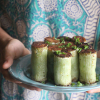
Millet is consumed in many forms, ranging from khuri (khuri-khu) or dedo to fermented beverages. Khuri is a traditional Lepcha food: often made from millet or buckwheat flour, it is a crepe filled with wild green-leafy vegetables, wild herbs like Kanchel Bee (gagleto), or other wild herbs and chhurpi or yak cheese. The vegetables and herbs are wrapped in the cooked millet or buckwheat bread. Dedo is a staple dish made out of millet and steamed with appropriate portions of water, eaten in place of rice along with other side dishes.
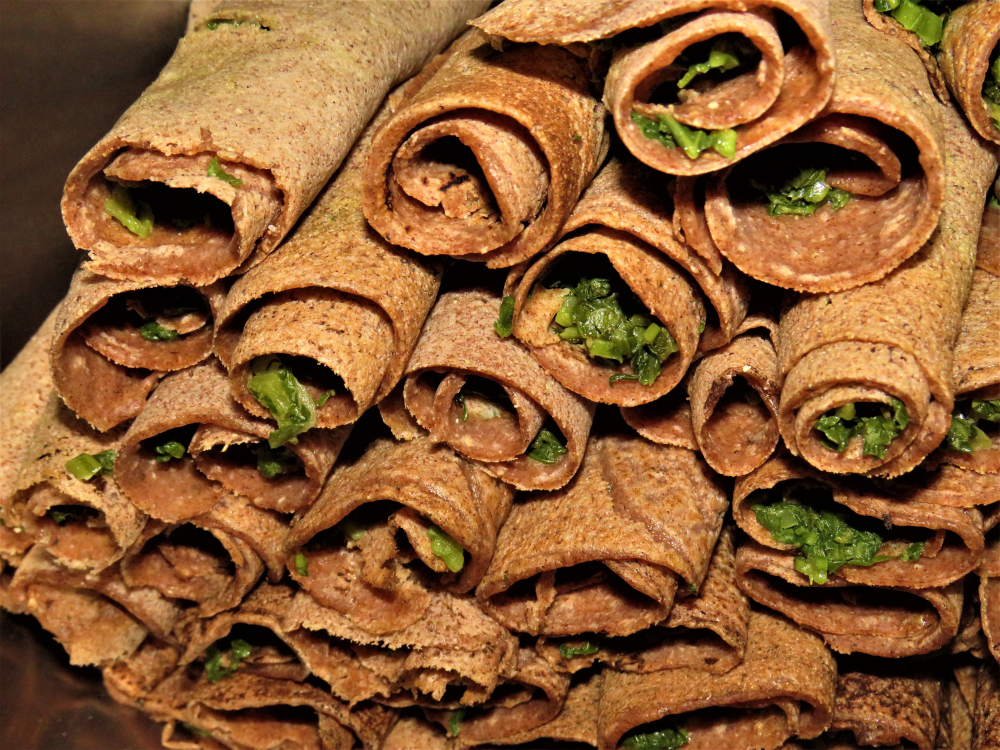
Khuri Khu. (Picture Courtesy: Pema Yangden Lepcha/Wikimedia Commons)
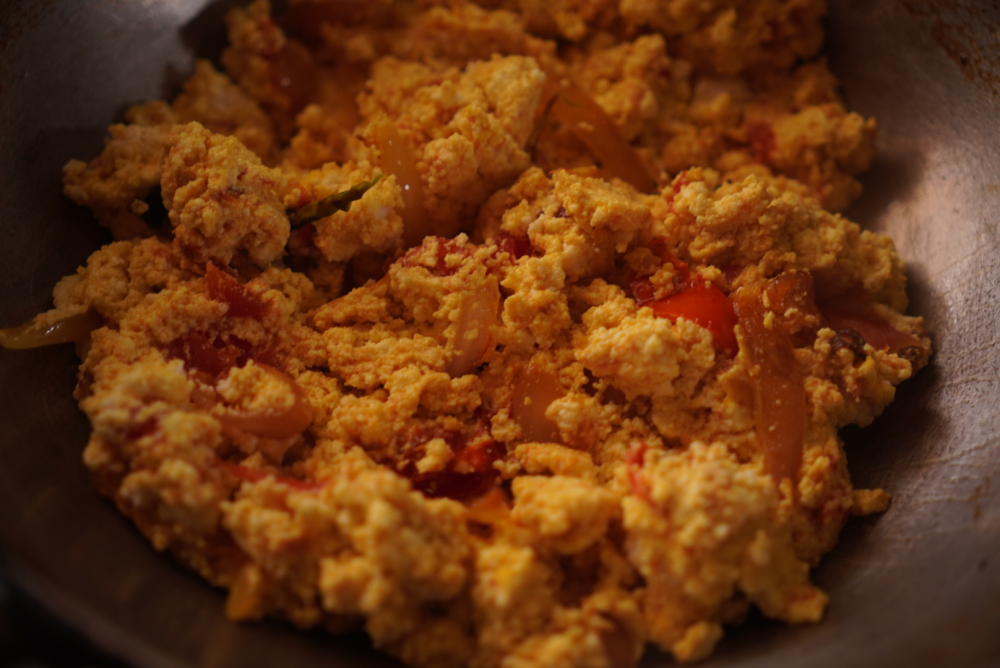
Churpi chutney. (Picture Credits: Ayushi Nirola)
Fermented alcoholic beverages made out of millet are revered among communities like the Rai, Limbu, Bhutia, Lepcha, Tamang, Gurung, and others. Millet is husked, grinded, washed, boiled, dried and stored after adding a traditional yeast called marcha — itself made using generational knowledge — to help in the fermentation process.
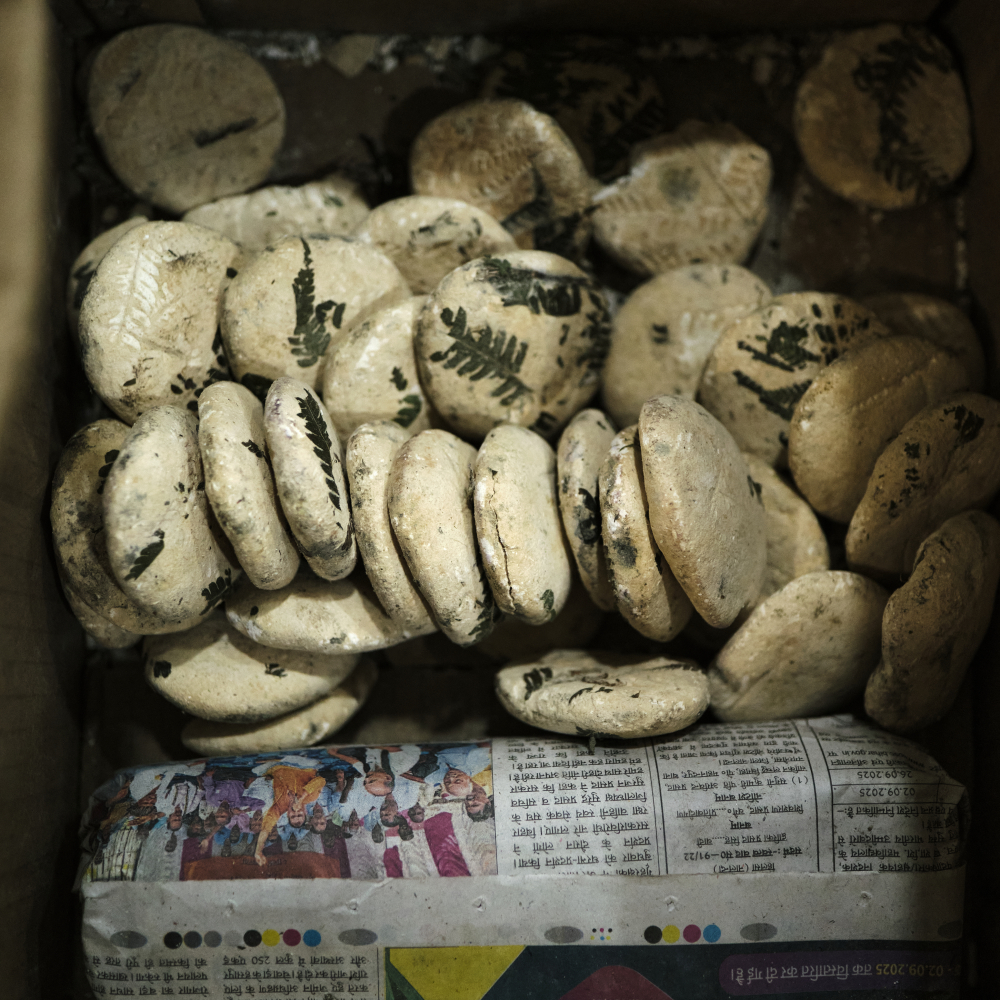
Marcha for sale in market. (Picture Credits: Abhishek Anil)
The beverages are used beyond consumption and also offered to god. When one visits monasteries, fermented millet seeds are bought and offered along with other religious offerings. Among the Limbus, such alcoholic beverages are consumed not only on an everyday basis (called chiya or tea), but also as crucial parts of festivals like Chasok Tonmang (harvest festival), wedding ceremony, death ceremony, and child birth. Similarly among the Rais, they are also used during festivals and rituals. The community also has a special flask made out of traditional gourds to store them. Among the Lepchas, the beverage is called chi and it is used during ancestral worship, marriages, birth ceremonies and other rituals.
Bhutia households call the drink chaang or tongba and serve it in bamboo containers. Another variety is changkol, which is prepared by boiling the already-fermented millet. Pieces of omelette are also added along with nuts and sugar before it is served.
Similar fermented alcoholic beverages are also made out of corn, yam, wheat, and barley. The corn variation, prepared using a special pot, is a distilled, traditional highly concentrated form often referred to as raksi. A special pot is used for preparing the beverage.
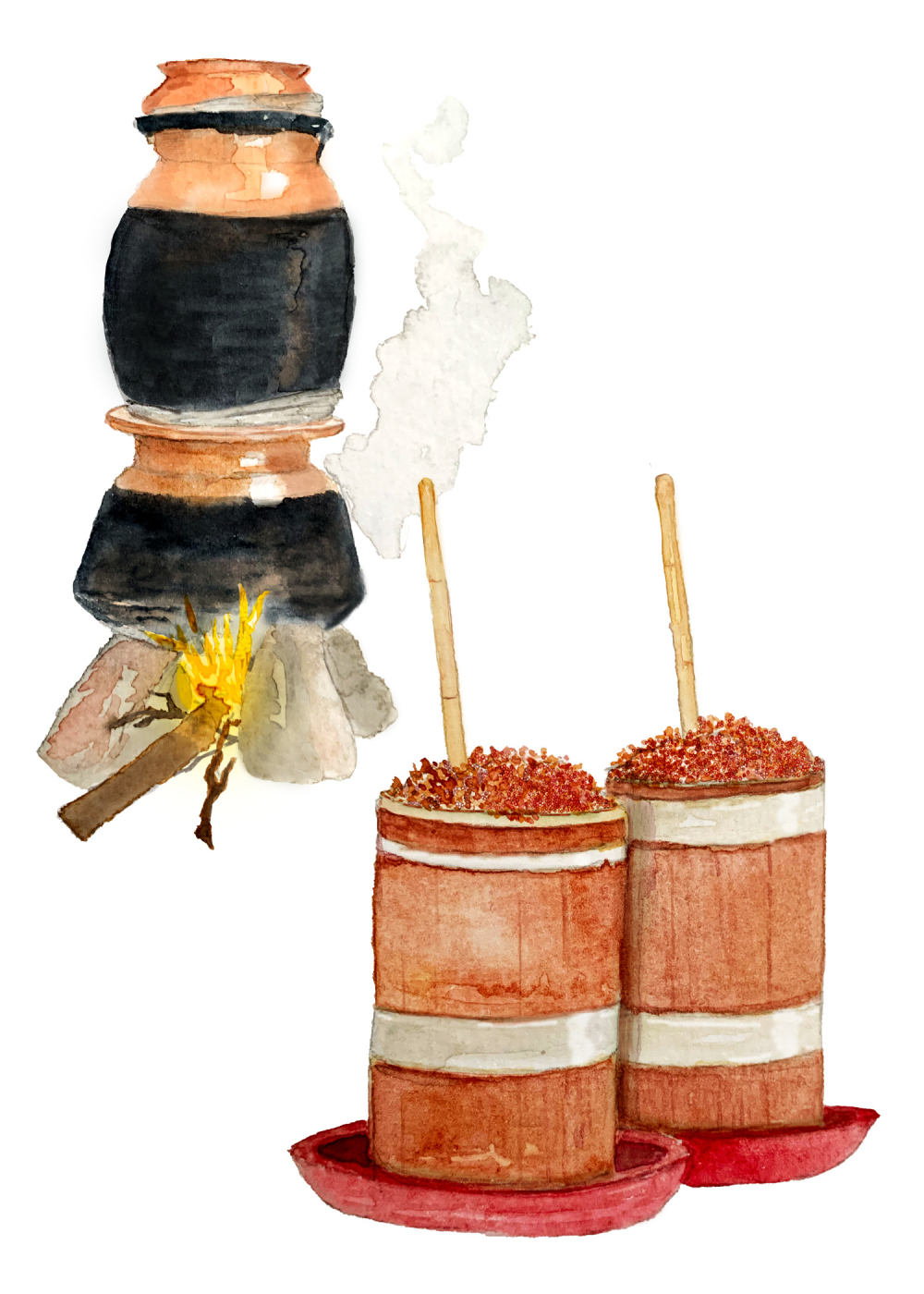
Distillation of Millet-beer (Chaang/tongba). (Illustration Credits: Jisha Unnikrishnan)
Socially, the culture of fermented alcohol faces casteism. In dominant Nepali social discourse, indigenous communities have often been associated with practices such as the consumption of fermented alcohol and labelled as matwalis (alcohol drinkers), a categorisation that has historically reinforced social hierarchies.
Cuisines That Accompany the Millet
What's on the Plate?
Daal-Bhaat-Sabji-Maasu Plate (Lentil-rice-vegetable-meat)
Everyday eating in Sikkim usually begins with the familiar daal-bhaat-sabji-maasu combination that serves as both late-morning meals and evening dinners. The food plate as seen in the Eastern Himalayas is widely a culmination of bhaat-kodo-tongba (rice-soybean-fermented alcoholic beverages). This is an alternative way of looking at the same daal-bhaat-sabji-maasu plate, depending on the altitude and availability and vice-versa. However, the overall diet still includes millets, either as fermented beverages or a quick snack comprising khuri with vegetables or achaar. Thus, millets are a grounding presence folded seamlessly into everyday food practices in Sikkim.
Across Sikkim, the plate or thali changes subtly from house to house, season to season.
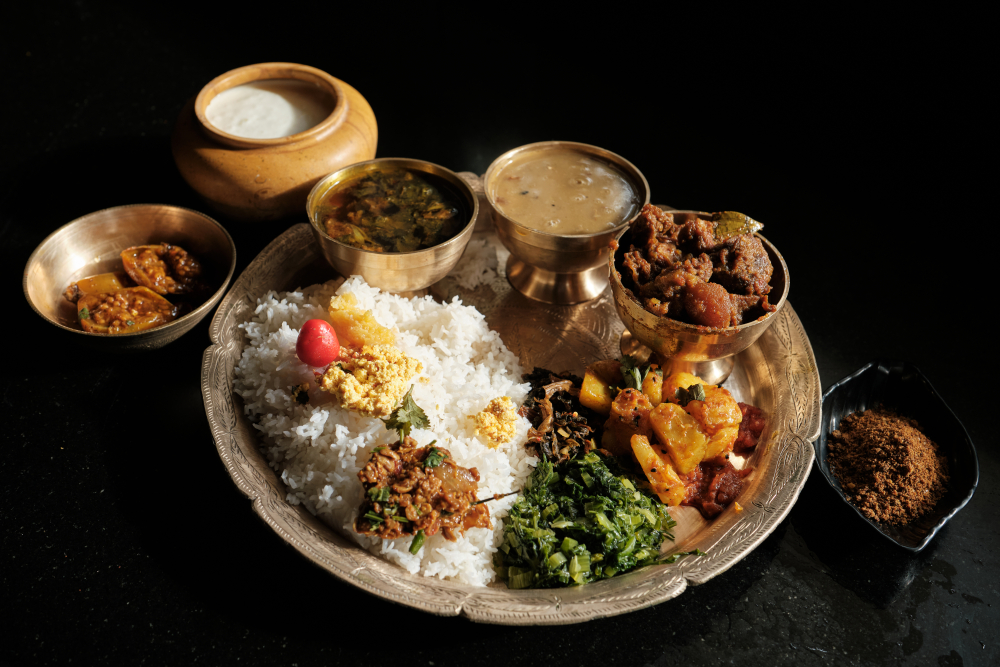
A thali comprising rice, lentils, vegetables, and meat, kindly prepared by the author's mother, Mamta Sharma. (Picture Credits: Abhishek Anil)
Meats and Leafs
Sisnu (stinging nettle) , ningro (fiddlehead fern), and mountain squashes are local vegetables that bring in the fragrance of the forage forests. These additions to the plate are full of nutrients and have medicinal benefits. Flour is sprinkled over sisnu for a few hours to do away with the thorns and then the leaves are separated and cooked with ginger-garlic paste, onions, salt, oil or butter. One also adds minced beef or pork to enhance its flavour. It is considered to help lower blood sugar levels. Minced beef is also added to mountain squash, a general food eating habit observed especially in Bhutia households. This helps add nuance to the flavour and may also be linked to the cold climate.
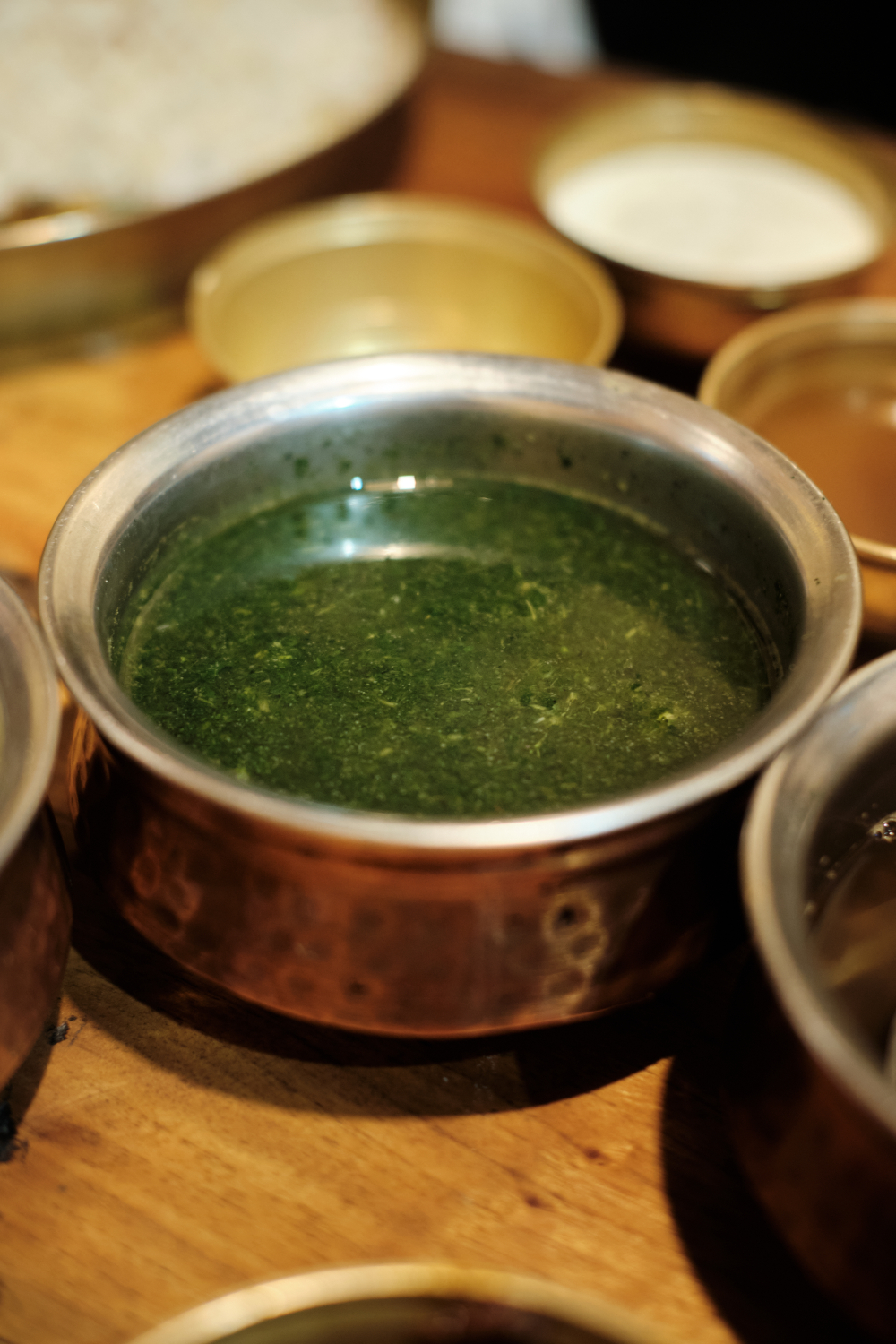
Sisnu or stinging nettle soup. (Picture Credits: Abhishek Anil)
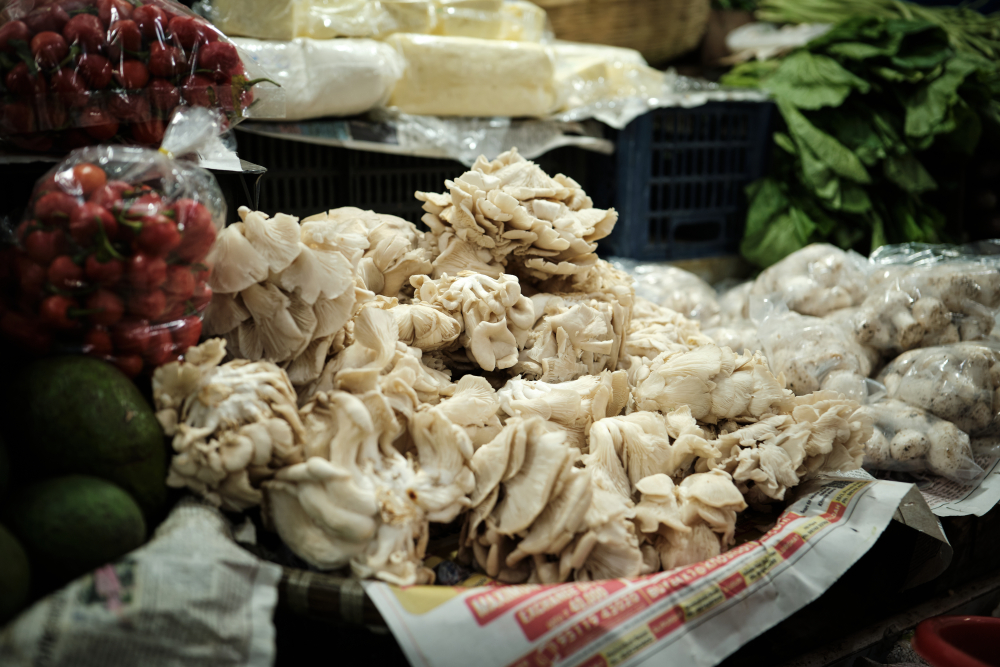
Mushrooms for sale in Lall Bazaar. (Picture Credits: Abhishek Anil)
In Bhutia kitchens, clouds of steam rise from beef soup. Beef soup is usually of two variations. One that has bone and meat slowly cooked to create a flavourful broth: a clear soup usually eaten with the rice plate or in between bites. Another version contains beef bones and beef fat that turns out slightly brownish. Beef is also sun-dried and then fried into smoky textured pieces called sikam (sun-dried beef). This sikam is also used to make another alternative of beef soup.
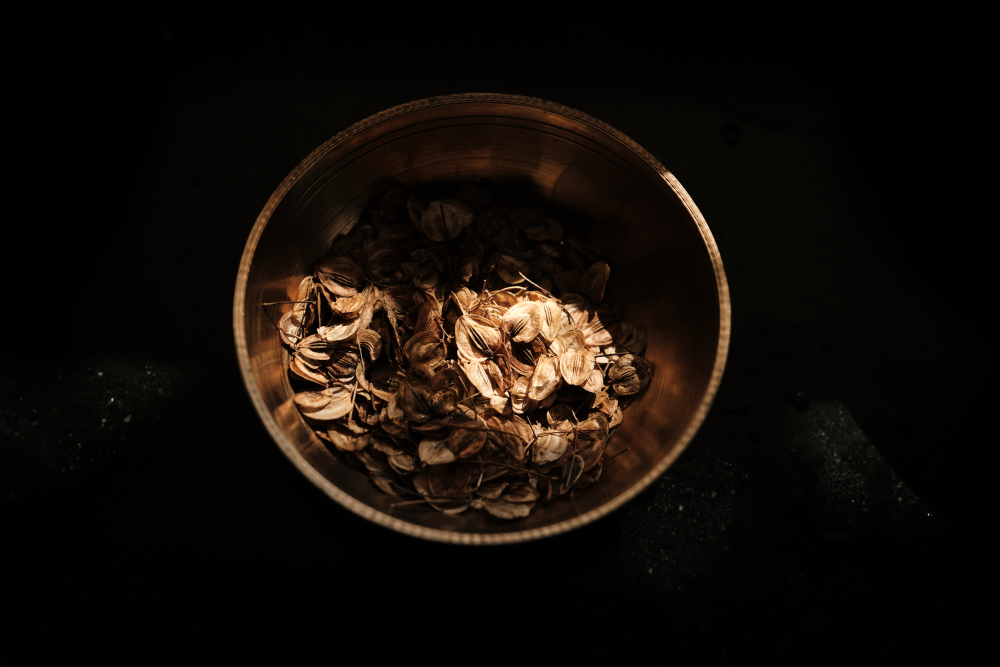
Chimphing. Picture Credits: Abhishek Anil)
Another variety of the rice plate common among the Rai, Limbu, or Lepcha community are their own version of pork and beef, and chutneys of wild herbs like the famous chimping (hogweed). The chutney has a slightly bitter undertone with a tingling sensation. Pork is often paired with green leafy vegetables and sometimes the seeds of hogweed are also added. The seeds have anti-inflammatory properties and are also used to cure dysentery, which reflects the rich ethnomedicinal knowledge of the people. A wide palette of wild green is an edible reminder of what Dolly Kikon describes as the deep entanglements of foraging and fermentation in Northeastern foodways.
Ponguzum is another delicacy famous among the indigenous Lepcha community. It consists of grilled fish paired with rice and vegetables cooked in hollow bamboo tubes.
The rice plate is also paired with pork or chicken, or fully converted into a special dish called wachipa (a Rai community delicacy). It has a bitter undertone and becomes the way that chicken enters as a special form of protein in the Rai community’s everyday cuisine. The country chicken is used for this, with the innermost feather of the fowl being a key ingredient. Many Nepali households also lean toward mutton or chicken curries, aludum (potato curry), gundruk (fermented leafy vegetable), sinki (fermented radish), and an array of preserved foods that carry the seasons’ flavours long after they have passed. These food items are eaten with rice and circulate within the daal-bhaat-maasu-saabji plate, reflecting a variety of stored flavours.
Fermented Foods
Maku, a comforting chhurpi melted in ghee, is a widely consumed delicacy. Chhurpi is a fermented product of milk consumed across communities in Sikkim. After the milk is fermented into curd, it is stirred to produce ghee. The remaining liquid called mohi is boiled and left down to cool. This turns out to be the chhurpi, which is then separated. The days of fermenting differ across communities: for example, in Bhutia households, chhurpi is fermented for more than 3-5 days, while in other Nepali (an umbrella term, often contested) communities, it is consumed right after it is separated.
Gundruk is one of the famous fermented cuisines in the region. The rayo ko saag (brassica rapa subspecies) is washed, cut into pieces, and dried under the sun. A dug pit is preheated with fire and the pieces are placed in a tight bag and then put in the dug. It is left for fermentation for a period of one month and then taken out and stored. It has a sour taste and is usually eaten as a quick nutritional soup or mixed like a salad. Gundruk contains a high level of iron and calcium and is a great appetizer. It is believed to have originated from the Kathmandu Valley in Nepal. People often speak of war time in Nepal, where the leaves were hidden under the dug pit that resulted in the fermented version. The same fermentation technique may have travelled across borders as Nepali people migrated. Similarly, sinki or fermented radish follows the same process and is eaten similarly.
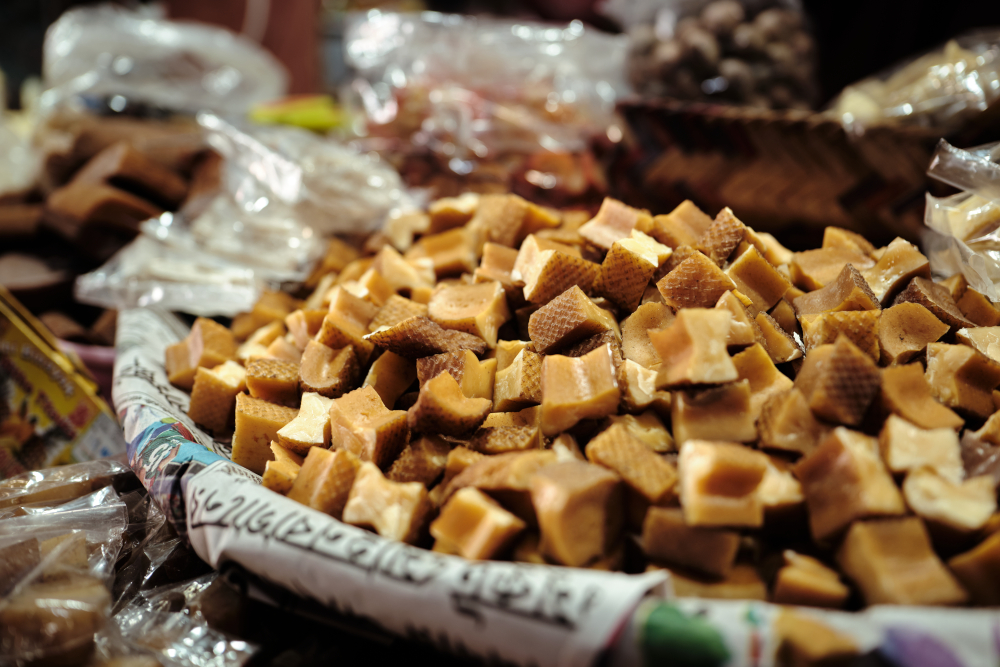
Hard churpi in a market. Picture Credits: Abhishek Anil)
Fermented soybean, or kinema, an age-old practice, is also very common in the region. Fermented soybeans can be fried or soupy. The process of fermentation is passed down via generations. As one walks through the vegetable market of Sikkim, vendors selling kinema are a very common sight. Kinema has a pungent aroma with a fulfilling taste. Many upper-caste Nepali households, especially in the rural areas, do not consume it. This brings in the Brahmanical idea of purity and pollution, where certain food items are considered less pure. The same goes with fermented beverages. Fermented food like curd that also has a different smell is consumed otherwise. This reflects how caste-based prejudices subtly surface in food practices in Sikkim.
Bamboo shoot is another fermented product in Sikkim, which goes commonly by the term tama in Nepali or mesu (young bamboo shoots) in Limbu. The shoots can also be pickled using a mixture of cumin, turmeric, mustard oil and red chilli.
Ningro and chhurpi are also combined in one of the popular plates of Sikkim, with ningro fried alongside a mixture of onions, chhurpi, oil, tomato, chilli, garlic, and salt. The ningro and chhurpi combination brings together forest produce and fermented ingredients in a single plate. In this way, the daal-bhaat combination emerges not as a fixed recipe, but a flexible one through which seasonality and taste are negotiated in daily food practices.
Sides and Snacks
The achaar palette, always on the side, consists of timbur (sichaun pepper) chutney, or rukh tamatar (tamarillo) chutney. A mixture of pumpkin seeds, chilli, and salt stored in a bottle is also a common sight at the dining table. This is commonly called dulo achaar.
Aludum is another favourite dish, and an everyday street food, that adds to the plate. Potato curry is often eaten with flattened rice in a dish famously called alu-chewra, a version that Bihari-Sikkim residents are famous for selling as a street fast food. Boiled potatoes are also consumed as sadeko alu or marinated potato.
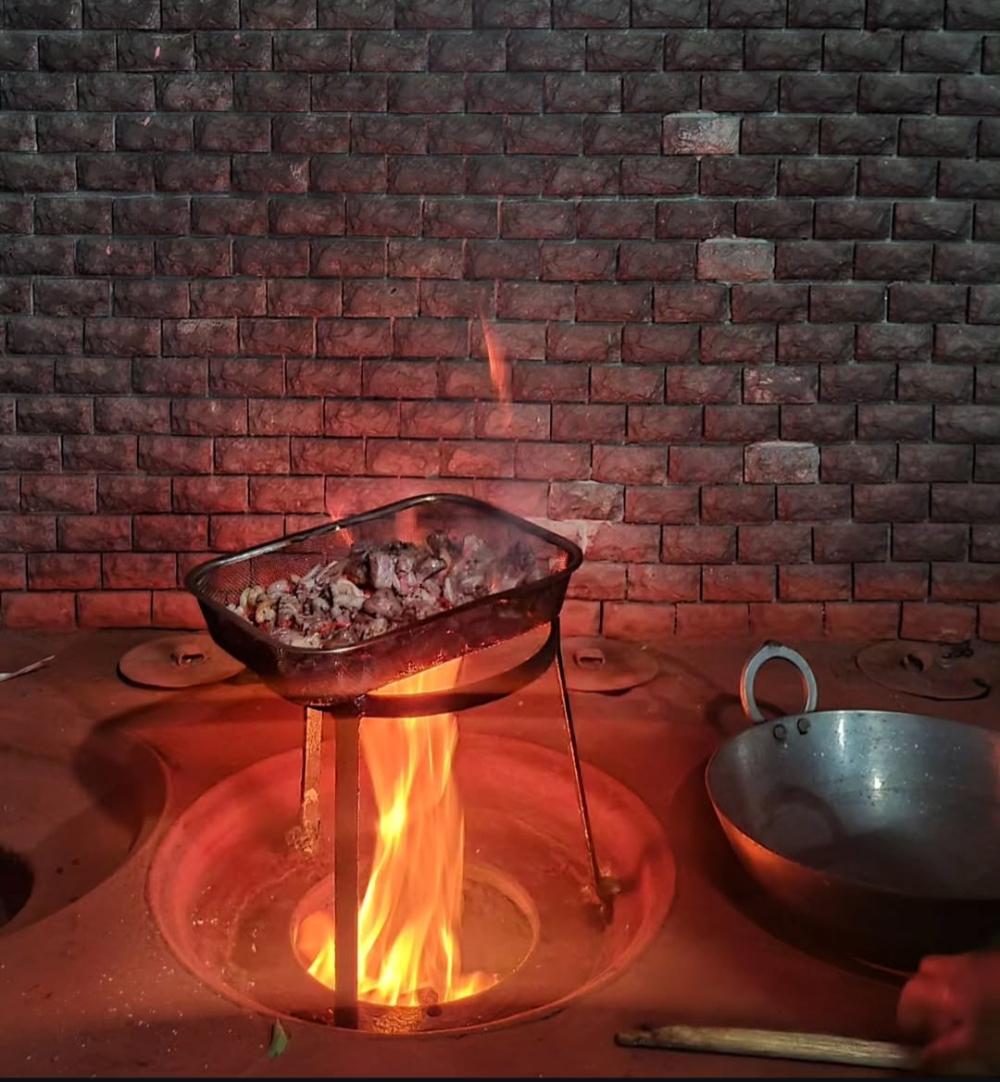
Fire smoking mutton. (Picture Credits: Ayushi Nirola)
An important point to reflect upon is that while dishes may have transcended kitchen borders and boundaries, their meanings do not transfer so easily. Mutton, for example, is avoided by some Rai groups, reflecting on how communities draw lines around what can and should be eaten. Even within the same region, the rice plate differs. Some thalis are brothy, some have a lot of fermented food and meat, and some have a variety of chutneys and spices.
The Cold-Curing Noodles
Thukpa is a traditional Tibetan noodle soup of wheat and meat (preferably beef) that is widely consumed in Sikkim and appears on nearly every menu. Its origins are often linked to east Tibet, with the journey of the Dalai Lama marking its culinary migration. Gyathuk is another variety of noodle-soup, distinguished by the shape of the noodles. Thenthuk, originally a Tibetan dish, is a hand-pulled noodle boiled along with beef or chicken meat. Guthuk is another noodle soup shaped into shell shapes. It is also commonly called kauri (shell) in Nepali. Maychinzay is an egg flat-noodle based soup that usually has chopped beef, beef stock, onion, tomato, ginger, chilli, soya sauce, vinegar, coriander leaves, and salt.
Momo and Other Common Cuisines
Momos are found in almost all restaurants, usually warmly accompanied by a flavourful soup and chutneys. There are many origin stories of the momo, often traced back to Kathmandu and Lhasa. In recent years, wheat dough has been increasingly swapped with millet dough, a reinterpretation of the momo that is locally known as kodo ko momo. While the form and familiarity of the momo is the same, the fillings are sometimes replaced with seasonal produce like iskus (chayote squash). This highlights the role of seasonal availability, shifting health sensibilities, and the adaptability of millet within the everyday food practices of Sikkim. This also reflects continuity, where traditional grains find versions of relevance within contemporary culinary practices.
Other common cuisines similarly breathe this grain based ecology. Shyafaley is another common deep-fried bread filled with minced meat, especially beef, that foregrounds grains in both structure and sustenance. Ting momo is another variant with no stuffing—plain steamed dough that allows grain to take centre-stage. It is usually consumed with beef chilly or aludum. Home-made sausages called guema, stuffed with beef pieces, beef blood, and intestines, are another delicacy among the Bhutia community. This is a highly regarded cuisine rich in iron, considered nutritious for pregnant women.
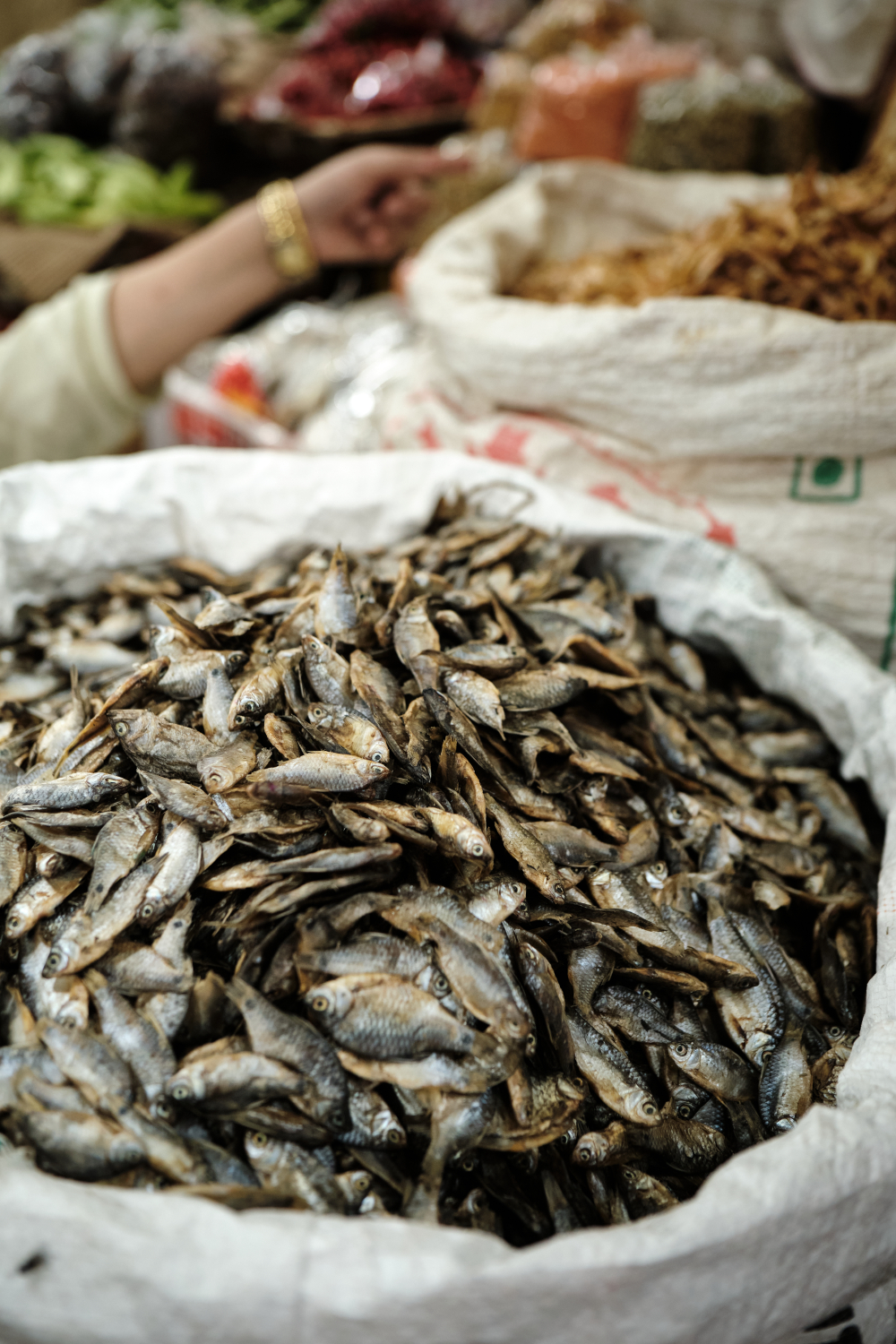
Sidra for sale in a market. (Picture Credits: Abhishek Anil)
Kargyong is another type of pork sausage common among the Lepcha community. The pork meat is mixed with fresh herbs to give a tasty palette. The sausages are usually accompanied by grain-based sides like rice or millet. Small dried fish called sidra is also consumed in the form of chutney that further complements the meals. Across these cuisines, rice or millet acts as the bedrock through which flavour, nourishment, and memories come to life at the food table.
The Festival Special Kyabzay and Sel-roti
Kyabzay (ka meaning mouth, say meaning snack) is a type of traditional cookie made out of refined flour, sugar, edible oil (ghee), and oil. The design of the cookies elevates them into a form of art. The dough of the flour is cut into palm sized squares and folded over to half its size. The folded section is cut into sections to form several pleats. It is then deep fried in ghee or oil to give it a crunchy finish. It is consumed during Loosong (Bhutia Harvest Festival) and Losar (Tibetan New Year). In Tibetan culture, it is believed to be a sweet that brings about peace and celebration. While Khabzay is primarily made from wheat flour, the importance can be seen within the wider grain varieties. Wheat tends to surface during celebrations and festivals marking a ritualistic pause and a divergence from the consumption of millets or rice. It reflects that grains structure festivals and agricultural cycles.
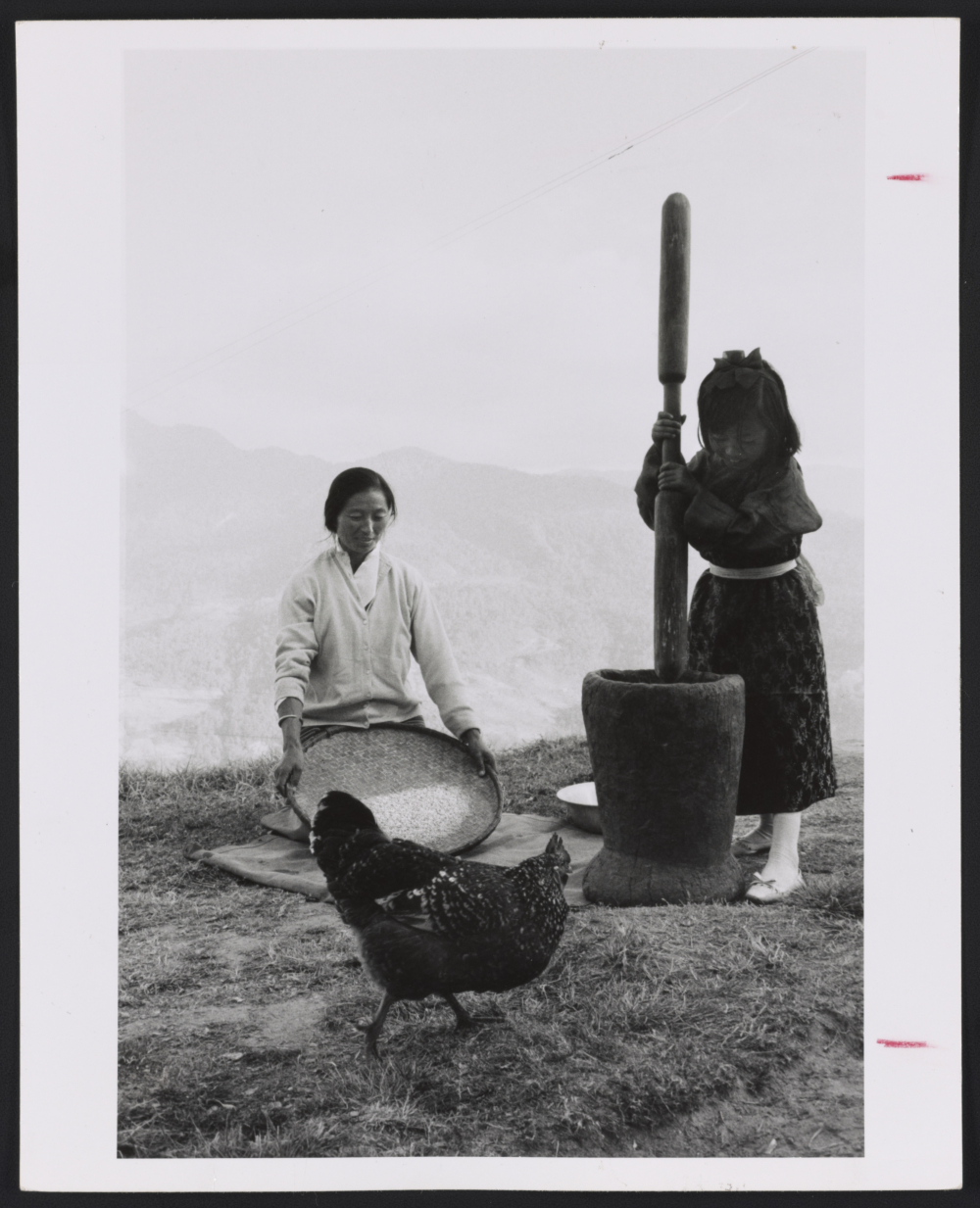
Pounding of rice. (Picture Courtesy: Alice Kandell/Library of Congress)
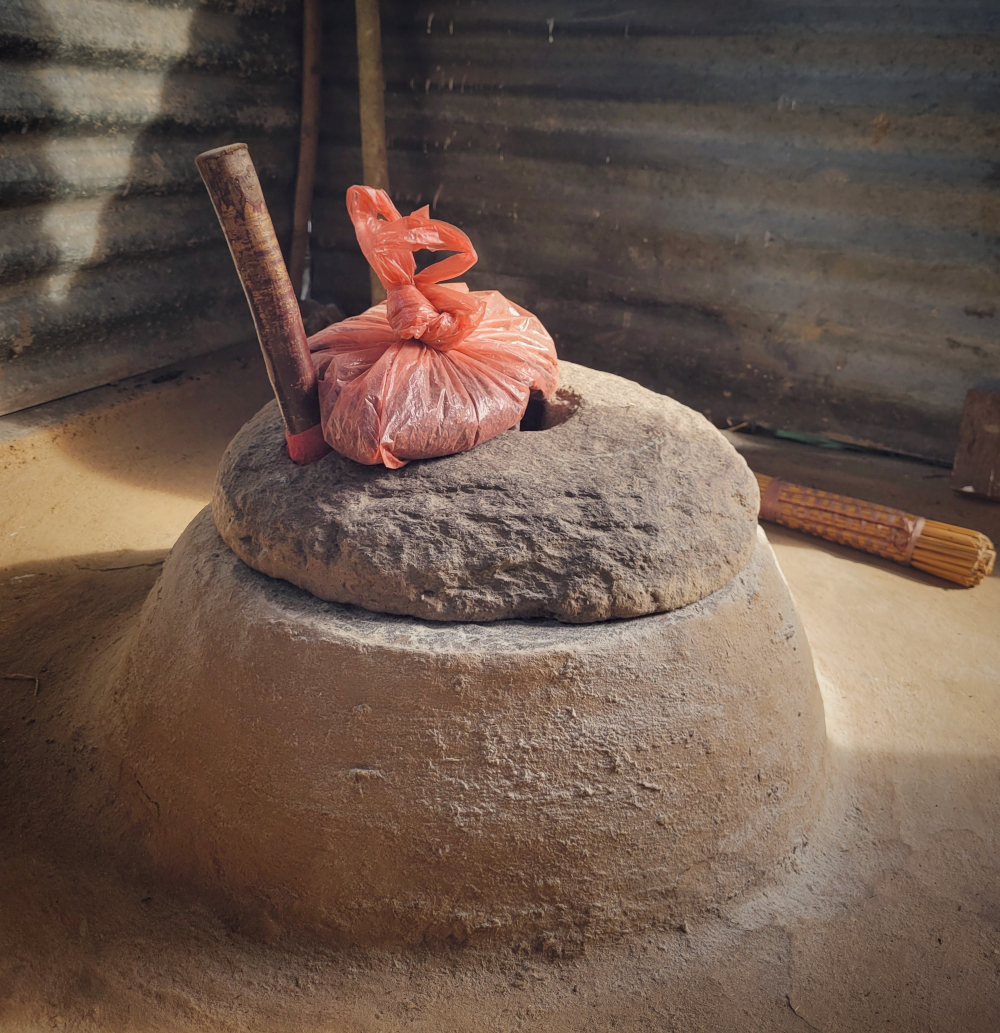
A jhato, traditional stone grinder. (Picture Credits: Ayushi Nirola)
Selroti is a round-shaped festival food made from rice flour. The rice is soaked and grinded into a flour using a traditional grinder called jhato or ohkli. The flour is mixed with ghee, sugar, cardamom as is preferred and the paste is rested overnight, then fried. A pointed stick called suiro is used to fry the selroti. The word selroti might have originated from the Nepali word saila (young) or from the local variety of rice called seli. It is used in festivals like Tihar (Diwali), marriage ceremonies, and in all religious rituals. It is often tradition to gift a basket of selroti to the bride’s parents by the groom during Nepali marriage. It is often paired with aludum or cooked mutton intestines (kharchi marchi). In Sikkim, both kyabzay and selroti are given to neighbours during Dashain (Dussherra) or Losar by the Nepali and Tibetan communities. This shows that these food items are merely also a shared form of bonding among diverse communities. Selroti is firmly rooted in rice, but it unfolds within the wider grain ecology, where rice and millets occupy food spaces distinctly yet have interlinked roles.
Both rice and millet are consumed in greater quantities for everyday nourishment; however, their presence largely depends on seasonal and altitudinal availability. Both grains occupy ritualistic and festival spaces. Selroti may be seen as a marker of relational bondings and abundance. Millet, on the other hand, is embedded in fermentation and sustenance practices and reveals culinary forms shaped by ecology, altitude, and seasonality. Millets as a grain ecology do not simply feed but create social life, meanings, and memories.
Conclusion
There are numerous intricacies that have been mentioned which make up the food heritage of Sikkim. Sikkim has a vast and shifting diversity of food culture that no single article can hope to lay out in entirety. This is not merely a limit of space but a general ethnographic drawback, the challenge of writing about “lived food worlds” without mentioning their complexity—what Dolly Kikon reminds us is the central dilemma of representing the everyday without taming it.
Bibliography
Appadurai, Arjun. ‘Gastro-Politics in Hindu South Asia.’ American Ethnologist 12, no. 3 (1985): 494–511.
———. ‘How to Make a National Cuisine: Cookbooks in Contemporary India.’ Comparative Studies in Society and History 30, no. 1 (1988): 3–24.
Counihan, Carole. The Anthropology of Food and Body: Gender, Meaning, and Power. New York: Routledge, 1999.
‘Folklore on Birds in Lepcha Language by Indigenous Lepcha People.’ Accessed n.d. https://www.sikkimbirds.com/post/folklore-on-birds-in-lepcha-language-by-indigenous-lepcha-people.
Goody, Jack. Cooking, Cuisine, and Class: A Study in Comparative Sociology. Cambridge: Cambridge University Press, 1982.
Gautam, Keshav. ‘The Settlement of Nepalese and Its Impact on the Economy of Sikkim.’ Indian Streams Research Journal, vol. 4, 7 (2021): 1-4. https://oldisrj.lbp.world/ColorArticles/5204.pdf.
Kikon, Dolly. Living with Oil and Coal: Resource Politics and Militarization in Northeast India. Seattle: University of Washington Press, 2019.
———. ‘Fermenting Modernity: Putting Akhuni on the Nation’s Table in India.’ South Asia: Journal of South Asian Studies 38, no. 3 (2015): 520–35.
Molummu, Sheera Pandi. ‘Chi – The Traditional Drink of the Lepchas: A Case Study.’ IOSR Journal of Humanities and Social Science 22, no. 11 (2017): 11-17.
Phaidon Editors. Living in the Forest. London: Phaidon Press Limited, 2022.
Rai, Bibhusha. ‘MOMO: Home, Memory, History, Culture on a Plate — Sikkim Project.’ Sikkim Project. Accessed n.d. https://sikkimproject.org/momo-home-memory-history-culture-on-a-plate/.
———. ‘Diversity of Yeasts in Indian Fermented Foods and Alcoholic Beverages.’ FEMS Yeast Research 23 (2023). https://doi.org/10.1093/femsyr/foad011.
Rodrigues, Joel. ‘Food Journeys: Stories from the Heart.’ Su-Se, January 1, 2023. https://www.academia.edu/144234164/Food_Journeys_Stories_from_the_Heart.
Tamang, Jyoti Prakash. Himalayan Fermented Foods: Microbiology, Nutrition, and Ethnic Values. Florida: CRC Press, 2009.
———. ‘Himalayan Food Culture.’ In Himalayan Bridge, 2020: 267-289.
Tamang, Jyoti Prakash, Kiyohito Okumiya, and Yasuyuki Kosaka. ‘Cultural Adaptation of the Himalayan Ethnic Foods with Special Reference to Sikkim, Arunachal Pradesh and Ladakh.’ Himalayan Journal 11 (2010): 177–185.
This essay has been created as part of Sahapedia's My City My Heritage project, supported by the InterGlobe Foundation (IGF).