
Gangtok, the capital of Sikkim, sits nestled in the eastern Himalayas, its densest urban fabric concentrated on the southwestern slopes of the ridge. From a bird's eye view, the city reveals itself in layers — buildings stacked side-by-side along the contours of the land, each following the practical template of the ubiquitous five-and-a-half-storey Reinforced Cement Concrete (RCC) building. This is the architectural language that has captured the common imagination, a vernacular born not of romantic notions of Himalayan architecture but of pragmatic necessity and rapid transformation.
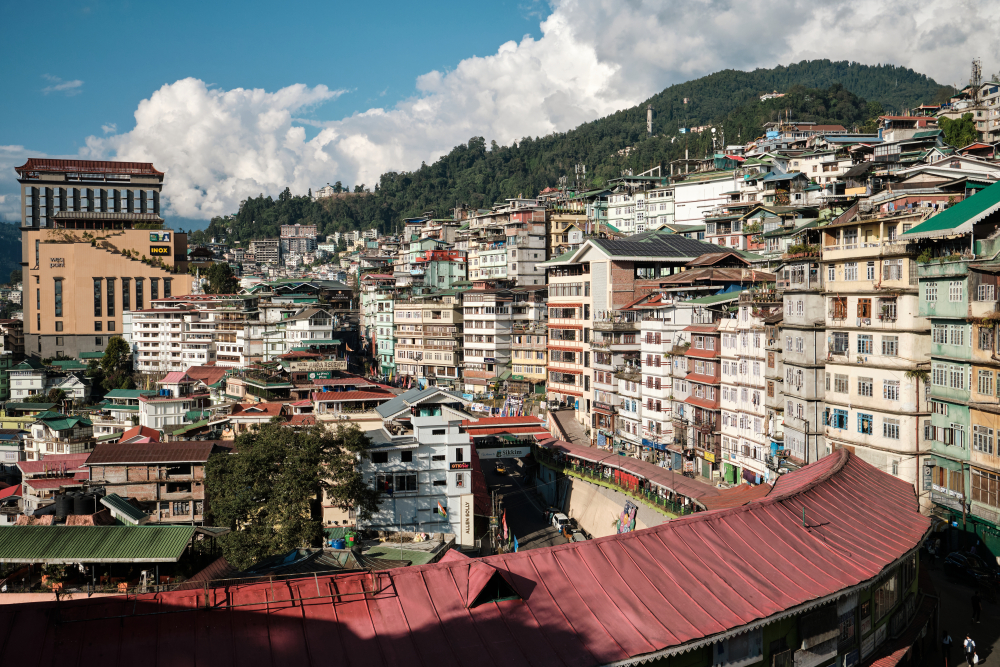
View of Gangtok from Lall Bazaar area. (Picture Credits: Abhishek Anil)
Sikkim, formerly the Kingdom of Sikkim, experienced democratic governance only fifty years ago when it was absorbed into the Republic of India in 1975. This political transformation marked a profound rupture in its cultural landscape. What followed was rapid infrastructural development, concentrated increasingly in Gangtok over the past three to four decades. The transformation has been dramatic, with Gangtok turning from a small Himalayan kingdom to a bustling capital city. Yet this contemporary architectural character is the product of a complex history, one that intertwines questions of identity, political uncertainty, material innovation, and the very meaning of tradition. To understand how Gangtok arrived at its present form requires looking back to a pivotal moment when architecture became a vehicle for asserting identity and tracing how practical considerations eventually overtook aesthetic aspirations.
The Architecture of the People
Before examining how Gangtok arrived at its current character, it is essential to look at the roots of vernacular architecture. As Paul Oliver, one of the leading scholars on the subject, defines it, vernacular architecture is "the architecture of the people, and by the people." It is typically self-built by owner-occupiers or members of a community who share cultural traditions. This refers to building practices that emerge organically from local conditions. They are shaped fundamentally by available materials, climate, traditional knowledge, and community needs rather than by formal architectural training or imported styles. It is architecture without architects, responding directly to the environment and the practical requirements of everyday life.
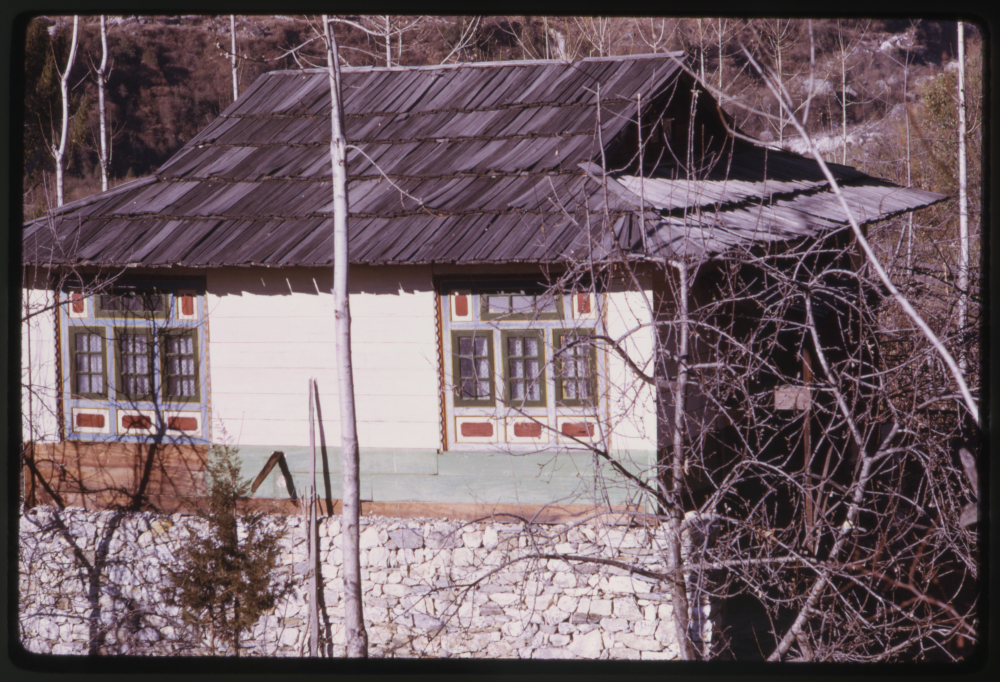
Exterior of a house in Lachung, Sikkim. (Picture Courtesy: Alice Kandell /Library of Congress)
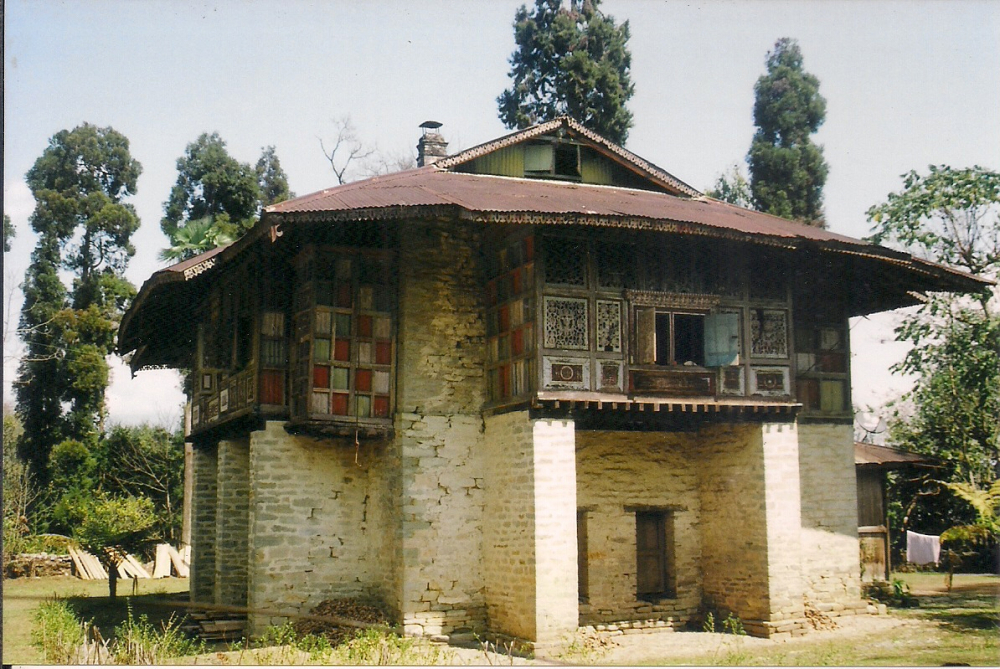
A stone house in Rinchenpong, Sikkim. (Picture Courtesy: Lokendra Nath Roychoudhury/Wikimedia Commons)
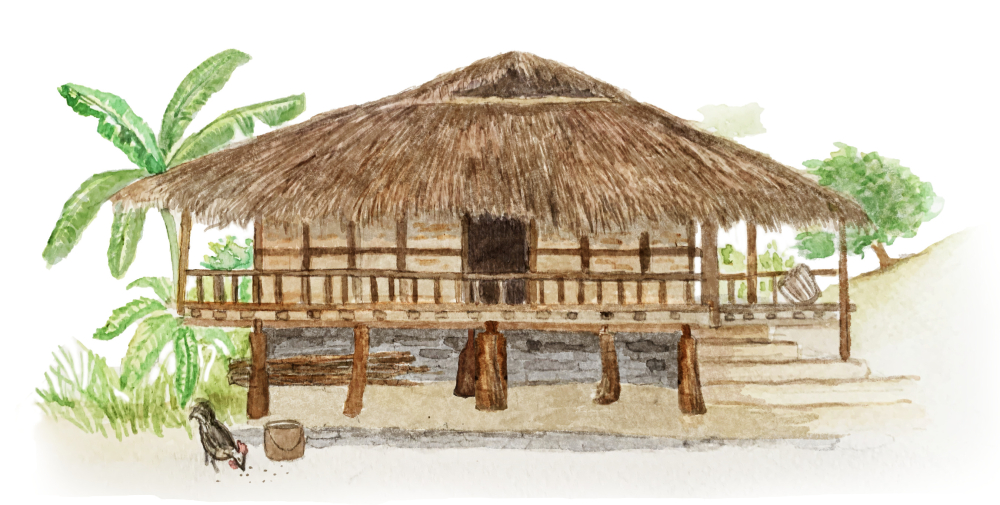
A wooden house common among Lepcha people. (Illustration Credits: Jisha Unnikrishnan)
In the context of Sikkim, this vernacular was historically shaped by what the land and local ecology provided. Material choices varied dramatically depending on location and altitude. Stone and rammed earth were used in the high-altitude villages of North Sikkim like Lachen. Stone provided thermal mass and protection against harsh weather, sometimes combined with mud. In higher altitudes inhabited by herding communities, or dokpas, stone was the primary building material for walls. Local timber and bamboo were the standard in the forested mid-elevations, while wooden shingles provided roofing where suitable trees grew.
Spatial Organization and Domestic Life
Traditional houses were modest in scale, with spatial arrangements reflecting both economic realities and social priorities. In most households, a single room served multiple functions including the kitchen, bedroom, dining area, and general living space. The kitchen, centered around the chula (hearth), was invariably the most important and vibrant space in the home. It provided warmth during cold months and served as the gathering point where family life unfolded.
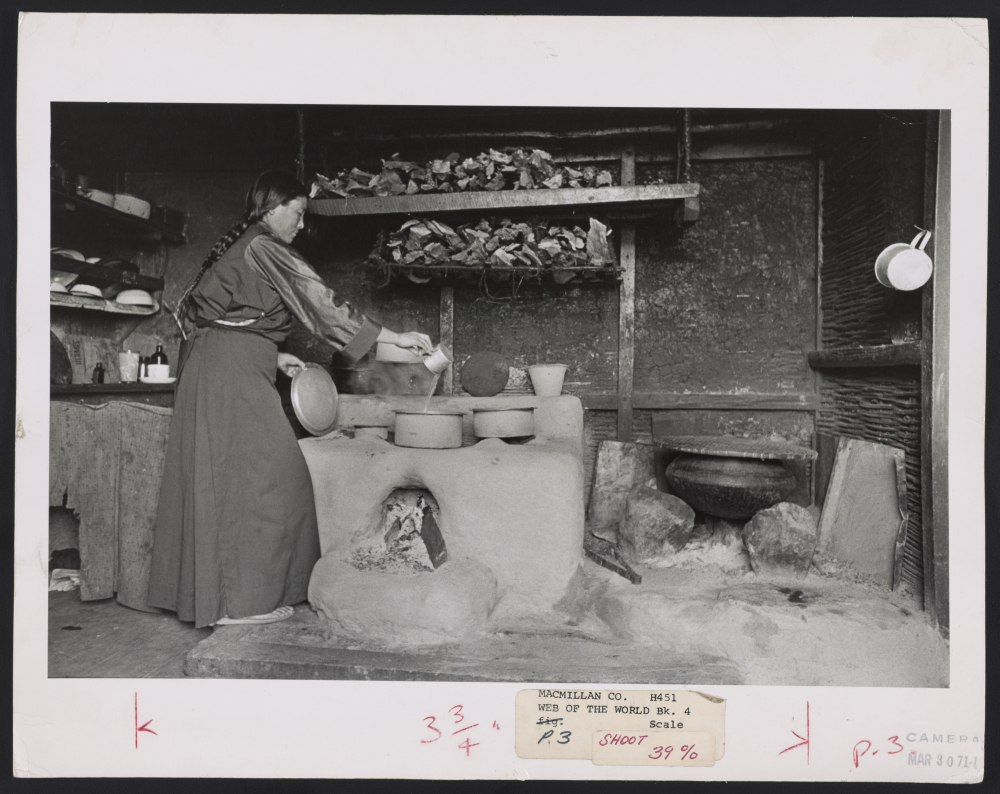
A hearth in Sikkim. (Picture Courtesy: Alice Kandell)
In Bhutia households, when a family could afford to build an additional room, it would typically be the choesum (shrine room), reflecting the central role of Buddhist practice in daily life. Only later, as economic conditions improved, would separate bedrooms be added. Nepali houses followed similar patterns, with the kitchen and its chula forming the heart of domestic life. Toilets were universally located outdoors, separate from the main dwelling.
The relationship between building and ground was carefully considered. Many houses, particularly in areas prone to moisture and on steeper slopes, were raised on stone plinths or wooden stilts. This elevation protected timber from rot, deterred pests, and created ventilation beneath the living floor. The main living spaces remained on the upper floor where they stayed drier. Roofs were steeply pitched to shed heavy monsoon rains and snow. Large roof overhangs were universal, creating deep eaves that protected mud-plastered or timber walls from direct rainfall.
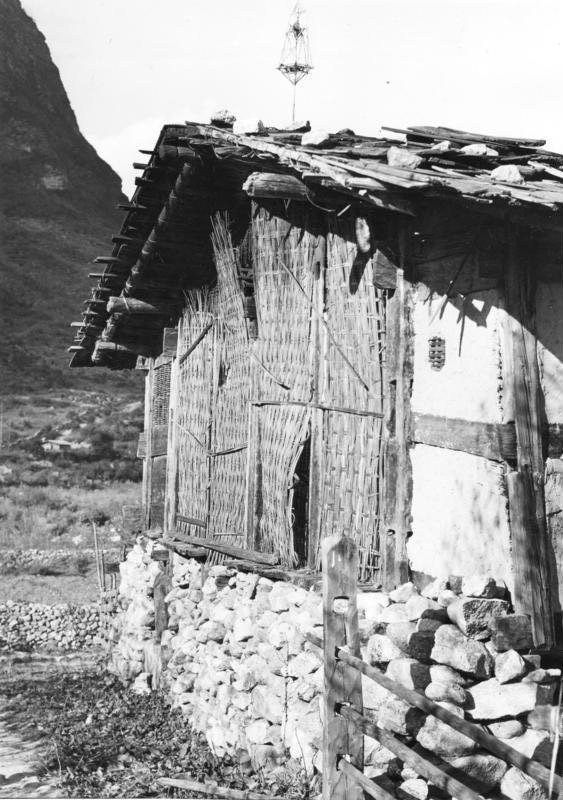
A house in Lachung 1938. (Picture Courtesy: Ernst Krause/Wikimedia Commons)
Building was fundamentally a communal activity. When a family needed to construct a house, people from the village would come together to help. The process became a form of collective knowledge-making, with techniques adapted and refined through generations of practice.
The Ikra Vernacular
One building technique that became particularly widespread across Sikkim, transcending community boundaries, was ikra construction. This was a common vernacular solution that made practical sense across the region. The technique involved creating wall infills between timber posts and beams using woven bamboo. Split bamboo strips were woven in a lattice pattern between the structural timber frame, creating a flexible yet stable wall surface that could then be plastered with a mixture of mud, cow dung, and sometimes lime.
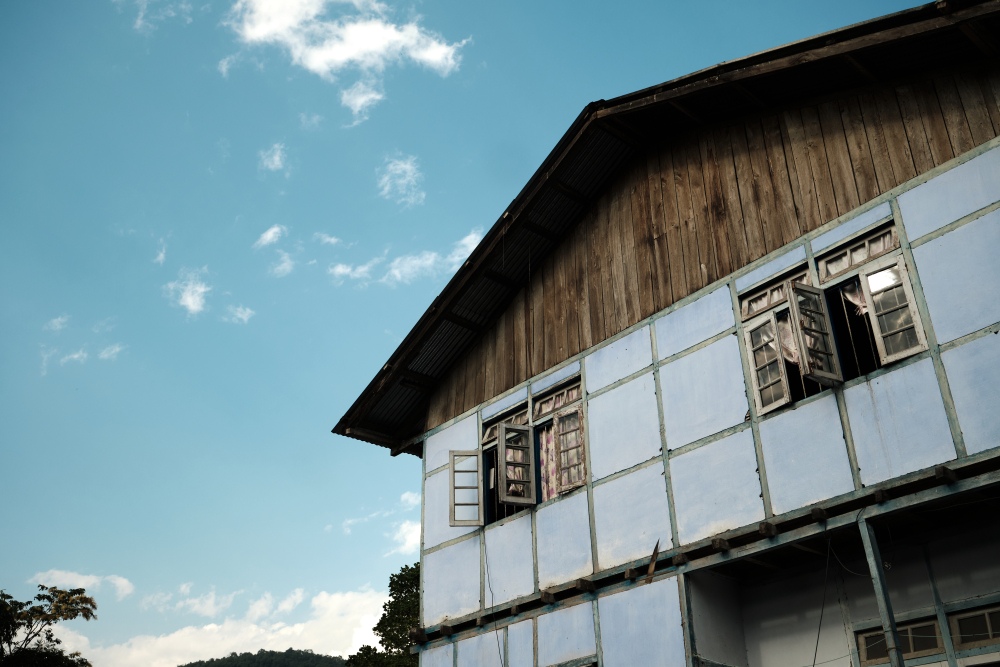
An ikra structure in Rhenock town. (Picture Credits: Abhishek Anil)
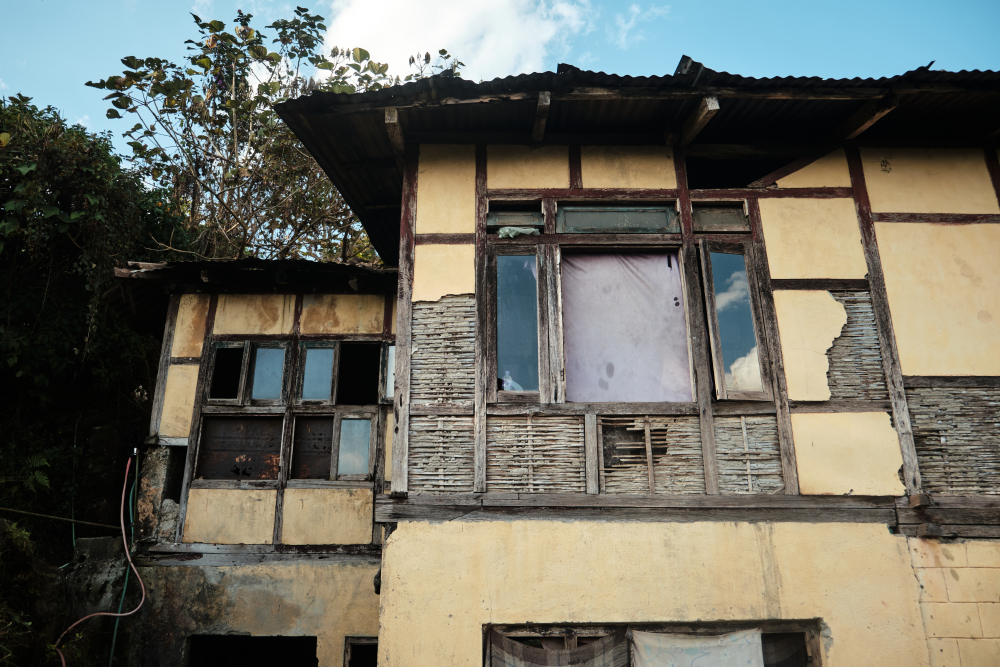
An old ikra structure used as metal workshop for Rumtek monastery. (Picture Credits: Abhishek Anil)
The advantages of ikra were multiple. It was lightweight, which reduced the load on foundations in hilly terrain. Most significantly, the flexibility of the bamboo-and-timber assembly performed well during earthquakes, allowing structures to flex rather than collapse catastrophically. It remained the dominant building technique for residential structures until the arrival of new materials in the mid-twentieth-century.
The Chogyal's Vision: Architecture as Identity
During the late 1960s and early 1970s, as Sikkim's political future hung in the balance, the twelfth Chogyal (king), Palden Thondup Namgyal, sought to establish a distinct Sikkimese identity through art and culture. Among his initiatives was commissioning filmmaker Satyajit Ray to create a documentary on Sikkim in 1971, capturing its unique character for posterity. The film was subsequently banned by the Government of India until 2010, making it both a cultural artefact and a political statement.
Another ambitious project of the Chogyal was architectural: to create buildings that would embody a distinctly 'Sikkimese' aesthetic. One of the earliest attempts at articulating this vision was the Namgyal Institute of Tibetology, whose foundation stone was laid on 10 February 1957 and which was inaugurated on 1 October 1958. The institute represented an effort to establish an architectural language that would reflect Sikkim's cultural heritage, drawing heavily from Tibetan Buddhist monastery architecture with its characteristic sloping roofs, ornate timber work, and religious iconography.
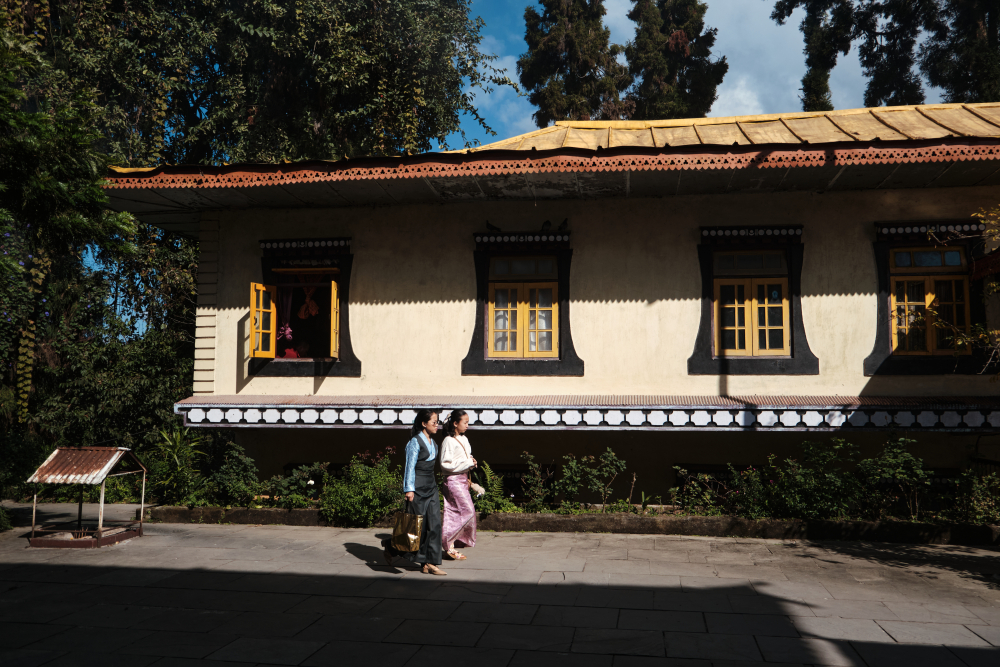
A wing of Enchey gompa with the sloping roof and timber work on the windows. (Picture Credits: Abhishek Anil)
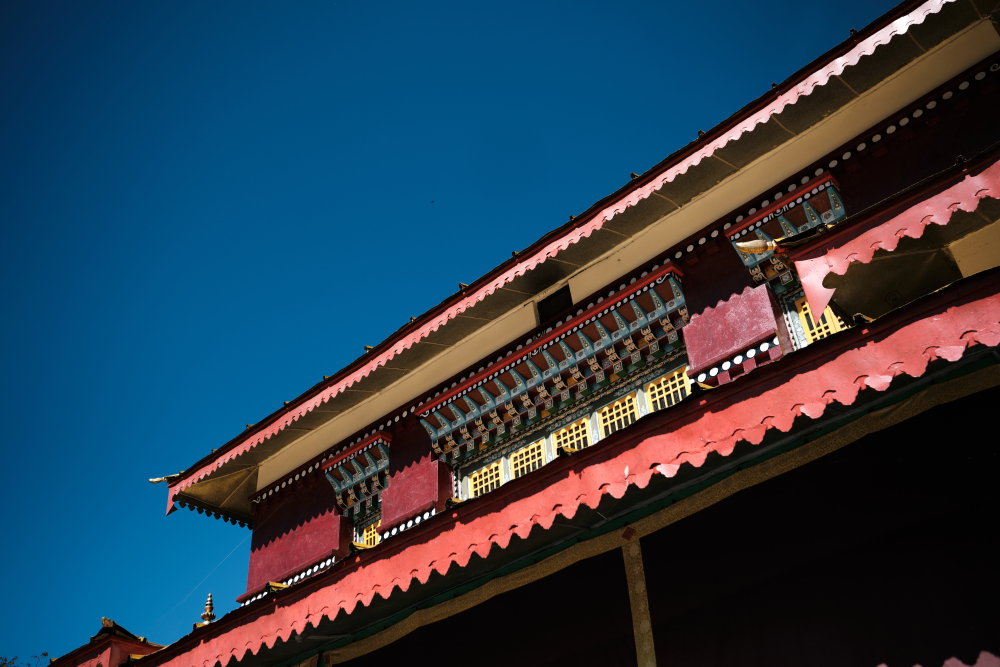
Sloping roofs of Enchey with ornate woodwork windows.(Picture Credits: Abhishek Anil)
The opportunity to fully realise this architectural vision arose with the construction of Sikkim House in New Delhi's Chanakyapuri diplomatic enclave, which would serve as the kingdom's embassy to India. In 1967, at Rashtrapati Bhawan in Delhi, the Chogyal met Swiss architect Robert Weise to discuss the design. Weise, who had never set foot in Sikkim, drew upon his travels and work in Tibet and Nepal to conceive what he imagined as Sikkimese architecture. His design borrowed heavily from Tibetan Buddhist monasteries — sloping curved roofs, elaborate ornamentation, and Buddhist motifs. The Chogyal approved the concept enthusiastically, and Sikkim House was constructed according to Weise's sketch.
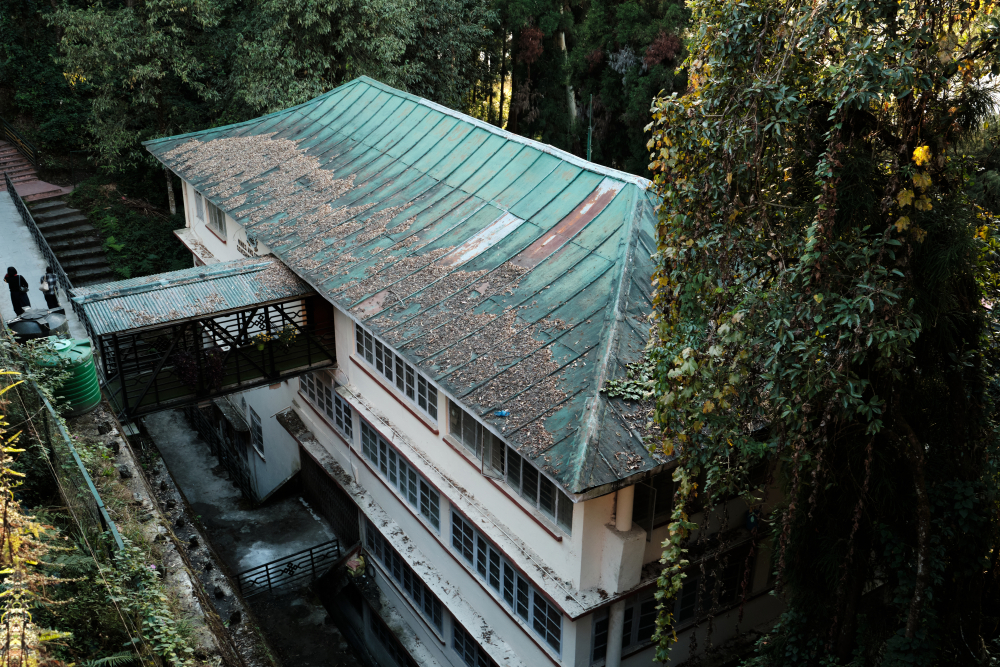
View of Mines and Geology building of Government of Sikkim. (Picture Credits: Abhishek Anil)
This moment proved pivotal in establishing a template: the 'Sikkim Style' became synonymous with Tibetan Buddhist aesthetic elements. Weise would go on to design several other significant buildings in Sikkim, including the Tashi Namgyal Academy (TNA) Hostel, and the Palace Secretariat (now the Tsuklakhang Trust Office), helping to establish a building language for public buildings, with which all further government projects had to comply. His influence extended beyond his own projects — when foreigners had to leave the state after the 1975 merger, Weise left behind apprentices who would carry forward this architectural vocabulary.
Elite Architecture and Everyday Building
However, the story of Weise and the Chogyal's architectural vision represents only one strand — an elite, state-sponsored attempt at defining Sikkimese identity through built form. These were buildings commissioned by the monarchy, designed by foreign architects, and constructed with resources unavailable to ordinary citizens. They were symbols of power and cultural aspiration, divorced from the everyday realities of how most people in Sikkim lived and built.
Meanwhile, a different architectural transformation was taking place, one driven not by aesthetic considerations but by practical necessity and material innovation. This transformation, which would ultimately prove far more influential in shaping Gangtok's contemporary landscape, must be understood through a class-based lens. Access to building materials and construction technologies has always been stratified by wealth — and the story of RCC in Gangtok is fundamentally a story of how an elite material gradually became democratised.
Before RCC became the material of choice, the vernacular building tradition among ordinary people relied on locally available materials. These structures were responsive to the local climate and seismic conditions, built using skills passed down through generations. However, they had limitations — timber required significant maintenance, ikra structures were vulnerable to moisture and fire, and both could only rise to a maximum of three storeys.
Material as a Democratising Force
The introduction of reinforced cement concrete to Gangtok can be traced to colonial influences in neighbouring hill stations. The British had developed Darjeeling into a popular hill station and sanatorium due to its cool climate, with the East India Company officially acquiring the territory in 1835. In Darjeeling and Kalimpong, one can find numerous Art Deco buildings and early RCC structures — evidence of colonial-era experimentation with modern materials. At that time, RCC was a sophisticated, elite material: not everyone could afford it or possessed the technical knowledge to work with it. Locally, concrete came to be called belaiti, possibly derived from the word belayat meaning foreign, a linguistic marker of its imported status and its association with colonial modernity.[i]
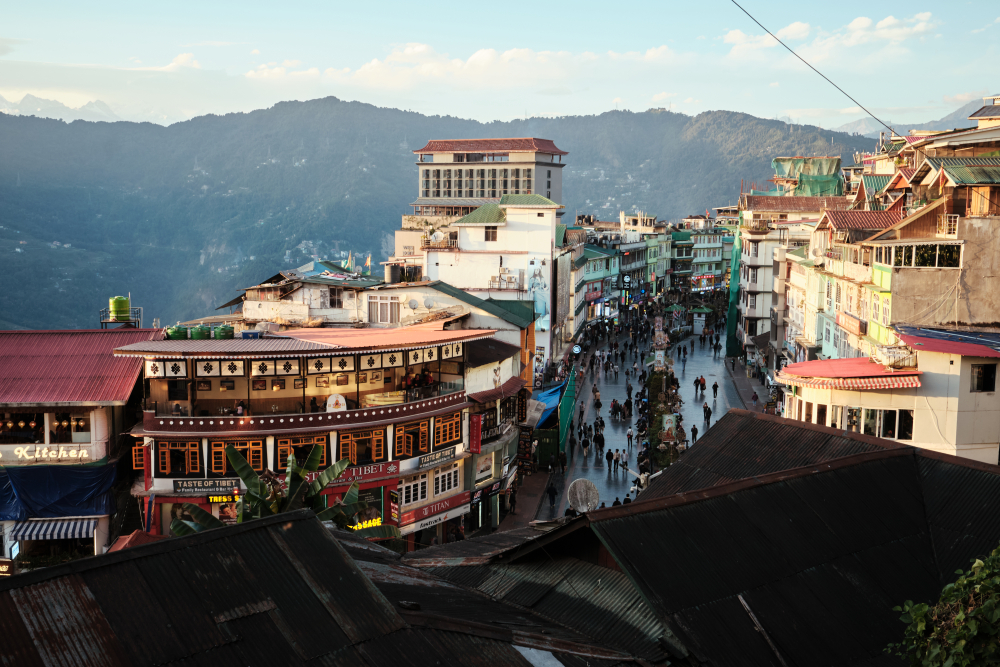
RCC structures at MG Marg, Gangtok. (Picture Credits: Abhishek Anil)
The first RCC buildings in Gangtok appeared in the main bazaar area around MG Marg during the 1950s, reaching heights of five-to-six storeys. These were extensions of developments in the built environment of neighbouring towns like Siliguri, Kalimpong, and Darjeeling. Significantly, these early buildings belonged to the wealthier families of Gangtok — the royal family and prominent business families. The Elephant Mansion in Deorali, Tenzing and Tenzing in Pani House (both belonging to the royal family), the Bakers Café building, and the building that now houses Craft Theory in Naya Bazaar all date from this period. One notable early structure was Hotel Society, which rose to five storeys, demonstrating the vertical possibilities of the new material.[ii]
These developments had nothing to do with architects or formal architectural practice. The form emerged in a utilitarian manner, shaped by engineers who had studied RCC construction techniques and by the practical advantages the material offered. Unlike ikra and timber structures, RCC allowed buildings to go much higher. This made economic sense as land prices rose and plots began to be distributed in standard sizes — the ability to build vertically proved far more cost-efficient and valuable. RCC structures were also demonstrably stronger, offering crucial advantages in terms of structural stability and earthquake resistance in a seismically active region.
A standard template emerged: five-and-a-half-storey RCC buildings with columns and beams measuring approximately one foot by one foot, typically arranged in a grid of about 14 to 15 feet centre to centre. Cantilevers were used for staircases or verandahs. Hoods extended out from floor slabs and ran across the building perimeter, eliminating the need for chajjas (projecting eaves) above windows while assisting with maintenance work and the laying of plumbing lines. This practical, efficient design would become the dominant building template in Gangtok.[iii]
During the 1970s, the Chogyal also initiated a push for renovating monasteries in Gangtok, projects that reveal the hybrid nature of even ‘traditional’ architecture in the city. The timber floors on ground floors were always problematic due to dampness, sometimes causing illness among monks. Consequently, ground floor timber structures were replaced with concrete slabs, and even ornamentation around windows was crafted in concrete. The monasteries in Gangtok thus became hybrids of old and new — practical problem-solving exercises that incorporated modern materials while maintaining traditional upper-storey elements. Visitors to these monasteries will find that the most traditional components are now visible only in the upper floors, which are usually restricted entry areas. Even within sacred architecture, pragmatism had begun to reshape tradition.
Post-Merger Transformations
After the merger with India in 1975, Sikkim witnessed an influx of development projects and increased construction activity. One of Weise's apprentices, Narendra Pradhan, a graduate of the Regional Engineering College (now MANIT) Bhopal, became one of the few practicing architects in the region. Having worked as a site architect on several of Weise's buildings, Pradhan received numerous commissions for important projects after the merger. His portfolio included the State Trading Corporation of Sikkim (STCS) building in Deorali, the Sikkim Police Headquarters near MG Marg, the Forest Office in Deorali, renovations at Rumtek Monastery, and the Secretariat Building (which was demolished and replaced by new structures following the September 2011 earthquake in Gangtok). Pradhan would later work extensively in Nepal and other places worldwide. These buildings represent a post-merger modern architecture that suggests an ongoing exploration of form and an attempt to articulate what best reflected the time and culture.
However, Pradhan's work and that of the few other architects represented only a small fraction of the building activity in Gangtok. The vast majority of construction — residential buildings, commercial structures, small institutions — proceeded without architectural input. Engineers determined structural systems and layouts based on technical requirements and standard practice. This engineering-driven approach prioritised functionality, economy, and structural safety over aesthetic innovation or cultural expression. The result was a highly standardised building typology: the practical, economical RCC frame structure that would come to define Gangtok's urban character.
The late 1980s marked another significant shift. The municipal body of Gangtok began distributing building sites extensively during this period.[iv] The concretisation of the city, which had begun with elite structures in the 1950s, slowly gained traction among the broader population. More residential RCC buildings appeared during the 1990s and early 2000s, democratising access to what had once been an elite building material.
The Contemporary Vernacular
What had once been an elite, foreign, sophisticated material became accessible to ordinary people. Several factors drove this transformation. As RCC construction became more common, the necessary technical knowledge spread. Local contractors and masons learned the techniques, and standardised methods emerged. The material itself became more readily available as suppliers established themselves in the region. Most importantly, people recognised the practical advantages: RCC buildings required less maintenance than timber structures, they were more resistant to fire and moisture, they could accommodate more floors on limited land, and they provided better earthquake resistance.
As RCC became widespread, it ceased to require highly skilled labour or sophisticated technical knowledge for standard residential construction. People began building with RCC without employing architects or, in many cases, even qualified engineers. More often than not, the house owner in consultation with the head mistri (head mason) would decide the layout and design of the house, determining how many steel rods and what size of columns and beams to construct, purely based on experience and rule of thumb. This vernacular knowledge — passed between builders, accumulated through trial and error, responsive to local conditions and budgets — represents a contemporary form of traditional building practice. The material had changed, but the process of learning through doing, of building based on practical wisdom rather than formal training, echoed older vernacular traditions.
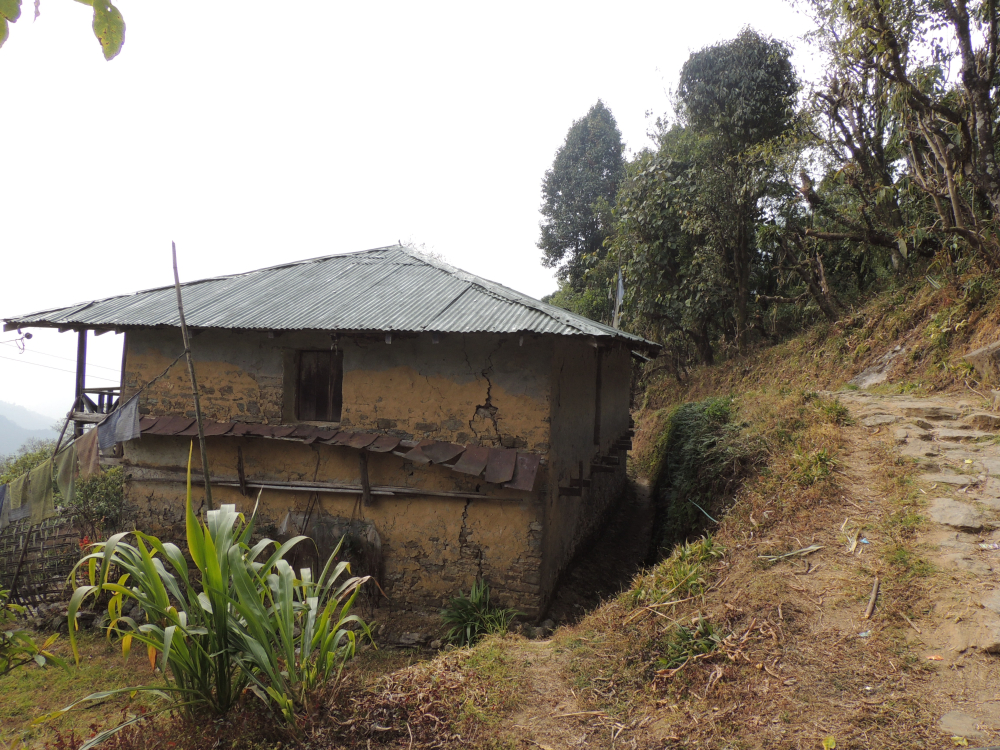
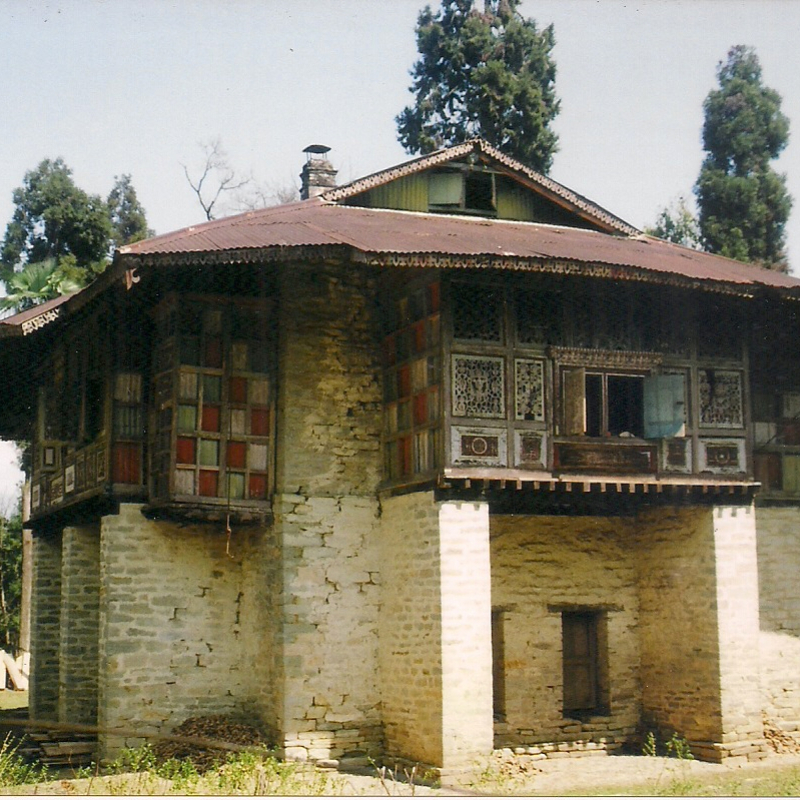
An old house made of mud, wood and ikra style at Yalli village. (Picture Credits: Martin Sada)
This is primarily how Gangtok transformed into the dense concrete agglomeration it is today, and how smaller towns in Sikkim are following suit. The old houses along MG Marg and the main bazaar area — timber and ikra structures that once defined Gangtok's streetscape — have largely disappeared or survive only in pockets. They stand as remnants of a pre-RCC era, testaments to a building tradition shaped by different materials and different economic realities.
Contemporary Practice and the Question of Continuity
Gangtok now has numerous practicing architects, and there are examples of thoughtful adaptations of vernacular traditions that respond to contemporary context. Ikra construction is also seeing readaptation in some private residences, where it is used as wall infill instead of brick walls, suggesting that older building typologies can find new applications within contemporary construction practices. Various communities are beginning to incorporate motifs from their cultural traditions into new buildings, though this remains an emerging rather than widespread phenomenon.
The question of how to move forward architecturally — whether one must look backward to traditional forms or embrace contemporary realities — remains contentious. There exists a tendency to romanticise the old and express shame about current building practices. Yet this perspective may miss the fundamental point: culture is not constant but perpetually evolving. What we build reflects who we are in a particular moment, shaped by available materials, economic constraints, technical knowledge, and practical needs.
When we think of culture and heritage, must they be synonymous with 'old'? The RCC buildings that dominate Gangtok's skyline may not conform to romanticised notions of Himalayan architecture, but they tell a story — of a small kingdom finding its place in the world, of a people adapting to sudden change of massive proportions, of material innovation reshaping possibilities. This is heritage too, even if it is only decades old, even if it does not fit conventional aesthetic expectations. The challenge is not to reject the RCC vernacular that has emerged but to recognise it as a legitimate expression of contemporary life while also encouraging thoughtful, context-sensitive design moving forward.
Embracing the Vernacular of Change
The evolution of Gangtok's built heritage reveals multiple, sometimes contradictory narratives. Rather than privileging one narrative over another, perhaps the task is to recognise that Gangtok's architectural heritage encompasses all of the varied stories and styles: the monastery renovations with their hybrid materials, the matchbox RCC buildings born of pragmatic necessity, the elite experiments in defining cultural identity, and the contemporary attempts at reinterpreting vernacular traditions. Heritage need not always be aesthetically pleasing or conform to preconceived notions of authenticity. Sometimes it is simply what is — the accumulated material record of how people have lived, adapted, and built in response to changing circumstances.
What has happened cannot be undone, and there is little value in shying away from the RCC vernacular that defines contemporary Gangtok. The question is not whether the old was better or whether we should be ashamed of the present. The question is: what do we do now? How does architectural practice move forward with awareness of context, sustainability, history, and the continued evolution of cultural sensibilities? People will develop sensibilities according to the times they inhabit. The story of Gangtok's built environment is ultimately a story of constant flux — a reminder that tradition itself is not static but perpetually remade through the needs, choices and creativities of each generation. The task is to build with intention and care, understanding that what we create today will be tomorrow's heritage, regardless of whether it conforms to today's notions of tradition.
[i] Information on the etymology of belaiti and colonial architectural influences in Darjeeling is based on local knowledge and oral traditions documented through conversations with Kailash Pradhan, Gangtok, 2025.
[ii] Information on early RCC buildings in Gangtok, including the Elephant Mansion, Tenzing and Tenzing, Bakers Cafe building, Hotel Society, and the building now housing Craft Theory, is based on conversations with Kailash Pradhan and Upendra Gurung, supplemented by accounts from long-time residents of Gangtok, 2025.
[iii] Information on the standardised RCC building template (column and beam dimensions, cantilevers, hoods, grid spacing) is based on the author's direct observation and analysis of existing structures, supplemented by conversations with Kailash Pradhan, Upendra Gurung, and practicing engineers in Gangtok, 2025.
[iv] Information on the municipal body distributing sites in Gangtok during the late 1980s and the subsequent increase in residential RCC construction during the 1990s and early 2000s is based on conversations with Upendra Gurung and long-time residents who experienced this period of urban expansion, Gangtok, 2025.
Bibliography
‘Namgyal Institute of Tibetology, About Us.’ Accessed December 23, 2024. https://namgyalinstitutesikkim.org.
Oliver, Paul. Dwellings: The Vernacular House World Wide. London: Phaidon, 2003.
Shetye, Archit. ‘This Satyajit Ray Documentary on Sikkim Was Banned for 39 Years.’ Homegrown, January 28, 2021. Accessed February 26, 2026. https://homegrown.co.in/homegrown-voices/this-satyajit-ray-documentary-on-sikkim-was-banned-for-39-years.
Weise, Kai. ‘The Sikkim Style.’ The Himalayan Times, January 9, 2016. Accessed February 26, 2026. https://thehimalayantimes.com/lifestyle/the-sikkim-style.
This essay has been created as part of Sahapedia's My City My Heritage project, supported by the InterGlobe Foundation (IGF).