
Each evening, as one walks along the quieter streets and footpaths crossing through the neighbourhoods of Gangtok, we can smell an earthy smoke and pungent kitchen flavours. Rising from the household choeshum or shrine, this is the burning sang or incense, a sensory experience that possibly elicits varying responses. It is a grounding fragrance for me, invoking nostalgia and a sense of being at home. Such olfactory experiences are part of the spiritual dimension of the region’s culture and relates to the Buddhist cosmological conception of Sikkim as a place where humans, deities, and spirits occupy the space together. This impalpable experience, of smelling sang as one walks through Gangtok, is the manifestation of centuries of living ritual.
Incense is a part of the religious and ritualistic lives of people all over the Indian sub-continent and the world. In Sikkimese and Tibetan Buddhist contexts, this practice, at the core, is rooted in the idea of purification and an appeasement to higher or spiritual beings that reside side-by-side with humans. The smoke from the sang, though formless, acts almost as a bridge transcending between different realms.
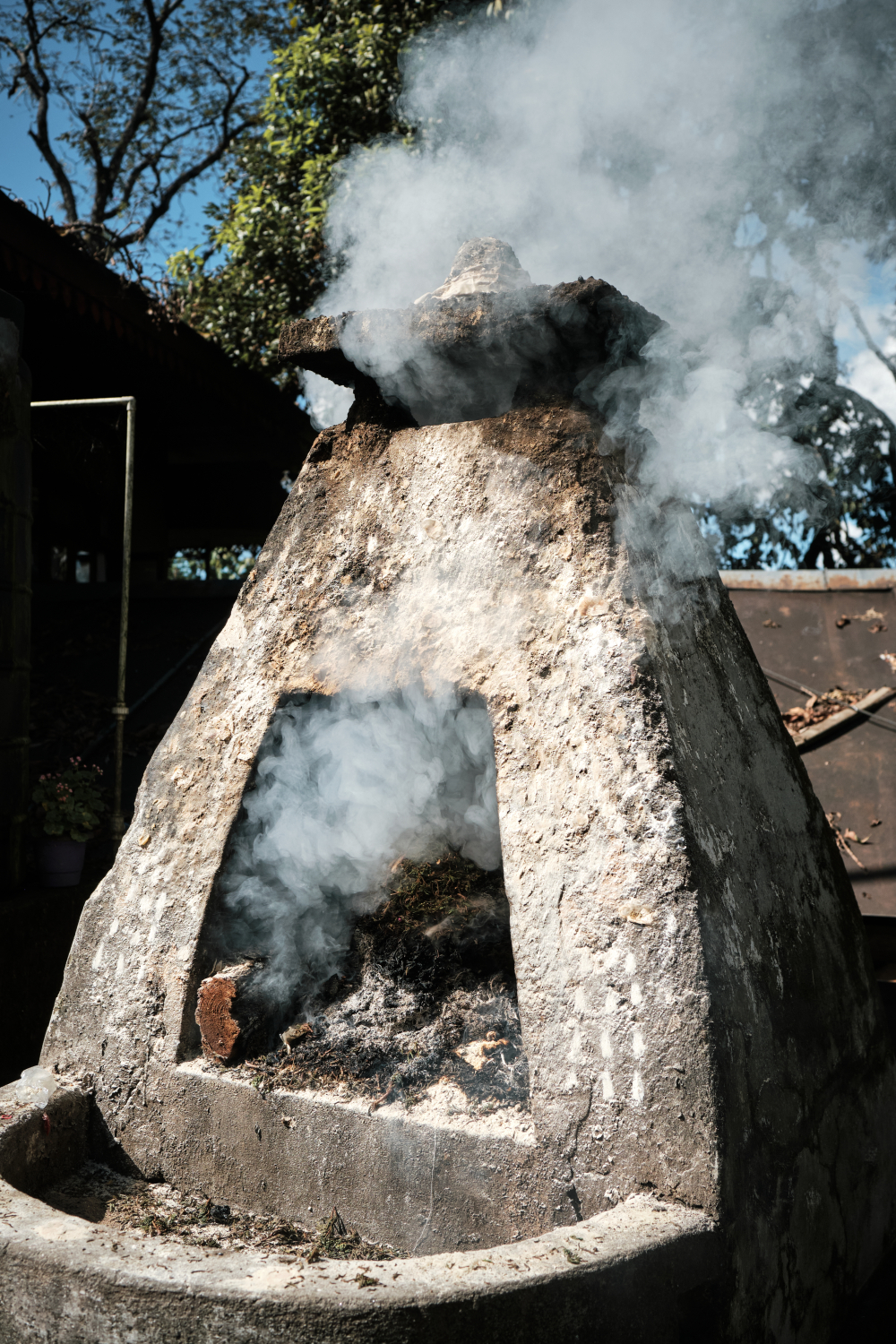
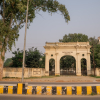
A sangbum made of stone at Enchey Gompa in Gangtok. (Picture Credits: Abhishek Anil)
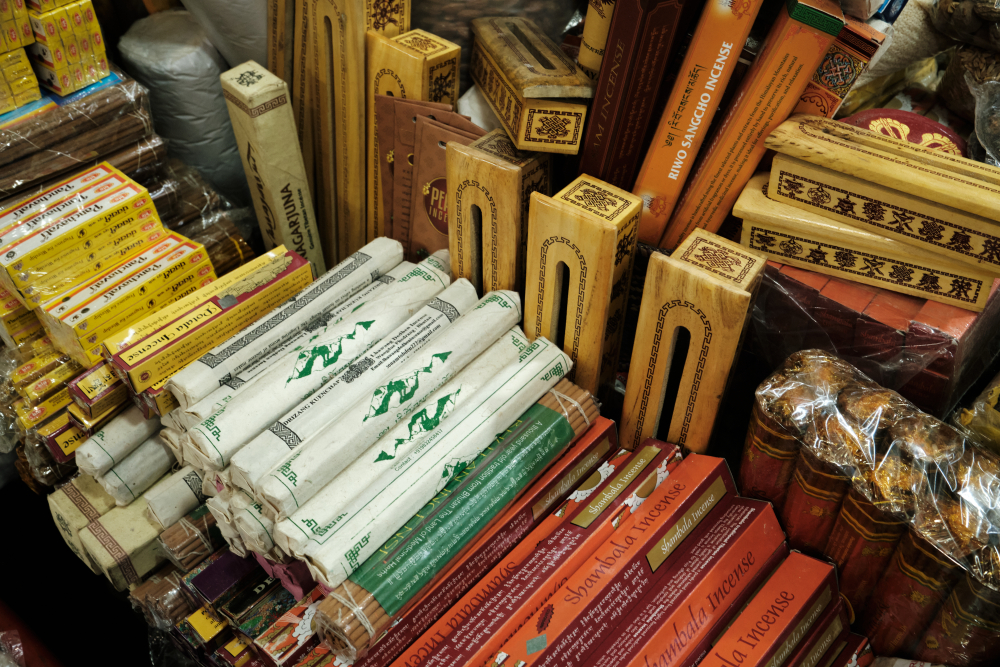
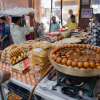
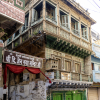
A shop in Lall Bazar selling Incense, Sang and Incense burners. (Picture Credits: Abhishek Anil)
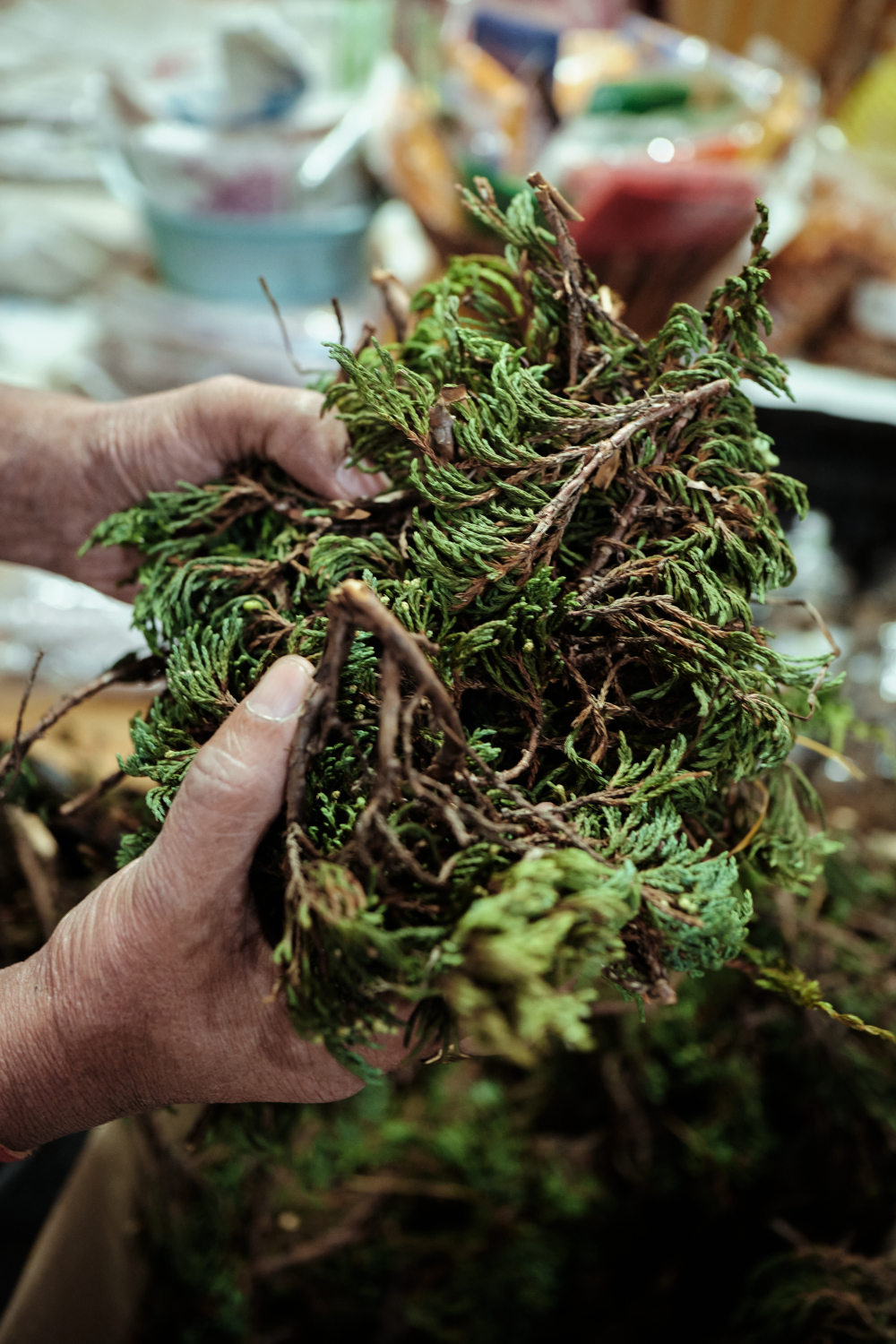
Dried Juniper and Pine tree leaves, colloquially called sang for sale in Lall Bazaar. (Picture Credits: Abhishek Anil)
In Sikkimese society, particularly in Buddhist families, incense-burning rituals form a part of the everyday life of people. This can range from the burning of the incense sticks to the burning of Juniper and Pine leaves to the burning of a combination of different ingredients ritually at the gompas (monasteries) in the sangbum (conical structure for burning sang) or in smaller metallic or clay containers at home. All over Gangtok markets, we may see incense in different forms, such as organic incense sticks, the leaves and branches of the pine and juniper tree, or even powdered versions, available for sale. If you ask a shop-keeper, the dried pine and juniper branches and leaves are almost always sourced from Lachung and Lachen valley, where these trees are found in abundance; the incense sticks, meanwhile, generally come from monastery-based production units in Sikkim or from neighbouring places such as Kalimpong, Bhutan, Darjeeling, and more. Alongside are also sold incense burners made of metal, wood, or clay, for those seeking to burn the incense in more private quarters.
I recall my grandfather religiously taking some coal from the burning chula (Earthen fireplace or stove) of the house every evening to light up the leaves of the sang to offer it at the altar. Generally, the entire house is aired with this smoke. Lamas (monks) in the monasteries and people in domestic households commonly accompany fragrant smoke-offering rituals with the recitation of mantras, for meditation, as well as for the invocation of protective deities, Buddhas, and forces associated with the natural environment. Some households burn loose leaves or other plant-based substances on heated charcoal in small containers: all household altars usually include a container activated with charcoal, in which incense sticks or leaves are placed, allowing the scent to disperse gradually throughout the space.
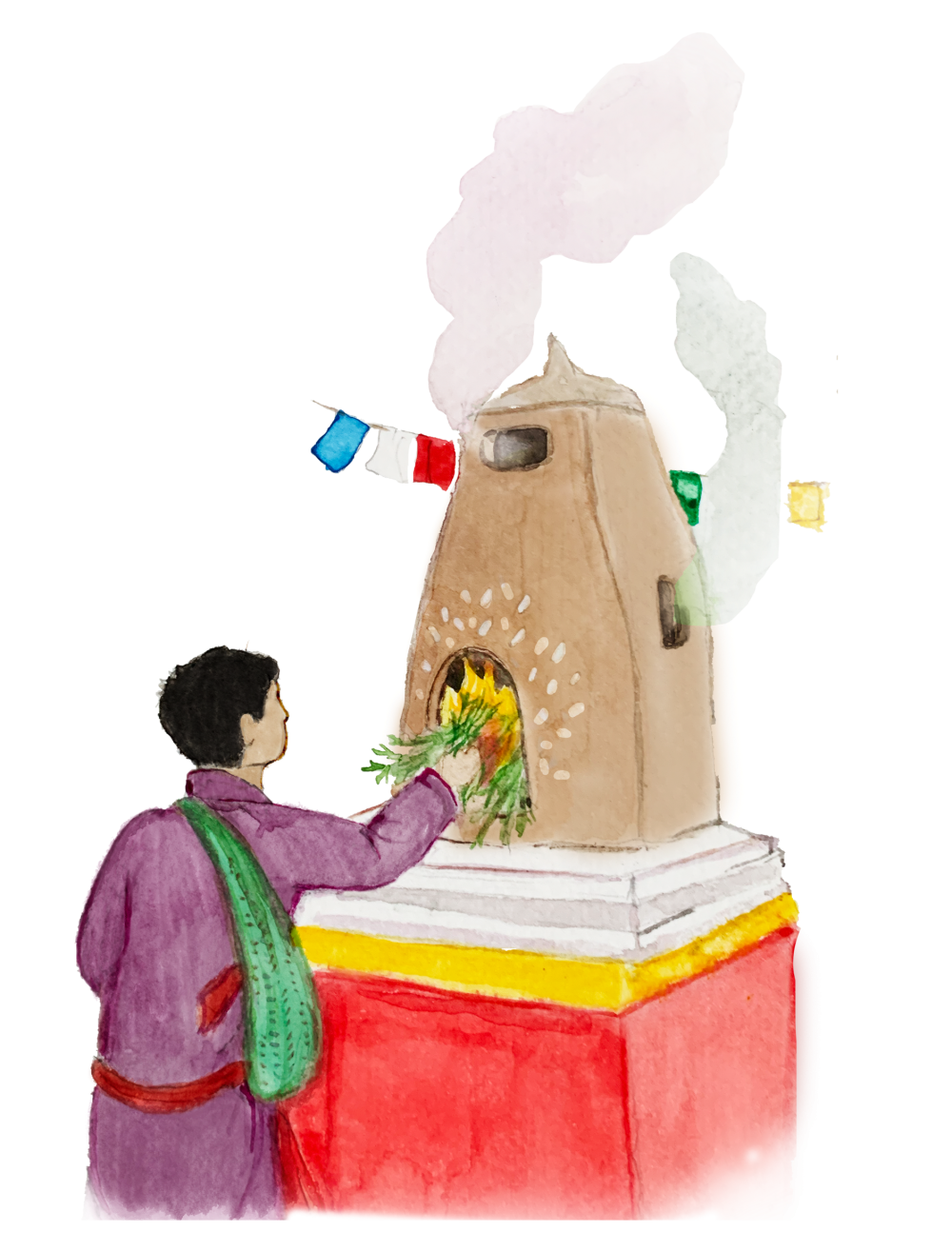
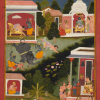
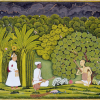
Sang offering. (Illustration Credits: Jisha Unnikrishnan)
The History of Sang
Sang (Bsang: Tibetan origin), though used colloquially to describe the dried juniper and pine tree leaves that are burned for their aroma, is also the term for a ritual linked with Buddhism in Sikkim. But its practice can be traced to native Bon religious/spiritual Tibetan practices of offering fragrant leaves for purification and appeasement to Gods, prior to the spread of Buddhism in the region. Solomon George FitzHerbert, scholar of Tibetan studies notes that in Buddhism, the rite of sang is also understood as following the Indic tradition of burning incense as a fragrant offering to the Buddhas and Bodhisattvas. We may see the meeting of these rituals and material traditions as syncretic adaptations that eventually shape our culture.
This practice, though common across regions in the Asian and Himalayan belt, holds a special weight as it is tied very closely to how Sikkim is conceptualised or imagined through the Buddhist lens. Believed to be one of the most sacred places on the Earth, Sikkim is widely regarded as a land inhabited by lamas, guardian deities, dakini and daka (sacred beings that inhabit natural landscapes), and peaceful and wrathful deities. Kalzang Dorjee Bhutia (2021), a research scholar, comprehensively explains the practice of Riwo Sangcho, the sang-offering ritual and the title of the text that lays out instructions for how the incense offerings are to be made. Rooted in the belief of restoring harmony and balance, the sang facilitates a connection between transdimensional beings. This is emphasized through the legend of the Lhatsun Namkhai Jikme, a revered Tibetan Buddhist teacher who played an important role in establishing Sikkim Dzogchen, the fundamental teaching of Buddhism, believed to have unveiled the terma (hidden teachings or treasures) of Riwo Sangcho, or Mountain Smoke Offering, to “open the hidden land” of Sikkim by calming the deities. He is credited to have disseminated this ritual around 1646, with Kyapje Dudjon Rinpoche adding verses, openings, and prayers in the later centuries to the text called the Riwo Sangcho. Hence, the text, albeit a short one, exists to guide people on how to conduct this ritual smoke offering. Bhutia notes that there are 108 ingredients that are prepared for this offering. In the contemporary context, these rituals have been performed at disaster sites such as landslides, increasing due to developmental projects, or at times of crisis such as the COVID-19 pandemic, as well as on significant dates of the Tibetan Lunar Calendar (Bhutia 2021).
Yet rituals such as Riwo Sancho are elaborate and take resources to perform, as well as requiring community effort and extensive ecological knowledge to collect ingredients. When we visited an incense factory in Tashiding, Sangay, who has been running the factory for eight years, showed me a pack of stick incense and told me that this is the special Riwo Sangcho incense that has been blessed by lamas. This repackaging of the centuries-old ritual into incense sticks is suggestive of the ways in which these older practices persist through re-interpretation and adaptation.
The Making of Incense Today
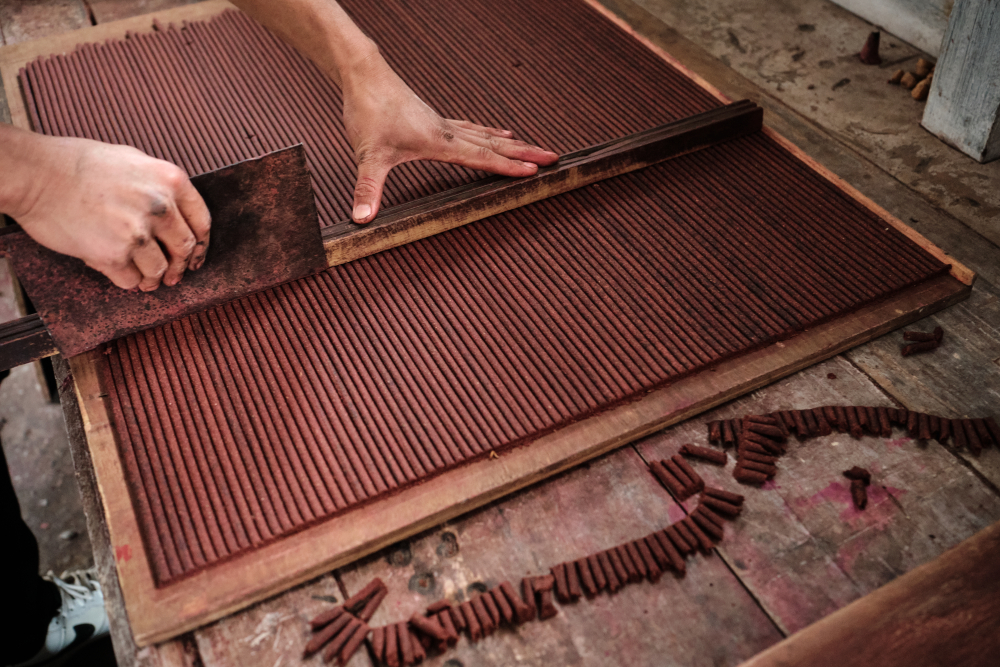
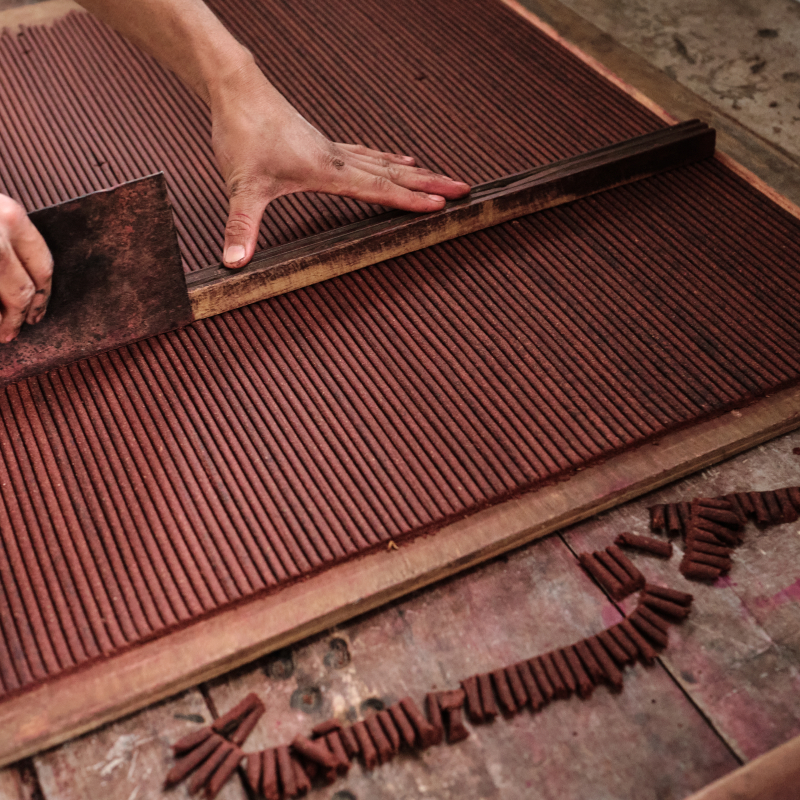
Cutting of rolled incense sticks. (Picture Credits: Abhishek Anil)
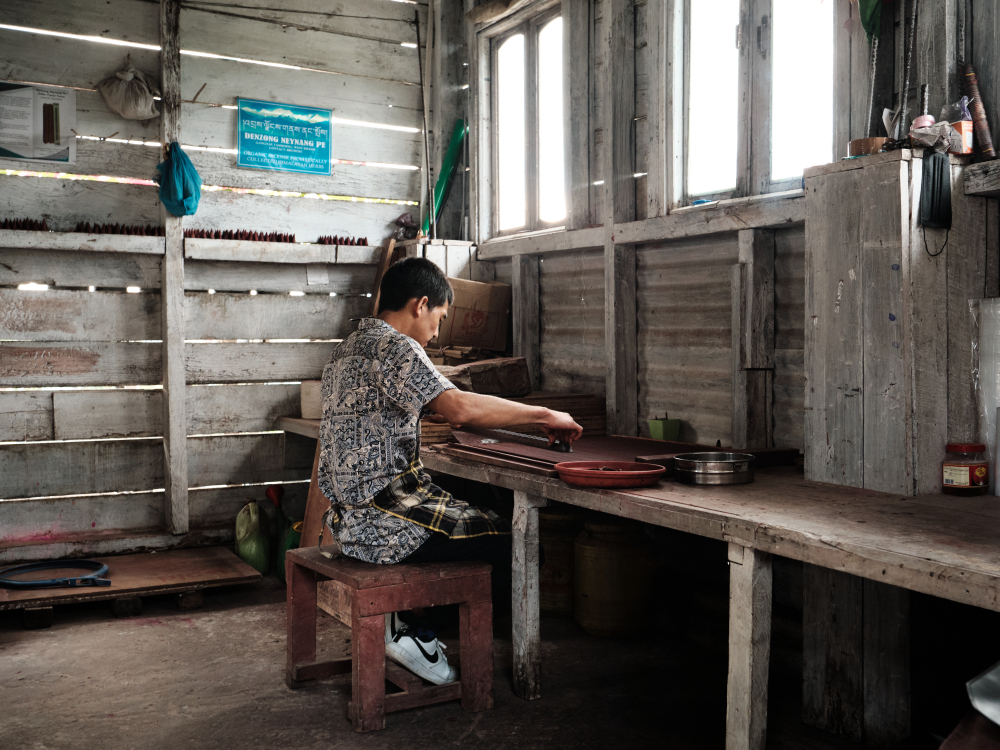
Rolling and shaping of incense sticks evenly. (Picture Credits: Abhishek Anil)
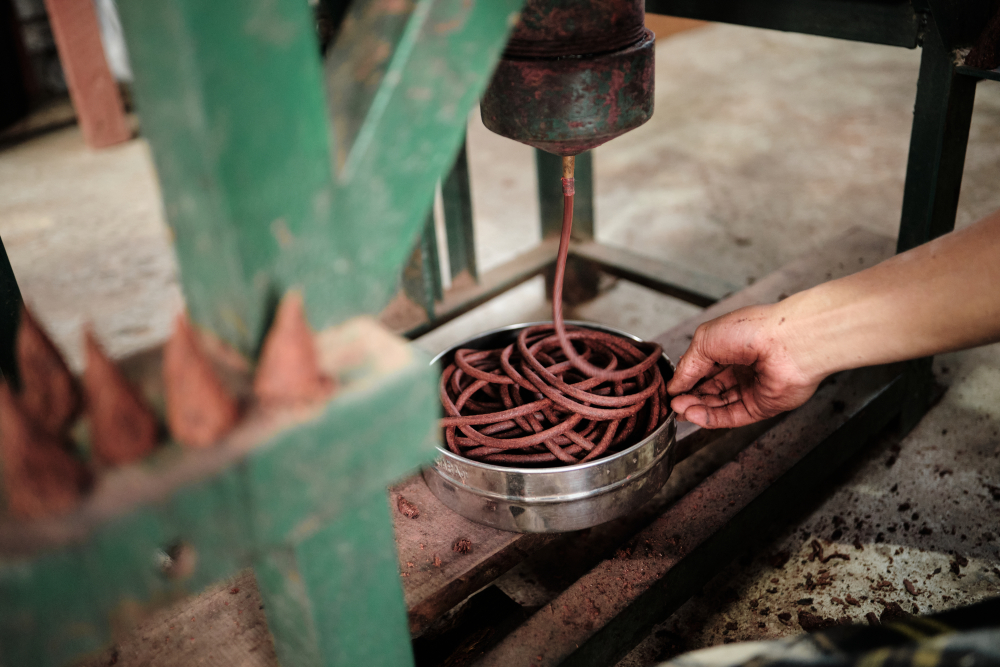
The process of shaping the mixture of the incense into string like shapes at Denzong Neynang Pe factory in Tashiding, West Sikkim. (Picture Credits: Abhishek Anil)
The incense factory in Tashiding, is located in the Gyalshing district of West Sikkim, a small town that can easily be traversed on foot in a single loop, markedly quieter and even smaller than MG Marg in Gangtok. When we arrived, Sangay expressed a confused delight and amusement as to why we had travelled nearly four hours from Gangtok to visit his “factory.” He explains that the term often creates expectations of something large and industrial for visitors, but his production unit occupies the terrace of a rented house a short distance from his village of Gyangap. Here, he lives with his family downstairs and runs the factory. According to him, this venture has provided a stable livelihood, supporting not only himself but also four employees, proving to be more sustainable and fulfilling than his previous work as a contractor taking government projects. He credits his brother, who is a lama, for the idea to start the factory.
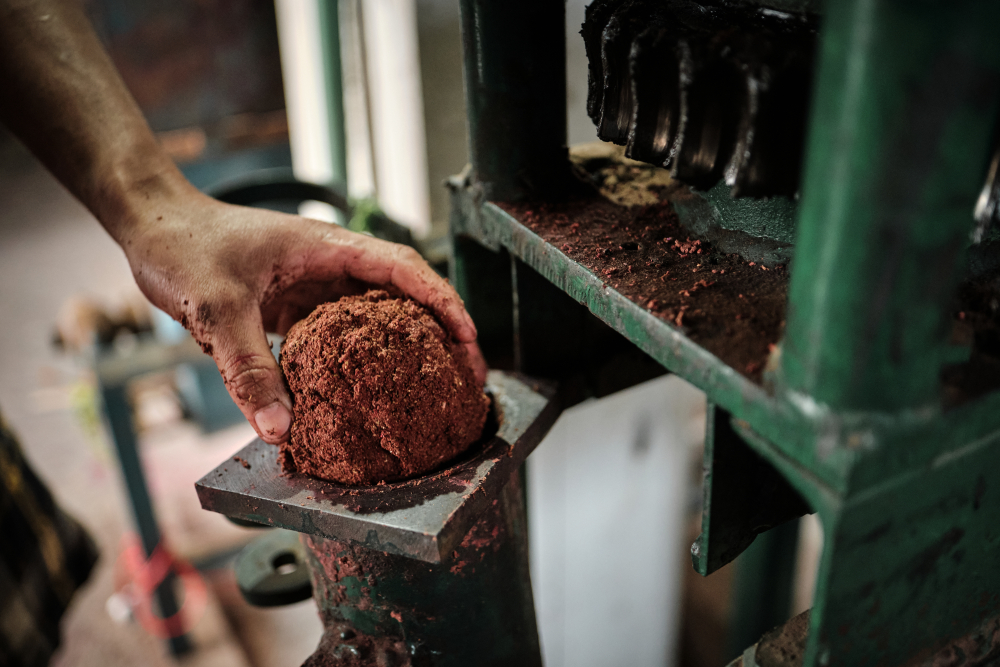
The mixture of incense ready to be shaped into strings. (Picture Credits: Abhishek Anil)
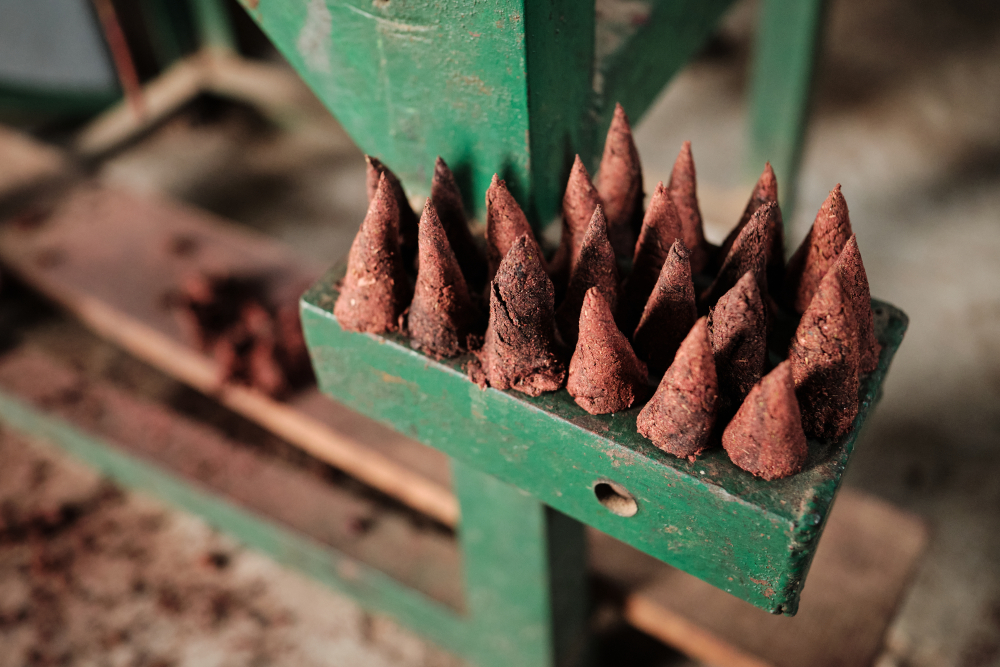
Conical variation of the incense. (Picture Credits: Abhishek Anil)
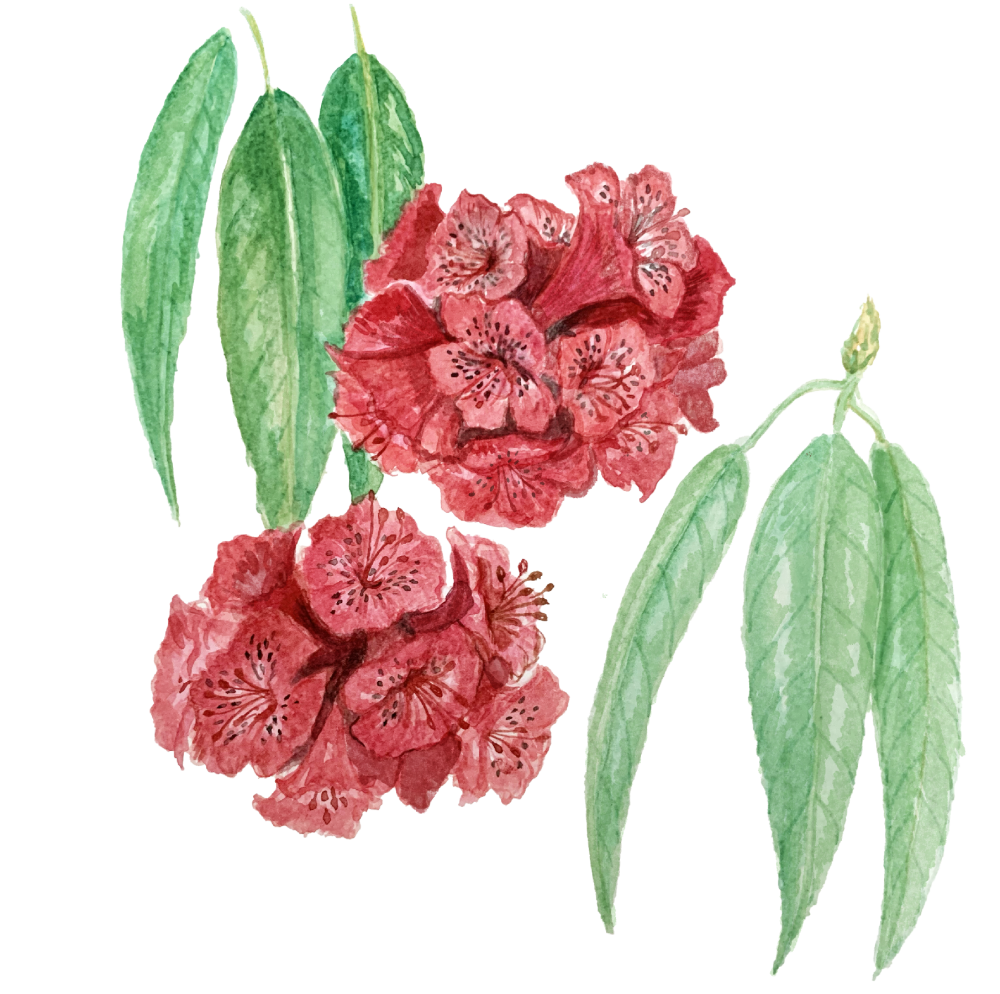
Rhododendron. (Illustration Credits: Jisha Unnikrishnan)
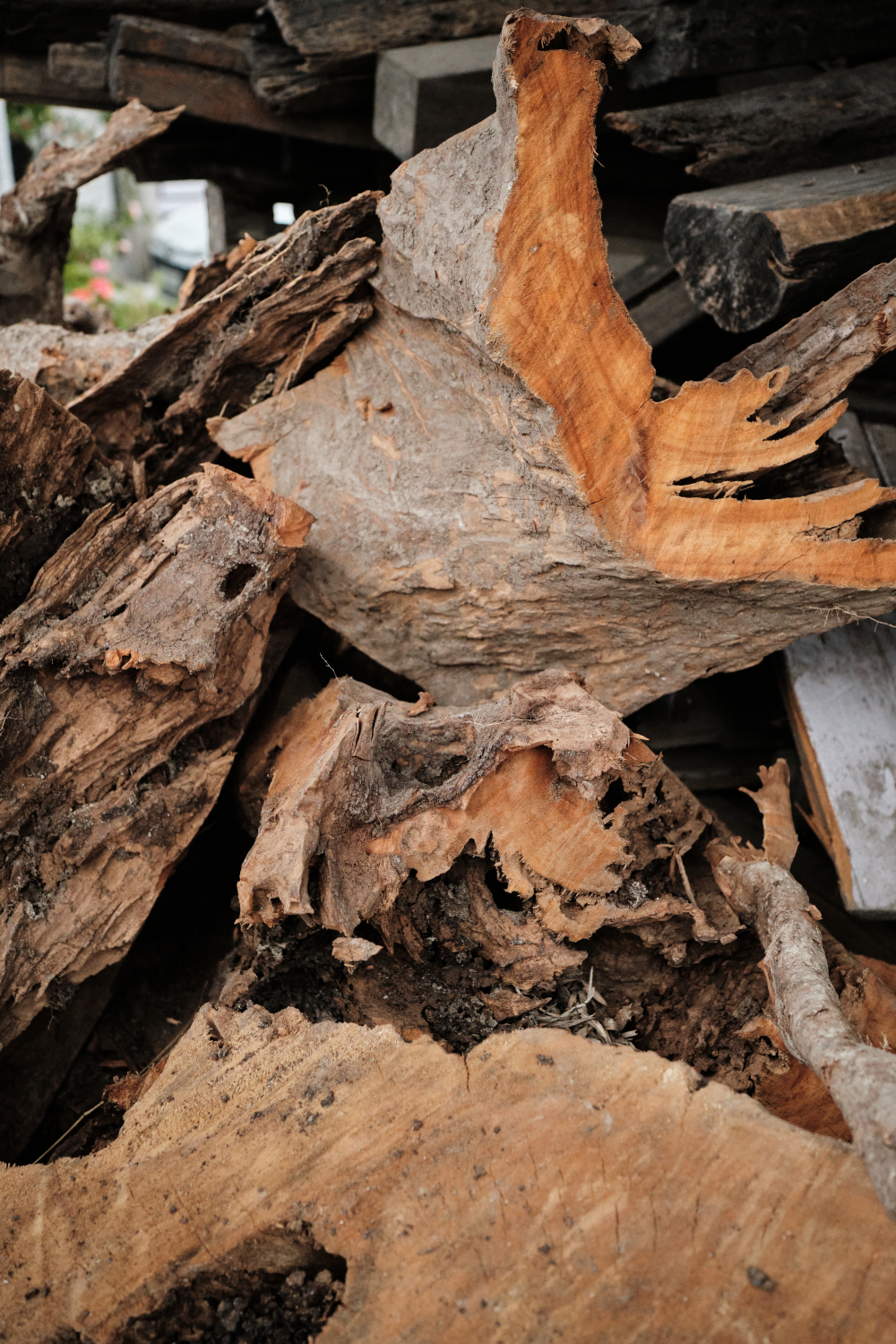
Root of the Malagiri or Archya tree, one of the raw ingredients used in the incense sticks. (Picture Credits: Abhishek Anil)
The production process in his factory involves a combination of manual labour and machine work. Equipment dedicated to grinding, mixing, and shaping the incense, along with human intervention, is essential to this process. This process was entirely manual before the arrival of machines, remarks Sangay. The ingredients in this particular incense are selected for their aromatic and ritual properties. In a brochure that he handed me, they are listed as saffron, white and black cardamom, clove, cinnamon, nutmeg, gokul (Commiphora wightii), jatamasi (a type of honeysuckle native to Himalayas), chirauta (Swertia chirata), agarwood (resinious wood of Aqualilaria trees, formed when it is infected by mold), titepathi (mugworth), saldhoop (made of Sal tree or Shorea robusta), white and red sandalwood, Himalayan pine leaves, rhododendron, the root of the malagiri (or archya) tree, and shuppa, a fine powder sourced from Bhutan. It takes time and seasonal planning to source and collect these ingredients. These materials are then dried, minced, and ground, before being mixed with wood resin, honey, jaggery, and sugar. Pine-wood dust, which is essential to this incense, is sourced from regions in Lachen, Lachung, and higher-altitudes, where these trees grow in abundance.
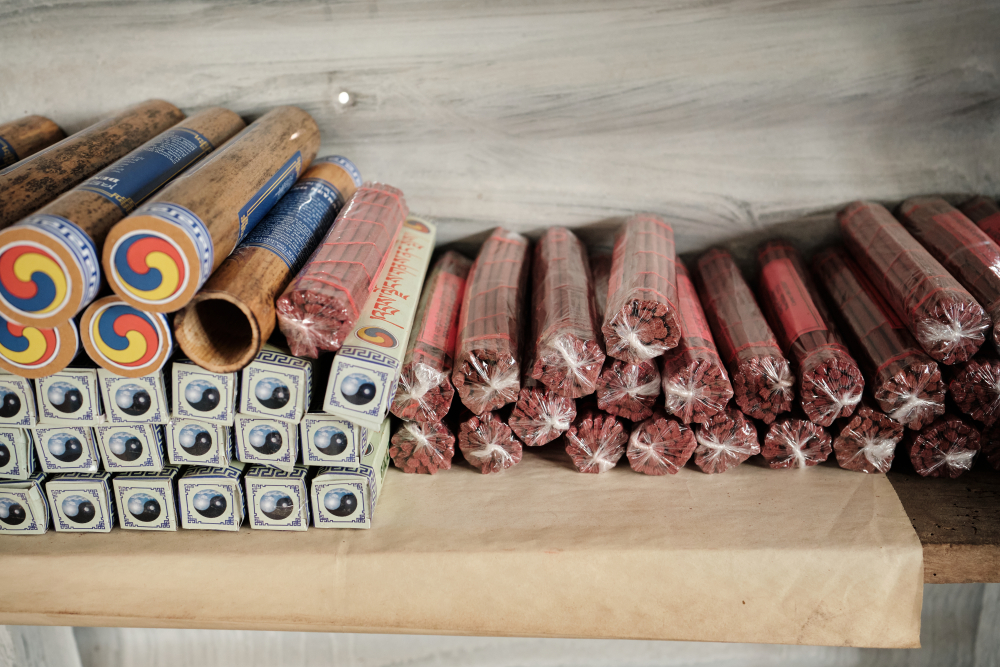
Final product kept on a rack at the Denzong Neynang Pe factory. (Picture Credits: Abhishek Anil)
The final product of the incense is branded as Denzong (another name for Sikkim) Neynag (Holy Place) Pe (Incense), which is also marketed as “Sikkim Organic Incense.” Sangay proudly shares testimonies of people who found these incense to be grounding and meditative.
Conclusion
Sang is a souvenir for tourists visiting Sikkim, but for those living outside, it is a reminder of home. Used as a tool of meditation or simply for the more utilitarian purpose of airing out odor or creating an earthy fragrance in our homes, the use of sang and incense has shifted from strictly ritualistic practice and integrated seamlessly into everyday lives in households and other spaces. Though sometimes largely removed from their ritualistic purpose, these traditions, unlike relics of the past, endure and take on different shapes and forms that keep changing and transforming. Rooted in ritual and reinterpreted as an ecological and cultural place-making practice that extends beyond its religious uses, the aroma of sang and incense shapes how Sikkim is experienced and remembered.
Bibliography
Bhutia, Kalzang Dorjee. ‘Purifying Multispecies Relations in the Valley of Abundance: The Riwo Sangchö Ritual as Environmental History and Ethics in Sikkim.’ MAVCOR Journal 5, no. 2 (2021). https://doi.org/10.22332/mav.ess.2021.1.
Bhutia, Neydup. ‘The Dissemination of Buddhism in Sikkim: A Drop of Ocean.’ Innovation: The Research Concept, Vol. 6, 1 (2021): 71-74.
FitzHerbert, Solomon George. ‘An Early Tibetan Gesar Sang Text.’ Archiv Orientální 84, no. 3 (2016): 467–526.
‘Riwo Sangchö – Tibetan Expert.’ Tibetan-Expert.org, 8 May 2025. Accessed 26 February 2026. https://tibetan-expert.org/riwo-sangcho.
This essay has been created as part of Sahapedia's My City My Heritage project, supported by the InterGlobe Foundation (IGF).