
Every city has localities where, if one tries hard enough, everything can be found. Tripuri is Patiala’s very own Magic Lamp. In August 2025, when my mother and I visited Tripuri to understand the ethnic footprint that its migrants left on the city, we were ecstatic to experience a sense of community that is otherwise fast-eroding. This is not to romanticise the haphazard urban expansion of Tripuri and the consequent civic problems: flooded streets in the monsoon, narrow gullies unsuitable for traffic, and an increasing law-and-order problem. Nevertheless, Kashmiri Gurdwara Road remains bustling as ever, Gol Gappa Chowk retains its world famous stature for street food, and the many Partition-displaced communities come together to support commercial activity in Tripuri.
In 1947, during Partition, a community of artisans from areas around Multan and Bahawalpur (historical cities in the southern Punjab province of Pakistan) moved to Patiala. This came about because of the friendship between Maharaja Yadavindra Singh, the last of the Patiala Maharajas before India’s independence and the dissolution of princely states, and the Nawab of Bahawalpur, Sadiq Mohammad Khan. Thus, some Sikhs and Hindus of Bahawalpur were escorted to the newly-carved borders and settled in refugee camps in the royal race-course — today’s Tripuri Town. Maharani Mohinder Kaur, whose farm in Hirabagh also became part of Tripuri, was the point of contact for the rehabilitation, logistics, and settlement of Partition refugees in Patiala.
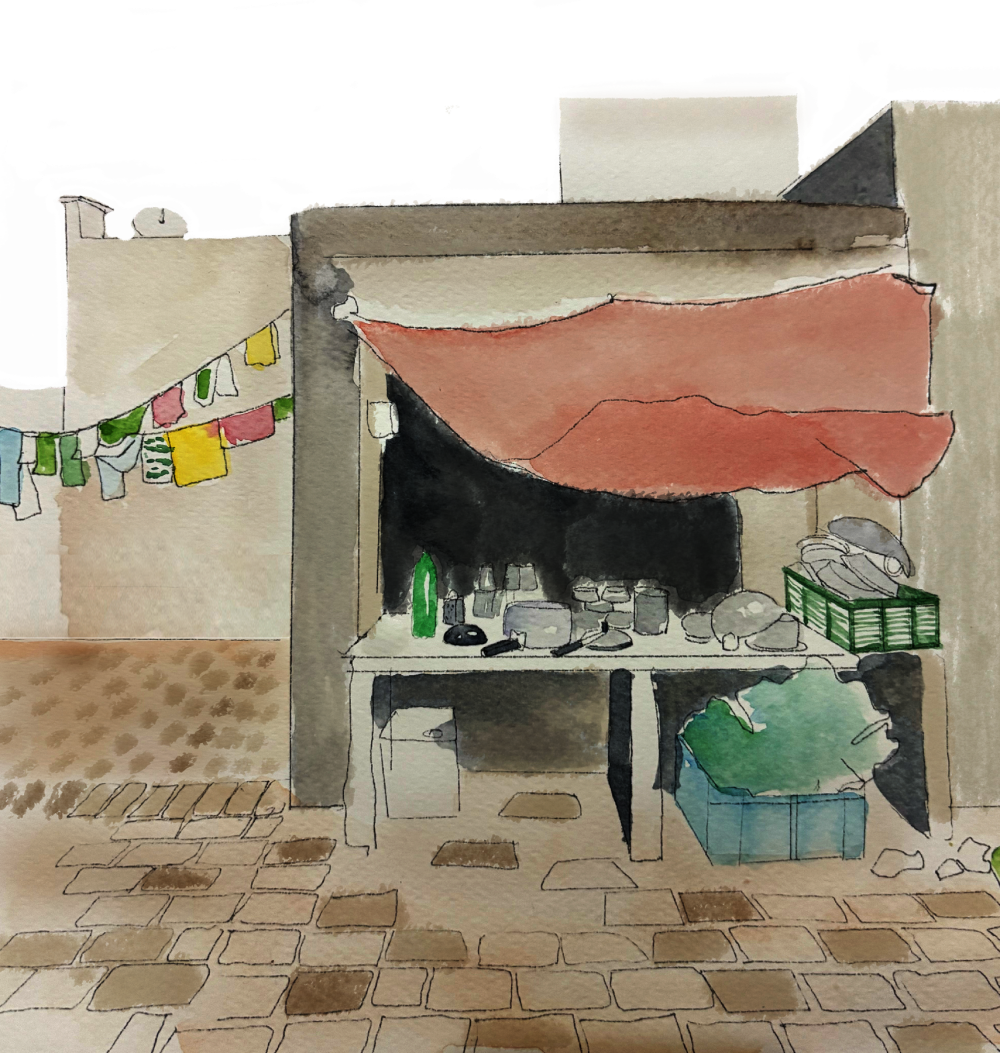
Lateral view of the few remaining original structures of the houses built in Tripuri Town in the 1950s. (Illustration Credits: Jisha Unnikrishnan)
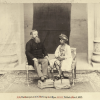
While driving towards Kashmiri Gurdwara Road, a friend’s father pointed out some old houses. These were the original structures built in the 1950s, when refugees were newly rehabilitated. Although people have demolished most buildings to accommodate changing architectural trends and expanding families, some continue to stand and are used by migrant labourers. One family kindly allowed some pictures of their quarters: the plot housed a single-story structure with a sunken front room to receive visitors, with little to no view of the inside rooms, an outhouse to the right, and a backyard with space to store wood and other materials.
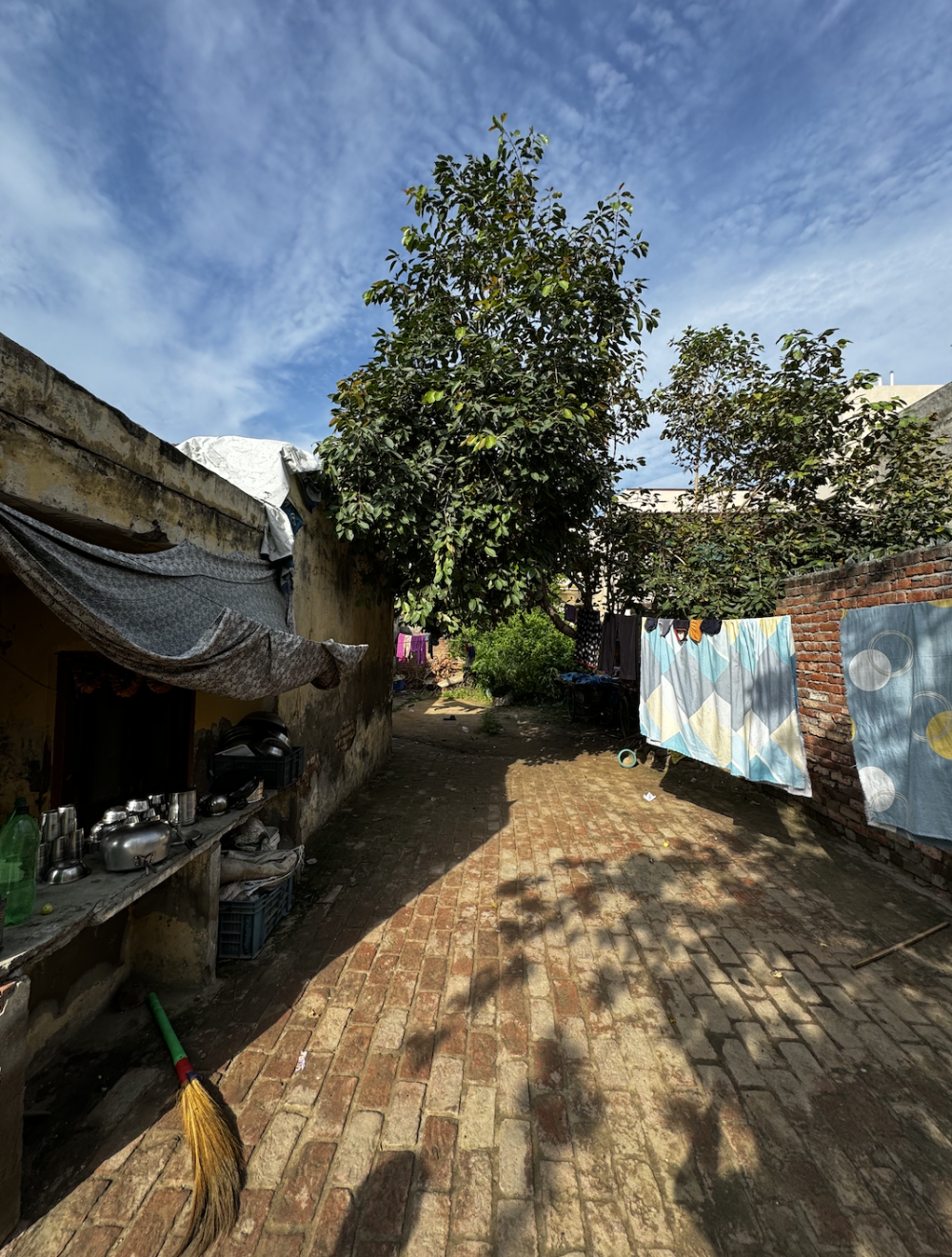
Veranda and porch spaces of the original structures. (Illustration Credits: Aalekh Dhaliwal)
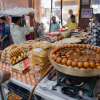
On our walk through the bylanes that open on Kashmiri Gurdwara Road, we stopped to chat with Ahuja, textile business owner and Indian cricketer Kanika Ahuja’s grandfather. He proudly asked me to Google his granddaughter, a local celebrity, and talked about accompanying her to cricket practices growing up. Ahuja himself is a treasure trove of stories, fishing in his drawer to locate a letter posted to his store with only ‘Gol Gappa Chowk’ in the address line, proving the lore of this world-famous chowk. Ahuja briefly explained the system using which plots were allocated to refugee families by PEPSU’s (Patiala and East Punjab States Union) Town Development Board, today renamed and headquartered in Rajpura. He reiterated what we had already sensed while walking through the gullies: that although it is cramped now and expansion is majorly illegal, Tripuri was one of the most well-planned residential areas of post-Partition India. It is on his advice that we ate some of the best gol gappe I have had in the eponymous chowk!

Gol gappe. (Illustration Credits: Jisha Unnikrishnan)
Kashmiri Gurdwara Road is also lined with stores selling phulkaris, Bahawalpuri crockery, all kinds of textiles, electronics, and everyday items. Post-Partition Patiala became a hub for phulkari (traditional embroidery) weaving, precisely because the community that settled here brought the artwork with them. Called Gulkari in Iran where it was first embroidered, Phulkari is a traditional embroidery of undivided Punjab worked using a counted darning stitch (phulkari tanka) from the reverse side of the fabric. Typically executed on handspun cloth with silk threads (pat), it features motifs such as butis (small floral forms), bagh (dense, all-over embroidery), chope (ceremonial borders), and vari-da-bagh (bridal coverings), often arranged in geometric patterns that reflect both everyday life and symbolic meanings.
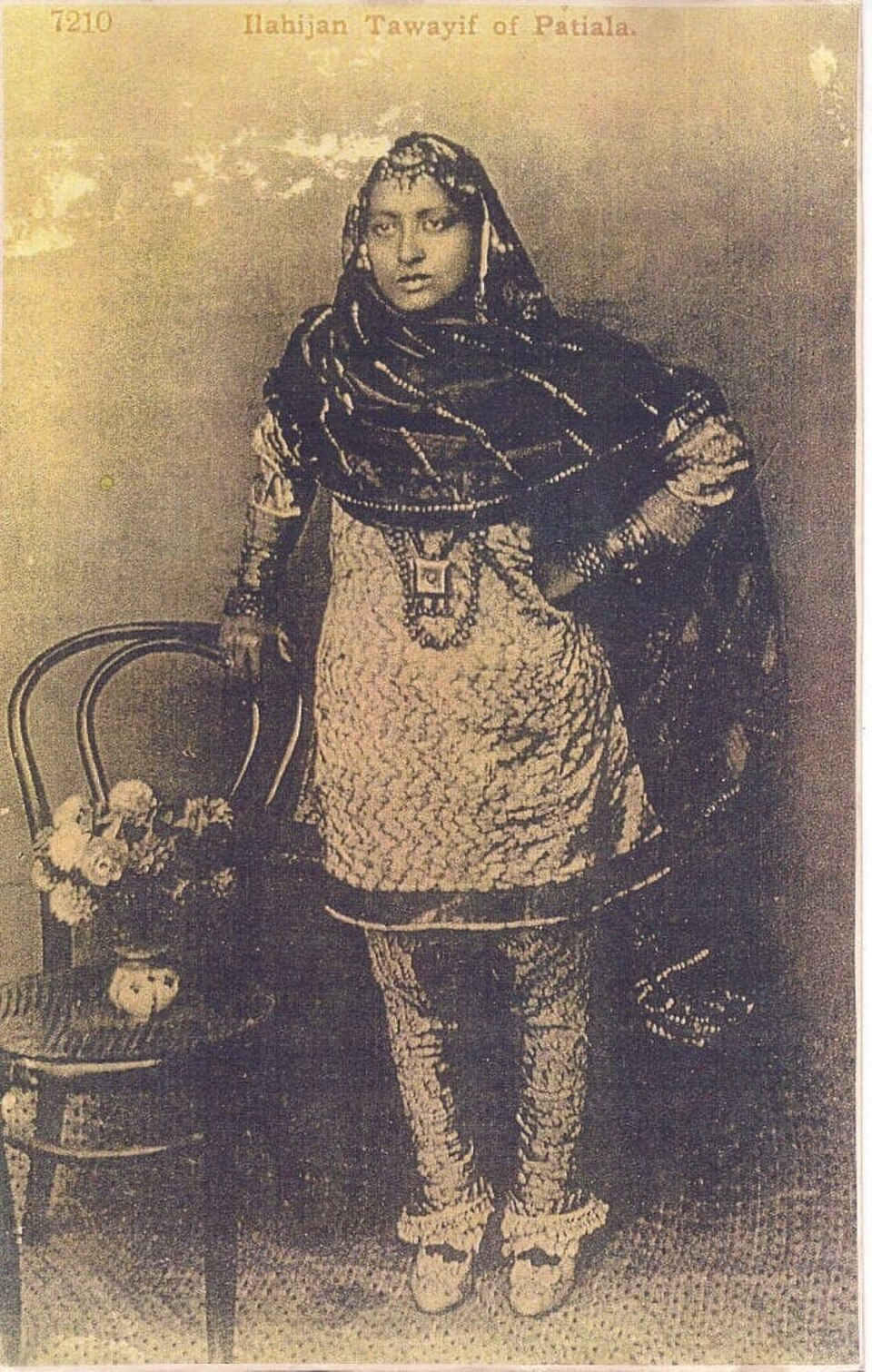
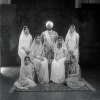
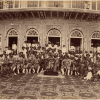
Photograph of a Patiala Punjabi woman (Ilahijan Tawayif) in phulkari, ca. 1900. (Picture Courtesy: Wikimedia Commons)
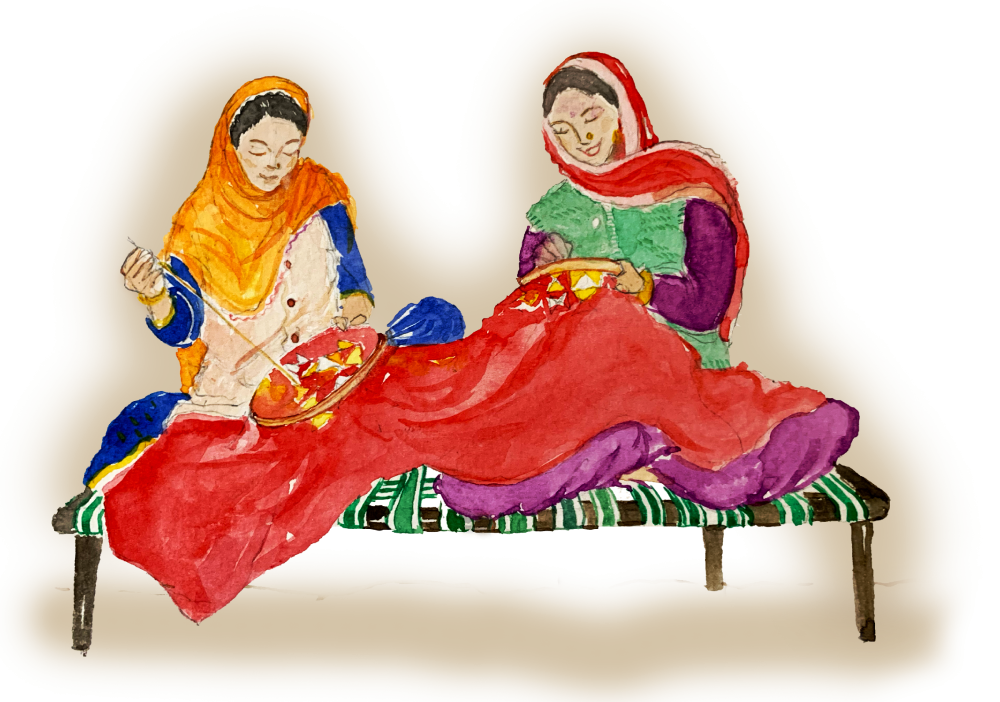
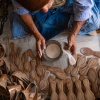
Women creating a phulkari piece. (Illustration Credits: Jisha Unnikrishnan)
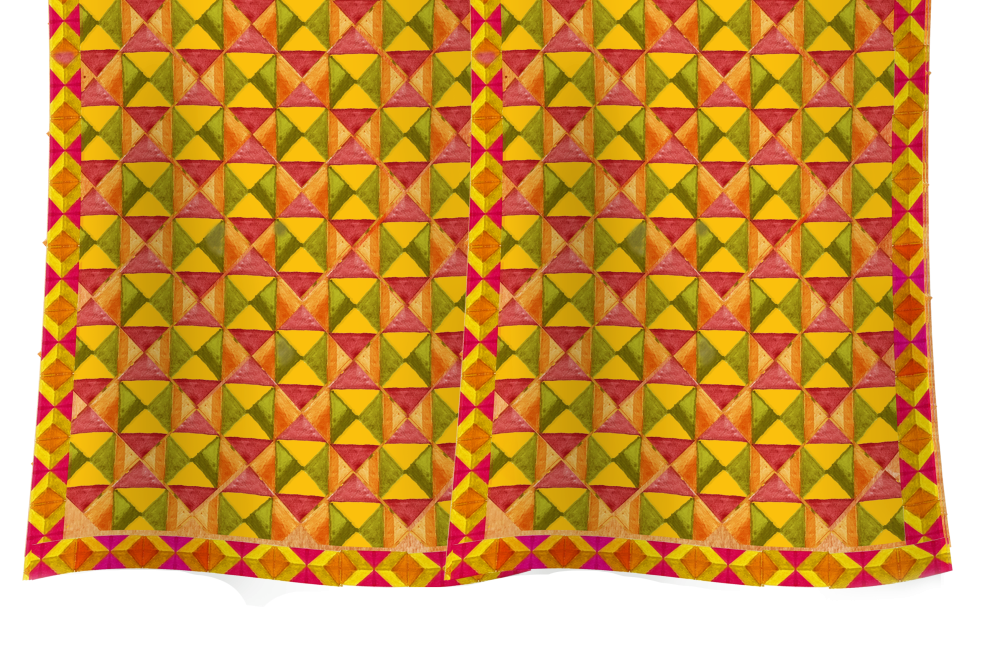
A bagh phulkari design. (Illustration Credits: Jisha Unnikrishnan)
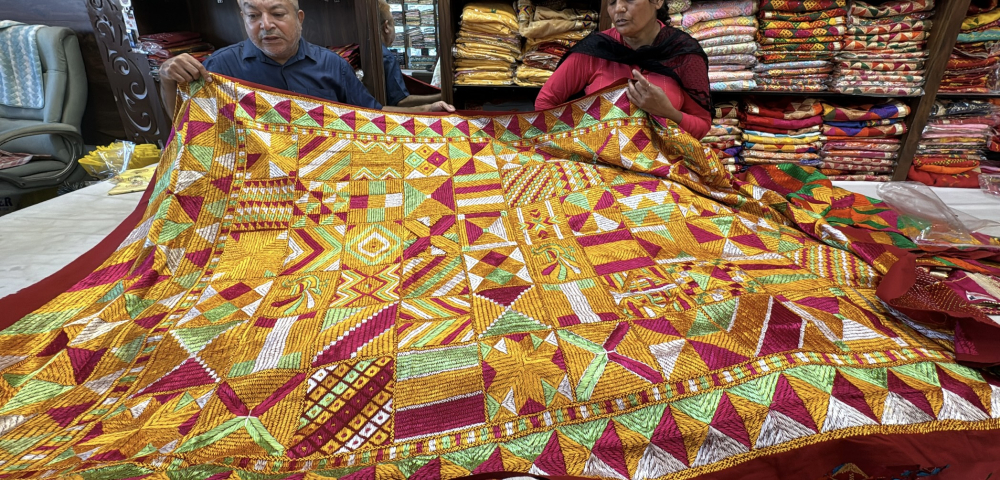
A bagh phulkari design that took four months to embroider. (Picture Credits: Aalekh Dhaliwal)
Although machine-made phulkari on synthetic fabrics have since made their way into Patiala’s bazaars, the original craft continues to survive due to various individuals. Foremost among them is handloom artist Dr Lajwanti Chabra, who was awarded the Padma Shri in 2021 for her work in reviving and retaining the craft by conducting workshops, exhibitions, and training, including at NIFT campuses across India. On a call with Lajwanti’s daughter last year, I learnt that they would be busy until at least March 2026; even while on call, she was at their workshop, preparing for upcoming exhibitions around the world.
On Kashmiri Gurudwara Road, Corner Dupatta Store is one of the bigger family stores, where Sonia patiently took us through many handmade designs. We got a masterclass in telling machine-made phulkaris apart from handmade ones, tried two elaborately embroidered baghs on khaddar cloth, and were even introduced to some of the store’s original designs of phulkari bedsheets and phone-bags.
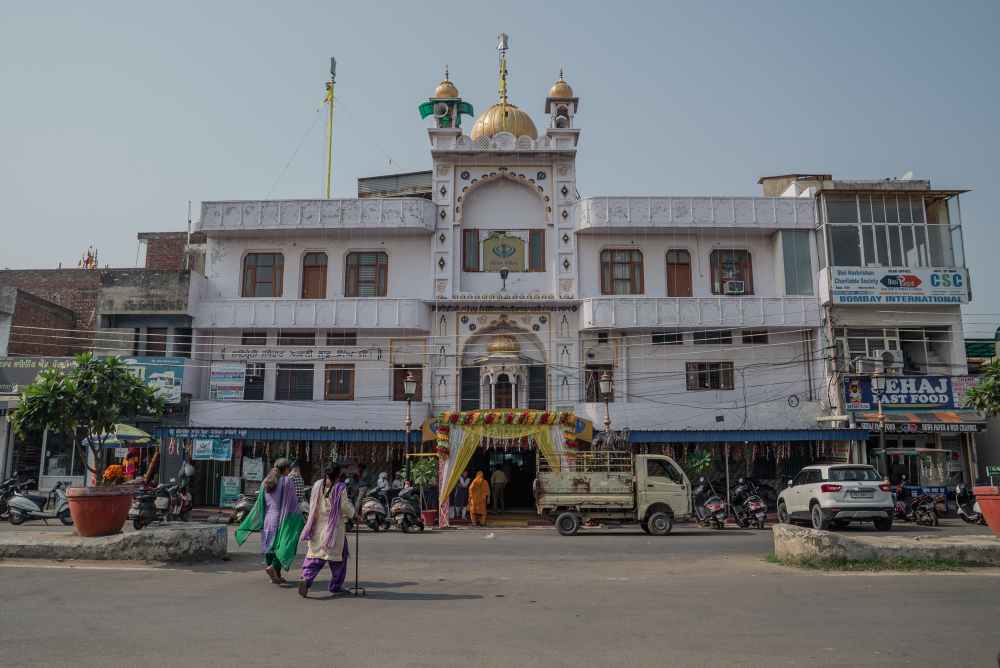
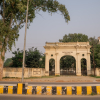
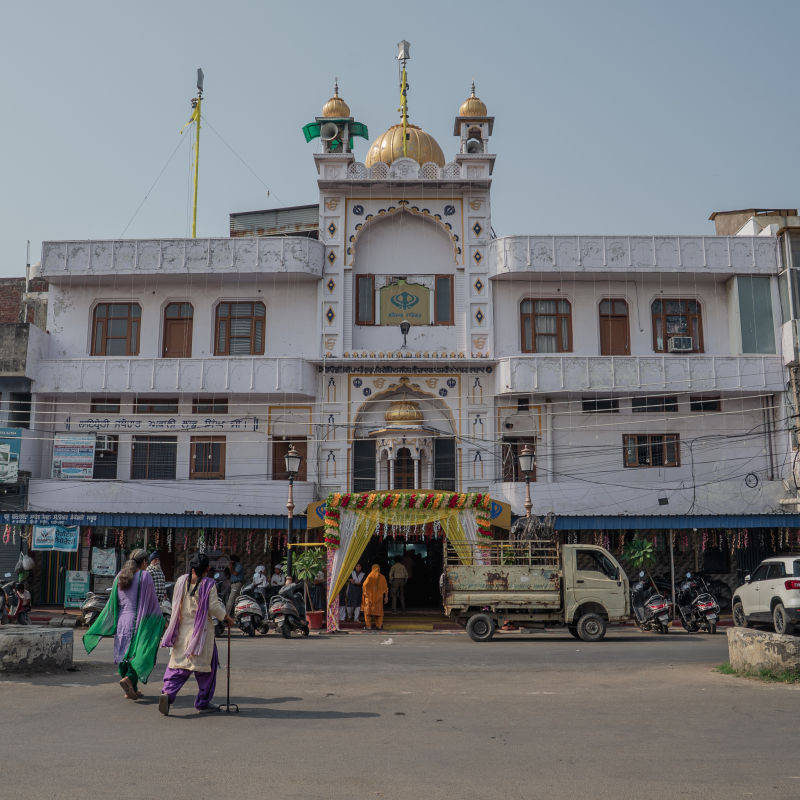
Kashmiri Gurdwara Road, the hub of commercial activity in Tripuri Town, takes its name from this Gurdwara. (Picture Credits: Meenal Upreti)
To end our evening in Tripuri, my mother and I made our way to Gurdwara Singh Sabha Muzaffarabad (Kashmiriyan), the gurdwara that lends its name to this main commercial artery of Tripuri. Needless to say, this reference to a city which is the capital of Pakistan-occupied Kashmir (PoK)/Azad Kashmir caught my eye. The gurdwara has a distinct golden dome — as do three other gurdwaras in Tripuri Town — and presents itself amidst a row of stores. The commemoration painted on the entrance can be translated to: “To remember the martyrs of 1947, Gurdwara Sri Guru Singh Sabha, by the Muzzafarabad community of Tripuri Town.”
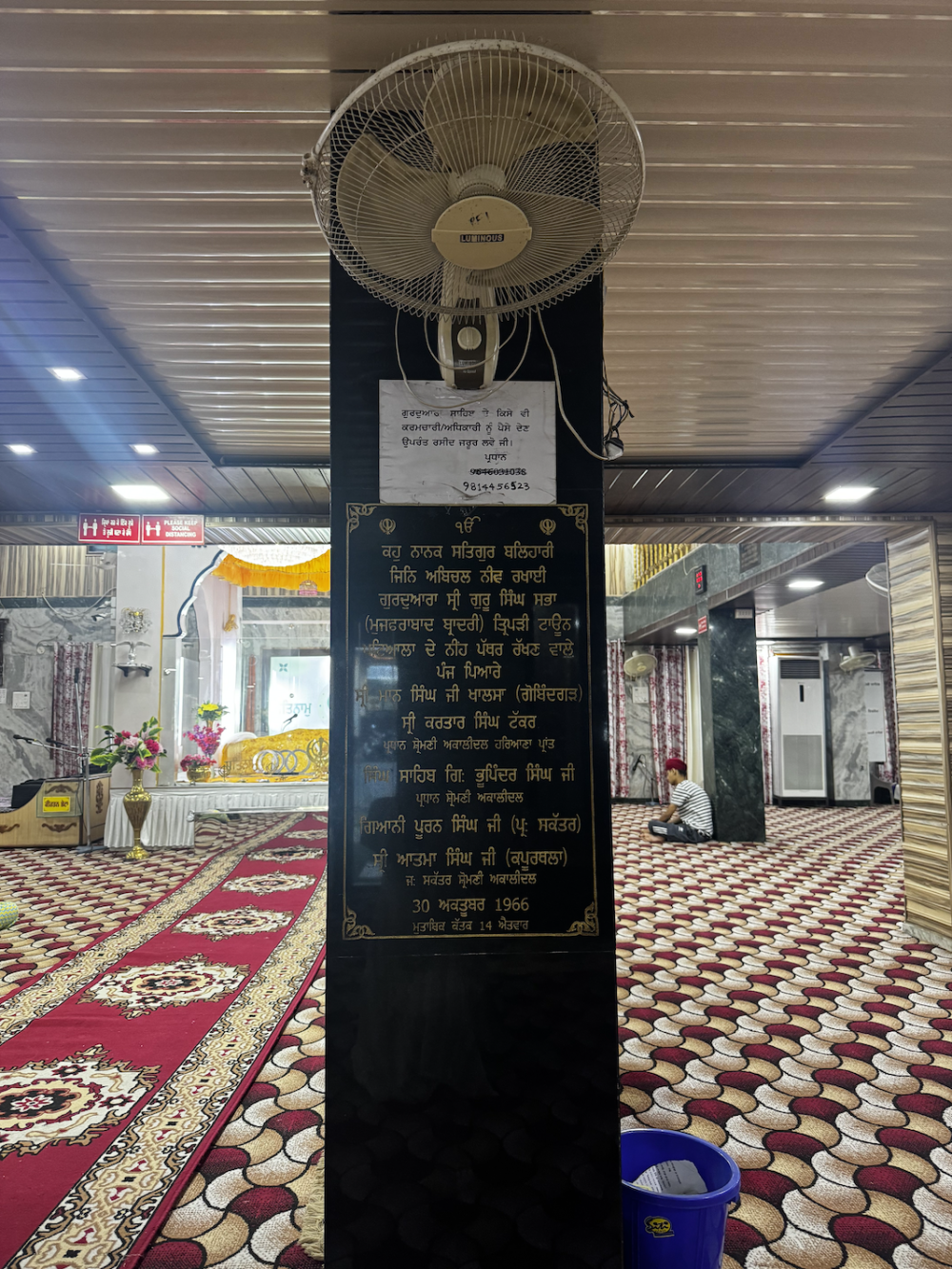
The commemoration plaque inside the Gurdwara Sahib premises. (Picture Credits: Aalekh Dhaliwal)
To further understand the significance of this gurdwara and its commemoration, one must go back in time. In October 1947, as scores of population were moving across the newly carved borders of India and Pakistan, hundreds of Pathan tribesmen were hired as mercenaries to run amok in Kashmir, a princely state whose fate had remained undecided until that point. They massacred people in Muzaffarabad and left the Sikh community of Muzzafarabad displaced. They moved multiple times until they finally arrived and settled in Tripuri in the 1950s.
Through conversations with a few sewadars (volunteers) of the gurdwara, I know that all the funds for the founding of the gurudwara in October 1966 were collected by the refugee community: they were neither aided by the state or central governments, nor patronised by the Maharaja and his family. Although the gurdwara has now been brought under the Shiromani Gurdwara Parbandhak Committee (SGPC) mandate, which manages the upkeep of gurudwaras, this has not brought about any material changes for this gurdwara. Today, these families come together in times of need, host events in commemoration of their experiences, and have even established a public library for children to use.
As my mother and I exited, young children were coming together for their evening kirtan (devotional-prayer songs) practice, bringing their harmoniums and tablas out from the storage space. We were informed that a group of children had hosted an hour-long kirtan for the sangat (congregation of Sikhs, usually religious) a few weeks ago. They host such kirtans often and people from near and far congregate to encourage the young participants.
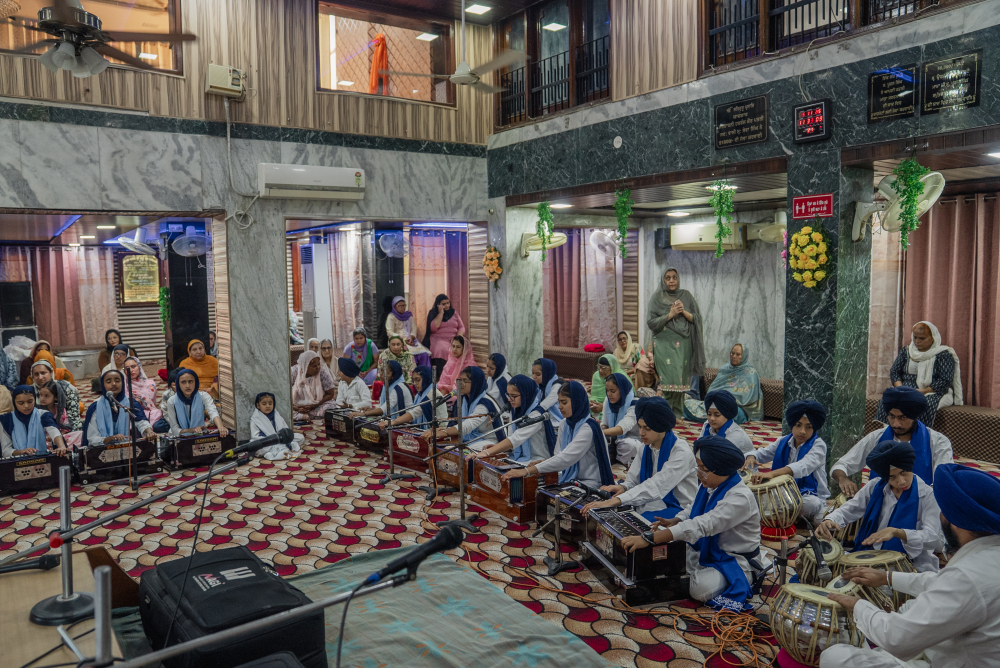
A kirtan congregation led by children. (Picture Credits: Meenal Upreti)
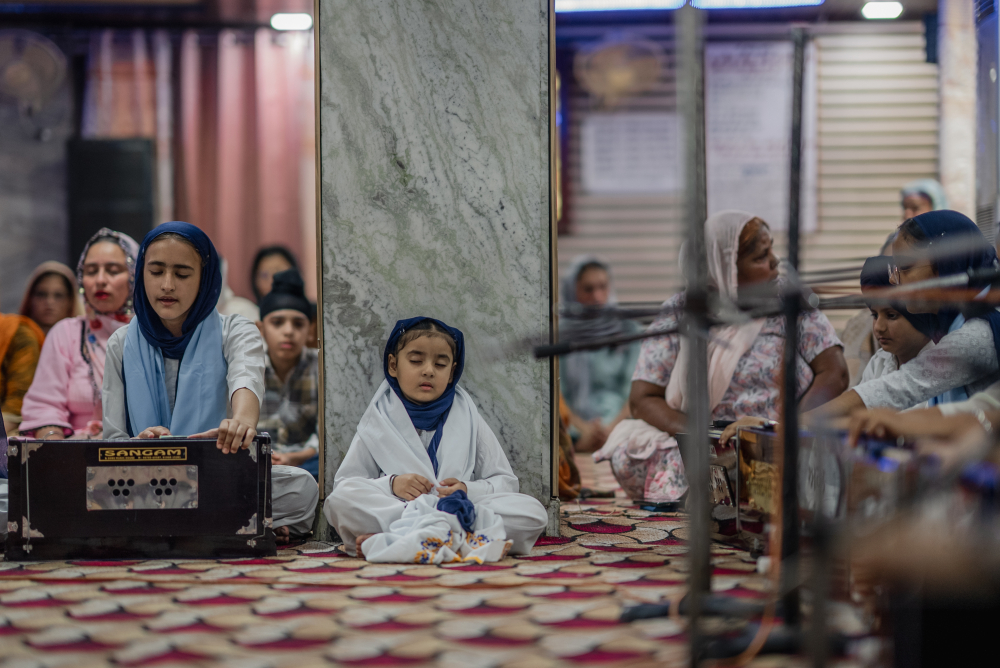
A young girl singing along to a kirtan. (Picture Credits: Meenal Upreti)
As we drove away through Tripuri Town’s winding alleys, my mother and I relished our versions of the day in silence. Strangers had opened their homes and hearts to us — they had ensured I had all the information and pictures I needed to write this piece. These exchanges stand as testament to the success of projects like this one.
Bibliography
‘Partition: Bahawalpuris' long journey to Rajpura.’Tribune India, May 22, 2022. https://www.tribuneindia.com/news/patiala/partition-bahawalpuris-long-journey-to-rajpura-396917/. Accessed May 14, 2026.
‘Mahatma Gandhi's 'adopted daughter' from Patiala who risked her life to stop riots.’ Tribune India, 15 August, 2022. https://www.tribuneindia.com/news/patiala/mahatmas-adopted-daughter-from-patiala-who-risked-her-life-to-stop-riots-422004/. Accessed May 14, 2026.
Khan, Ilyas. ‘Partition 70 years on.’ BBC, October 22, 2017. https://www.bbc.com/news/world-asia-41662588. Accessed May 14, 2026.
This essay has been created as part of Sahapedia's My City My Heritage project, supported by the InterGlobe Foundation (IGF).