
In colonial India, princely authority operated under the constraints of British paramountcy. While rulers could retain internal autonomy, their sovereignty was limited in formal political terms. In this context, cultural domains — especially sport — emerged as crucial sites for the performance and negotiation of power. Among the princely states, Patiala stands out for the scale, diversity, and longevity of its sporting patronage.
By the late colonial period, despite political curtailment by the British, Patiala’s rulers commanded significant revenues and symbolic capital within the subcontinent. Through sustained investment in both indigenous and modern sports, from cricket and polo to wrestling and hockey, the rulers of Patiala expressed their sovereignty and actively shaped sporting cultures, institutions, and reputations across India.
The Princely Ethos of Sports
Long before the arrival of British sports, physical culture was embedded in South Asian kingship. Hunting, wrestling, horsemanship and martial training were integral to ideas of rulership, moral authority and public performance. In Patiala, these traditions were inflected by Sikh martial culture, which emphasised physical strength, discipline, and readiness for combat. Kushti (wrestling), ghursawari (horse riding), shikar (hunting), tirandazi (archery), and weight training were not peripheral pastimes, but central to courtly life and military preparation.
Akharas (gymnasiums) received sustained royal patronage and renowned wrestlers from Patiala competed across Punjab and northern India, particularly at seasonal fairs and religious gatherings. Court records and oral histories recount wrestling bouts organised during festivals, where victors were rewarded with cash, land grants, or ceremonial honours. Bolstered by royal support and reward, bodily discipline and physical excellence were thus closely tied to honour and moral legitimacy.
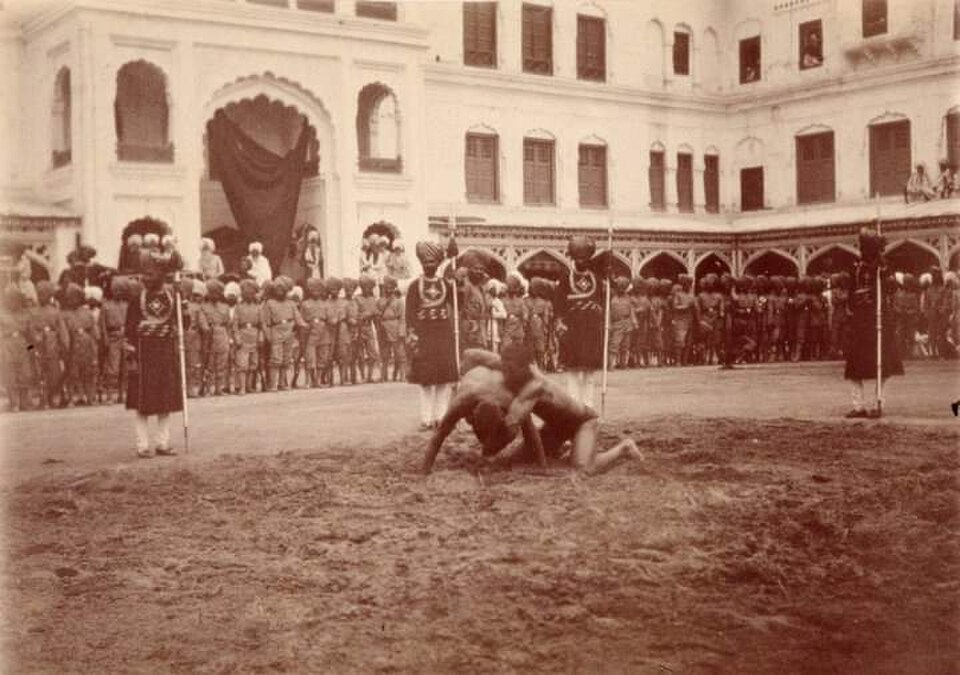
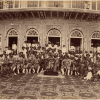
Photograph of a wrestling bout held in the court of Maharaja Bhupinder Singh of Patiala state, ca. 1903. The Maharaja used to sponsor an annual wrestling competition during the month of Muharram. (Picture Courtesy: Wikimedia Commons)
By the late nineteenth-century, British cantonments and missionary schools introduced sports such as cricket, athletics, and other sports to Patiala. Unlike other regions where these games remained confined to colonial clubs, Patiala’s rulers actively incorporated them into the state’s cultural life. Grounds were laid within palace estates, and local players encouraged to train alongside elite participants. Colonial sports did not displace older ideals of physical culture, but instead were absorbed into existing frameworks of authority.
British officials promoted sport as a tool of discipline and fitness, but princely rulers recognised a different possibility: sport could project modernity without signalling subordination. By excelling at imperial games themselves, rulers such as those of Patiala claimed parity with colonial elites.
Making Elite Networks with Cricket
When visiting cricketers arrived in Patiala, they entered a world where the game was inseparable from royal ritual. Patiala’s rulers understood cricket as a social technology: a means to cultivate relationships with British officials, Indian elites, and international players. Matches hosted by the state were renowned not only for their quality, but also for their ceremonial grandeur: elite guests, lavish feasts, and carefully curated hospitality. Maharaja Rajinder Singh invested in facilities and talent to raise the quality of play and infrastructure. Grounds such as the Baradari cricket ground acquired near-mythic status among players for its meticulously prepared pitch. Visiting teams often went out of their way to include Patiala in their itineraries, drawn by both exceptional sporting conditions and royal generosity.
Patiala’s association with Ranjitsinhji, one of cricket’s most innovative batsmen, is one example that illustrates how personal relationships shaped sporting history. Ranji’s cricketing fame was forged in England, but his emotional and financial ties with Patiala remained strong. In his memoirs, he recalled the hospitality of the Patiala court with deep gratitude, describing bonds that transcended politics and empire.
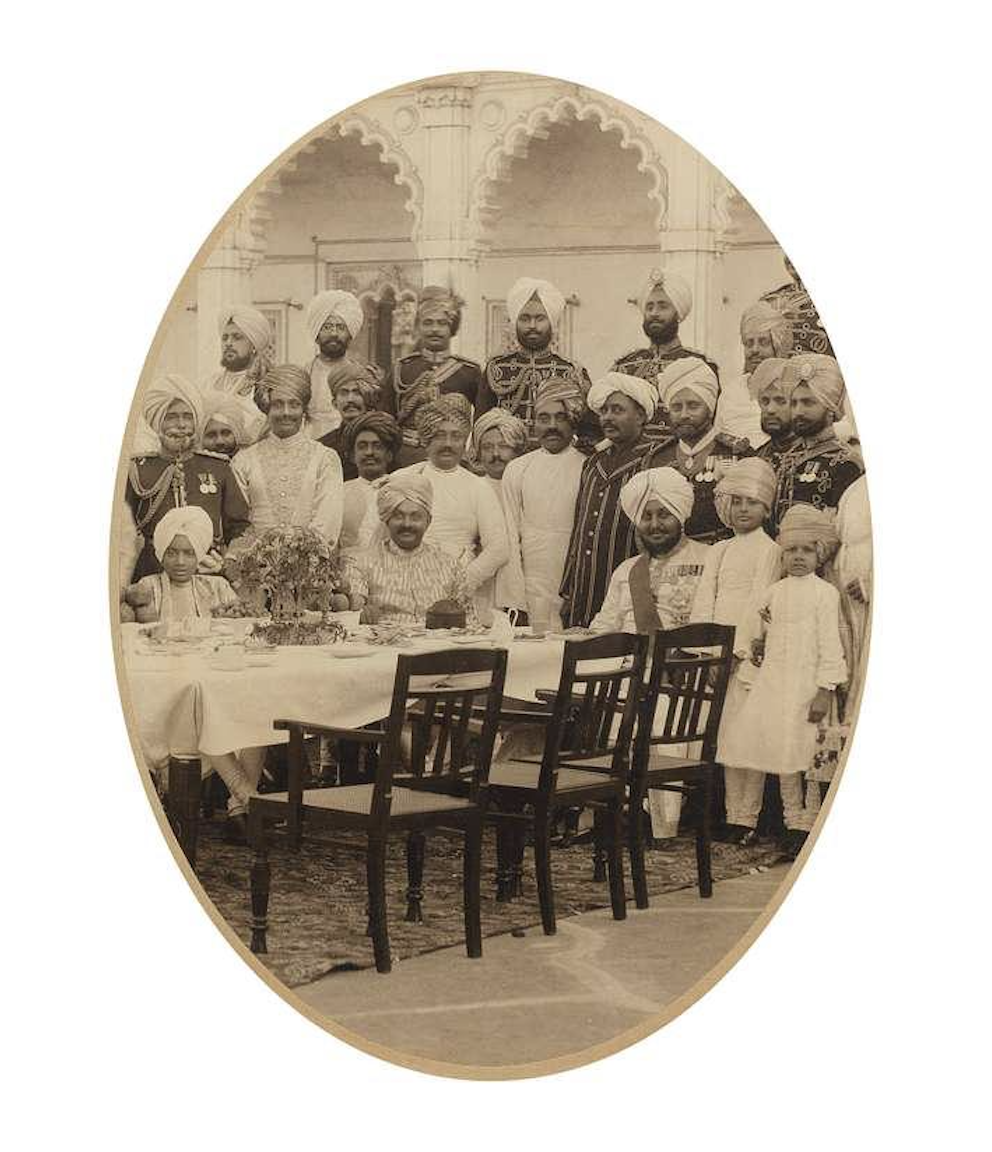
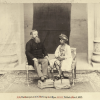
A group photograph of Maharaja Bhupinder Singh with the cricketer Ranjitsinhji Vibhaji Jadeja, known as Ranji, and other guests and servants. Patiala, ca. 1910. (Picture Courtesy: Wikimedia Commons)
This relationship acquired institutional significance in 1934, when Maharaja Bhupinder Singh played a crucial symbolic and financial role in the establishment of India’s premier domestic cricket tournament. Endorsing the naming of the competition Ranji Trophy, the Maharaja redirected Indian cricket away from overt imperial symbolism toward indigenous commemoration of Ranjisinhji. Bhupinder Singh also supported the construction of Bombay’s Brabourne Stadium, by funding the project and acting as a key driving force alongside Anthony S. de Mello. As President of the Cricket Club of India (CCI), he helped overcome land acquisition challenges and donated 50,000 towards construction costs.
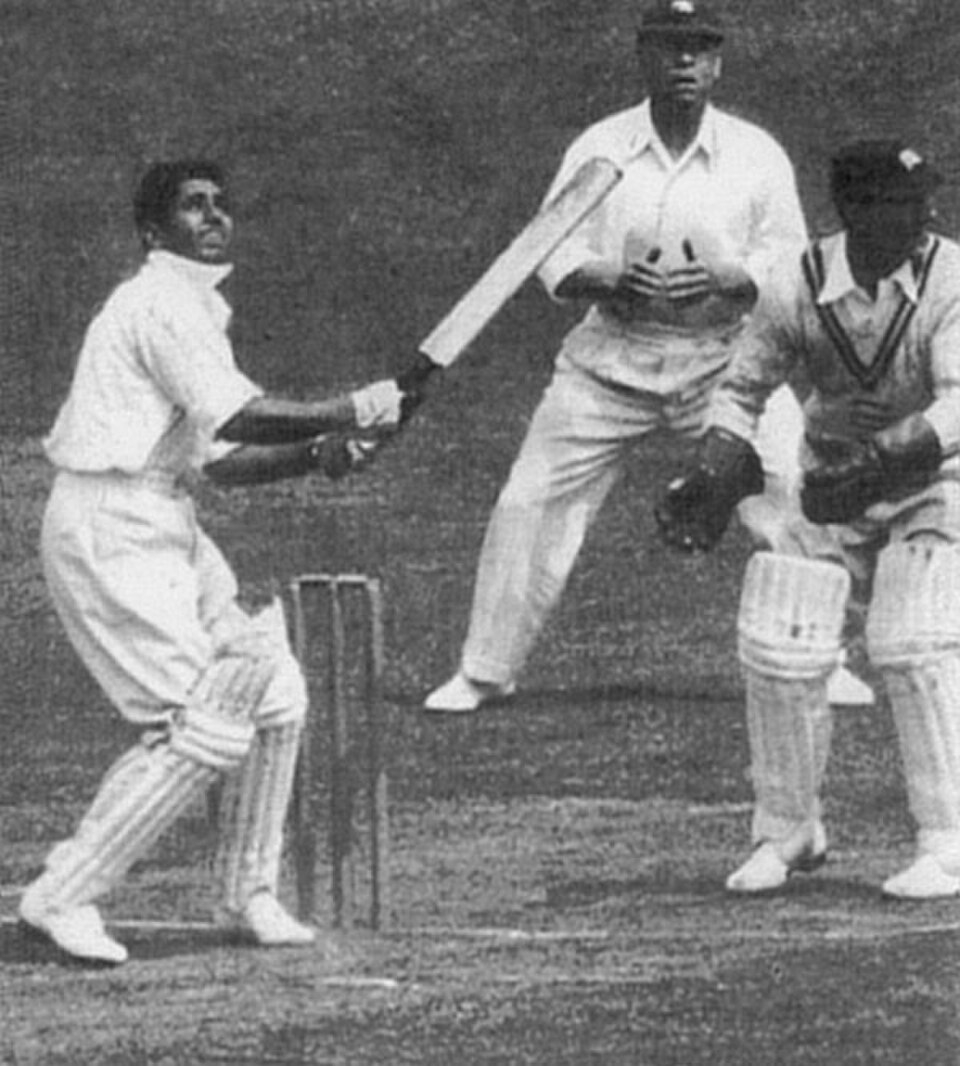
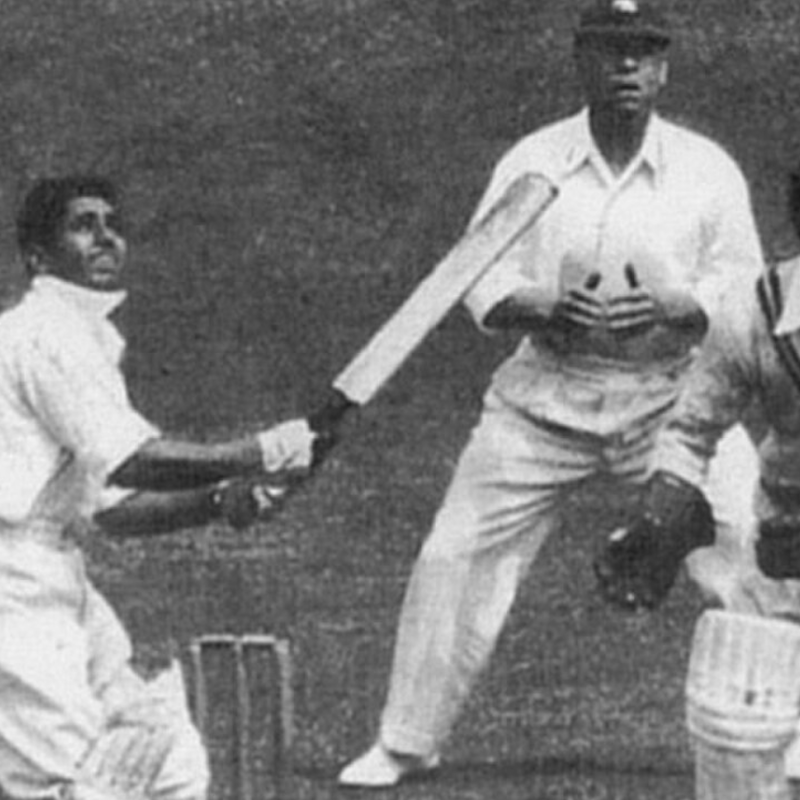
Lala Amarnath at Lord's in 1936. (Picture Courtesy: Wikimedia Commons)
Royal patronage, however, was not without tension. Expectations of loyalty and victory could weigh heavily on players. Accounts by cricketers such as Lala Amarnath indicate that there were pressures to playing under the princely gaze, as sporting failure could carry social consequences. Sport thus reproduced hierarchies within society: players were celebrated, but always within the orbit of royal authority.
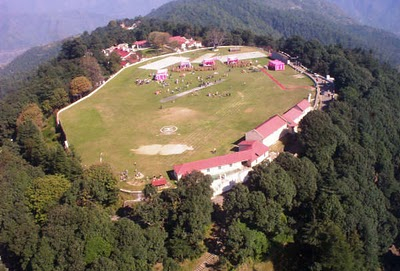
The cricket ground in Chail finished under Maharaja Bhupinder Singh in 1893. (Picture Courtesy: Wikimedia Commons)
The development of Chail as Patiala’s summer capital added another dimension to the state’s sporting geography. Cricket grounds built at high altitude hosted matches between gymkhanas, princely teams, and visiting sides. These events combined leisure with diplomacy, reinforcing Patiala’s image as a cultured and progressive state. Patiala’s sponsorship of unofficial foreign tours, notably by an Australian team in the 1930s, demonstrated how princely states could also operate transnationally via sport. Contemporary newspaper reports framed these encounters as evidence that cricket had become a shared imperial language, connecting distant territories through play.
National Pride with Polo and Hockey
While cricket has been regarded as a symbol of modernity, polo came to embody aristocratic lineage. The rulers of Patiala were dedicated patrons of polo, allocating significant resources to the procurement of horses, training initiatives, and participation in international competitions. The state team, colloquially referred to as the Patiala Tigers, gained a formidable reputation both nationally and internationally. Polo was introduced to Patiala around 1889, when visiting nobles from Dholpur brought ponies and encouraged local aristocrats such as Raja Gurdit Singh to engage in the sport under the auspices of Maharaja Rajinder Singh. Early matches took place on makeshift grounds in Patiala, and by 1894, local players were involved in formal fixtures, including a noteworthy match in Lahore.
Maharaja Rajinder Singh, who played a crucial role in establishing the foundations of mounted sports, assembled a cadre of skilled polo players from Patiala’s military and aristocratic elite. Maharaja Bhupinder Singh financed polo, cricket, and hockey, served as the president of the Indian Olympic Association, and utilised state resources to attract talent and foster competition. During the early twentieth-century, Patiala’s polo teams thus emerged as the strongest in India, securing prestigious titles such as the 1910 Shimla season and the Duke of Connaught’s Cup, while also participating in major tournaments in Delhi during the 1920s. The expansive polo grounds established under the maharajas have since evolved into integral components of Patiala’s sports infrastructure, leading to the development of complexes such as the Polo Ground area, the Raja Bhalindra Sports Complex, and the Yadavindra Sports Stadium.
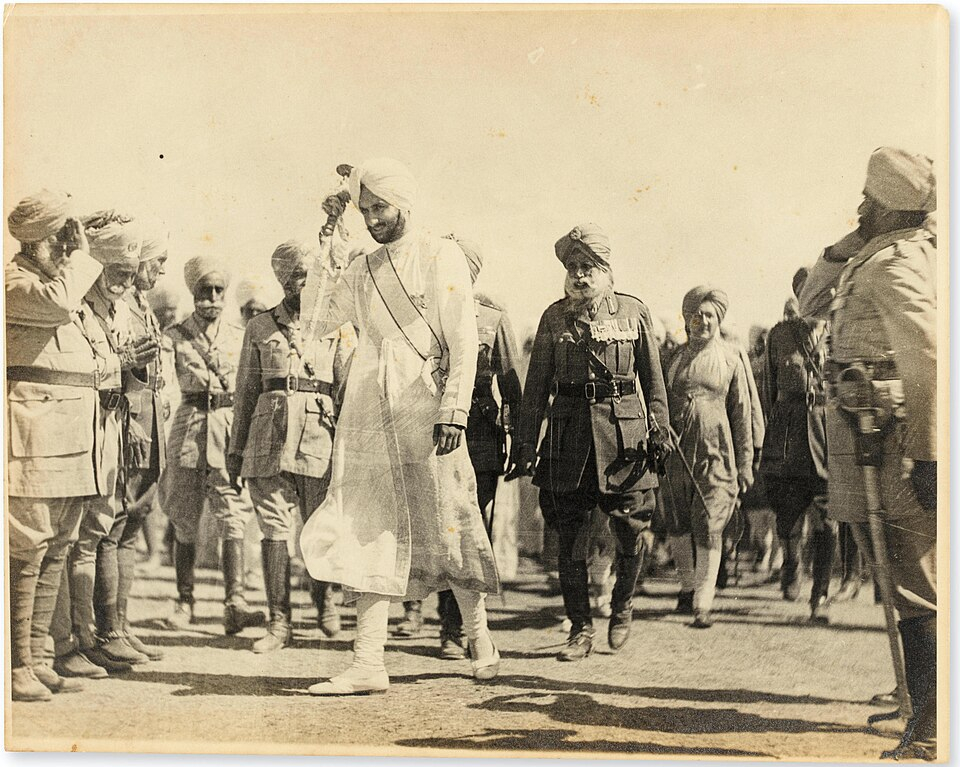
Immediately behind Maharajah Yadavindra Singh is Sardar Bahadur General Chanda Singh (1864–1950), a world-renowned polo player who had been recruited by Maharaja Rajinder Singh (r. 1876–1900) into the Patiala Tigers. (Picture Courtesy: Wikimedia Commons)
Among notable figures in Patiala’s polo history, Chanda Singh holds a distinctive position. Renowned for his exceptional skill and sportsmanship, he captained the Patiala team and represented princely India in Europe. He was invited to play for King Alfonso XIII of Spain, but declined to remain abroad without royal permission, an example that highlights the interconnection between personal loyalty and princely service in Patiala.
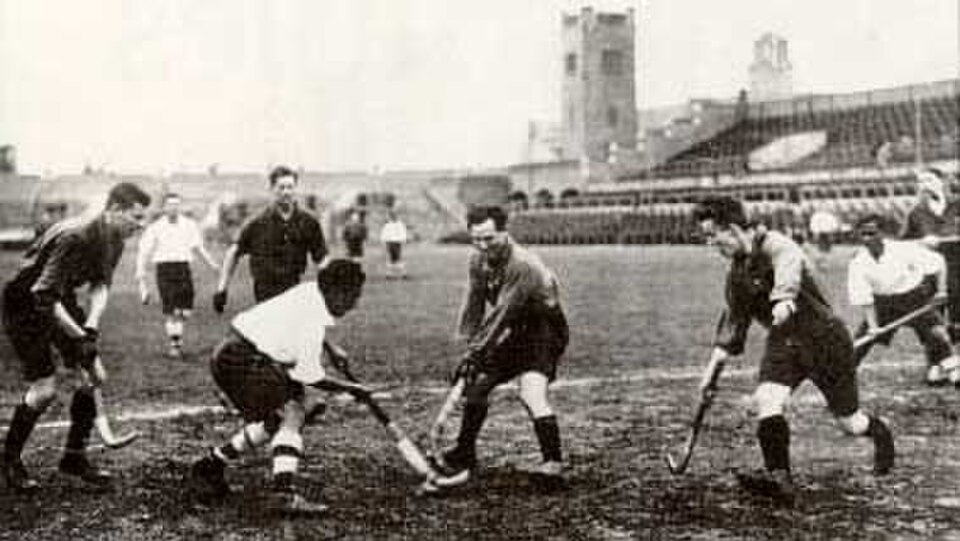
The Indian team at the Amsterdam Olympics in 1928 where Major Dhyan Chand made his debut. (Picture Courtesy: Wikimedia Commons)
The emergence of hockey in Patiala, which followed shortly after the rise of polo, occurred through a different trajectory. Gaining traction in the early twentieth-century, hockey was assimilated into the existing sports culture of the Patiala court. The maharajas, the state military, and local educational institutions collectively contributed to the transformation of hockey into an organized sport. Initially rooted in military regiments, the sport gradually permeated civilian institutions. Patiala-based teams and regimental clubs achieved significant success in inter-provincial tournaments during the 1920s, aligning with India’s broader emergence as a formidable hockey power. In contrast to cricket and polo, hockey emphasized collective discipline over individual patronage, reflecting evolving ideals of teamwork and mass participation. Hockey also aligned with the rising nationalist sentiment of India, with wins by Indian hockey teams perceived globally as the excellence of the country.
The Sustenance of Wrestling
Wrestling remained closely tied to indigenous traditions of bodily discipline and strength in Patiala. Royal support for akharas and prominent pehlwans (wrestlers) linked the court to soldiers, peasants and artisans through shared practices of training and competition. Maharaja Bhupinder Singh’s patronage of Ghulam Mohammad Baksh, known to the world as the Great Gama, placed Patiala at the centre of wider developments in wrestling and nationalism. After Gama’s 1910 campaign in London, where he defeated numerous wrestlers, Hindi and Urdu newspapers cast his successes as a rebuttal of colonial ideas about Indian physical inferiority. In other words, Gama’s victories over European champions transformed him into a national icon, celebrated not merely as an athlete but as living proof of Indian physical prowess.
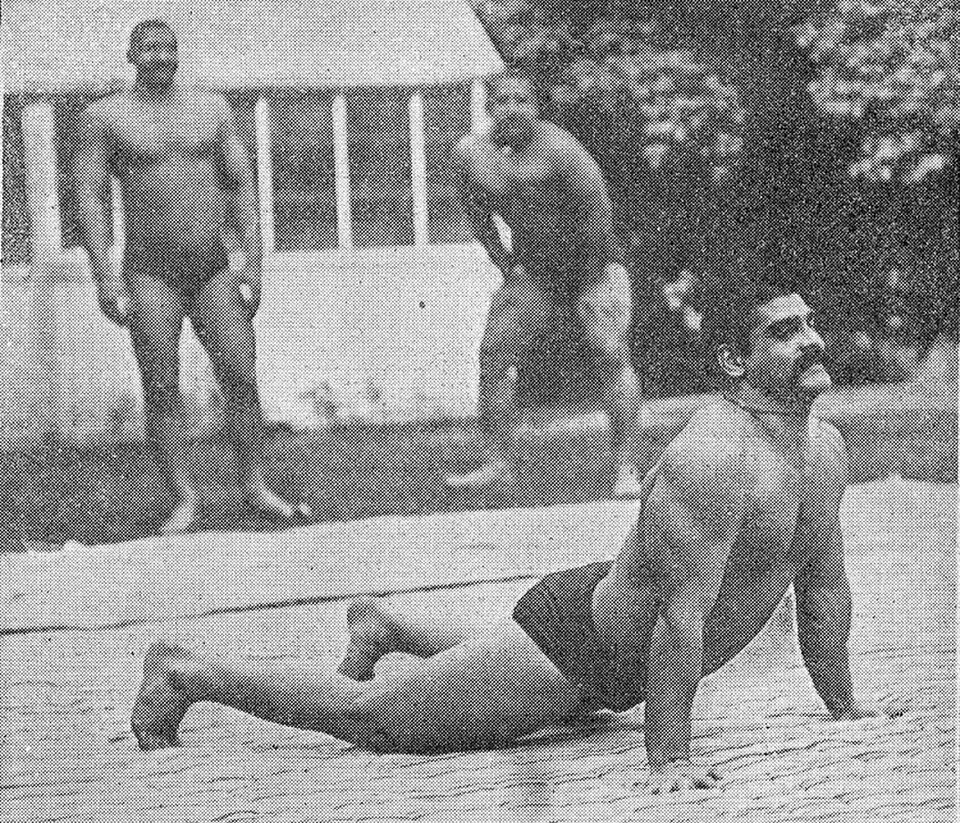
The Great Gama clicked while training at his akhara in Patiala, 1928. (Picture Courtesy: Wikimedia Commons)
Gama lived and trained at the Patiala court for many years, supported by a famously abundant diet and generous stipend intended to sustain peak physical condition. A particularly celebrated moment came in 1928, when he faced the Polish wrestler Stanislaus Zbyszko in Patiala and reportedly won within seconds before a crowd estimated in the tens of thousands. The spectators’ chants and the maharaja’s public honours — such as a pearl necklace, a land grant, and an annual allowance — turned into a dramatic spectacle with quasi-national overtones (with chants including “India has won!”).
However, Gama’s later decline into poverty, after princely support faded, reveals the vulnerability of wrestlers to changing political and economic contexts. Scholars like Joseph Alter have used Gama’s career to show how royal patrons could invest wrestlers’ bodies with political meaning while also inevitably tying their fortunes to the shifting priorities of the court.
Afterlives of Princely Sport
Even though Patiala’s sporting culture was significantly supported by the maharajas, its enduring legacy transcended the dissolution of princely governance.
Institutions established or influenced by royal patronage continued to thrive in independent India, most notably exemplified by the National Institute of Sports (NIS). Founded in 1958 at Motibagh Palace under the auspices of Maharaja Yadavinder Singh, the institute solidified Patiala’s position as a national training centre. On 7th May 1961, the Government of India formally established the NIS to enhance sports in the country and institutionalised coaching, sports science, and athlete training in postcolonial India. In 1973, the institute was renamed the Netaji Subhas National Institute of Sports (NSNIS).
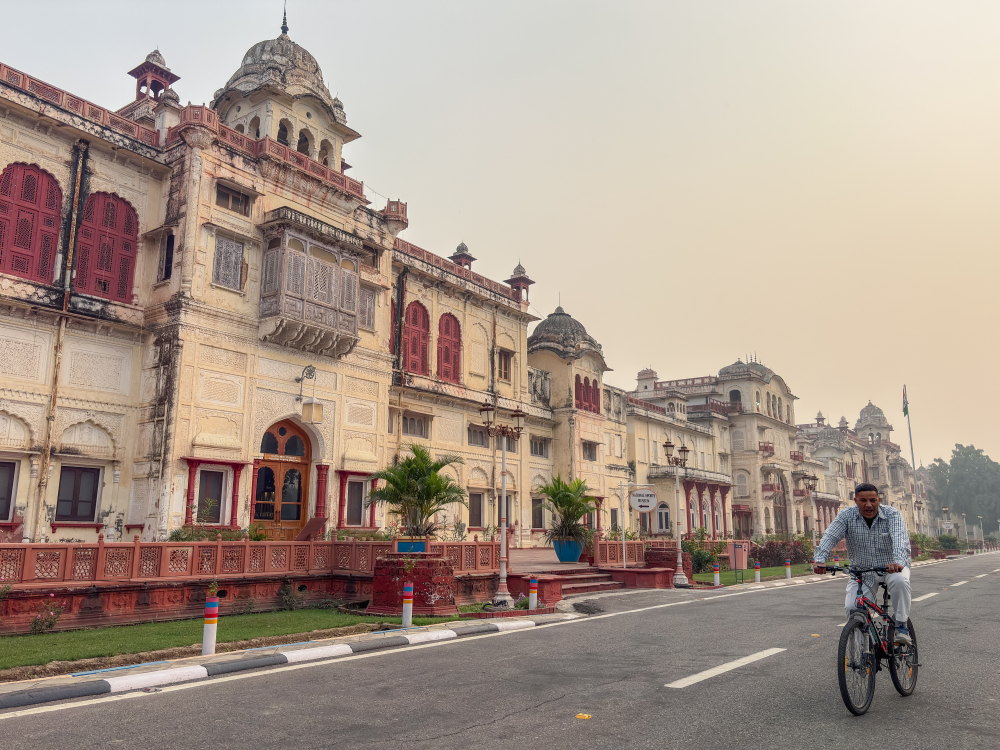
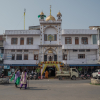
Moti Bagh Palace, which now houses the Netaji Subhas National Institute of Sports (NSNIS). (Picture Credits: Meenal Upreti)
Today, NSNIS Patiala is recognised as Asia’s largest sports training institute, often referred to as the ‘Mecca of Indian Sports’. It has produced a significant number of highly qualified coaches who have played crucial roles in preparing Indian teams for both national and international competitions. The foundation of the institute was guided by recommendations from a government committee convened in 1958 to evaluate the state of sports in India. This committee advocated for the establishment of a training centre aimed at producing proficient coaches. Subsequently, another committee conducted a study of sports institutions in various foreign nations. Based on these analyses, Patiala was selected as the designated location for the institute, which was inaugurated with formal ceremonies.
In retrospect, the selection of Patiala as the site for the institute was intentional: the city already possessed extensive sports infrastructure, a deeply entrenched culture of physical training, and administrative continuity shaped by its princely heritage.
This spirit for sport continues to find new avenues and channels in contemporary Patiala. More recently, the Maharaja Bhupinder Singh Punjab Sports University in Patiala has explicitly invoked princely sporting heritage to promote sports education and research. Through such institutions, Patiala’s history as a princely hub of sport continues to inform post-colonial debates on sport, development and national performance. Today, the princely legacy of dense sporting infrastructure — stadiums, akharas, and above all, the NIS — has been actively folded into Punjab’s campaigns against what the official term the “drug menace” among youth. State and district programmes encourage young people to join clubs and tournaments, echoing older princely idioms that linked physical training, discipline and moral order, even as they now speak the language of development and public health. At the same time, the evidence for a straightforward causal link between sport and reduced substance-use remains limited; the city belongs to a state with some of India’s highest rates of substance-use disorders, and elite sports themselves have become entangled with doping and steroid consumption in and around training centres.
The afterlife of princely sport in Patiala thus reveals a complex field where aspirations for disciplined, “drug-free youth” coexist with new forms of pharmaceutical risk and where the body remains a central site for negotiating power, modernity, and vulnerability.
Bibliography
Alter, Joseph S. The Wrestler’s Body. New Delhi: Munshiram Manoharlal, 1997.
Amarnath, Rajender. The Making of a Legend: Lala Amarnath. New Delhi: Rupa, 2004.
Guha, Ramachandra. A Corner of a Foreign Field: The Indian History of a British Sport. New Delhi: Picador, 2002.
Majumdar, Boria. Twenty-Two Yards to Freedom. New Delhi: Viking, 2004.
Majumdar, Boria. ‘The Golden Years of Indian Hockey.’ International Journal of the History of Sport, Vol. 25, No. 12 (2008): 1592-1611.
National Call, New Delhi, 30 October 1935.
Sen, Ronojoy. Nation at Play. Gurgaon: Viking, 2015.
Singh, Jaisal and Priya Kapoor. Polo in India. London: New Holland, 2007.
Singh, Kunwar Natwar. The Magnificent Maharaja: The Life and Times of Bhupinder Singh of Patiala. New Delhi: Rupa, 1988.
The Statesman, New Delhi, 29 October 1935.
This essay has been created as part of Sahapedia's My City My Heritage project, supported by the InterGlobe Foundation (IGF).