
To understand Patiala is to recognise it as a city born of tactical necessity and refined through cultural ambition. Unlike the Mughal metropolises of the north or the planned colonial cantonments, it emerged within the ‘Malwa’ region of Punjab, part of the cis-Sutlej tract, in the eighteenth-century. Prior to this, the region was characterised by dispersed agrarian settlements and shifting local authority. Areas such as present-day Sangrur and Sunam, located within the same Malwa tract to the west of Patiala, reflect this pattern of lack of consolidation into major urban centres. Its relative absence in early historical and travel accounts, which tend to focus on established centres such as Lahore or Sirhind, underscores its position as a hinterland. Even during the Mughal period, the cis-Sutlej tract functioned primarily as a revenue-generating zone administered through local intermediaries.
These conditions, combined with the weakening of Mughal authority, created the context for the rise of the regional polities, particularly Sikh chiefs who began consolidating territorial control in the region. As one of the principal Phulkian states, Patiala occupied a strategically significant position between competing forces: the expanding Sikh kingdom under Maharaja Ranjit Singh, the residual influence of Afghan power under Ahmad Shah Abdali, and, increasingly, the British East India Company.
The origins of Patiala lie in the consolidation of authority by the Phulkian lineage, descendants of Chaudhary Phul, whose successors established the states of Patiala, Nabha, and Jind. Among them, Baba Ala Singh (r. 1714–1765) laid the foundations of the state in 1763, at a moment when political authority in north India was increasingly negotiated through regional assertion rather than imperial control. The name ‘Patiala’ itself reflects this formation, derived from patti (meaning a strip of land, a residential sector, or a territorial division) and the name of its founder ‘Ala’. ‘Patti-Ala’ thus translates to the territory of Ala Singh, a naming convention typical of eighteenth-century regional polities where authority was closely tied to the person of the chieftain.
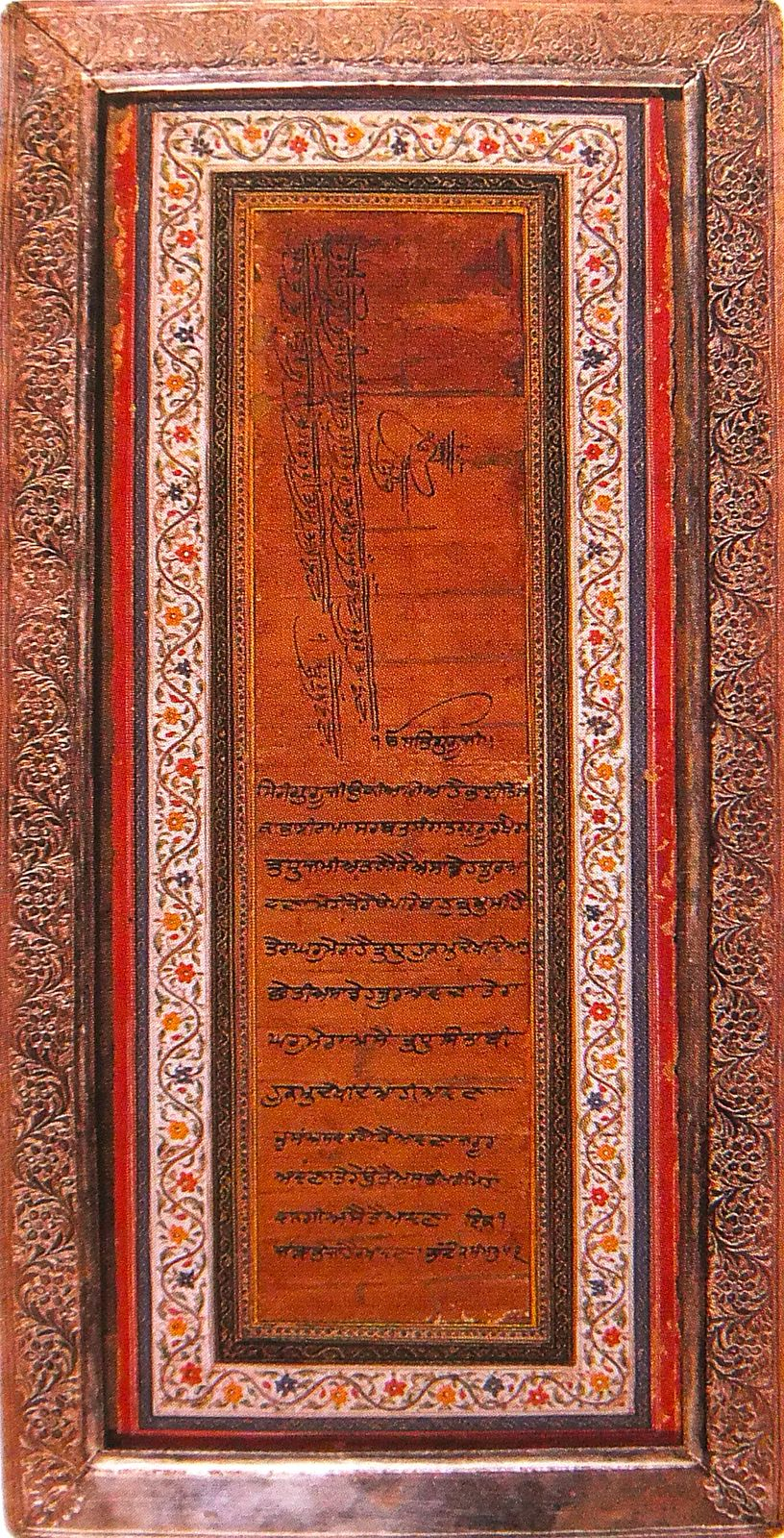
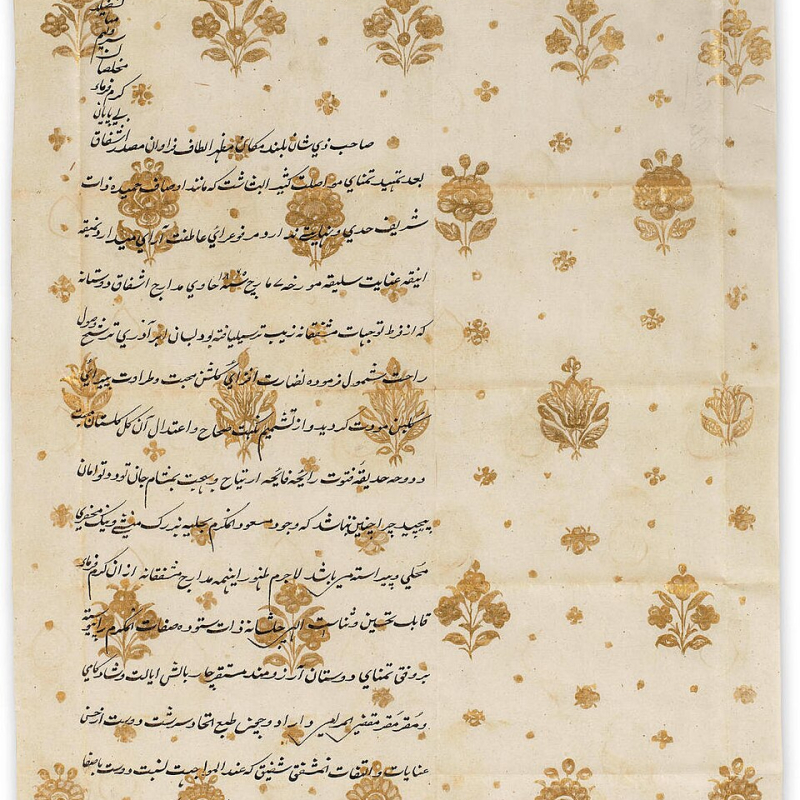
Dated 2 August 1696, this letter was signed by Guru Gobind Singh Ji and written to Bhai Triloka and Bhai Rama from the family of Phul. Also known as the 'Patiala Hukumnama', it includes the sentence, ‘tera ghar mera assey’ which translates to ‘your house is my refuge’. This was later used as the motto on the crest of the Patiala Maharajas. (Picture Courtesy: Wikimedia Commons)
The Qila-Bazaar Symbiosis
At the centre of this early settlement stood Qila Mubarak, initially constructed as a kachigarhi (mud fortification) in 1763, reflecting the uncertainties of the time, particularly the repeated incursions of Ahmad Shah Abdali into Punjab. The fort erected by Baba Ala Singh functioned not only as a defensive structure but also as the nucleus of an emerging urban form. The city developed around it in a concentric pattern, where the palace complex and the bazaar (market) were closely intertwined — linking political authority with economic life. Such proximity was not incidental. It reflects a broader pattern in eighteenth-century north Indian towns, where rulers sought to anchor their authority within circuits of trade, taxation, and everyday exchange. A similar logic is evident in the layout of Jaipur (founded 1727), where the City Palace was integrated directly into the commercial grid of the Johari Bazaar, and in Bharatpur, where the mud-walled Lohagarh Fort was positioned to regulate the agrarian surplus of the Braj region. In Patiala, this spatial link allowed the state to draw directly from and regulate urban economic activity. Markets like Adalat Bazaar and Dharampura Bazaar functioned as the city’s economic engine, fueled by the security provided by the Qila’s shadow.
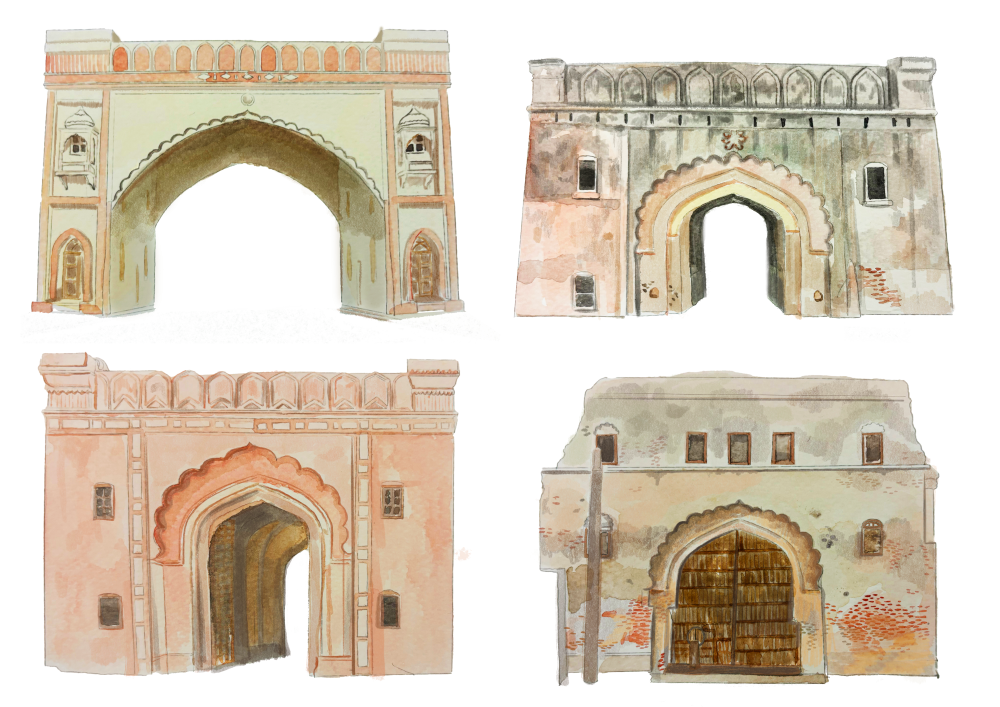
The four surviving imposing gateways to the old city of Patiala: Shere Wala Gate (top left), Sirhindi Gate (top right), Sunami Gate (bottom left), and Topkhana Gate (bottom right). (Illustration Credits: Jisha Unnikrishnan)
Ala Singh’s political strategy was marked by careful negotiation rather than territorial aggression. By securing recognition from both Ahmad Shah Durrani and the declining Mughal court, he was able to maintain a degree of autonomy in a region characterised by overlapping sovereignties. But within the internal politics of the Sikh misls (confederacy), this approach was an anomaly. While the Majha misls (north of the Sutlej) practiced uncompromising resistance, Ala Singh’s Phulkian misl adopted a sedentary, diplomatic form of state-building. By accepting the title of “Raja” and a Sanad (grant) from Abdali in 1761, he secured the Chaudhari (revenue collection) rights that provided the fiscal foundation for a formalised monarchy. Though this "dual diplomacy" occasionally caused friction with the Dal Khalsa, it allowed Patiala to function as a pragmatic buffer--retaining Mughal-trained administrative staff and bureaucratic continuity even as the empire crumbled.
The leadership of Patiala was characterised by long reigns that allowed for the consolidation of this "Patiala Shahi" identity. Following Ala Singh, Maharaja Amar Singh (r. 1765–1781), his grandson, expanded the territories and received the title ‘Raja-e-Rajgan’. The approach of balancing allegiance and independence would continue to define Patiala’s political culture in the decades that followed the new set of pressures.
The Colonial Pivot
By the early nineteenth-century, however, the political landscape had shifted. The rise of Maharaja Ranjit Singh’s Lahore kingdom introduced a new form of centralised Sikh power in the region, while the British East India Company expanded its influence northwards. The cis-Sutlej states, including Patiala, found themselves positioned between these two forces.
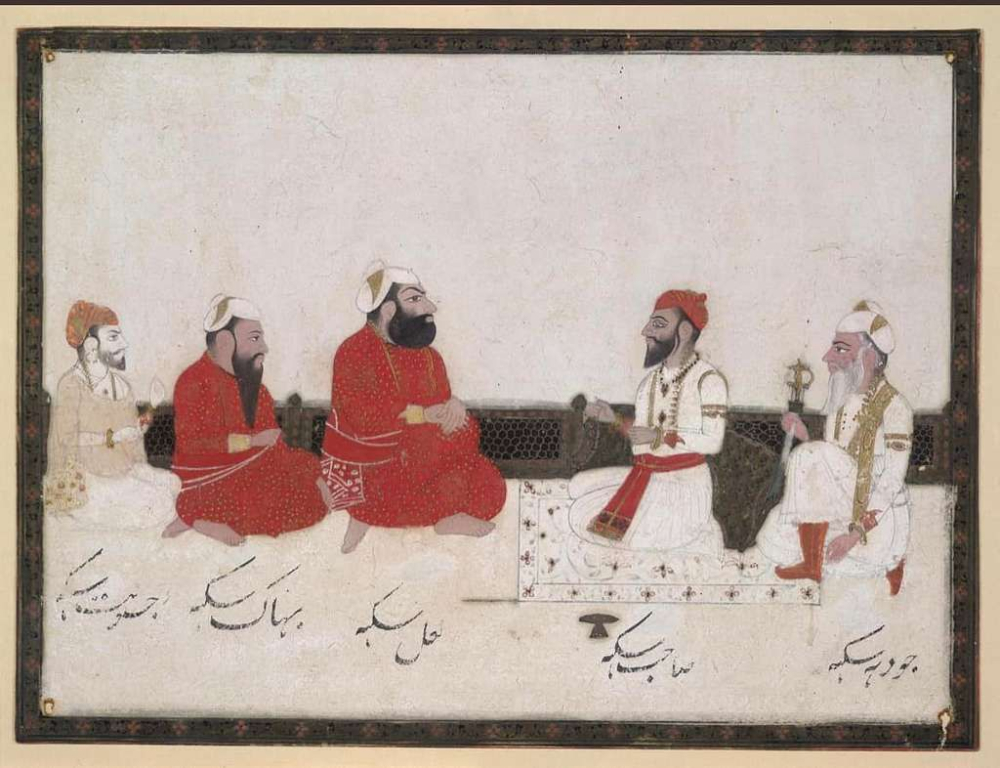
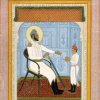
Painting depicting a meeting between Maharaja Sahib Singh of Patiala state, Sardar Jodh Singh of Kalsia state, Bhai Lal Singh of Kaithal State, Mehak Singh, and Raja Jaswant Rao Holkar, ca. 1850. (Picture Courtesy: British Museum/Wikimedia Commons)
In 1809, Maharaja Sahib Singh (r. 1781–1813) entered into a treaty with the British, placing Patiala under their protection while retaining internal autonomy. This agreement effectively transformed the state into a buffer, basically an intermediary zone that both separated and connected two expanding powers. While it ensured the survival of Patiala as a political entity, it also integrated the state into the structures of colonial governance.
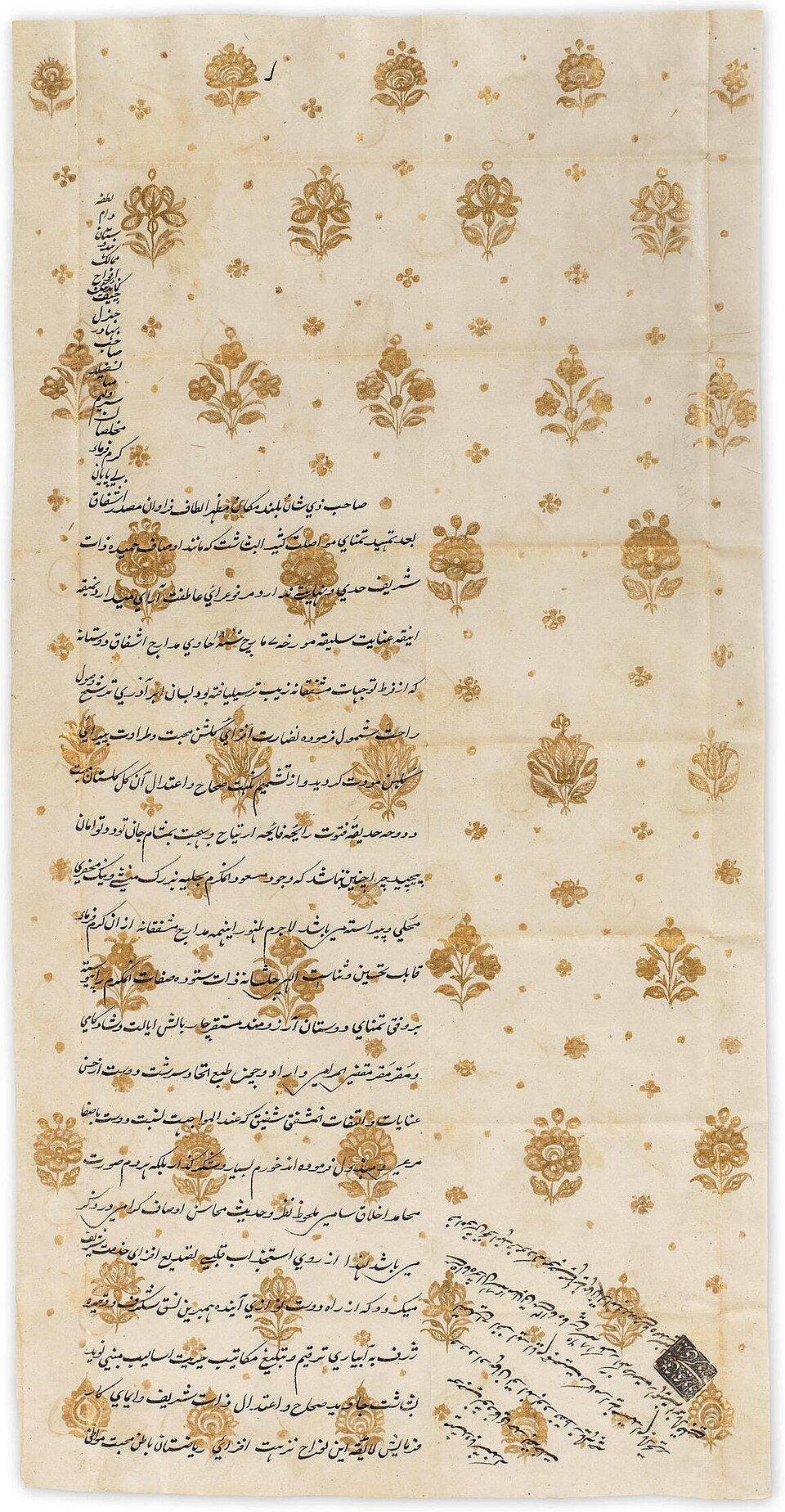
One of six manuscript letters in Persian and dated between 1860 and 1868. Five of these were from Mahendra Singh of Patiala (r. 1862-76) and Bhagwan Singh of Nabha (r. 1864-71), addressed to the British Governor-General and the Commander-in-Chief, and presenting envoys to them. (Picture Courtesy: Wikimedia Commons)
This relationship with the Colonial power deepened under Maharaja Karam Singh (r. 1813–1845) and Maharaja Narinder Singh (r. 1845–1862); the latter’s support during the 1857 Uprising reinforced the state's standing, resulting in its recognition as a 17-gun salute state. This alignment strengthened its position within the imperial order. Its rulers thus, as earlier, occupied a dual position i.e., regional sovereigns within their territory, yet also participants in the hierarchical system of British paramountcy.
Urban Transformation: From Defence to Representation
The nineteenth-century marked a significant transformation in the physical and cultural landscape of Patiala. As political conditions stabilised under British protection, the city expanded beyond its original fortified core. This expansion was not merely spatial; it reflected a shift in how princely authority was imagined and represented.
Earlier forms of architecture had prioritised defence and enclosure. By contrast, the buildings of the nineteenth-century emphasised scale, visibility, and display. Structures such as the Sheesh Mahal, constructed under Maharaja Narinder Singh (r. 1845–1862), exemplify this transition. With its reflective surfaces, ornamental detailing, and incorporation of both Mughal and European elements, the building represents a deliberate attempt to craft a visual language of princely sophistication.
The later expansion of Moti Bagh Palace under Maharaja Bhupinder Singh (r. 1900–1938) further extended this trajectory. Conceived as an expansive residential and ceremonial complex, it drew on the spatial logic of Mughal garden-palaces while incorporating modern technologies and materials. Such constructions were not merely aesthetic statements; they were assertions of legitimacy, projecting the ruler’s authority within both regional and imperial contexts.
This period also saw the introduction of new institutions that reflected changing priorities. Mohindra College, established in the 1870s, stands as one of the earliest examples of Western-style higher education in a princely state, signalling the incorporation of new forms of knowledge into the administrative and cultural framework of Patiala. Notably, due to the lack of a regional university at the time, it was initially affiliated with the University of Calcutta, plugging Patiala into the intellectual networks of the Bengal Presidency.
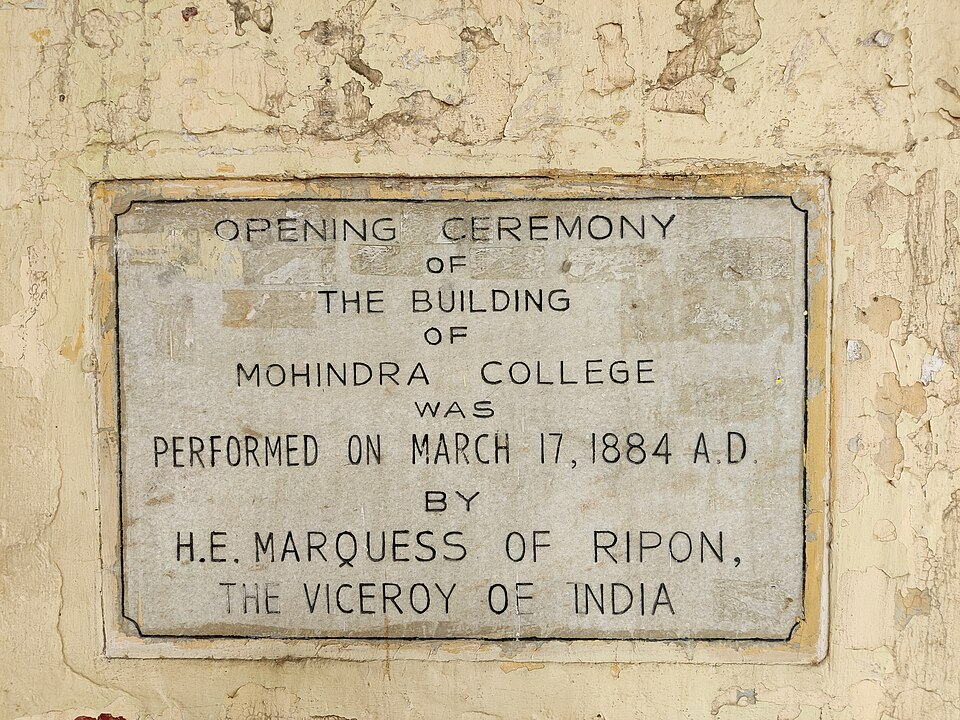
Plaque commemorating the opening of Mohindra College. (Picture Courtesy: Wikimedia Commons)
Maharaja Rajinder Singh (r. 1876–1900) furthered this cosmopolitan trajectory. Known for his secular outlook and deep patronage of the arts, he was also an early pioneer of cricket and polo in India, bridging the gap between traditional courtly pastimes and modern imperial sports.
Cultural Synthesis
Alongside these architectural and institutional developments, Patiala emerged as an important centre of cultural production, most notably in the field of Hindustani classical music. The Patiala gharana developed in the late nineteenth-century under court patronage, particularly during the reigns of Maharaja Rajinder Singh and Maharaja Bhupinder Singh.
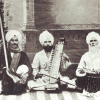
Associated with Ustad Ali Baksh and Ustad Fateh Ali Khan, the Patiala gharana evolved a distinctive musical style. While it shared a foundational relationship with the Gwalior gharana as the founders were trained under the gharana, particularly in its adherence to the ashtang tradition and khayal gayaki, it developed its own stylistic identity over time. The gharana retained the structural discipline associations, while introducing intricate layakari, fluid taans, and a pronounced incorporation of ornamentation derived from the tappa tradition. This stylistic synthesis reflects broader patterns of cultural exchange in the period. As the Mughal court in Delhi declined, musicians migrated to regional centres such as Patiala, where new forms of experimentation became possible. These courts did not merely preserve earlier traditions; they actively reshaped them, giving rise to styles that were both rooted in established forms and responsive to changing cultural contexts. The later prominence of Ustad Bade Ghulam Ali Khan, perhaps the most celebrated exponent of the gharana in the twentieth-century, further underscores the enduring influence of this tradition.
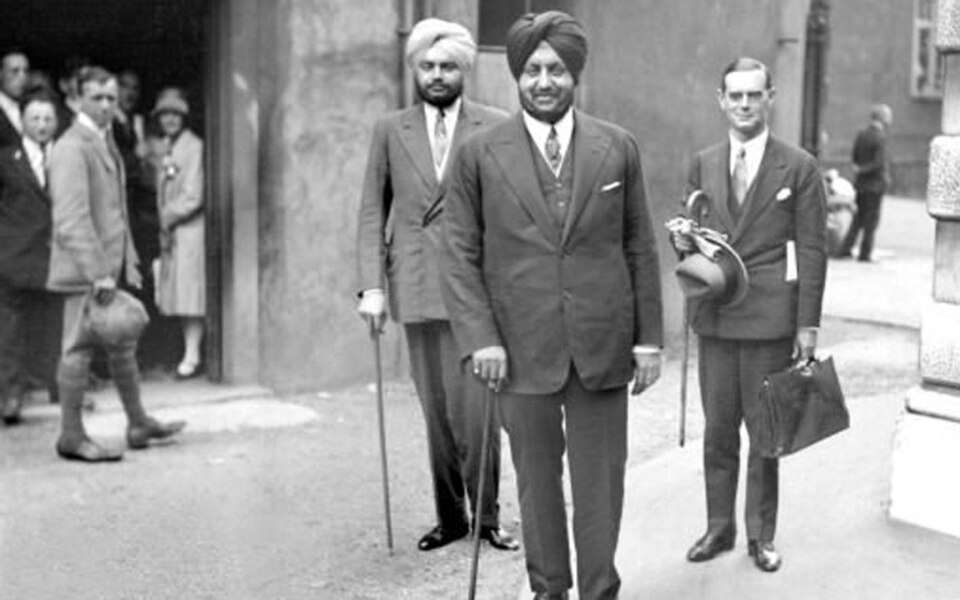
The Maharajah Bhupinder Singh arriving to attend the Chamber of Indian Princes in London, 1928. (Picture Courtesy: Wikimedia Commons)
Court culture in Patiala extended beyond music into other domains of social and political life. Under Maharaja Bhupinder Singh, the state cultivated a distinctive form of princely modernity. His engagement with institutions such as the Chamber of Princes, along with his patronage of sports and participation in international networks, positioned Patiala within a broader global context. Contemporary accounts frequently remark upon the scale of his courtly display. From elaborate durbars to ceremonial processions suggested that spectacle itself functioned as a form of political communication within the structures of empire.
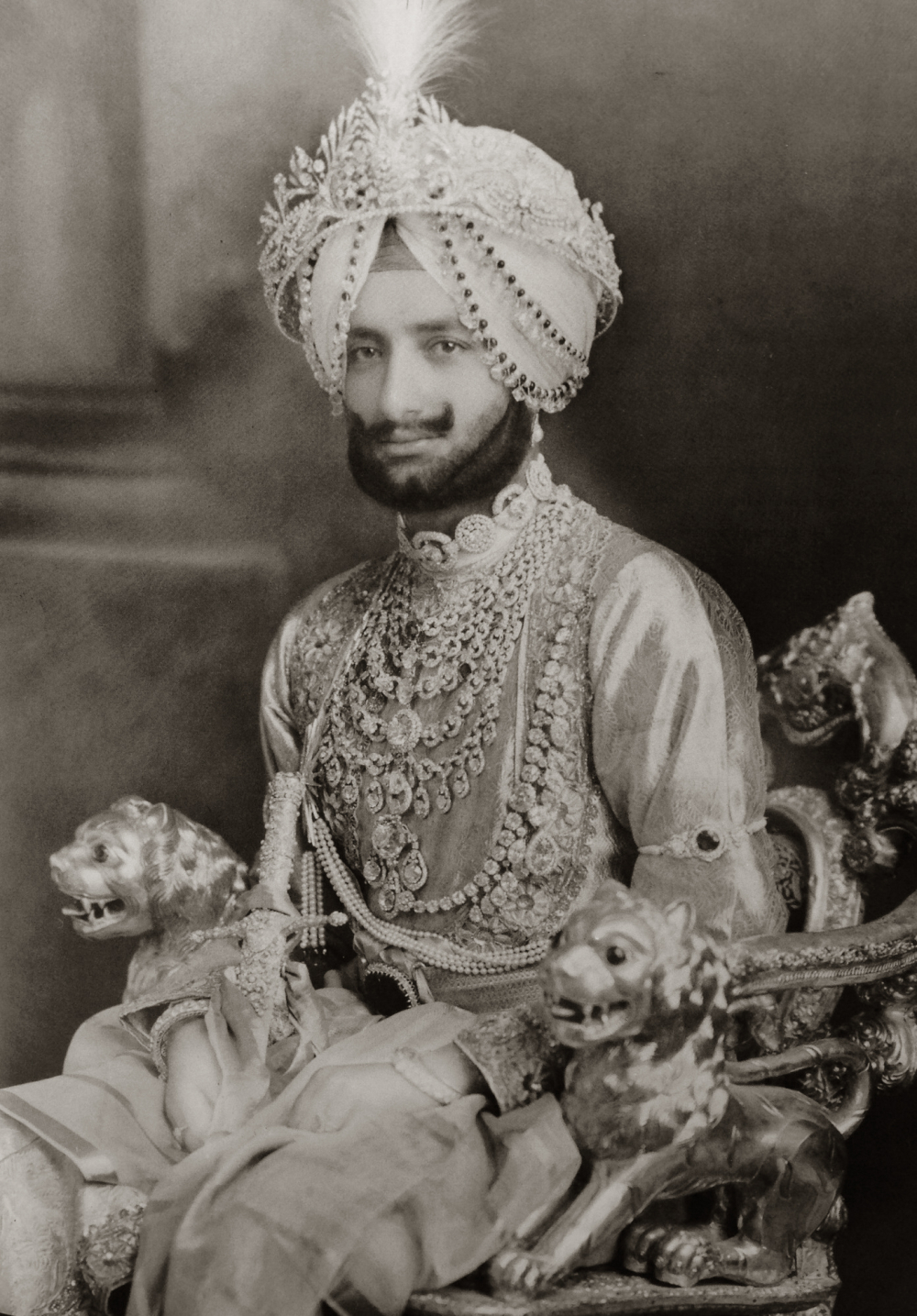
A portrait of the last ruling king of Patiala, Maharaja Yadavindra Singh, 1930. He signed the treaty to merge Patiala into independent India. (Picture Courtesy: Wikimedia Commons)
This emphasis on display extended into material and sartorial cultures. The famed “Patiala Necklace,” commissioned from Cartier, exemplifies this synthesis of European craftsmanship and princely opulence. Such objects were not merely ornamental. They articulated a carefully constructed identity, one that signalled a Phulkian aristocracy equally at ease within imperial circuits and regional traditions. At the same time, such displays coexisted with internal tensions. Efforts to modernise administration and respond to changing political expectations often sat uneasily alongside the persistence of older forms of authority, reflecting the broader contradictions of late colonial princely states.
Integration and Afterlives
The mid-twentieth-century brought a decisive transformation in the political status of Patiala. With the end of British rule in 1947, princely states across the subcontinent were required to negotiate their position within the newly independent Indian Union. Under Maharaja Yadavindra Singh, Patiala acceded to India, marking the end of its formal sovereignty.
In 1948, the state became the capital of the Patiala and East Punjab States Union (PEPSU), a federation formed by the integration of several princely states in the region. This moment represents an important transition in the history of governance in India. Rather than being abruptly dismantled, princely authority was reconfigured within a democratic and federal framework. As it happened in the many other parts of the country, former rulers assumed new constitutional roles, while administrative structures were reorganised to align with modern governance. The merger of PEPSU into the state of Punjab in 1956 marked the completion of this process. Although Patiala’s political centrality diminished thereafter, the city continued to function as an important regional centre, shaped by its institutional legacy and historical depth.
Today, Patiala’s past remains embedded in its urban form, its cultural traditions, and its social memory. The fort, palaces, and educational institutions continue to structure the city’s landscape, while its musical traditions sustain a lineage beyond the region. From Mughal decline and Sikh consolidation to colonial alliance and postcolonial integration, Patiala’s story is not one of linear progression, but of continuous negotiation--between power and patronage, tradition and modernity, and the local and the global.
Bibliography
Bhaskar, Aditi. ‘Qila Mubarak: A Brooding Slice of Patiala History’. India Art Review, 23 February, 2021. https://indiaartreview.com/stories/qila-mubarak-a-brooding-slice-of-patiala-history/. Accessed May 14, 2026.
Fretz, W.L. ‘A Few Days’ Sport in Patiala.’BMJ Military Health Vol. 23 (1914): 528-532.
Geddes, Patrick. Town-Planning in Patiala State and City: A Report to H.H. the Maharaja of Patiala. Lucknow: Perry's Printing Press, 1922.
Kapuria, Radhika. Music In Colonial Punjab: Courtesans, Bards, And Connoisseurs. New Delhi: Oxford University Press, 2023.
Kaur, Roopam Jasmeet, and Mohammad Idris. ‘The Development of Education in Patiala District (1948-2001): A Gendered Analysis.’ Proceedings of the Indian History Congress Vol. 72 (2011): 1460–70.
Kosh, Shodh, and Mona Malhotra Sood. Exploring the Significance of Historic Gardens in Context to Cultural Diversity: The Case of the Royal Gardens of Punjab. Indore: Granthaalayah Publications and Printers, 2023.
Punjab State Gazetteers Vol Xvii A: Phulkian States, Patiala, Jind, and Nabha with Maps. Lahore: Government of Punjab Press, 1909.
‘Reflections on ‘PEPSU’ versus Punjab.’ South Asia Post, September 15, 2010. https://diplomat.anandweb.com/2010/09/reflections-on-pepsu-versus-punjab.html. Accessed May 14, 2026.
Singh, Kirpal. Baba Ala Singh, Founder of Patiala Kingdom. Amritsar: Guru Nanak Dev University Press, 2005.
This essay has been created as part of Sahapedia's My City My Heritage project, supported by the InterGlobe Foundation (IGF).