The gharanas (schools) of Hindustani music often evoke images of established musical lineages, rooted in particular regions or courts for centuries. The association of ‘ghar’ (or house) with the term strengthens the idea that gharanas are families of musicians, found in the cities they are named after. However, gharanas are less individual than they seem, coalescing through extensive cultural exchanges, networks of teachers and students, and chance encounters. The Patiala gharana exemplifies these criss-crossings most clearly. As music historian Radha Kapuria notes, in Patiala, we see “the classic example of a gharana emerging as a confluence of different influences and practitioners: from Lahore to Jaipur and Tonk, from Kasur to Kashmir and Kapurthala.” In fact, something as coincidental as Maharaja Karam Singh’s (r. 1813-1845) personal passion for music led to the development of the gharana in Patiala. He appointed Miyan Ditte Khan as a court musician, whose son Miyan Kallu Khan would eventually go on to be considered the founder of the Patiala gharana. In turn Miyan Kallu Khan's son, Ali Bakhsh, and Fateh Ali (considered both a friend and cousin of Ali Baksh in conflicting accounts), then became modern representatives of the gharana and trained several musicians, fondly remembered as ‘Aliya-Fattu’.
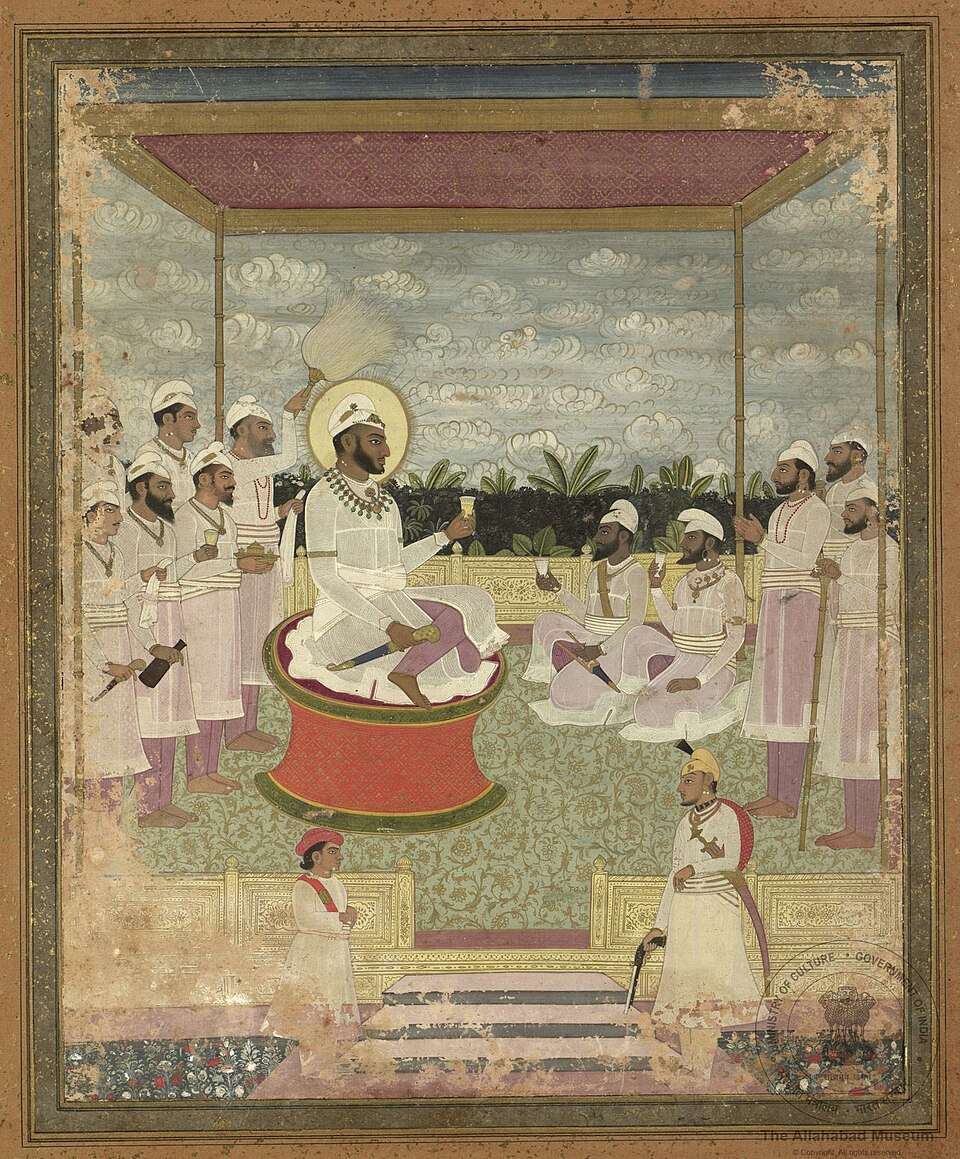
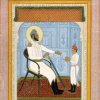
Maharaja Karam Singh with courtiers and attendants, nineteenth-century, Pahari School of Painting. (Picture Courtesy: Wikimedia Commons)
Patiala’s development of the gayaki tradition also emphasizes the multiplicity of musical styles within a gharana. Though there is a belief that each gharana represents a distinct style, there are generally overlaps in style across gharanas. In Patiala, Miyan Kallu Khan was trained by Tanras Khan of the Dilli gharana and other teachers affiliated with Lahore, Jaipur, and Gwalior; so were his students, Ali Baksh ‘Jarnail’ and Fateh Ali ‘Karnail’, the nicknames being Punjabi versions of ‘General’ and ‘Colonel’ respectively, titles conferred by Viceroy Lord Bruce. Less known, but as crucial, is the fact that these two were also trained by Goki Bai, a female vocalist of the Jaipur gharana and student of Behram Khan — descended from the Dagar family of dhrupad musicians, a genre of Hindustani music that predates the khayal, is more systematised, meditative, and slower. This traffic of musicians across courts led to a cosmopolitan musical culture, facilitating a mixture of styles.
Equally, distinct strands of musical practice emerged within each gharana itself. From its inception, Patiala’s courtly music culture was eclectic. The last two rulers of the state, Bhupinder Singh (r. 1909– 38) and Yadavindra Singh (r. 1938– 1971), patronised diverse musicians, prominent among them Ustad Ali Bakhsh, Ustad Fateh Ali Khan, Ustad Kale Khan (representing gharana or so-called classical music), Bhai Mehboob Ali alias Booba Rababi (‘Rababis’ being a musician community associated with the rabab string instrument and Sufi traditions), and the kirtani (performing Sikh devotional music) Mahant Gajja Singh. Together these musicians formed an amalgam of various strands of music, encompassing courtly and popular traditions, religious and secular themes.
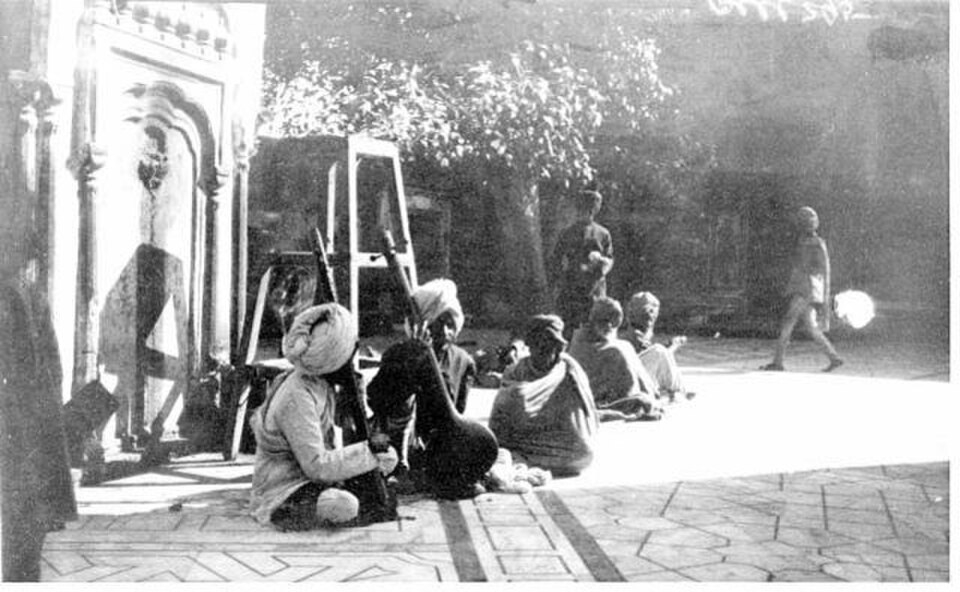
Rababis at the Golden Temple, 1903. (Picture Courtesy: Wikimedia Commons)
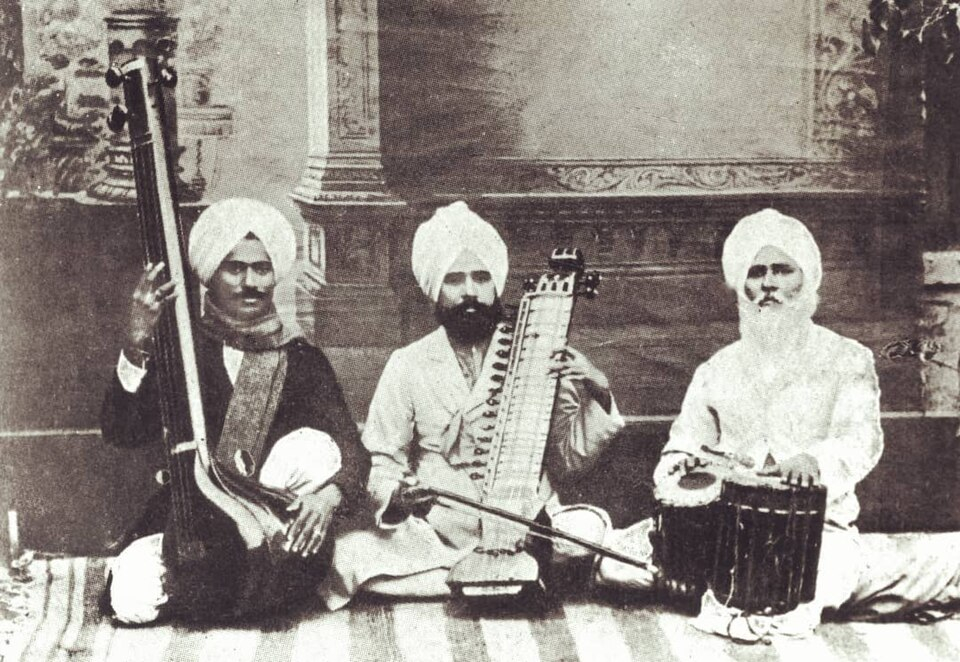
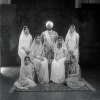
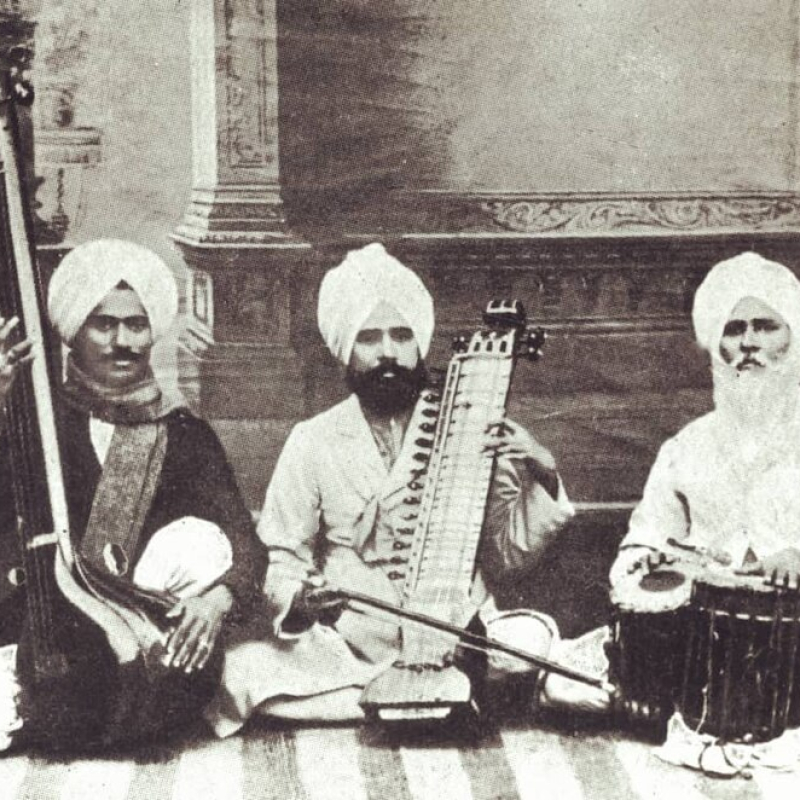
Kirtanis Bhai Chhaila on the tanpura, Bhai Ghasita on dilruba, and Bhai Gopal Singh on jori of the Patiala court at the 2nd All-India Music Conference in Delhi, 1918. Maharaja Bhupinder Singh of Patiala and his chief court musician, Mahant Gajja Singh brought a troupe of their leading court raagis and rababs to the conference. (Picture Courtesy: Wikimedia Commons)
As centres of patronage shifted to the metropolises of Calcutta and Mumbai through the early twentieth-century, musicians began to adapt. This was a time when classical singers found themselves seeking new avenues of patronage through the radio, music conferences, and emerging urban listening circles, as older networks of courtly patronage waned. Bade Ghulam Ali Khan rose to the fore in this context, becoming the face of the Patiala gharana. Taught by his uncle Ustad Kale Khan, he had ironically never performed in Patiala. However, he had a cosmopolitan trajectory. Critics suggest that his personal style evolved to suit the appetite of the masses, as compact renditions of thumris circulated as records. Ragas like Bhopali, Hameer, and Adana, considered light-hearted and therefore appealing and accessible, became mainstays of his performances and the gharana itself. Perhaps one of the first Hindustani musicians to adapt to new forms and urban audiences, Bade Ghulam Ali Khan even sang for the film Mughal-e-Azam (1960).
It is Bade Ghulam Ali Khan’s time in Calcutta, and the students he taught, that led to Calcutta becoming the new epicentre for the gharana in India. Some musicians were taught by Bade Ghulam Ali Khan himself, his tradition eventually carried on by their many pupils (like Parveen Sultana, whose teacher and father was his student). Others gained their taleem (training) through Munawar Ali Khan, Bade Ghulam Ali Khan’s son. Particularly notable today are practitioners like Ajoy Chakraborty and Kaushiki Chakraborty, given whose popularity the gharana is now identified squarely with Bengal.
The time of Partition altered the fate of both the original Patiala gharana, still associated with the court, and the branch associated with Calcutta. In what can only be considered a strange irony, the ‘Indian-born’ court musicians of Patiala — including descendants of Ali Baksh Jarnail, like Amanat Ali Khan and Fateh Ali Khan (named after Fateh Ali ‘Karnail’) — moved to Pakistan post-Partition, while the ‘Pakistan’-born Bade Ghulam Ali Khan and his associates continued in India after a brief stint in Pakistan.
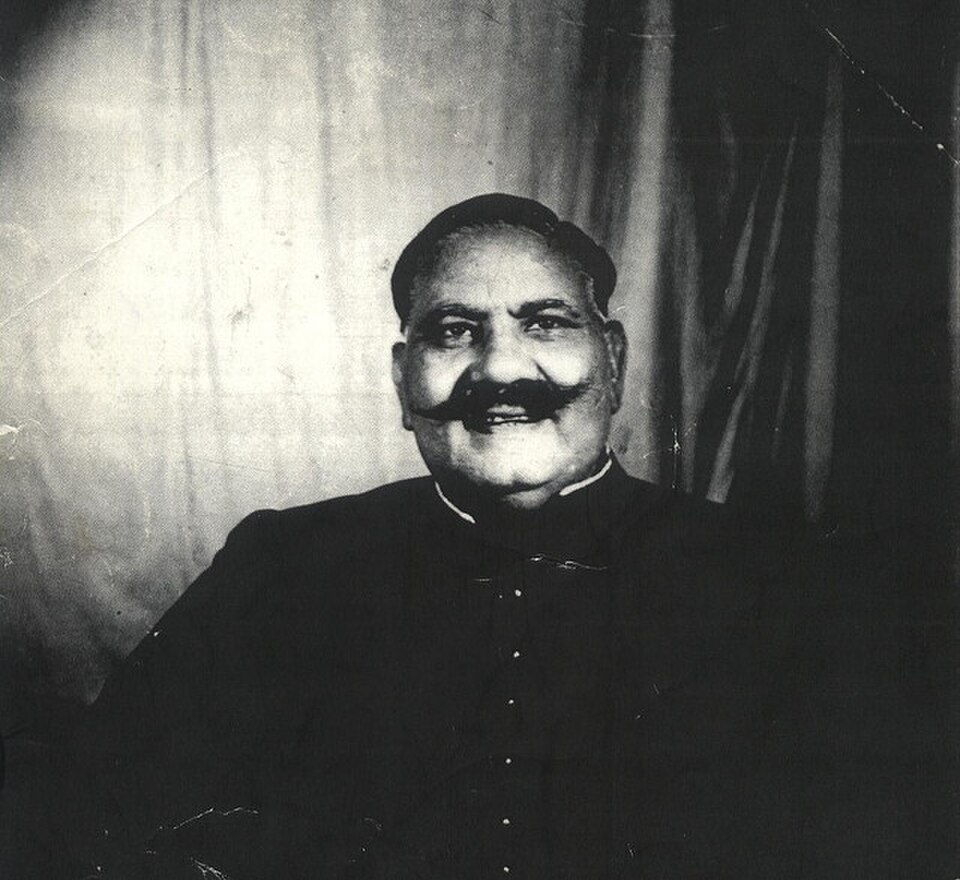
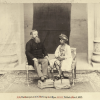
Ustad Bade Ghulam Ali Khan began his training in Kasur under his uncle, Kale Khan and father, Ali Baksh, both of the Patiala-Kasur lineage. (Picture Courtesy: Wikimedia Commons)
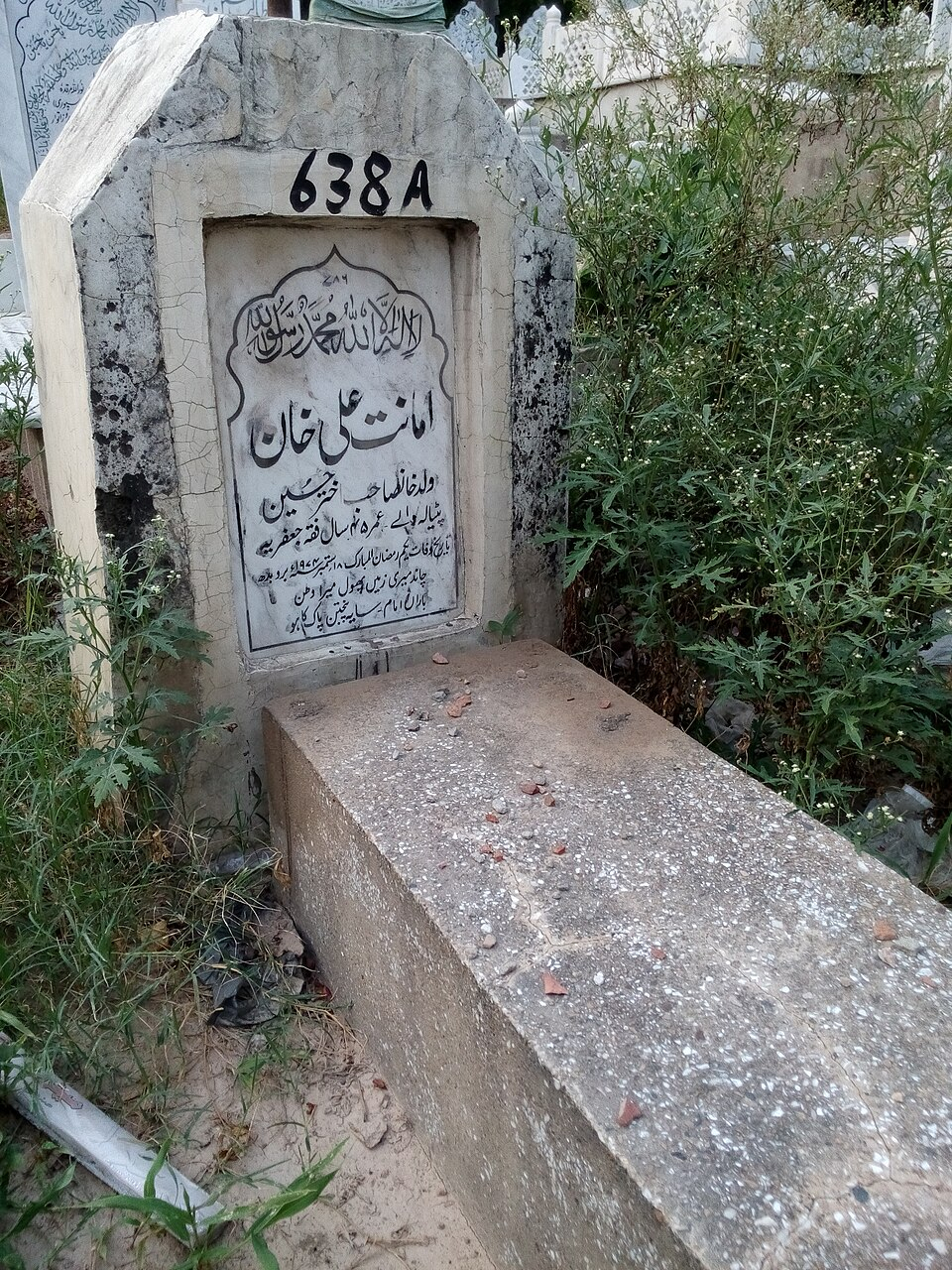
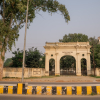
The grave of Ustad Amanat Ali Khan at Mominpura Graveyard in Lahore. (Picture Courtesy: Wikimedia Commons)
This political fissure permanently impacted the repertoire and subsequent development of the gharana in both India and Pakistan. Noted singers of the gharana in India continue to be rooted in the more ‘esoteric’ forms of khayal gayaki — compositions that begin with slow and long raga elaborations through aalaap with the taal (beat) speeding up as the piece progresses, open to a great degree of improvisation — and thumris (a genre of so-called folk music from the Gangetic plains composed in Awadhi, Bhojpuri, or Brajbhasha, often voiced by women). On the other hand, the Pakistan branch of the gharana focussed on the qawwali, a mainstay of the Dilli gharana but a form that generated a greater degree of interest and mass appeal than slower, dhrupad-inspired forms like khayal. This also reflects in the significance of poetry and language in these geographies. Qawwali, a form that doubled up as a recitation of Sufi poetry and verse, retains a greater archive of poetry from Punjab, while such a transmission of Punjabi-language compositions, and a stress on their meaning, did not occur to a great degree in India.
Partly, the reason is formal: khayal does not depend heavily on the meaning of lyrics to convey affect and music. Words are sounds that bind (the very etymology of ‘bandish’ being ‘that which binds’) the notes of a raga. It is therefore not puzzling at all that the Patiala gharana does not continue to have an extensive collection of Punjabi bandishes in active circulation, since its own archive for khayal was similar to other gharanas where Braj and Hindustani predominated — compositions from the Dilli, Jaipur, and Gwalior gharana, from which the Patiala gharana traced its descent. Simultaneously, rather than Punjabi-language compositions, stylistic features from Punjabi folk forms — like the tappa — made their way into the gharana’s style, especially evident in Bade Ghulam Ali Khan’s singing. The tappa is characterised by fast-paced and compressed taans. Bade Ghulam Ali Khan retained this complex taan structure and speed — with most of his recordings often beginning with such sequences rather than slower aalaaps — and translated them in the mode of khayals and thumris.
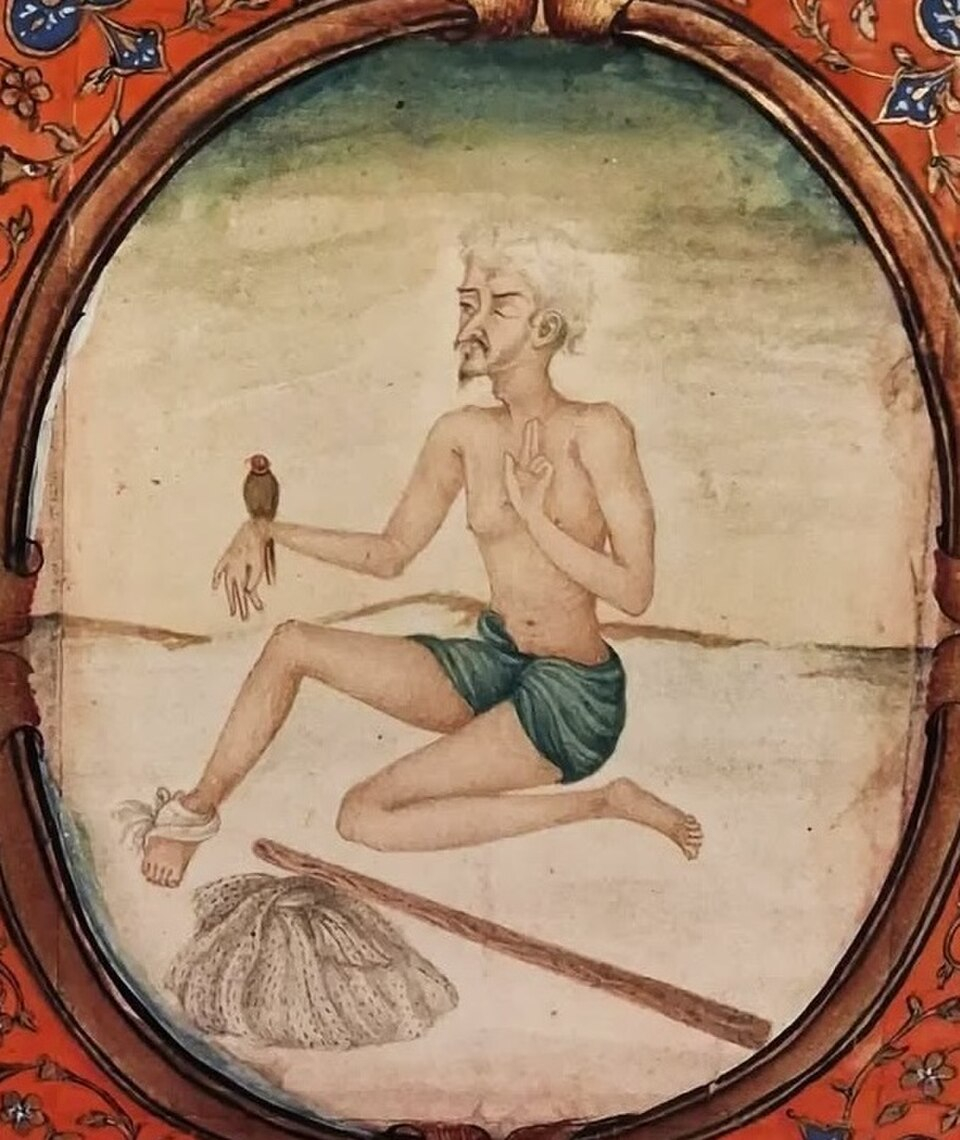
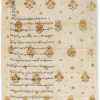
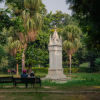
Miniature painting of Baba Farid (also known as Sheikh Farid, Fariduddin Ganjshakar, or Farīd al-Dīn Masʿūd
Ganj-i-Shakar) from the Alwar School of Art, 1823-24. Tanras Khan, in his composition of Tansen’s Miyan Ki Todi,
sings:
“अब मोरी नैया पार करोगे (Now, you will take my boat across the river)
हज़रत निज़़ामुद्दीन औलिया (Hazrat Nizamuddin Auliya)
दःख दलिद्र सब द ु ूर करो रे (Take away my sorrow and pain)
तानरस खान की लेहो ख़बरिया (Check on your devotee, Tanras Khan)
गंज शखर के लाड लड़़ैया (O Nizamuddin, Fariduddin Ganj-e-Shakhar’s dearest).”
(Picture Courtesy: Wikimedia Commons)
It is often lamented that the Patiala gharana no longer has representation in its own historical backyard: a collective Hindustani music-listening public is virtually unnoticeable in contemporary Punjab. But the series of confluences that animate the two-hundred-year-long trajectory of the gharana might also be a source of reassurance. From its very inception, its musical tradition was defined by travel, both physical and formal, allowing us to appreciate even the transformed incarnation of the gharana today.
This essay has been created as part of Sahapedia's My City My Heritage project, supported by the InterGlobe Foundation (IGF).