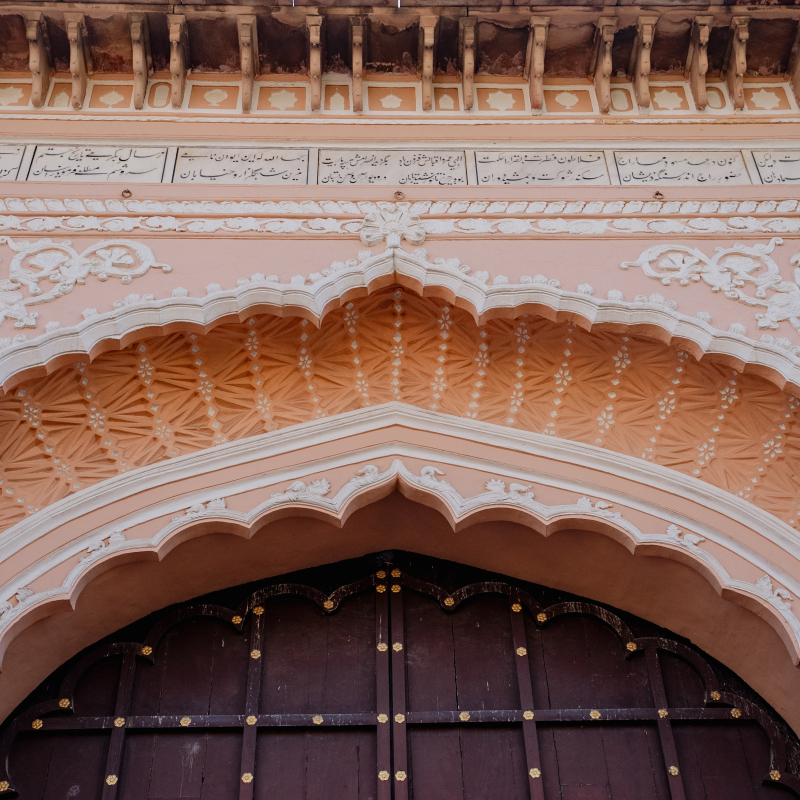

Patiala, once a princely state of Punjab, was established as an independent riyasat (principality) that managed to maintain positive relations with the East India Company. Patiala’s maharajas were thus able to provide adequate patronage to social, economic, and modern reforms as well as various development works. Under the patronage of the maharajas, art and Punjabi culture flourished in Patiala, particularly emphasised in the architectural endeavours undertaken within the city. The subtleties of this built heritage make them unique and melodious symphonies of the past. However, due to various environmental and physical factors, these monuments have experienced periods of upkeep interspersed with complete abandonment. Even when undergoing conservation processes, monuments are often fully reconstructed, hence changing the context and historicity of the site. To ensure the conservation and preservation of Patiala’s heritage, several government bodies, NGOs, and local organisations must work in tandem. It is by preserving the city’s historic architectural marvels that we can strive to preserve the practices of local artists, artisans, and craftspeople.
Monumental Contributions
The Patiala princely state, which emerged under the Phulkian Misl (confederacy) — a prominent eighteenth-century Sikh ruling dynasty — made a valuable contribution to the development of Punjab's art and culture. The Phul rulers concentrated their attention, energy, and ability on the expansion of the state and established conditions within which to build new forts and palaces to protect the region. Notably, most monuments in Patiala were built during the reign of Narinder Singh (r. 1845-62) and his son Mohindra Singh (r. 1862-76). Both were generous patrons of the arts, the education system, and public welfare.
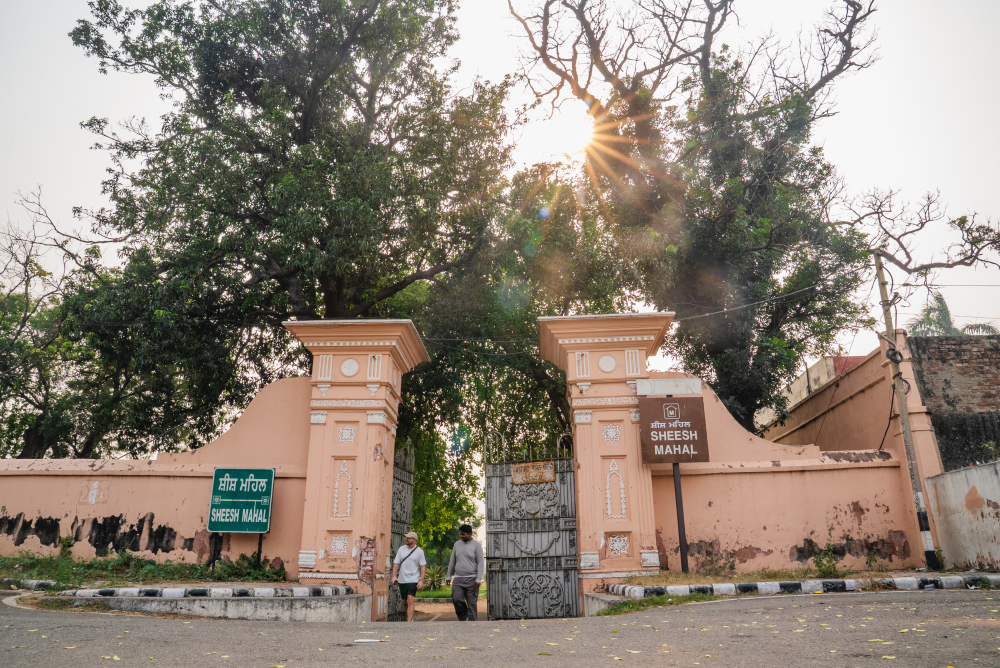
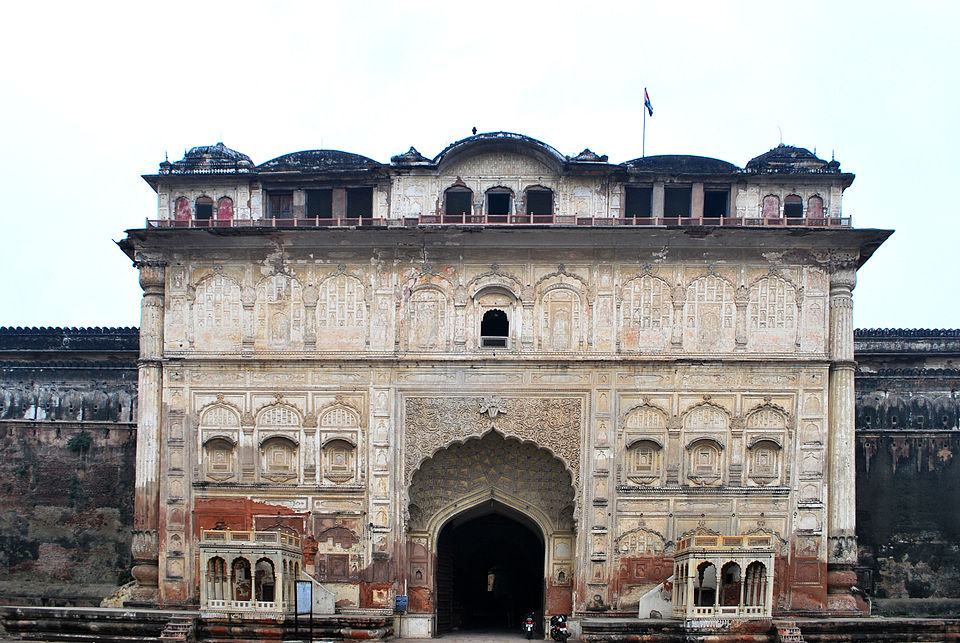
The entrance to Sheesh Mahal. (Picture Credits: Meenal Upreti)
Narinder Singh, in particular, had a highly aesthetic eye for all forms of art. He built the Old Motibagh Palace, one of the most magnificent buildings in Patiala. Designed along the lines of Shalimar Bagh in Lahore, with terraces, fountains, and canals, the Motibagh is an architectural achievement. Narinder Singh is also said to have built the Sheesh Mahal, bringing in expert artists, masons, craftsmen, architects, and locals to construct the building in Rajasthani style. The murals and miniatures in Sheesh Mahal feature Sikh themes, as well as depictions of Rajput ragamalas (miniatures) and pahari nayak-nayikas (a style of miniatures from Punjab).
Narinder Singh is also considered to be responsible for the renovation of Qila Mubarak, the fortress in Patiala that served as a royal residence for the maharajas. Qila Mubarak, on the other hand, was first constructed as a mud fortification under Baba Ala Singh for defensive rather than ornamental needs but successive rulers transformed this into a royal residence with brick masonry, distinct sections to attend to state matters, and hybrid architectural vocabulary spanning Mughal, Sikh, Rajasthani, and Colonial influences. In the 1770s-80s, Maharaja Karam Singh undertook the replacement of the mud sections with brick and the expansion of gateways to include inner palaces like Qila Androon, Ranvaas, and Durbar Hall. Under Maharaja Karam Singh, between 1813 and 1845, the Qila Androon came to be decorated with jharokas (overhanging enclosed balcony or window), fresco-painted chambers, and lime-plaster stucco. Painters and craftsmen were invited from Rajasthan, Kashmir, and the Pahari regions to lend their expertise. The construction of the Durbar Hall and Ranvaas were completed by Maharaja Narinder Singh between 1845 and 1862 and these spaces featured khatamband (an intricate form of Kashmiri woodcraft used to create decorative ceilings), Sheesh Mahal-style glass interiors, Bohemian glass chandeliers, and Gothic arches and fireplaces. The Qila that had been founded for defensive reasons was — with increased stability and power in the late nineteenth-century — now the ceremonial seat of the Phulkian royals.
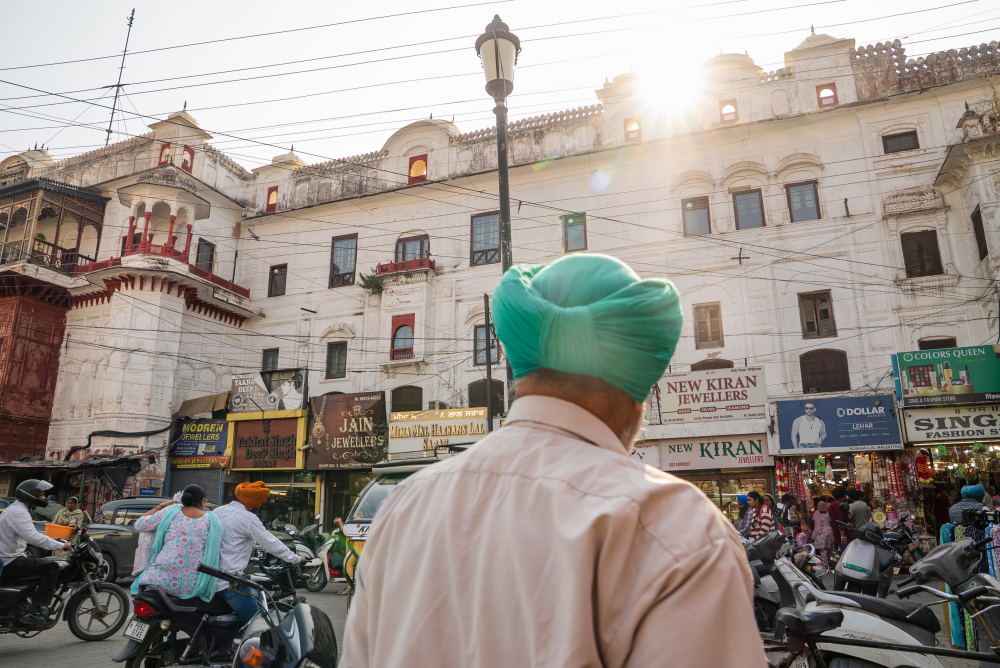
The exteriors of the Qila which are now one with the bazaar. (Picture Credits: Meenal Upreti)
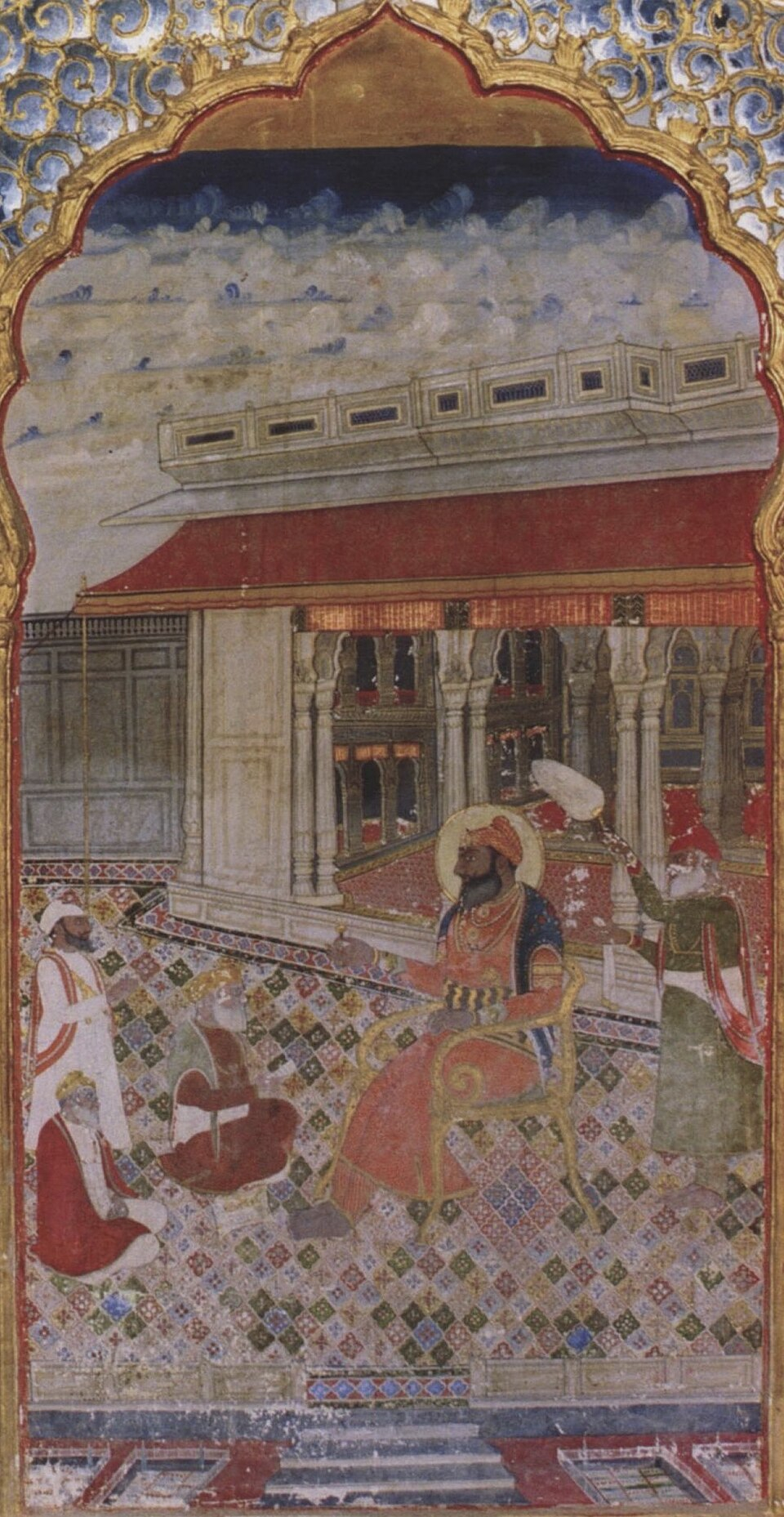
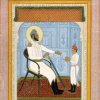
Mural of Karam Singh of Patiala State from the Sheesh Mahal of the Qila Mubarak, c. 1845–62. (Picture Courtesy: Wikimedia Commons)
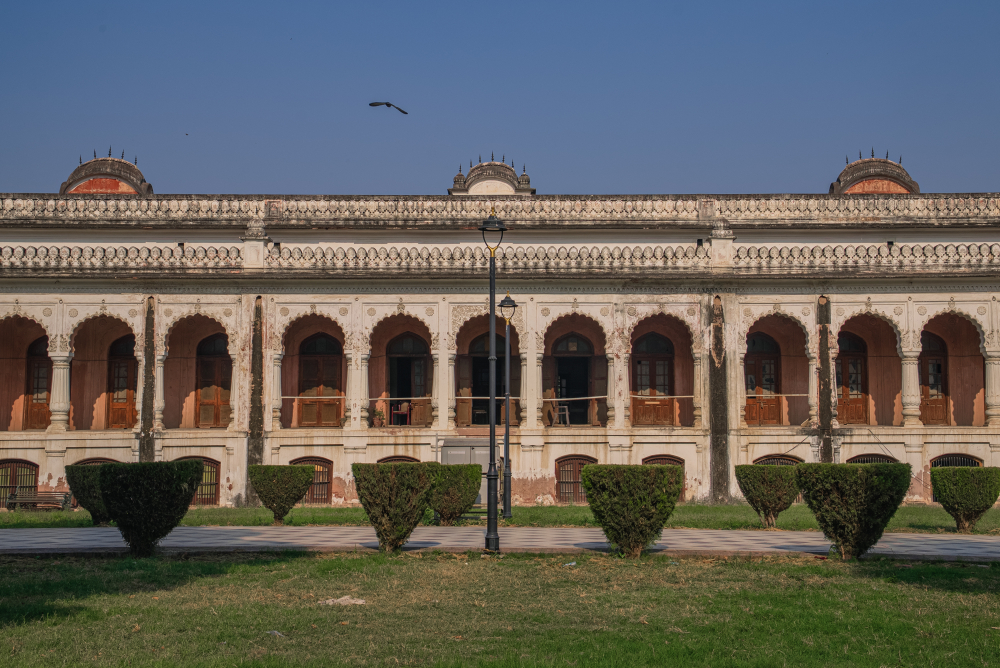
A few of the hundreds of rooms that make the imposing Qila. (Picture Credits: Meenal Upreti)
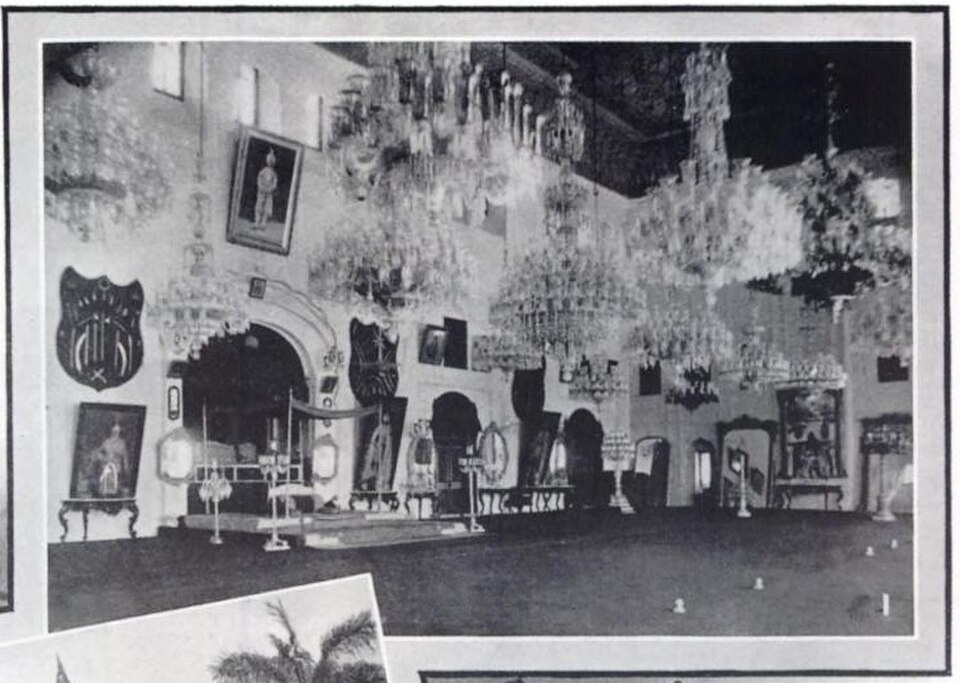
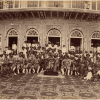
A picture of the interiors of the Durbar Hall featuring glass chandeliers and khatamband work on the ceiling, published in 'Indian States, A Biographical, Historical, and Administrative Survey' (1922). (Picture Courtesy: Wikimedia Commons)
Today, all these monuments are in various states of disarray and deterioration, partly as a consequence of time and accelerated by moisture penetration, thermal expansion, pollution, and microscopic biological growth. the elements.
Challenges to Conservation
The conservation of monuments has been a source of contention in Patiala. Despite its rich cultural heritage in the form of famous forts, palaces, museums and historic gurudwaras, a lack of periodic maintenance has left various sites in a state of abandonment and disrepair.
Many of these sites have been brought under the control of the Archaeological Survey of India (ASI), which follows multiple approaches to architectural conservation and preservation. One of the primary methods is chemical conservation, undertaken by the science wing, where specialised materials and treatments — such as employing vaccines — are used to stabilise and protect structures, including damp-proofing interventions. However, the resources required for such processes, ranging from expenditure to infrastructure to laboratories, have limited their application in the ongoing conservation work at Qila Mubarak and Sheesh Mahal.
A second approach focuses on structural preservation. In this case, committees comprising professionals, art historians and critics, architects, restoration organisations, and contractors are constituted to develop plans for the protection of monuments against environmental and structural risks, including earthquakes, cyclones, rains, floods, and various pollution factors. In Patiala, such a committee prepared a conservation framework for the repair and maintenance of its historic bhawans (buildings). However, the agencies tasked with implementation were unable to provide adequate documentation of proposed or ongoing work, and key records were not made publicly accessible. This has constrained transparency and limited the effectiveness of this approach in Patiala.
The third approach involves awareness-building initiatives, including symposiums and exhibitions, aimed at fostering public engagement with heritage conservation. While such efforts have been initiated in Patiala, their long-term impact remains to be seen.
The Qila Androon before being restored, 2012. (Picture Courtesy: Wikimedia Commons)
Broadly, restoration and conservation work have been underway in Patiala at Qila Mubarak and Sheesh Mahal for nearly the past decade. Added to the World Monuments Fund’s list of ‘100 most endangered monuments’ in 2004, the Qila Mubarak’s restoration was undertaken between the years 2012 and 2026 by the Archaeological Survey of India and INTACH with monetary assistance from various government programmes. Portions of the Qila — except the Qila Androon, housing 13 royal chambers and some of Sikh art’s masterpieces — are now repaired and accessible to the public from 2025. These include the Ranvaas (a royal guesthouse), Sarad Khana (once a guesthouse for Europeans), Jalau Khana (exhibition hall), and the Durbar Hall (court hall). The Durbar Hall is functioning as a museum and armaments gallery once again, after a period of over 10 years. These preservation efforts have also been carried out in accordance with the Venice Charter Act for the conservation of buildings and its amendments.
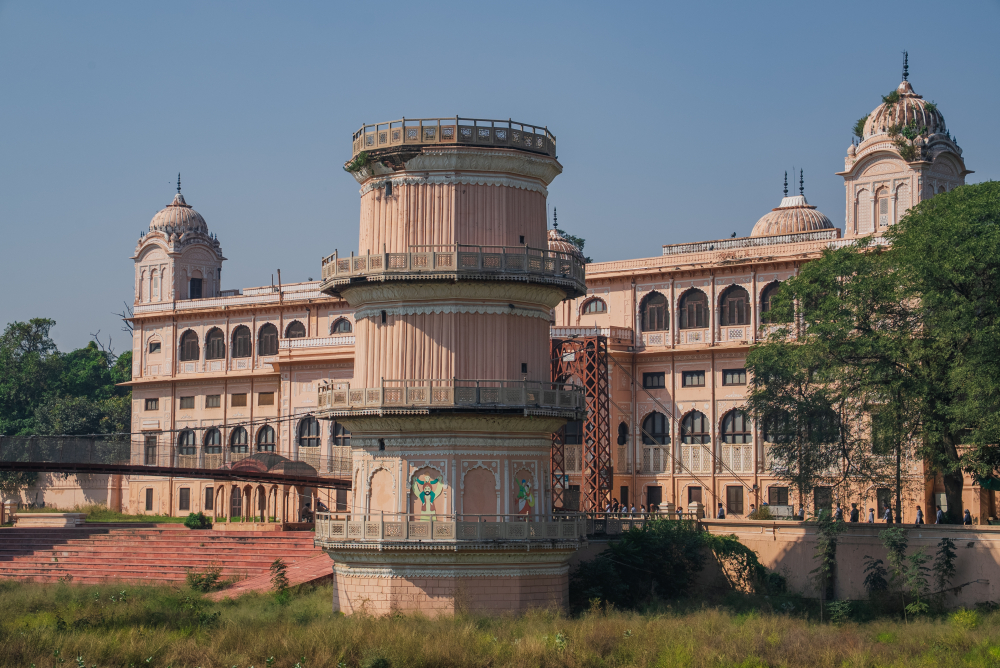
The complexity of the design of the Sheesh Mahal ensures a complex conservation process. (Picture Credits: Meenal Upreti)
Rediscovering Royalty at Ranvaas
Of the many undertakings to conserve the architecture of Patiala, one of the most significant and ambitious has been the successful restoration of Ranvaas. Originally conceived as a residential enclave for the royal consorts of the Patiala dynasty, Ranvaas functioned not merely as a domestic complex but as a highly structured spatial system embodying gendered hierarchies, courtly etiquette, and the aesthetics of late-medieval Sikh royal architecture. Over time, changing political landscapes, shifting patterns of royal patronage, and the gradual decline of princely authority led to the fragmentation of the complex’s original cohesion.
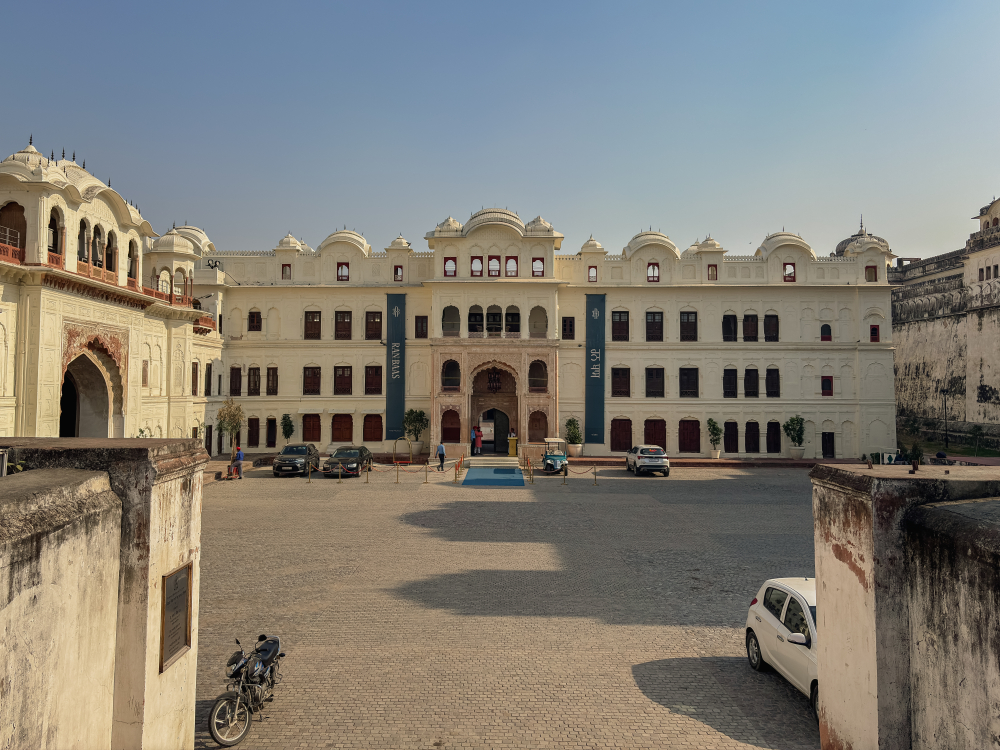
Ranvaas which is now a hotel, Ran Baas The Palace. (Picture Credits: Meenal Upreti)
The Ranvaas was tendered by the Punjab Bureau of Investment Promotion, following which the Apeejay Surrendra Park Hotels took possession in 2021 as Ran Baas The Palace. Architect Abha Narain Lambah, who was already on the consultants’ list for the restoration of the Qila, was contacted to lead the restoration for the legacy hotel project. The doors of the new heritage hotel opened in 2025.
Undertaken by Priya Paul, Chairperson of the Apeejay Surrendra Park Hotels, and Abha Narain Lamba with the commitment to reviving historic properties with sensitivity and vision, the project sought to conserve architectural heritage while adapting it to contemporary cultural demands. This involved a series of interventions that balanced conservation ethics with functional reinvention. On the one hand, the material authenticity of the historic structure, its lime-plastered walls, traditional courtyard layout, intricate frescoes, timber detailing, and the rhythm of its multi-chambered residential units were preserved. On the other hand, these spaces were gently reinterpreted and modified to support modern hospitality functions, cultural programming, and curated experiences that highlight Patiala’s rich historical identity. Central to this was the modification of courtyards and private chambers, once intimate spaces of royal domesticity, into public zones of interaction, exhibition, and leisure.
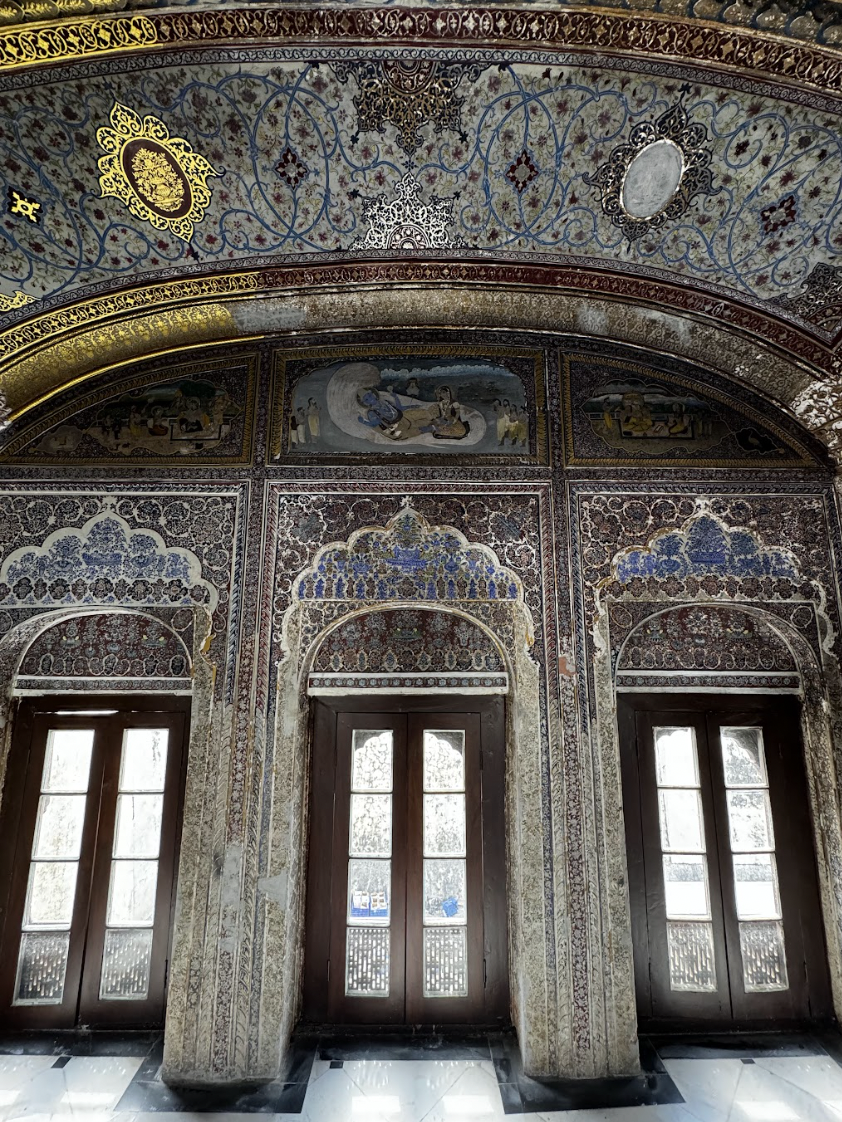
Sheesh Mahal under restoration in Ranvaas. (Picture Credits: Aalekh Dhaliwal)
The resulting architectural language is neither purely restorative nor wholly modern; instead, it forms a negotiated hybrid. This shift mirrors a broader movement in heritage management, where formerly exclusive royal spaces are democratised and made accessible to a wider audience. Through careful landscaping, lighting design, and the introduction of climate-responsive features, the renovation team sought to maintain the spatial atmosphere of Ranvaas while enhancing its usability and visitor experience. Simultaneously, conservation professionals worked to stabilise and restore fragile architectural elements, ensuring that the site’s tangible heritage remains protected for future generations. The conversion not only offers a multi-dimensional perspective on royal life and serves as a medium of heritage education, but also plays a crucial role in Patiala’s cultural and tourism economy.
On 3rd February 2025, I had the privilege of visiting the historic Ran Baas The Palace in the company of two distinguished scholars: Dr Saleem Beg, former convener, INTACH, Jammu & Kashmir and Dr Suresh from Jammu. During our visit, we carefully observed and analysed the significance of preserving such spaces, and how expert interpretations can transform a simple tour into a meaningful exploration. What made the day truly special was the way Dr Beg and Dr Suresh connected the past with the present, highlighting the importance of safeguarding heritage for future generations. During the discussion, Dr Beg also spoke about the two masterminds behind the project: Ms Priya Paul and conservation architect Abha Narain Lamba. He highlighted how both are renowned for their deep commitment to heritage conservation and their remarkable ability to revive historic properties with sensitivity and vision. I went away from the conversation appreciating how such projects are not merely architectural undertakings, but heartfelt efforts driven by individuals who value history, aesthetics, and cultural continuity.
The remaking of Ranvaas thus stands as an important case study in balancing preservation with modernity, exemplifying how historic structures can be revitalised without erasing their embedded cultural meanings. This example has had magnificent success and could become a model for ongoing and future projects of conservation for the rich architectural legacy of Patiala.
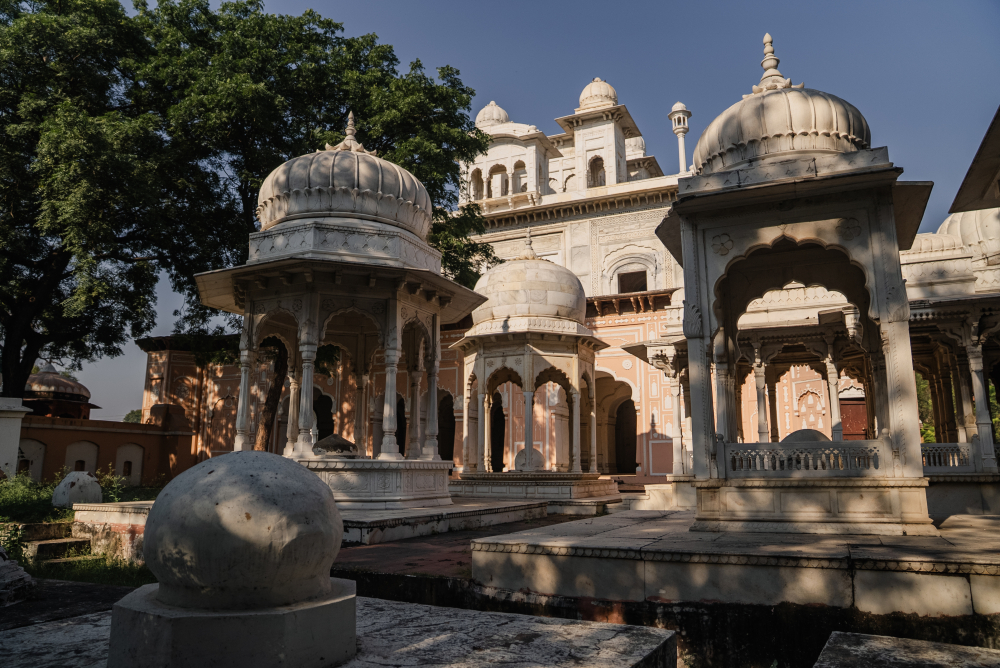
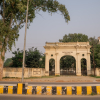
The Shahi Samadhan offer a successful example of conservation in Patiala's Old City. (Picture Credits: Meenal Upreti)
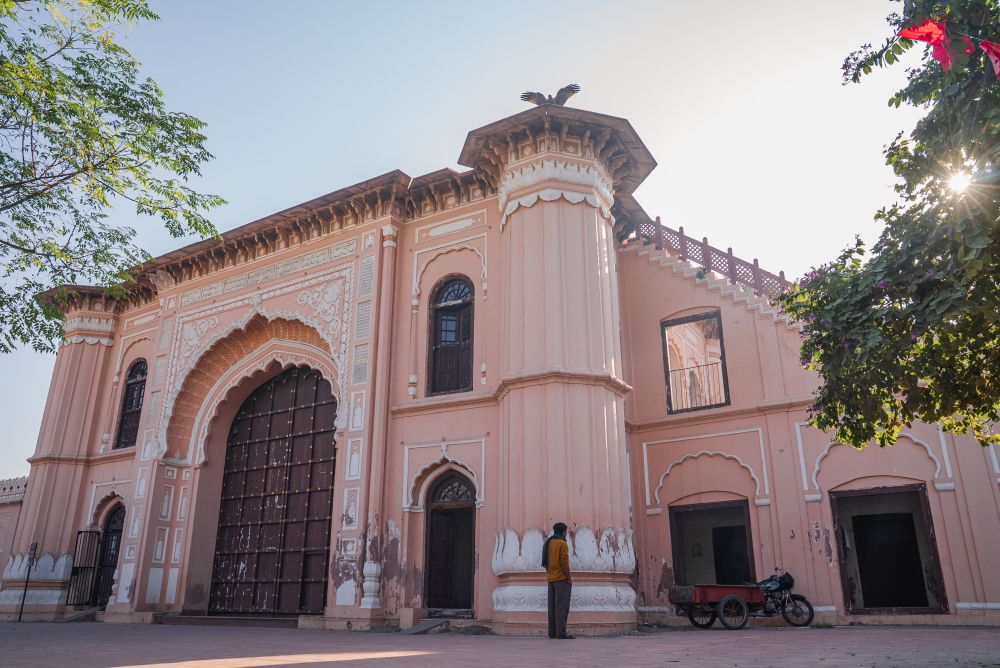
Entrance of Shahi Shamadhan post-restoration. (Picture Credits: Meenal Upreti)
Bibliography
Aijazuddin, F. S. Pahari Paintings and Sikh Portraits in the Lahore Museum. London: Sotheby Parke Bernet, 1977.
Alag, Sarup Singh. Excellence of Sikhism: Non-Sikh Views. London: Ealing, 1998.
Archer, W. G. Paintings of the Sikhs. London: HMSO, 1966.
Arora, A. C. British Policy Towards the Punjab States, 1858-1905. Jalandhar: Export India Publications, 1982.
Arora, Anju. The Princely States: British Paramountcy and Internal Administration, 1858-1948: A Case Study of the Kapurthala State. New Delhi: National Book Organisation Publishers, 2001.
Arshi, P. S. Sikh Architecture in Punjab. New Delhi: Intellectual Publishing House, 2000.
Aryan K. C. ‘The Pool of Nector (Golden Temple).’ Marg Vol. 30 (1977): 9-12.
Beach, M. L. The New Cambridge History of India. London: Cambridge University Press, 1992.
Bhattacharya, S. K. The Story of Indian Art. Delhi: Atma Ram Publishers, 1996.
Bhatti, H. S. Folk Religion: Change and Continuity. New Delhi: Rawat Publications, 2000.
Blacker, J. F. The ABC of Indian Art. New Delhi: Indian Reprint Publishing Co., 1922.
Brown, Kerry. Sikh Art and Literature. London: Routledge Press, 1999.
Brown, Percy. Indian Architecture. Bombay: D.B. Taraporevala, Sons & Co. Pvt. Ltd, 1983.
Burke, Peter. What is Cultural History? USA: Polity, 2004.
Daljeet. The Sikh Heritage – A Search for Totality. New Delhi: Prakash Book Depot, 2004.
Goswamy B. N. & Smith, C. I See No Stranger: Early Sikh Art and Devotion. Ahmedabad: Mapin Publishing House, 2006.
Goswamy B. N. Manaku of Guler: The Life and Work of Another Great Indian Painter from a Small Hill State. New Delhi: Niyogi Books, 2021.
___________ Piety and Splendor: Sikh Heritage in Art. New Delhi: National Museum, 2000.
Griffin, Lepel. The Rajas of the Punjab. New Delhi: Atlantic Publishers, 1990.
Javanocich, Gopal, S. British Policy in India 1858-1905. London: Cambridge University Press, 1965.
Kang, K. S. Wall Paintings of Punjab and Haryana. Delhi: Atma Ram Publishers, 1985.
Mcleod, W. H. Popular Sikh Art. USA: Oxford University Press, 1991.
Singh, Khushwant. A History of Sikhs. New Delhi: Oxford University Press, 1999.
Singha, K. Baba Ala Singh: Founder of Patiala Kingdom. Amritsar Guru Nanak Dev University: 2005.
Srivastava, A. L. Medieval Indian Culture. Agra: Shira Lal Agarwala, 1975.
Srivastava, S. P. Punjab Painting. New Delhi: Abhinav Publications, 1983.
___________ Art & Cultural Heritage of Patiala. Delhi: Sandeep Prakashan, 1991.
Stronge, Susan. The Art of the Sikh Kingdom. London: VA Publications, 1999.
Tadgell, C. The History of Architecture in India. London: Architecture Design and Technology Press, 1990.
This essay has been created as part of Sahapedia's My City My Heritage project, supported by the InterGlobe Foundation (IGF).