
In popular imagery, Punjab royalty brings to mind the stalwart personality of Maharaja Ranjit Singh, the founder of the Sikh Empire, under whose patronage Punjabi identity and culture saw a renaissance. Forgotten in common culture are other equally important individuals, chief among them Maharaja Karam Singh, who ruled Patiala between 1813 and 1845, then the second largest Sikh state of Punjab, stretching across present-day Southern Punjab and Northern Haryana. It was under Karam Singh that a crucial and distinct form of Sikh cultural renaissance, often dubbed the Phulkian Renaissance, began to take shape.
The Historical Context
Patiala is often viewed singularly in light of its rule by the extravagant and indulgent Maharaja Bhupinder Singh (r. 1900–1938) during the time of British collaboration. However, Patiala is more than just this one ruler.
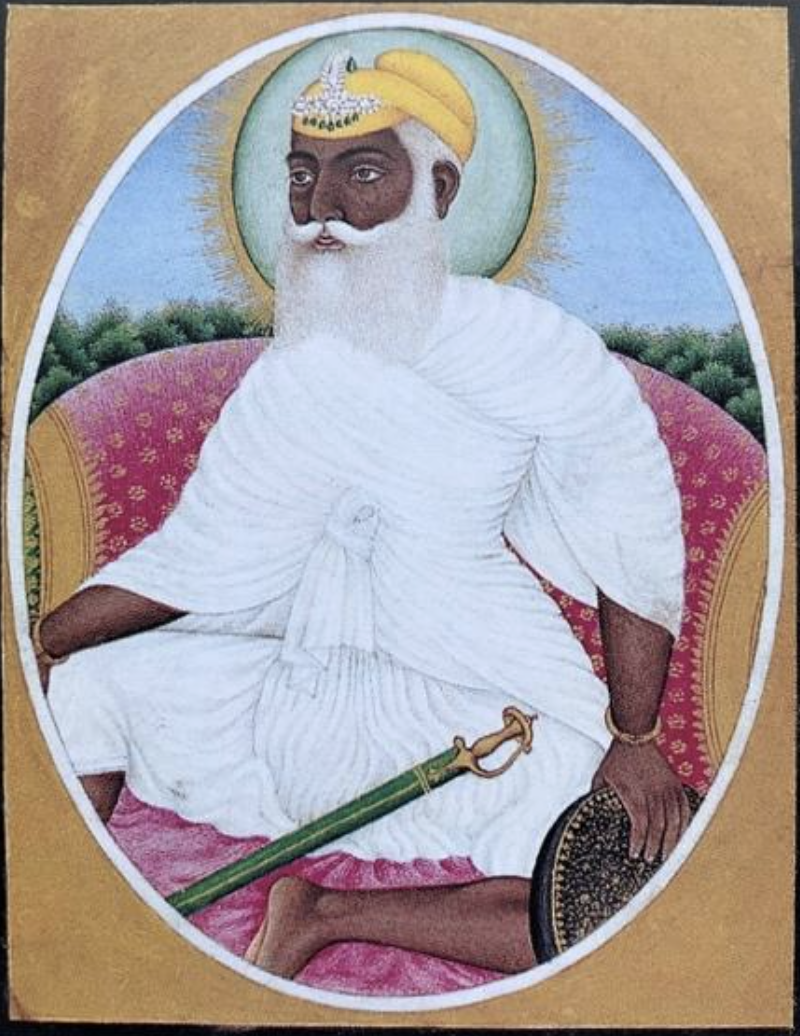
Painting of Sardar Ala Singh of Patiala in tondo, Pahari School, ca. 1880. (Picture Courtesy: Himachal State Museum, Shimla (Goswamy, 2000)/Wikimedia Commons)
The founders of Patiala were originally from Mehraj, a village in Bathinda district in the Malwa region of Punjab. Their forefathers were the Sidhu Jatt Chaudharies, the headmen and revenue collectors under Mughal suzerainty. Official records and folk memory both say that an orphan of the village, Chaudhary Phul, was taken to Guru Hargobind — who prophesied that the boy and his descendants would be prosperous. Phul grew up and his influence increased, with his two sons also receiving personal blessings from Guru Gobind Singh. Phul’s grandson, Ala Singh, would eventually become a Sikh chief and expand his territory slowly. In 1764, Ala Singh founded Patiala, and his grandson, Amar Singh, expanded the territory by warring with the Mughals and neighbouring Sikh states. At one point, Patiala extended until the outskirts of Delhi, before being forced back towards Punjab by the Chalisa Famine of 1783.
Under the next successor, Sahib Singh (r. 1781–1813), who took cognizance of the increasing influence of the Lahore Durbar (court), Patiala signed a protection treaty with the British East India Company. At the same time, in 1809, Maharaja Ranjit Singh of Punjab and the British signed the Treaty of Amritsar, following which 70 other principalities joined Patiala in their own independent treaties. However, British protection did not make these states wholly subservient to the new masters, as noted by Lepel Griffin: these states continued to flout the terms set by the British, with their ministers continuing to participate in the court of Maharaja Ranjit Singh.
It was within this political context that a young Karam Singh was crowned the ruler of Patiala, the first ruler to be throned under British suzerainty.
The Rise of Karam Singh
Karam Singh was born in 1797 to Sahib Singh and As Kaur, becoming the ruler of Patiala in 1813. His formative years saw him helping the British repel the Gurkha advances in the hills of Shimla, which earned him territories across what is today recognised as Shimla and Chail.
By 1823, Karam Singh had streamlined his administration and brought in various reforms: increasing the centralisation of the state by absolving petty disputes with other local chiefs; strengthening the treasury department by reducing dependency on influential moneylenders. Patiala’s status as a protectorate of the British also bolstered its power, especially as it was providing loans to British war efforts against various kingdoms. Given the peace that Patiala experienced in this duration, Karam Singh also arranged land revenue more effectively by creating a centralised office devoted to documenting the state’s revenue in Persian, which was, until 1829, only recorded by Diwans in the Landa Punjabi script. Through these many measures, Patiala re-emerged from chaotic instability into a culturally vibrant centre in Punjab.
Literature and Poetry
Karam Singh’s patronage would make the Patiala Durbar the home of various poets and the foremost Sikh scholars of the nineteenth-century.
Of the many poets was kavi (poet) Vir Singh Bal, who contributed significantly to Sikh culture and religion via his work. He authored a history of the life of the tenth Guru in his voluminous Singh Sagar Granth. He also penned his own version of Heer-Ranjha, the famous epic of the tragic end of two lovers, renaming it Heer of Jhang Sial and Ranjha of Takhta Hazara and transforming the tale into a spiritually significant icon. Rendering a new meaning to the text, Vir Singh portrayed himself as Heer longing for guidance from her spiritual master, Ranjha, who in this metaphysical lore signified Guru Gobind Singh. The manglacharan (benedictory verse traditionally featured in the beginning of the text) of Heer Ranjha eulogised Guru Gobind Singh, rather than containing the more traditional ode to Ganesha and Saraswati. This also marked the unique emergence of Sikh poetry culture emerging from Patiala.
Apart from open support and patronage for literary works on religion and folklore, Karam Singh also commissioned Ram Singh to translate the Persian book on political sciences, Ikhlaq-e-Mohsin, into Suniti Prakash. Patiala slowly became a haven for writers and poets, with several settling in the region. For instance, Santokh Singh, the famous author of the magnum opus Nanak Prakash and Gur Pratap Suraj Granth, moved to live in Patiala from 1823 to 1829.
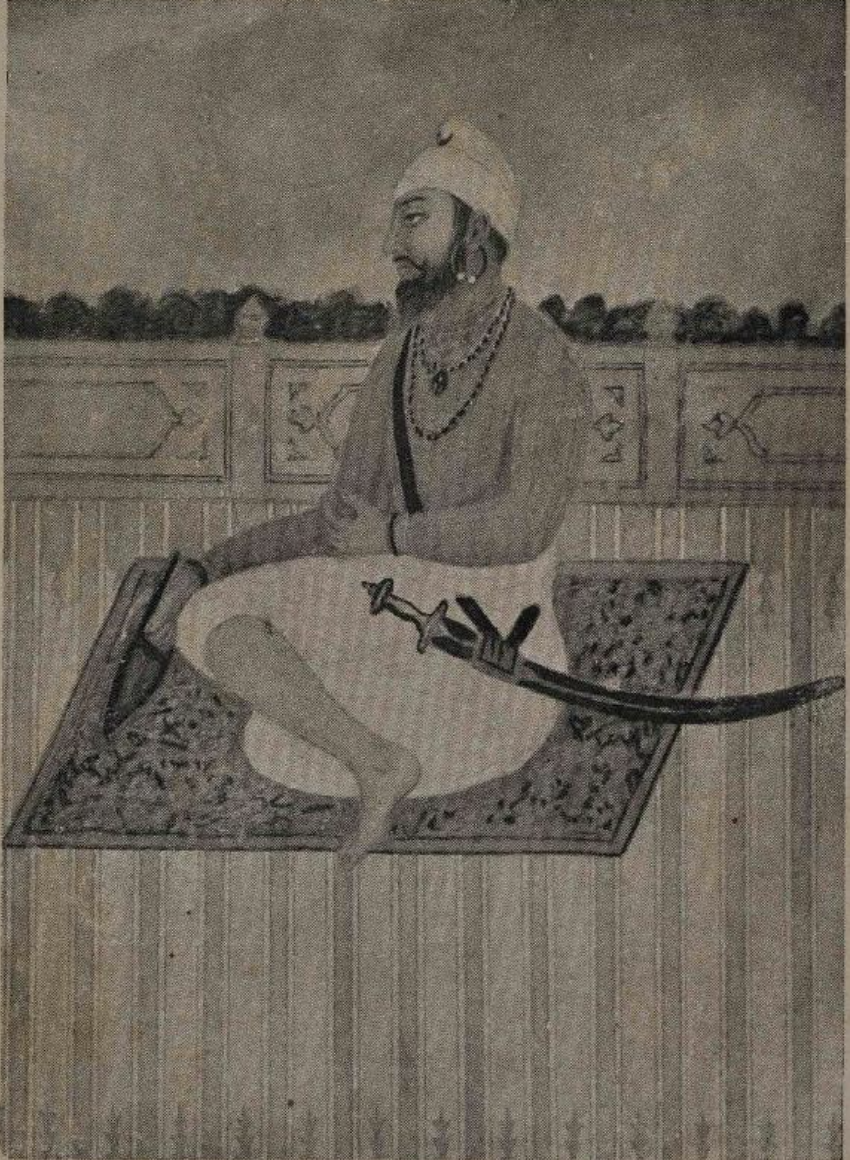
Kavi Santokh Singh seated on a terrace, in a miniature painting preserved by his descendants, c. nineteenth century. One of the most influential Sikh literary figures of the nineteenth century, he resided in Patiala from 1823 to 1829 and is best known for authoring 'Nanak Prakash' and the monumental 'Sri Gur Pratap Suraj Granth'. (Picture Courtesy: Wikimedia Commons)
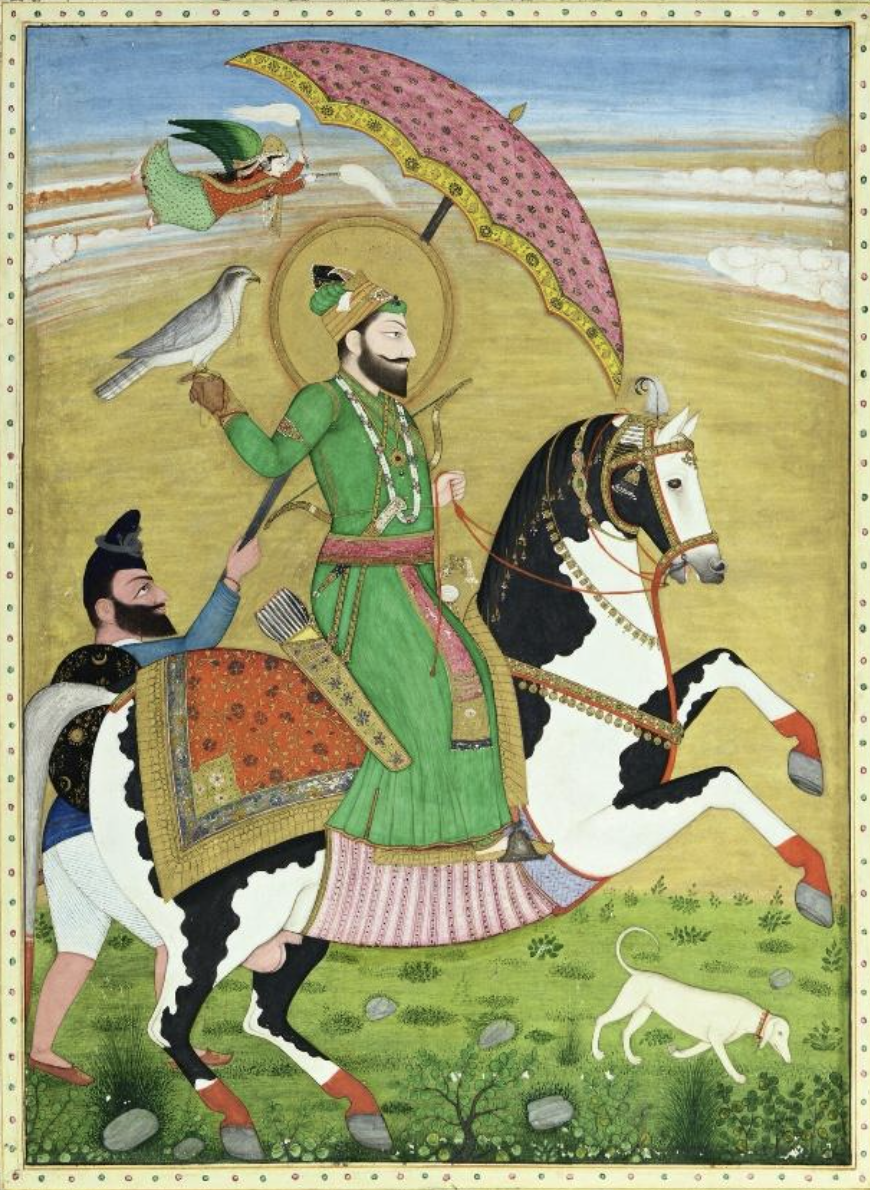
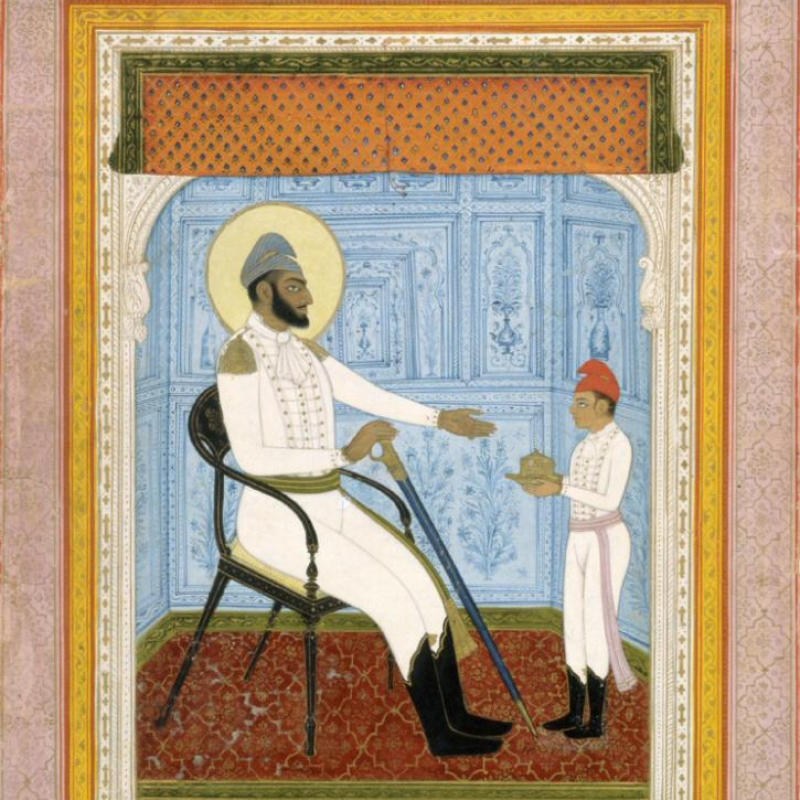
Guru Gobind Singh with a Nihang bodyguard, Patiala, Punjab, ca. 1830-40. Toor Collection. (Picture Courtesy: Ram Chand/Wikimedia Commons)
Art
Karam Singh was also a lover of various art forms. Under his rule, Patiala became famous for its painting styles, with painters from the hills, Rajasthan, and Awadh entering the state. They enriched their paintings with local Punjabi and syncretic elements, leading to the slow growth of the Patiala school of art. Eventually, Patiala’s art would depict themes ranging from the religious to the secular. Notably, it would include depictions of common people and their daily lives, elements usually missing in many art schools across the subcontinent. Paintings from Karam Singh’s era were majorly done with gouache on paper; many of these are today in the private collection of the British art collector, Davinder Toor.
Architecture
Karam Singh’s contribution to architecture was the creation of a distinct Sikh architectural style, very unlike its counterparts in the Lahore Durbar. The gurudwaras built in Phulkian style had domes inspired by Bengal roofs, rather than traditional onion-style domes. Karam Singh, a devout Sikh himself, had countless such gurudwaras built across the State, many of which are historic as a result of their association with the lives of Sikh Gurus. Sadly, only a handful of these remain intact, such as Gurudwara Qila Mubarak in Bathinda and a small portion of Gurudwara Shri Patshahi Nauvin Sahib Qila Bahadurgarh on the outskirts of Patiala. Under the Kar Sewa (devotional voluntary service) architectural renovations, the original structures of the other gurudwaras have been significantly rebuilt for the sake of maintenance. Much of the original style of architecture initiated under Karam Singh is thus lost to time.
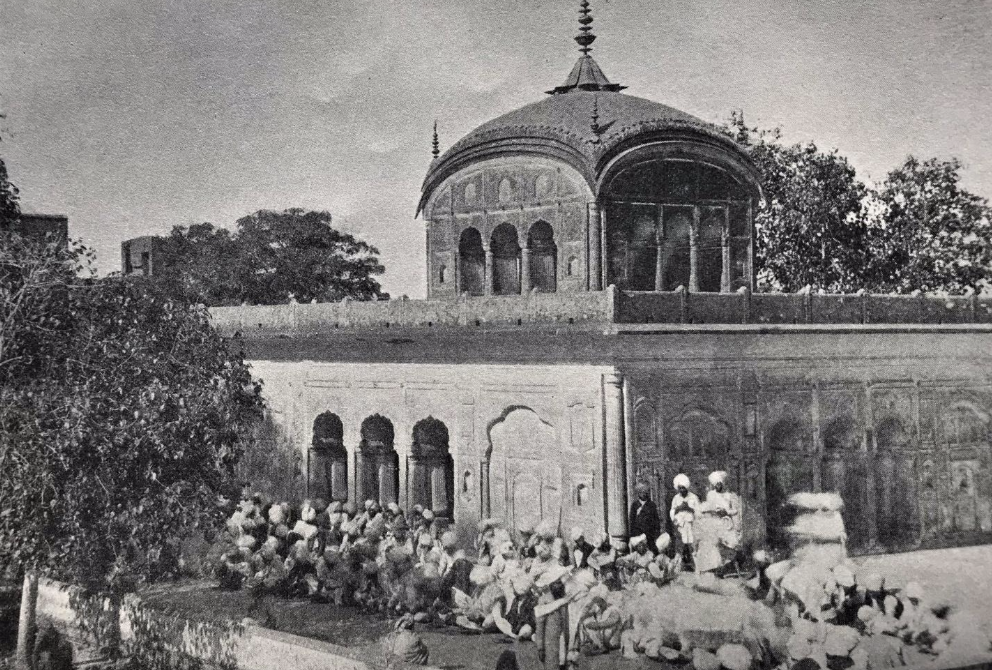
Gurdwara Fatehgarh Sahib, c. 1909 built by Maharaja Karam Singh in 1844. (Picture Courtesy: Wikimedia Commons)
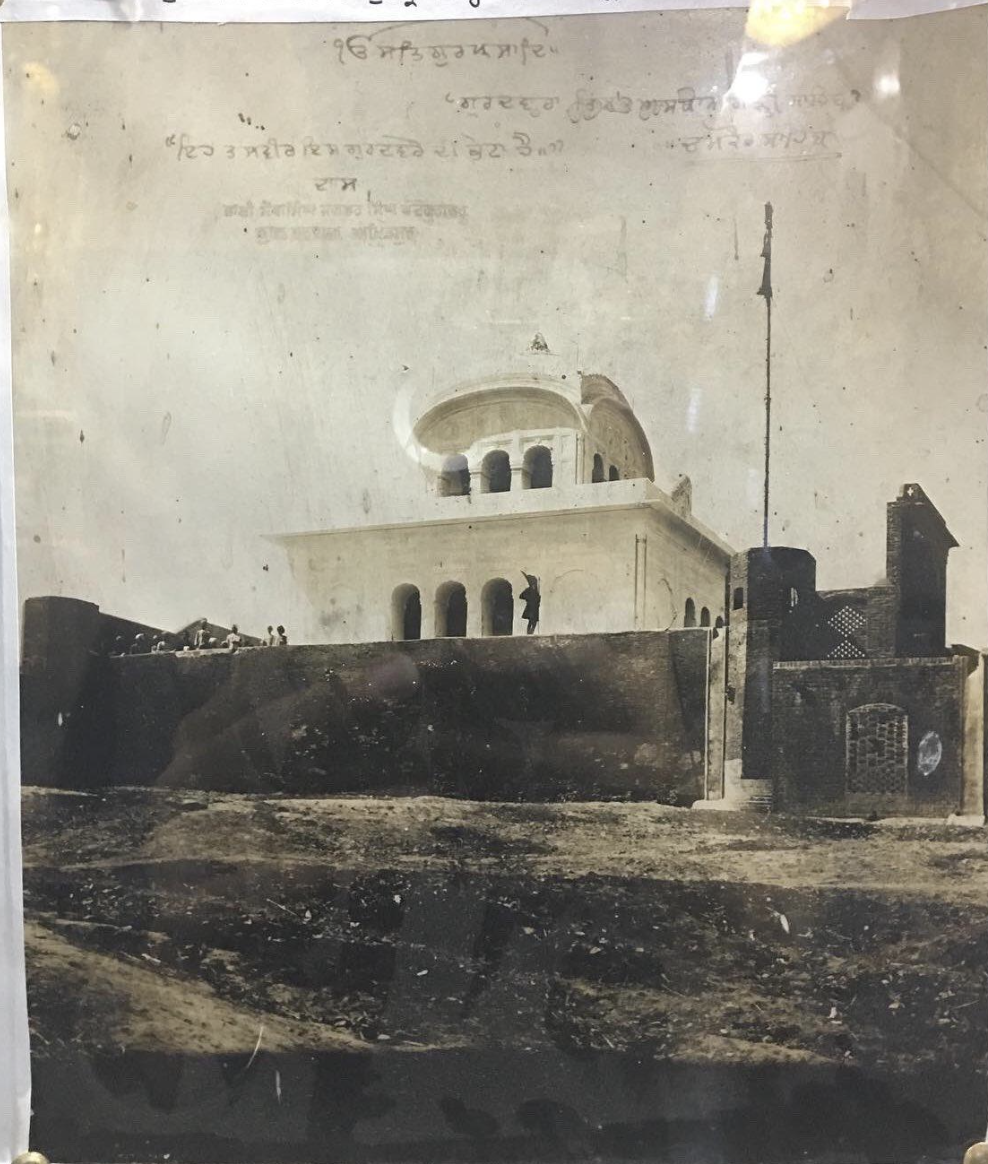
Photograph from the 1920s by Kahn Singh Nabha of Gurdwara Tilak Asthan (Garhi Sahib) in Chamkaur, constructed by Maharaja Karam Singh of Patiala. (Picture Courtesy: Wikimedia Commons)
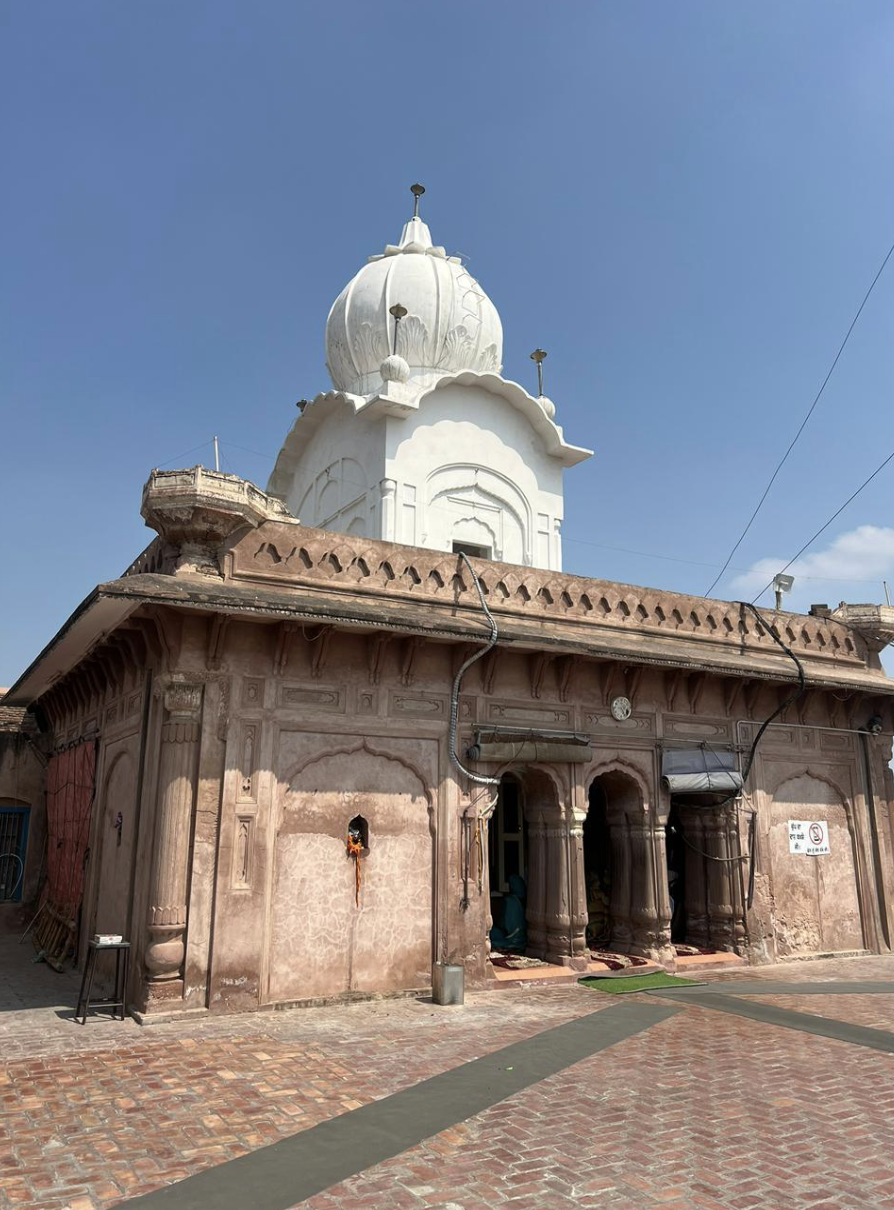
Gurdwara Qila Mubarak, Bathinda, built in 1835 by Maharaja Karam Singh. It is one of the last surviving gurdwaras built by Karam Singh. (Picture Credits: Harmilan Singh)
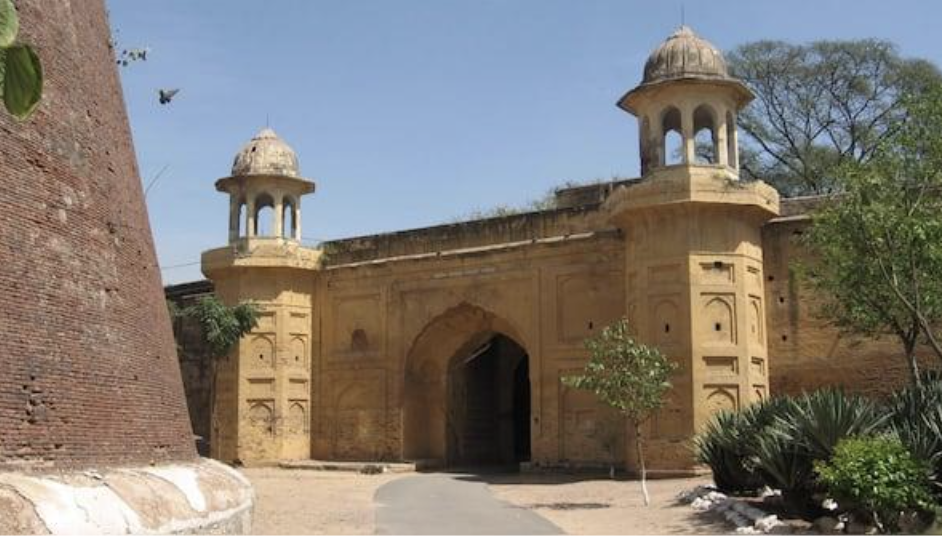
Bahadurgarh Fort, originally named Saifabad, was repaired by Maharaja Karam Singh in 1837 and renamed after Guru Tegh Bahadur to commemorate his visit to the fort in the 1660s. (Picture Credits: Harmilan Singh)
Death and Legacy
The rule of Karam Singh ended abruptly in 1845, when he died during the First Anglo-Sikh War. Many conspiracies floated around his death, which was rumoured to have been a consequence of everything from illness to poisoning by his durbaris (members of the court) for his reluctance to rebel against his British overlords. One vague report in the Illustrated London News edition of April 1846 claimed that he was hanged by the British for refusing to act against Lahore, as he had enjoyed a working relationship with the kingdom despite their rivalry. Karam Singh was eventually succeeded by his son, Narinder Singh (r. 1845–1862), who would further enrich Patiala with grand architectural projects.
Today, Karam Singh has been forgotten in the city that he once ruled, overshadowed by the legacy of his descendants. Yet it was Karam Singh who sparked the torch that was carried on by his successors as far as the patronage of the trinity of arts, architecture, and literature is concerned.
Bibliography
Singh, Kirpal. Baba Ala Singh, Founder of Patiala Kingdom. Amritsar: Guru Nanak Dev University Press, 2005.
Singh, Khushwant. Captain Amarinder Singh: The People’s Maharaja. New Delhi: Hay House, 2017.
______________ A History of the Sikhs. New Delhi: Oxford University Press, 2005.
Lepel, Griffin. The Rajas of the Punjab. Lahore: Punjab Printing Company, 1870.
Punjab State Gazetteers Vol Xvii A: Phulkian States, Patiala, Jind, and Nabha with Maps. Lahore: Government of Punjab Press, 1909.
This essay has been created as part of Sahapedia's My City My Heritage project, supported by the InterGlobe Foundation (IGF).