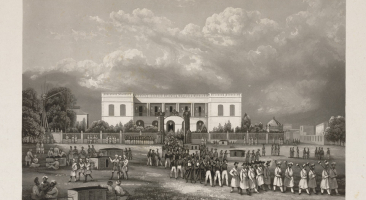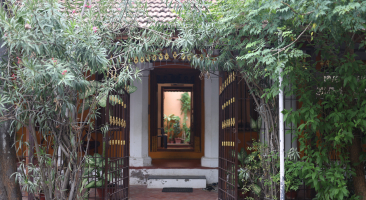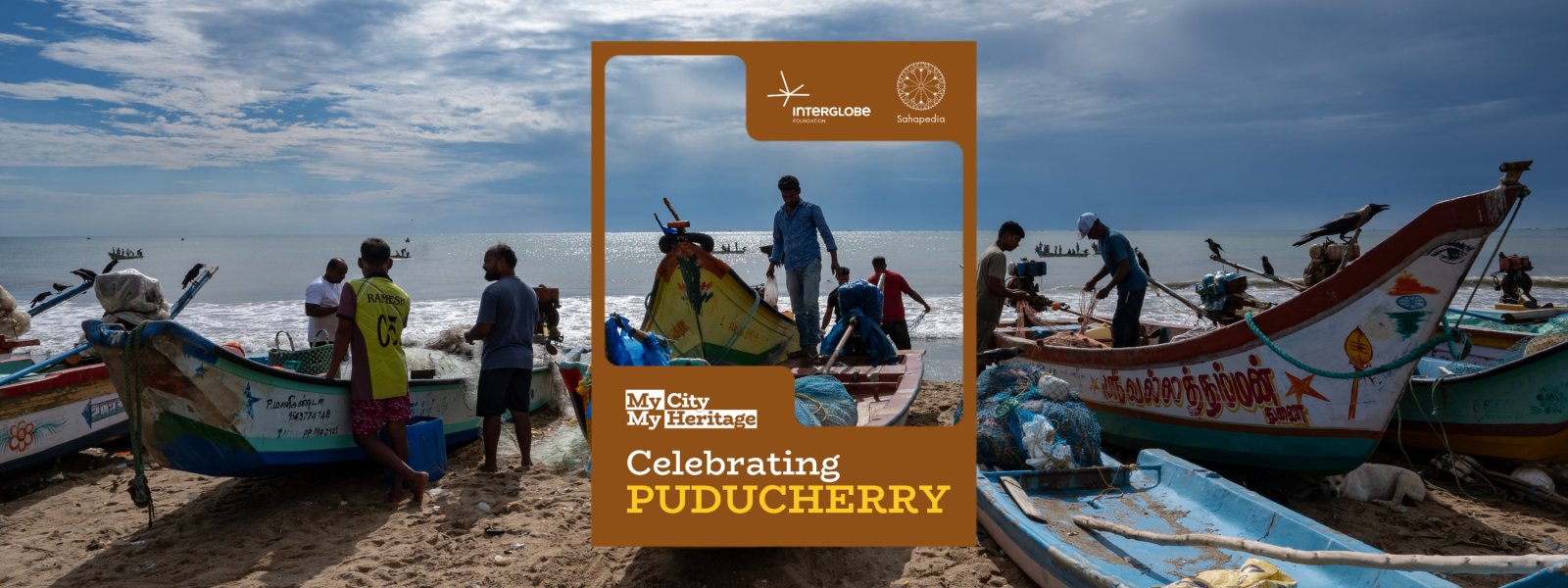
Puducherry is a city along the Coromandel coast, born of the surrounding Tamil landscape and its long colonial history. Its compact heritage town, with verdant boulevards and polychromatic street facades, is often the most photographed part of the city. Yet this enclave, covering less than three square kilometres, is only a pocket within a much larger, complex urbanscape.
Pondicherry was officially renamed Puducherry in 2006 to reflect its original Tamil name meaning ‘new town’. While it shares language, culture and ecology with its wider Tamil backdrop, Puducherry, at the same time, retains a distinct civic identity. This distinctiveness, a result of its particular colonial trajectory and its political separation from Tamil Nadu, is not confined to architecture alone. It is visible in its institutions, intellectual life, and daily practices.
The city is home to major research and cultural institutions such as the Jawaharlal Institute of Postgraduate Medical Education and Research, the École Française d’Extrême-Orient, and the French Institute of Pondicherry. It houses temple traditions that predate the early modern period, an important spiritual centre in the form of the Sri Aurobindo Ashram, and an archival collection of international significance, recognised by UNESCO’s Memory of the World Register. Puducherry’s unmistakable romance has even made it popular in international literature. The city has lent its name to Prince Pondicherry in Roald Dahl’s Charlie and the Chocolate Factory, served as the opening setting of Yann Martel’s Life of Pi, and formed the backdrop for Lee Langley’s A House in Pondicherry. Along with this cultural legacy, the city is also rich in natural heritage with wetlands and mangrove forests of considerable ecological significance.
This curation seeks to move beyond viewing Puducherry solely through the lens of its colonial quarter. Instead, the essays gathered here explore multiple dimensions of the city, covering its historical legacy, lesser-known stories of colonial encounters, intellectual exchanges and ecological systems that continue to define its everyday life.
The collection opens with At the Fringe of the French Empire, which offers a historical overview of the city. The Grid and the Canal follows by tracing the spatial logic of Puducherry’s urban landscape that formed its distinctive precincts.
The city’s culture unfolds through Pondicherry’s Mélange of Cuisines, which captures Puducherry’s multiple culinary expressions, and Traces of Vietnam in Puducherry, which explores its exchanges through transnational links with French Indochina. The Silent Mills of Pondicherry follows the story of textile production and its trade networks.
Material traditions come into focus through On a Craft Walk Through Puducherry, which explores local practices across the city, and Casting the Divine: Making of Chola-style Bronzes in Pondicherry, which documents a now seldomly practiced form of metallurgy. Temples of Puducherry takes us through the temple sites embedded within the urban fabric of Puducherry.
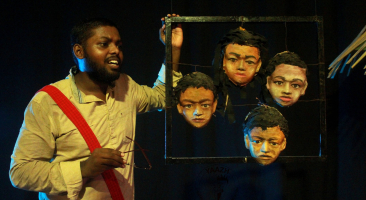
Community life and the territory’s vibrant festivals are explored in Of Mangoes, Monstrances, and Firewalks: Festivals of Puducherry while From Temple Grounds to the Modern Stage: Evolution of Theatre in Puducherry looks at the city’s rich legacy of theatre.
The Confluence of Aurobindo and Bharati dwells on two figures whose presence in Puducherry shaped early twentieth-century political and intellectual thought. The built environment returns to the foreground in Solace by the Sea: The Architecture of Golconde, examining a landmark modernist structure.
Finally, The Natural Wealth of Pondicherry and The Congress of Arboreal Legislators draw attention to the ecological dimensions of the city — its wetlands, mangroves, and trees — reminding us that natural heritage is as valuable as cultural heritage.
Through this wide-ranging collection, we invite you to view Puducherry in a new light, as a city whose many histories continue to shape its present.
Team
Curator: Sayali Athale
Photographer: Joseph Rahul
Editor: Shree Thaarshini Sriraman
Designers: Kaustav Purkayastha and Farishta Anjirbag
Illustrator: Jisha Unnikrishnan
________
Project Mentor: Vaibhav Chauhan
Project Head: Meenakshi Vashisth
Project Coordinator: Adit Shankar